The Encroaching "Zombie Student Culture"
I must admit that when I first began reading and hearing about the long term effects of the internet and screen time on students (as well as students using the internet and AI to cheat on assignments) I largely dismissed it because I thought (naively), “This isn’t affecting our Anabaptist schools because our parents know better than to let their children spend inordinate hours on the internet, plagiarize, or play online games for hours.” Sadly, I am concerned about it now.
A colleague recently shared with me the article “What’s Happening to Our Students?” and I am indeed worried, because although most Anabaptists are usually a little behind pop culture and its trends, the Internet has allowed us to be almost, if not completely, caught up with the world and its trends. We are definitely being affected by it and are headed in the wrong direction.
I have talked to several teachers who confirm that this is true in our schools as well, and all agree that they have seen the effects (although not as dramatic as in public schools) in our schools. This is especially the opinion of teachers who have taught ten years or longer. One teacher had overheard her second graders (who were tired and not focused on their work) talking to other students about staying up late and using their big brothers’ accounts to play online computer games with each other after school and in the evenings.
This makes me want to cry, or bang my head against a wall, or both. These children should be outside riding their bikes, climbing trees, and building tree forts with their fathers. Unfortunately, some of them head home from school to retreat to their bedrooms, shut the doors, and play online games, staring at a screen and interacting online with people they just spent seven hours with in real life at school.
I have two questions.
Why is this happening in our Anabaptist schools?
What are the parents thinking?
I have some suggestions for answers.
I believe that this is happening because we are just a few steps beyond secular society. Regrettably, the lure of being cool and fitting in, which is greatly influenced by social media, is extremely appealing to the parents of our students, the 25-40 year olds, many of whom are buying into the new norm of Youtube influencers, Instagram, and Facebook likes; along with all the hype, lingo, fashion, and accompanying mannerisms.
This is exactly the opposite of what God instructs us to do in His word: "Wherefore come out from among them, and be ye separate, saith the Lord, And touch not the unclean thing; And I will receive you." 2 Cor. 6:17.
Woefully, this is the answer to question number two as well. The only other option is that the parents are simply not aware or are not monitoring the activities of their children, which is equally as bad. The end of that verse is frightening. Will God receive this?
Many of our Anabaptist brethren are just steps behind the world, and the resulting consequences are becoming apparent in our schools. Students are becoming more and more tuned out, overly stimulated mentally from other more entertaining sources. They are becoming bored with maps and interesting history and science facts. They are more enthralled by computer screens and online games than they are teachers, math problems, or English grammar.
There is almost nothing the teachers can do except to gently warn our students of the dangers of such behavior. From what I have seen and heard from other teachers, the students will politely listen and then go back to their same activities. It is the parents who need to be aware of the dangers and be proactive about this hazardous situation.
We can make parents aware of what we are hearing at school, but this obviously can be unappreciated and labeled as “tattling”, unless the parents ask us directly, which rarely happens.
In conclusion, what we can do is to pray for our students, pray for their parents, set a good example ourselves, and to cling to Paul’s words: “whatsoever things are true, whatsoever things are honest, whatsoever things are just, whatsoever things are pure, whatsoever things are lovely, whatsoever things are of good report; if there be any virtue, and if there be any praise, think on these things.” Philippians 4:8


Fun Ways to Practice Spelling Words
Games like these can help to make learning spelling words competitive, creative, and fun. Of course, good, old-fashioned copying the list is still the simplest and most efficient way to practice spelling words. But this can so quickly become tedious and dull, causing students to turn their brains off. On the other hand, when student’s minds and imaginations are engaged through games and activities, their whole brain is activated to learn more effectively.

College Student Weekend 2026
College education can be an opportunity for Christians to learn more about the creation of God and interact with people from a variety of backgrounds and beliefs. At the same time, this opportunity comes with a unique set of challenges socially, spiritually, and intellectually. For example, conservative Anabaptist college students are often a minority in both their churches and colleges.
Who: We welcome applications from full-time and part-time college and university students currently in school and/or planning to begin a program in the next academic year. Registration priority is given to full-time students and students who are currently in school and will continue their studies next year.
Where: Faith Builders hosts the College Student Weekend at the River Ridge Mansion, an early-20th-century mansion built by an oil baron near Franklin, PA.
When: College Student Weekend 2026 begins on the afternoon of Friday, July 3, and continues through lunch on Sunday, July 5.
Cost: The cost of attendance is $255 per person, including two nights of lodging and five meals. The event is limited to 48 participants. Registration is required.


Science Alive 1-2
The inspiration for the creation of Science Alive began when I was teaching in a first and second grade classroom. One of the years I taught, the children had quite a bit of spare time, so we would have impromptu classes on the digestive system or whatever else I happened to field a question about. It didn’t take me long to begin recognizing that the children seemed to retain this style of learning almost better than what they considered work. I wished at that point to have a science curriculum that started out based more on input than output.
However, I didn’t really begin to do anything about this dream until I began to teach the Living Threads curriculum for history class. Then the lightbulb moment hit. I could use similar methods to teach science.
Since this curriculum is designed for multiple grades at the same time, you can guiltlessly hold a class that is amazingly distracting because they are all supposed to be involved. The curriculum is designed for grades one through three, with grade one skipping out on tests. They all take the same levels together and alternate levels for variety of learning. For example, the first-year grades one through three take level 1-2 together, the next year level 2-1. If you use this for three grades, first and third grade are a repeat level. The level is made to be taught three days a week for a 45-minute period for ½ of the term.
This curriculum is designed for the children to be paired up into partner teams. Generally, it works best to put an older child with a younger child for coaching purposes.
When teaching this class, there are a few basic structures I use to instill information. The first is constant review of facts you want them to have for life. There are a few extra pieces of information for the fast learners and for interest’s sake, but by and large, study the tests to know what they should master.
Use the experiments. If you have any that are bigger and more exciting to illustrate the point, use them. Practice the experiments before having class.
Vary the flashcard drill as inspiration hits. Let them practice together in pairs. Use your creativity.
Feel free to add or chop up lessons as needed. There are several books mentioned in this curriculum. While you may not have the exact book mentioned, the library often has good resources that will work just as well or better.
Enjoy teaching the amazing world of science!

Science Alive 2-1
The inspiration for the creation of Science Alive began when I was teaching in a first and second grade classroom. One of the years I taught, the children had quite a bit of spare time, so we would have impromptu classes on the digestive system or whatever else I happened to field a question about. It didn’t take me long to begin recognizing that the children seemed to retain this style of learning almost better than what they considered work. I wished at that point to have a science curriculum that started out based more on input than output.
However, I didn’t really begin to do anything about this dream until I began to teach the Living Threads curriculum for history class. Then the lightbulb moment hit. I could use similar methods to teach science.
Since this curriculum is designed for multiple grades at the same time, you can guiltlessly hold a class that is amazingly distracting because they are all supposed to be involved. The curriculum is designed for grades one through three, with grade one skipping out on tests. They all take the same levels together and alternate levels for variety of learning. For example, the first-year grades one through three take level 1-2 together, the next year level 2-1. If you use this for three grades, first and third grade are a repeat level. The level is made to be taught three days a week for a 45-minute period for ½ of the term.
This curriculum is designed for the children to be paired up into partner teams. Generally, it works best to put an older child with a younger child for coaching purposes.
When teaching this class, there are a few basic structures I use to instill information. The first is constant review of facts you want them to have for life. There are a few extra pieces of information for the fast learners and for interest’s sake, but by and large, study the tests to know what they should master.
Use the experiments. If you have any that are bigger and more exciting to illustrate the point, use them. Practice the experiments before having class.
Vary the flashcard drill as inspiration hits. Let them practice together in pairs. Use your creativity.
Feel free to add or chop up lessons as needed. There are several books mentioned in this curriculum. While you may not have the exact book mentioned, the library often has good resources that will work just as well or better.
Enjoy teaching the amazing world of science!

3 Teaching Positions Available at Shady Grove Christian School Mifflinburg PA
Shady Grove Christian School (Mifflinburg, PA) is looking for qualified teachers for the 2026-2027 school year for the following positions:
1st grade
2nd grade
High School
Elementary Grades are taught conventionally using CLP curriculum.
High School is individualized using ACE curriculum.
Contact Andrew Beachy: abeachy2@gmail.com


Jesus: Greater Than Moses (A Christmas Program)
This hour-long whole-school Christmas program uses dramatic recitation of Scripture, songs, and simple actions (mostly still poses) to illustrate how the life of Moses foreshadowed the life and work of Jesus. It can easily be adapted to schools of nearly any size.
Example livestream from Pilgrim Christian School: https://youtube.com/live/KfCZwHG2f1AZwHG2f1A
6196 results found with an empty search
- Sample Prospective Teacher Questionnaire
Sample Prospective Teacher Questionnaire John Risser March 12, 2018 Sample Prospective Teacher Questionnaire Document 00:00 / 01:04 Download Download At CASBI 2018 , John Risser shared this sample questionnaire for use with prospective teachers. Feel free to adapt the content below to your needs. Download Facebook X (Twitter) WhatsApp LinkedIn Pinterest Copy link John Risser Jonas Sauder
- Stories that Teach
Stories that Teach Jim Morrison September 27, 2019 Western Fellowship Teachers’ Institute 2019 Stories that Teach Audio 00:00 / 01:04 Download Download Lets look at stories that teach lessons. There are stories out there that do seem to entertain, but not really teach. What kind of stories can we use that help our teaching program? Download Facebook X (Twitter) WhatsApp LinkedIn Pinterest Copy link Jim Morrison
- The High Place of Respect (Wesley King)
The High Place of Respect (Wesley King) Wesley King February 27, 2017 CLE Workshops 2009 The High Place of Respect (Wesley King) Audio 00:00 / 01:04 Download Download Wesley continues his series on respect and honor. The way we respond to civil and church authorities reflects our attitude toward God. Courtesy Christian Light Education (CLE). Download Facebook X (Twitter) WhatsApp LinkedIn Pinterest Copy link Wesley King
- World History 16B Picture Overview Of French Revolution.pdf
World History 16B Picture Overview Of French Revolution.pdf Kendall Myers December 22, 2017 Supplementary Materials for BJU World History World History 16B Picture Overview Of French Revolution.pdf Document 00:00 / 01:04 Download Download Simple sketches showing how the government structure changed during the French Revolution and in the years following. Download Facebook X (Twitter) WhatsApp LinkedIn Pinterest Copy link Kendall Myers
- To Understand and Do: Teaching Literature for Life Change
To Understand and Do: Teaching Literature for Life Change Jonas Sauder June 14, 2019 CASBI 2019 To Understand and Do: Teaching Literature for Life Change Video 00:00 / 01:04 Download Download Why teach literature? For wisdom. The writer is one who has eyes that see what's in front of his face. The Proverb writer, I think it was said, I walk by the place where the hedge was overgrown and the weeds were coming up. This is my words. He looked and he saw and he took construction. We need some understanding. Do we understand? The circumstances are the things that stand around us, the situation in which we are in. Do we understand that, understand the questions, the problems, the potentialities, the difficulties? Do we understand? And then are we able to discern the best course of action? Not all wisdom is created equal. Wisdom is the principal thing. Therefore, get wisdom. With all that getting a good understanding. This is important that we know that. How do we go about doing this? There is a way, the Scriptures tell us, that seems right. The characteristics of this worldly wisdom are that it's based on a natural desire, that is, an inborn desire for understanding and achievement and success. We want to have a successful life. And it pretty much depends upon our ability to reason. The definition of success in worldly wisdom would be whatever the seeker says success is. Godly wisdom is—you're motivated by a healthy fear of the Lord. That moves you then to responsible action. And we do not depend upon human reason. However, we do use our God-given reason and our abilities to think coupled with a dependence upon His Spirit to guide us into truth and, I would say, as children also coupled with a respect and an openness to be taught by those who are teaching you. There's a lot of talk about critical thinking today and it has its role, but I would like to caution us that critical thinking can become idolatry the same as any other thing that we focus on solely. When we use critical thinking, we do, in a sense, hold things at arm's length and we look at them and we evaluate them, "What is this? Where does it come from? What's it trying to accomplish?" We're very careful before we adopt it. Now, the risk is that it can put whatever we study beneath us putting our mind into the driver's seat. It depends quite a bit on the seeker as to what he gets from this. You can't assume that just because somebody reads something or studies something or hears something that he is going to gain godly wisdom from that. That's why it does make a big difference who the teacher is, who the person is who guides this person to his thinking. Teaching literature involves helping the students to engage. When I would say "engage" here, it's to interact with a literary work in a way that influences how they live their lives from that day forward. I'm not saying that tongue-in-cheek. I actually mean that. When you read something, you read it and if it's worthwhile reading, you read it and it influences you in some way; your attitudes, your thinking, your understanding in some way. Now, we may not remember having read it and that doesn't matter. I don’t remember every meal I've eaten. I can't tell you what I had for lunch on July 13th, 1987. But what I ate that day influenced my life. We can't name all the stories we've read, all the things we've read and say, "I read this then. Therefore, I think this now." People who truly read literature grow a little—grow a little!—with each piece they read. They may be enlightened, inspired, encouraged, or warned. They may gain knowledge, insight, or motivation. Quality literature has both themes of substance along with excellence of form and expression. Students see straight through some things. Some selections are so thin that the reader can tell you before they start. Dad’s going to go away and he's going to tell the boys to behave and the boys are going to do something they shouldn't do. When Dad gets home, the boys are going to be called on the carpet. It's just a question of, "What it is this time?" That kind of writing deals with real things of life, but it's not literary. Sometimes, actually, telling the reader what to think or how to think actually sometimes undermines the purpose. But effective stories show truth in action. If you have something with excellent form and expression but don't have substance, then it becomes this sounding brass that Paul talks about. It's a rich privilege to be able to discuss with students the content here. Here's where you come together. We read in “The Village Blacksmith,” His hair is crisp and black and long.His face is like the tan. His brow is wet with honest sweat. He earns whatever he can And looks the whole world in the face For he owes not any man.” “His brow is wet with honest sweat." Is there such a thing as dishonest sweat? "He looks the whole world in the face for he owes not any man." What does it mean to look someone in the face? For what reason might you not be able to look someone in the face? What might be a reason why your eyes might go down? Toiling, rejoicing, sorrowing,Onward through life he goes. Each morning sees some task begun. Each evening sees it close. Something attempted, something done, Has earned a night's repose. “Toiling, rejoicing, sorrowing.” If you had to pick three words, what three words would you pick to describe life? That middle one there is a powerful one. These lines you can take with you to the bank and you can use them for the rest of your life. Think about it in the evening. When you put your head in the pillow: “Something attempted, something done.” Have you done that today? Have you attempted something? Have you done something? When you discuss literary pieces, it gives you opportunity to deal with these things of substance that make life what it is. Also, it builds tremendous opportunities for discussion and to develop the skills in students to actually talk out loud about what they're thinking and to hear each other talk and to learn from each other. Download Facebook X (Twitter) WhatsApp LinkedIn Pinterest Copy link Jonas Sauder
- Practical Ideas for Cultivating Hearts of Service
Practical Ideas for Cultivating Hearts of Service Paul Yoder January 4, 2017 CASBI 2014 Practical Ideas for Cultivating Hearts of Service Audio 00:00 / 01:04 Download Download How can we create an atmosphere of joyful, humble service? Paul helps us think about practically stepping towards this goal.Courtesy CASBI. Download Facebook X (Twitter) WhatsApp LinkedIn Pinterest Copy link Paul Yoder
- Random Acts of Integrity: An Easy Way to Keep Students Accountable for Self-Checking
Random Acts of Integrity: An Easy Way to Keep Students Accountable for Self-Checking David Miller January 3, 2020 Random Acts of Integrity: An Easy Way to Keep Students Accountable for Self-Checking Video 00:00 / 01:04 Download Download Self-checking: I think it's a great opportunity for them to learn at a young age. Sometimes I wonder if we put a little too much temptation on too young students, and then maybe expect them to have a higher level of integrity than what they have matured to. That has always been a problem. Probably most students at some point get caught with cheating in their score and they don't do it properly. It used to be, back when I started teaching, that I would spot check every book that was handed in for a test, and that just got to be cumbersome. It’s a lot of work the teacher shouldn't have to be doing. Lately what I've been doing, and it seems to be working better than anything that I've ever tried before, is I have a randomizer app on my phone. I’ve got all the students' names in it in a list. Usually after lunch or after last break or something, on days that I remember, I just pull it out. I take the third name that comes up and that student is the checker. Then I take the next two third names that come up and those are the ones that get checked. Then I've got a list of the subjects and I randomly pick a subject, and those two students bring that subject and the checker gets the answer key and checks the last lesson that they did in it. If it's perfect, then I give them a little award. If it's got problems, they erase it and do it again. If it's got real problems, then the penalties get bigger. If it's bad enough, they erase the entire Light Unit and start over. If you happen to be on Lesson 14 or something, you have to redo two or three weeks worth of work in that subject. It's pretty good motivation. Again, I would like to see them do it because it's the right thing to do, not because they're afraid of what's going to happen if they don't. But that has really helped. No one knows when they're going to get called and no one knows which subject is going to get checked. It seems to really keep them on top of it. Download Facebook X (Twitter) WhatsApp LinkedIn Pinterest Copy link David Miller
- The Children's Tabernacle Book and Study Guide
The Children's Tabernacle Book and Study Guide Edward Lake August 15, 2019 The Children's Tabernacle Book and Study Guide Document 00:00 / 01:04 Download Download In this 1875 novel, Charlotte Tucker follows a family as they build a model of the Tabernacle while quarantined with an illness. A girl named Dora works on the project on the Lord's Day and becomes burdened with guilt, but ultimately finds relief in confession. Meanwhile, Dora's sister learns to subdue her envy and temper. This novel also explains the various shadows in the Old Testament and their application in the New Testament. The accompanying study guide encourages student comprehension. For more freely downloadable books and study guides, visit Edward's website . Download Facebook X (Twitter) WhatsApp LinkedIn Pinterest Copy link Edward Lake Erikson Lehman
- Helen, or Temper and Its Consequences with Study Guide
Helen, or Temper and Its Consequences with Study Guide Edward Lake March 4, 2020 Helen, or Temper and Its Consequences with Study Guide Document 00:00 / 01:04 Download Download Download the book or preview it below. Download the study guide or preview it below. Who is your neighbor? This 1868 novel by Mrs. George Gladstone explores the themes of love of neighbor and self-control. The accompanying study guide queries students' comprehension of the themes and plot. Download Facebook X (Twitter) WhatsApp LinkedIn Pinterest Copy link Edward Lake
- Helping the Undisciplined
Helping the Undisciplined Irene Bontrager April 12, 2019 Helping the Undisciplined Document 00:00 / 01:04 Download Download Image by StevePB on Pixabay How do we help those who struggle to maintain discipline? In these notes from a session at REACH 2019, Irene considers the Scriptural basis for discipline, the purpose for disciplined living, and tools to grow our discipline. Scripture Be fruitful and multiply and fill the earth and subdue it. (Genesis 1:28) Being disciplined is the foundation for living a righteous lifestyle that reflects Jesus and brings glory to God. Every athlete exercises self-control in all things. They do it to receive a perishable crown, but we an imperishable one. (1 Corinthians 9:25) Sacrifice or effort in developing godly habits is costly for Christians because they are preparing to win an eternal crown. I appeal to you therefore, brothers, by the mercies of God, to present your bodies as a living sacrifice, holy and acceptable to God, which is your spiritual worship. (Romans 12:1) Exercising self-discipline brings focus to doing the necessary things instead of being distracted by doing easier but less productive things. The soul of the sluggard craves and gets nothing, while the soul of the diligent is richly supplied. (Proverbs 13:4) A disciplined person endures hardship for a greater cause then immediate gratification. They sacrifice because the discipline justifies the end result. A man without self-control is like a city broken into and left without walls. (Proverbs 25:28) God gave Adam and Eve the first opportunity to develop a healthy habit. They failed. People fail. Purpose Cultivates Purposeful Lifestyle The ultimate purpose in being disciplined is to love God, to love others and to live a fruitful life that will glorify and honor God. Paul cultivated a purposeful lifestyle that was costly, but he glorified God by advancing God’s Kingdom. Builds Healthy Habits Studies show that it takes at least two to three weeks to create new habits. Bright lines are hard and fast rules that can help people from procrastinating when building new habits. Bright lines conserve energy because people are not deciding whether they made or broke their goals. Grows Willpower Muscles “State” refers to a person’s level of willpower that fluctuates from moment to moment. Studies show that conflict, stress and lack of sleep depletes a person’s “state.” “Trait” refers to a person’s natural willpower muscles. “Trait” muscles vary from person to person, but everyone can grow these muscles. Tools Ask Questions An undisciplined person often feels ashamed of their inability to accomplish their goals. Undisciplined people want to be disciplined, but they struggle accomplishing them on their own. Asking questions is crucial in understanding the person and their struggle. Help Prioritize Most people have time to accomplish their goals if they prioritize and learn to say “no,” to distractions that are time wasters. People become disciplined by intentionally choosing how they live each day. Teach Accountability Accountability is about building relationships that are characterized by love, acceptance, encouragement, trust, and long-suffering. Accountability is not about perfection but about helping people accomplish more than they would if they were not accountable to someone. Begin Small Begin small when establishing a new habit. If people try to do too much on day one, they will drain their willpower and fail to repeat the behavior the next day. Without repetition new habits will not grow. Make It Measurable Developing habits is easier if people make them measurable and fit them into their schedule. Many individuals begin new habits because they feel motivated, but often their goals tend to be lofty and undefined Connect Weekly or Biweekly When helping the undisciplined, we must stay connected. Connecting weekly is ideal when helping people create new habits. Keep Going We must inspire, equip, and motivate people to keep going when they experience interruptions difficulty, discomfort, and failure. Pushing through discomfort and difficulty helps people become disciplined. Concluding Thoughts God created people to be fruitful. Developing a disciplined lifestyle honors God. We become productive when habits become established. Disciplined people will be more resilient and motivated to be effective kingdom builders. Download Facebook X (Twitter) WhatsApp LinkedIn Pinterest Copy link Irene Bontrager
- Improving Word Usage (Nathan Yoder)
Improving Word Usage (Nathan Yoder) Nathan Yoder April 10, 2017 CLE Workshops 2015 Improving Word Usage (Nathan Yoder) Audio 00:00 / 01:04 Download Download Words, Nathan reminds us, are a God-given gift. He leads participants in considering the way words enable thought, and in activities to enrich vocabulary in school. Courtesy Christian Light Education (CLE). Download Facebook X (Twitter) WhatsApp LinkedIn Pinterest Copy link Nathan Yoder
- Albanian Words
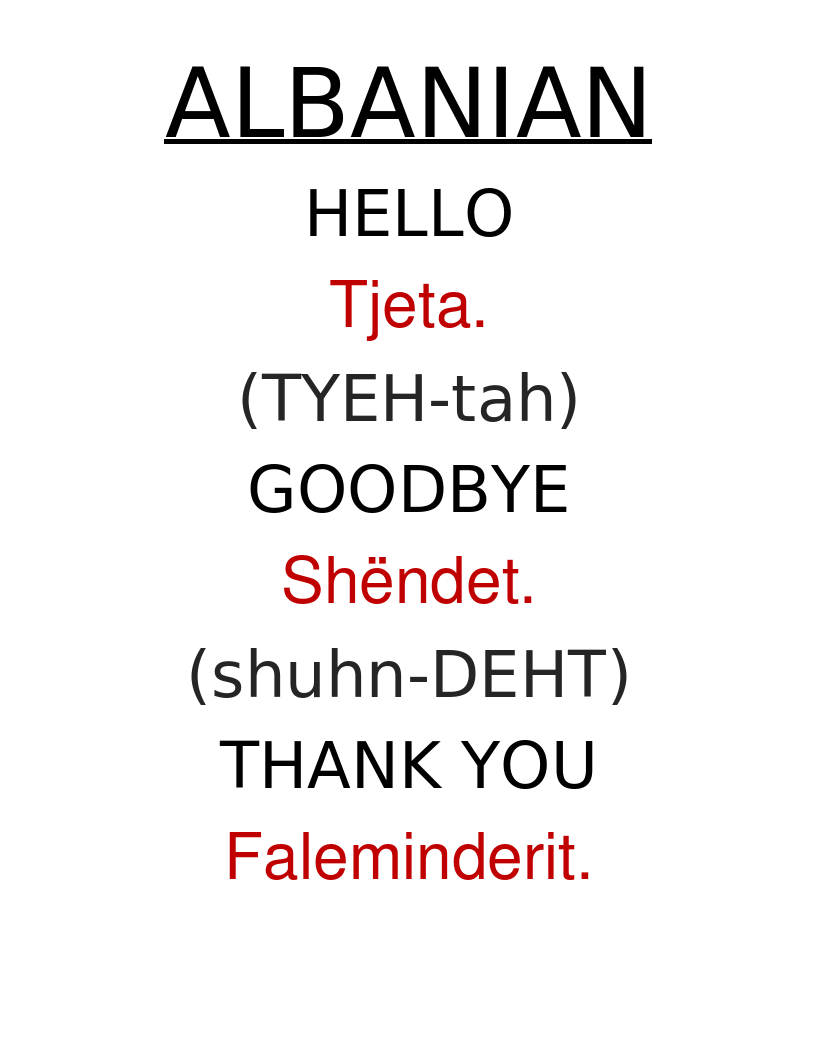
Albanian Words Lanita Hess July 26, 2019 Countries of the World Albanian Words Document 00:00 / 01:04 Download Download A document to teach children how to say and spell hello, goodbye, and thank you in Albanian. Download Facebook X (Twitter) WhatsApp LinkedIn Pinterest Copy link Lanita Hess
- Tidings of Peace Christian School By-Laws
Tidings of Peace Christian School By-Laws Austin Shenk December 10, 2019 Tidings of Peace Administrative Documents Collection Tidings of Peace Christian School By-Laws Document 00:00 / 01:04 Download Download Tidings of Peace Christian School's bylaws govern the qualifications, duties, and elections of officers, the protocol for calling meetings, and related agreements that allow the board to effectively guide the school. You may wish to modify relevant sections for use in your own bylaws. Download Facebook X (Twitter) WhatsApp LinkedIn Pinterest Copy link Austin Shenk
- Love, Hate, Manipulate: Communicating Effectively with Unhappy Parents
Love, Hate, Manipulate: Communicating Effectively with Unhappy Parents Ken Kauffman May 3, 2019 CASBI 2019 Love, Hate, Manipulate: Communicating Effectively with Unhappy Parents Video 00:00 / 01:04 Download Download Jonas : What are practical ways to have interaction with manipulative parents (with some of their tendencies), speaking truth yet keeping insurance for ourselves and our staff? Along with that, what's the core problem with manipulative parents? Must we only deal with the symptoms or can we get to the root?Gerald : This is asking the right question. What's underneath some of this? As I talked to a board chairman who was substituting for several weeks for their high school teacher, he said," I learned more in those four weeks about students and what life is really like than I had before this." He's been a chairman for a long time. Excellent, excellent chairman. He said, "I didn't realize some of this." One of the things we need to recognize is that parenting really, truly has changed. The culture has pressed in deeply and if you're over 40 it's not a bad idea to think about the difference in what we mean when we say things. When we talk about child training in church and school or whatever, what's being said is being interpreted two different ways. Compassion feels like—or a relationship feels like, "Well, we just, we dote on, we really take care of, make sure that there's nothing hard for this child." When we talk about having a relationship with our children, the older generation... when they're talking about it, they're realizing that they didn't have the relationship with their moms and dads they might have wished for. What's happened is we've swung, I think, on the other side pretty far and and it's all about relationship and making sure the child is happy and that the child is set up for success in ways that will be the easiest possible for that child. I don't think that parents always realize what's actually going on, how they've become influenced, but children are very selfish, because we've parented in a way that makes them the center of their universe. It's why children don't have grit today. They can't do hard things. We've made it so simple for them. I think we have been too afraid to say the truth. I find young parents willing to listen. My sense is that in our community there's a growing... those that have first-graders, they're new parents, they're realizing some of this. And I think it's up to us to begin to say, "Can we talk about this?" We don't lead the discussion necessarily or anything like that. It's "Can we talk about this?" And let's not talk past each other, because there's a language barrier going on. Ken : The traditional model has been that school and school staff are in loco parentis or, in the Latin phrase, in the place of parents. Parents have delegated the responsibility to the school for their academic developments and even spiritual and moral education and development. Today's culture is shifting, like Gerald has suggested. It's shifting to where they want to be more involved. There's a partnership that they're longing for and it comes out sometimes in a way of manipulation and not really respecting or fully, actually, releasing that delegated responsibility to the school. Perhaps as board members, begin to address how this functions and what is the responsibility of the school and what are the parents' responsibilities to the school as well.Gerald : What we need to do is think through how we're going to respond to those issues. They're trying to be helpful. They care so much. I think we have to be willing to talk about how we go about these things—what's appropriate—and talk about the place of school and home, parents, how this functions together.Jonas : You simply have to talk about as a school family, being aware of these influences and how we're going to function. So, how do you go about having effective communication with a parent who hates the teacher, does not trust her, will not talk to her? How can the school board intervene? Gerald : Well, first of all, communication is a two-way street and so it does need to start going two ways. These are always difficult. A couple of things to remember, I think: Matthew 18 always applies. A direct approach is always appropriate and we always start there. By the way, it depends a little bit on the situation. The principal or a chairman may need to go with somebody, especially if it's maybe a lady and it's pretty... If it's a pretty rancid situation and it's pretty hot, you need to protect your staff, too, at some level, but always Matthew 18. We always start there. You can lose trust in a moment and it could take years to regain it. I think it's always helpful to think about, "Has the teacher, has the school, has the principal, has the board, somehow broken trust with the parent? And how?" To also offer that: "is there a problem? What is the problem?" I think at a certain point the board does need to say, "Well, this isn't the way we do things. The gospel doesn't call us to this, and we need to resolve this. There needs to be resolution. You don't have to like the teacher, but you need to love her." There have been times when it's appropriate to say to a parent, "You know what? I don't think you're a very good fit for this school." We can't operate a school without mutual trust, and we own what are our issues and the parent needs to own their issues. If you have a principal in the school, he needs to be front-lining that for the board and needs to be very involved to understand what is going on and should be heading off things before they get to the "hate, doesn't trust, won't talk" level. Linford : And after seven weeks of conversations go by, you might just still have to walk away and bear the accusation that it wasn't handled right. Sometimes... We've sat in board meetings already for hours trying to decide how we're going to approach this and realizing—this question here had something about saving some insurance for yourself, and you just can't always. Sometimes you just have to know that they're going to make a loser out of you, and pray and go on your way. You did the best you could. And I'm glad this is always the minority, only a handful. The most are very supportive. But one of the ways they manipulate you is to point to the things you haven't been doing. You haven't been praising enough. You haven't been encouraging enough. And you know what, you always can do better, but you just have to walk away sometimes. Download Facebook X (Twitter) WhatsApp LinkedIn Pinterest Copy link Ken Kauffman Gerald Miller Jonas Sauder Linford Horst
- Gratitude--An Attitude that Will Take You the Distance
Gratitude--An Attitude that Will Take You the Distance Unknown Contributor July 15, 2025 Gratitude--An Attitude that Will Take You the Distance Audio 00:00 / 01:04 Download Download The Bible contains many reminders of the importance of gratitude. James draws heavily from these Scripture passages as he explores the importance of an attitude of gratitude. He emphasizes that gratitude is important for the following reasons: Gratitude (or a lack thereof) is highly contagious A life attitude of gratitude is commanded in Scripture Purposeful cultivation of gratitude can be life-changing “Gratitude—An Attitude that Will Take You the Distance” was presented by James Jantzi at Teacher Inspiration Day in February of 2025 at Brookside Conservative Mennonite Church in Listowel, Ontario. Download Facebook X (Twitter) WhatsApp LinkedIn Pinterest Copy link
- Thriving in Your Imperfect Space
Thriving in Your Imperfect Space Rosalie Beiler December 26, 2025 Thriving in Your Imperfect Space Blogpost 00:00 / 01:04 Download Download Recently I enjoyed the opportunity to visit another school while classes were in session. I visited various classrooms and was able to observe a slice of the daily life of a school somewhat like my own. This school moved into a new building only a few years ago, and the whole place is modern, efficient, and beautiful. Things appear to run like a well-oiled machine. I watched a friend of mine teach her class of fourteen in a spacious, sunlit room considerably larger than my own little basement room where twenty-two students are stuffed into a space that might be ideal for a dozen or so. You can probably imagine some of the thoughts that were running through my head. Let me tell you about the place where I teach. During the heat of early fall each year, my first task when I arrive at school is to empty the dehumidifier that has been running overnight. I deal with the daily decision of whether to put up with the heat all day or to wear out my voice by trying to talk over the noise of the air conditioner. One day a few weeks ago when we flipped a breaker (for the umpteenth time) while running the microwave at lunchtime, the students wondered why it keeps flipping. I said, “This is an old building. It wasn’t wired to run a bunch of microwaves and air conditioners.” “When was this school built?” asked one student incredulously. “1993?” “Actually, 1952,” I replied. “Well, I was close,” he said. I suppose 1993 and 1952 are equally ancient to him. I hid my amusement and noted the need to keep teaching math skills. Old buildings have their quirks, and living creatures find ways to get in. One of the many unexpected skills I have acquired as a teacher is dead aim with a fly swatter. I’ve had a student get stung by a bee in the middle of class (Lesson learned: When there is a bee in the classroom, stop everything until that bee is dead or is chased out the window). And do you want to hear mouse stories? Ok, it may be best if I don’t get started on those. I write all this because my guess is that most of you who read this blog do not teach in state-of-the-art buildings, nor do you teach under ideal circumstances. As we deal with inconveniences, we can choose complaining and frustration, or we can choose gratitude, creativity, and a sense of humor. Gratitude lets us focus on what we have, not on what we wish we had. I am immensely grateful for a positive school culture, a strong staff team, and a supportive school community. All these things are much more important than having the perfect classroom with all the latest teaching tools. I would far rather deal with flies and flipped breakers than with bad attitudes or relational issues. Creativity helps us realize that even the inconveniences can be part of our students’ education. Those ants that literally come up from under the edge of the carpet and start building a home there provide a free science lesson. Being a little uncomfortable from the heat or from the crowded room does not hurt my students in the long run, and it may in fact help them build resilience. Creativity lets me find joy in fixing the broken flushing mechanism in the toilet with a paper clip or in finding that I can make the clock work by stuffing a folded piece of paper beside the battery to make it fit more tightly. We teachers can be masters of creativity when the occasion calls for it, and it is our privilege to revel in this ability. Keeping a sense of humor is a good way to keep our sanity. After all, sometimes the ridiculous inconveniences make the best stories afterward, and it can be delightful to laugh over them with fellow staff members. I can tell you that experiencing mouse escapades together is a quick way to create some great staff camaraderie. Plans are underway for our school to construct a new building sometime in the next few years. Though I look forward to things like a larger classroom and central air, I will miss some things about our old school. I hope that we will not take the conveniences for granted. No matter the space in which we find ourselves as teachers, we can choose to make the best of what we have and to teach our students to do the same. Photo by Khay Edwards on Unsplash Download Facebook X (Twitter) WhatsApp LinkedIn Pinterest Copy link Rosalie Beiler
- A Beka Grade 5 World History Chapter Check-Up 4
A Beka Grade 5 World History Chapter Check-Up 4 Karen Nolt January 31, 2019 A Beka Grade 5 World History Chapter Check-Up 4 Document 00:00 / 01:04 Download Download A student worksheet for Chapter Check up 4 in A Beka Grade 5 World History. Download Facebook X (Twitter) WhatsApp LinkedIn Pinterest Copy link Karen Nolt
- Addressing Students' Frustrating Responses: "I Don't Care."
Addressing Students' Frustrating Responses: "I Don't Care." John Mark Kuhns August 12, 2022 Teachers Week 2021 Addressing Students' Frustrating Responses: "I Don't Care." Audio 00:00 / 01:04 Download Download You have just presented the best project of the year to your students. The students start working, and automatically you see that they are not motivated. They might not say "I don't care," but their actions tell you otherwise. John Mark explores what is going on when students say or act "I don't care." Download Facebook X (Twitter) WhatsApp LinkedIn Pinterest Copy link John Mark Kuhns
- Teaching Sunday School: Execution
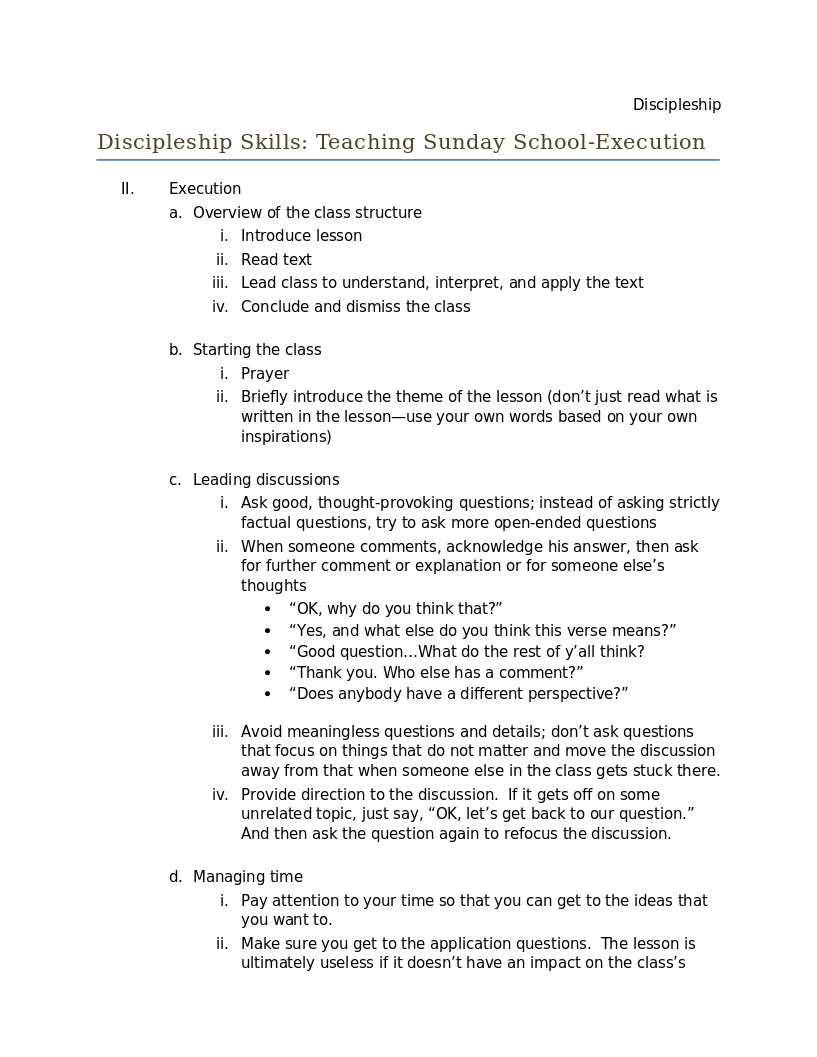
Teaching Sunday School: Execution Kendall Myers May 5, 2021 Teaching Sunday School Teaching Sunday School: Execution Document 00:00 / 01:04 Download Download Lesson notes on teaching a Sunday School lesson. Covers introducing and concluding the class, leading discussions, and managing time. Download Facebook X (Twitter) WhatsApp LinkedIn Pinterest Copy link Kendall Myers
- Algebra 2 Class Work 1.1
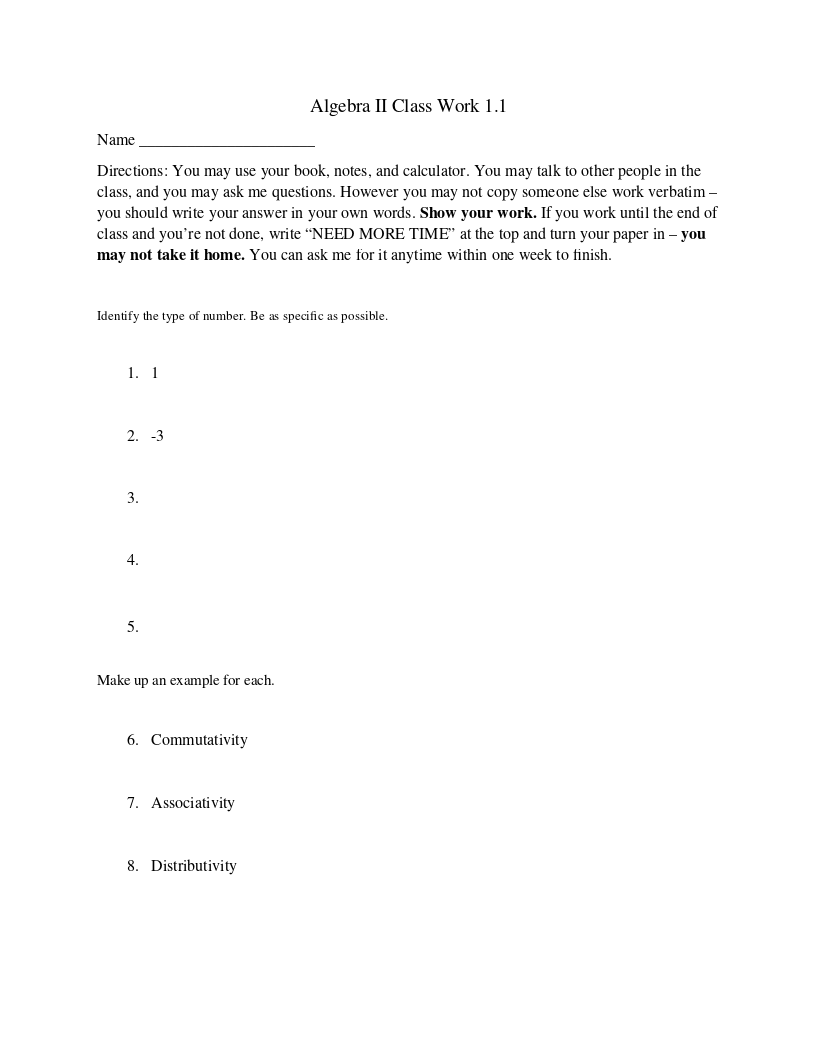
Algebra 2 Class Work 1.1 Brian J Martin December 28, 2017 Algebra 2 Class Materials Algebra 2 Class Work 1.1 Document 00:00 / 01:04 Download Download This class work gives students practice working with number types and mathematical properties. Download Facebook X (Twitter) WhatsApp LinkedIn Pinterest Copy link Brian J Martin