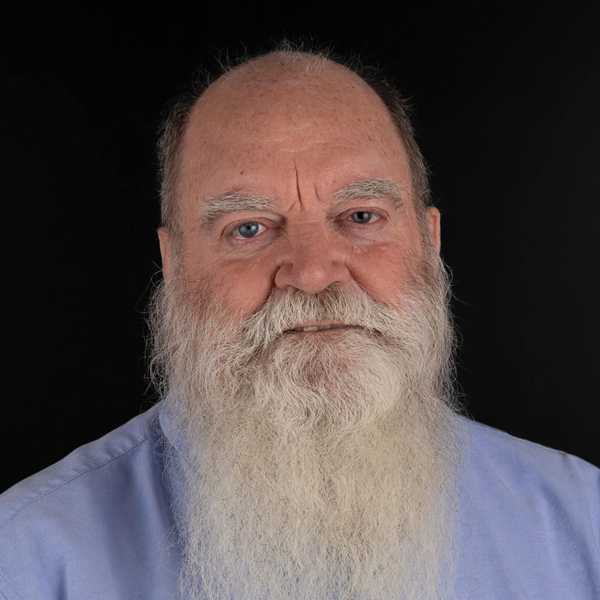
Book Review: Against the Machine - On the Unmaking of Humanity by Paul Kingsnorth


Often artists such as poets, novelists, and others, see more deeply into the reality of the world than the average person focused on living everyday life. Paul Kingsnorth, an Englishman now resident in western Ireland, is a poet, a novelist, and author of several non-fiction works. In his latest work he picks up this artistic critique of the development of the western world since at least the Enlightenment and carries it further.
One of these insightful poets, a Welsh Anglican priest named R. S. Thomas, preached and wrote against the dehumanization he saw in the consumerism spreading throughout the western world. He called this development the Machine. Kingsnorth sees this image as a fruitful way to name the growing system of consumerism, regimentation, uniformity, and materialism tied together and empowered by the spreading net of “connectedness” (a connectedness that more and more isolates people) and commercial and governmental control enabled by social media, the internet, an ever-increasing number of apps and AI (artificial intelligence).
Kingsnorth sees the technologically enhanced Machine dominating the lives of most people. He writes, “The degree of control and monitoring which we endure in ‘developed’ societies, which has been accelerating for decades and which has reached warp speed since the 2020s, is creating a kind of digital paranoia that extends now across the political spectrum throughout the Western world–the anger and confusion, the sense of promises broken and established systems gumming up–all of this, I think, can be traced to the rise and consolidation of the Machine, this matrix which strips from us our understanding of what a human life is, and makes us instead lonely cogs in its drive for self-creation.”[1]
Kingsnorth is not alone in what he sees happening. Numerous other Christian writers have identified the same danger. C. S. Lewis in his books Abolition of Man, That Hideous Strength, and The Screwtape Letters foresaw the growth of scientism[2] which would displace religion and endanger our humanity. Jacques Ellul in the 1960s was already concerned with this turn away from “what it means to be human.
“This change was due to the dominance of what Ellul called technique. A product of the revolution of reason and the categorising, controlling approach of modern science, technique grew into something which eclipsed and co-opted both of them. . . .
“Ellul’s technique is an attitude of mind, one which replaces spontaneous, human-scale, organic ways of living with a focus on technical, rationalised, planned and directed outcomes. Technique is not the same thing as technology. Humans have always used technologies, or at least tools; but for most of history they have been designed to augment human work rather than to entirely replace it. Technique, on the other hand, when it is taken up as a way of seeing, gives birth to an entirely new type of technology: one which exists to remake the world in the image of technique itself. The kind by which, today, we are all increasingly enslaved.”[3]
Kingsnorth even quotes Wendell Berry: “It is easy for me to imagine,” wrote Wendell Berry in his extended essay Life Is a Miracle, “that the next great division of the world will be between people who wish to live as creatures and people who wish to live as machines.”[4]
Kingsnorth sees even non-Christians critiquing this way of seeing and of organizing our lives. He references the authors of 1984, Brave New World, and other books who warn of the often seemingly benevolent move by governments to control more and more of life so that we common people don’t have to struggle with decisions anymore. “C. S. Lewis understood the trap well: Of all tyrannies, a tyranny sincerely exercised for the good of its victims may be the most oppressive. It would be better to live under robber barons than under omnipotent moral busybodies. The robber baron’s cruelty may sometimes sleep, his cupidity may at some point be satiated; but those who torment us for our own good will torment us without end, for they do so with the approval of their own conscience.”[5]
Kingsnorth handily summarizes what he feels we are in danger of losing and what the Machine is replacing those goods with. The goods of the past around which most cultures are based he lists as the Four P’s: People, Place, Prayer (or religion), and the Past. As the Machine takes more and more of our lives, it replaces these with the Four S’s: Self, Science (I think Scientism would be more accurate), Sex, and Screen (the internet and the iPhone). The Four P’s promoted virtue, the Four S’s promote vice.
Kingsnorth presents a convincing argument that we all should at least entertain. Many prominent Christians of the past forewarned us of this coming development. Some non-Christians saw the potential for a coming disaster as well. Even some of those who develop the new technologies recognize their dangers and have issued warnings.
Kingsnorth also suggests some actions we ought to take. Of course, awareness of what is happening is key. Then we to have make conscious decisions concerning what we will allow and what we will avoid. He tells of a tribe on the fringes of the Chinese Empire many years ago. Some Yi lived in the empire and paid taxes and lived in the cities, but even so the Chinese did not trust them fully and called them “cooked barbarians.” Outside the empire lived Yi who were not at all submitted to the Chinese, and these they named the “raw barbarians.” Kingsnorth is calling on us to make a decision: Will we be “cooked” or “raw” barbarians? His call is for us to take control of our own lives rather than let them unobserved fall under the control of the Machine.
My own hope is that we conservative Anabaptists would have the best stance from which to hear his message, to evaluate it, and to decide clearly where we stand. Are we going to be “cooked” or “raw”? If Kingsnorth is right, our humanity, our being in the image of God, is at stake.
“People, place, prayer, and the past. Human community, roots in nature, connection to God, memories passed down and on. These are the eternal things. We could form hedge schools (secret and illegal schools) to teach them. We could write books. We could plant trees. We could do anything, really. None of it will ‘solve’ all of the world’s problems, or all of ours. We are still going to die; and so, one day, is the Machine. But what will we do in the meantime? What will we do amidst the rise of the robots, amidst the ascendancy of all these tiny, laughable, tyrannical dreams?”[6]
Do we care about our humanity? It’s up to us; what will we choose to do?
[1]Against the Machine, p. 121.
[2] Scientism is a world view that sees science and the scientific method as the sole source of knowing ultimate reality. It denies the reality of the spiritual.
[3]Against the Machine, p. 116.
[4]Against the Machine, p. 122.
[5]Against the Machine, p. 216.
[6]Against the Machine, p. 317.