The Encroaching "Zombie Student Culture"
I must admit that when I first began reading and hearing about the long term effects of the internet and screen time on students (as well as students using the internet and AI to cheat on assignments) I largely dismissed it because I thought (naively), “This isn’t affecting our Anabaptist schools because our parents know better than to let their children spend inordinate hours on the internet, plagiarize, or play online games for hours.” Sadly, I am concerned about it now.
A colleague recently shared with me the article “What’s Happening to Our Students?” and I am indeed worried, because although most Anabaptists are usually a little behind pop culture and its trends, the Internet has allowed us to be almost, if not completely, caught up with the world and its trends. We are definitely being affected by it and are headed in the wrong direction.
I have talked to several teachers who confirm that this is true in our schools as well, and all agree that they have seen the effects (although not as dramatic as in public schools) in our schools. This is especially the opinion of teachers who have taught ten years or longer. One teacher had overheard her second graders (who were tired and not focused on their work) talking to other students about staying up late and using their big brothers’ accounts to play online computer games with each other after school and in the evenings.
This makes me want to cry, or bang my head against a wall, or both. These children should be outside riding their bikes, climbing trees, and building tree forts with their fathers. Unfortunately, some of them head home from school to retreat to their bedrooms, shut the doors, and play online games, staring at a screen and interacting online with people they just spent seven hours with in real life at school.
I have two questions.
Why is this happening in our Anabaptist schools?
What are the parents thinking?
I have some suggestions for answers.
I believe that this is happening because we are just a few steps beyond secular society. Regrettably, the lure of being cool and fitting in, which is greatly influenced by social media, is extremely appealing to the parents of our students, the 25-40 year olds, many of whom are buying into the new norm of Youtube influencers, Instagram, and Facebook likes; along with all the hype, lingo, fashion, and accompanying mannerisms.
This is exactly the opposite of what God instructs us to do in His word: "Wherefore come out from among them, and be ye separate, saith the Lord, And touch not the unclean thing; And I will receive you." 2 Cor. 6:17.
Woefully, this is the answer to question number two as well. The only other option is that the parents are simply not aware or are not monitoring the activities of their children, which is equally as bad. The end of that verse is frightening. Will God receive this?
Many of our Anabaptist brethren are just steps behind the world, and the resulting consequences are becoming apparent in our schools. Students are becoming more and more tuned out, overly stimulated mentally from other more entertaining sources. They are becoming bored with maps and interesting history and science facts. They are more enthralled by computer screens and online games than they are teachers, math problems, or English grammar.
There is almost nothing the teachers can do except to gently warn our students of the dangers of such behavior. From what I have seen and heard from other teachers, the students will politely listen and then go back to their same activities. It is the parents who need to be aware of the dangers and be proactive about this hazardous situation.
We can make parents aware of what we are hearing at school, but this obviously can be unappreciated and labeled as “tattling”, unless the parents ask us directly, which rarely happens.
In conclusion, what we can do is to pray for our students, pray for their parents, set a good example ourselves, and to cling to Paul’s words: “whatsoever things are true, whatsoever things are honest, whatsoever things are just, whatsoever things are pure, whatsoever things are lovely, whatsoever things are of good report; if there be any virtue, and if there be any praise, think on these things.” Philippians 4:8


Fun Ways to Practice Spelling Words
Games like these can help to make learning spelling words competitive, creative, and fun. Of course, good, old-fashioned copying the list is still the simplest and most efficient way to practice spelling words. But this can so quickly become tedious and dull, causing students to turn their brains off. On the other hand, when student’s minds and imaginations are engaged through games and activities, their whole brain is activated to learn more effectively.

College Student Weekend 2026
College education can be an opportunity for Christians to learn more about the creation of God and interact with people from a variety of backgrounds and beliefs. At the same time, this opportunity comes with a unique set of challenges socially, spiritually, and intellectually. For example, conservative Anabaptist college students are often a minority in both their churches and colleges.
Who: We welcome applications from full-time and part-time college and university students currently in school and/or planning to begin a program in the next academic year. Registration priority is given to full-time students and students who are currently in school and will continue their studies next year.
Where: Faith Builders hosts the College Student Weekend at the River Ridge Mansion, an early-20th-century mansion built by an oil baron near Franklin, PA.
When: College Student Weekend 2026 begins on the afternoon of Friday, July 3, and continues through lunch on Sunday, July 5.
Cost: The cost of attendance is $255 per person, including two nights of lodging and five meals. The event is limited to 48 participants. Registration is required.


Science Alive 1-2
The inspiration for the creation of Science Alive began when I was teaching in a first and second grade classroom. One of the years I taught, the children had quite a bit of spare time, so we would have impromptu classes on the digestive system or whatever else I happened to field a question about. It didn’t take me long to begin recognizing that the children seemed to retain this style of learning almost better than what they considered work. I wished at that point to have a science curriculum that started out based more on input than output.
However, I didn’t really begin to do anything about this dream until I began to teach the Living Threads curriculum for history class. Then the lightbulb moment hit. I could use similar methods to teach science.
Since this curriculum is designed for multiple grades at the same time, you can guiltlessly hold a class that is amazingly distracting because they are all supposed to be involved. The curriculum is designed for grades one through three, with grade one skipping out on tests. They all take the same levels together and alternate levels for variety of learning. For example, the first-year grades one through three take level 1-2 together, the next year level 2-1. If you use this for three grades, first and third grade are a repeat level. The level is made to be taught three days a week for a 45-minute period for ½ of the term.
This curriculum is designed for the children to be paired up into partner teams. Generally, it works best to put an older child with a younger child for coaching purposes.
When teaching this class, there are a few basic structures I use to instill information. The first is constant review of facts you want them to have for life. There are a few extra pieces of information for the fast learners and for interest’s sake, but by and large, study the tests to know what they should master.
Use the experiments. If you have any that are bigger and more exciting to illustrate the point, use them. Practice the experiments before having class.
Vary the flashcard drill as inspiration hits. Let them practice together in pairs. Use your creativity.
Feel free to add or chop up lessons as needed. There are several books mentioned in this curriculum. While you may not have the exact book mentioned, the library often has good resources that will work just as well or better.
Enjoy teaching the amazing world of science!

Science Alive 2-1
The inspiration for the creation of Science Alive began when I was teaching in a first and second grade classroom. One of the years I taught, the children had quite a bit of spare time, so we would have impromptu classes on the digestive system or whatever else I happened to field a question about. It didn’t take me long to begin recognizing that the children seemed to retain this style of learning almost better than what they considered work. I wished at that point to have a science curriculum that started out based more on input than output.
However, I didn’t really begin to do anything about this dream until I began to teach the Living Threads curriculum for history class. Then the lightbulb moment hit. I could use similar methods to teach science.
Since this curriculum is designed for multiple grades at the same time, you can guiltlessly hold a class that is amazingly distracting because they are all supposed to be involved. The curriculum is designed for grades one through three, with grade one skipping out on tests. They all take the same levels together and alternate levels for variety of learning. For example, the first-year grades one through three take level 1-2 together, the next year level 2-1. If you use this for three grades, first and third grade are a repeat level. The level is made to be taught three days a week for a 45-minute period for ½ of the term.
This curriculum is designed for the children to be paired up into partner teams. Generally, it works best to put an older child with a younger child for coaching purposes.
When teaching this class, there are a few basic structures I use to instill information. The first is constant review of facts you want them to have for life. There are a few extra pieces of information for the fast learners and for interest’s sake, but by and large, study the tests to know what they should master.
Use the experiments. If you have any that are bigger and more exciting to illustrate the point, use them. Practice the experiments before having class.
Vary the flashcard drill as inspiration hits. Let them practice together in pairs. Use your creativity.
Feel free to add or chop up lessons as needed. There are several books mentioned in this curriculum. While you may not have the exact book mentioned, the library often has good resources that will work just as well or better.
Enjoy teaching the amazing world of science!

3 Teaching Positions Available at Shady Grove Christian School Mifflinburg PA
Shady Grove Christian School (Mifflinburg, PA) is looking for qualified teachers for the 2026-2027 school year for the following positions:
1st grade
2nd grade
High School
Elementary Grades are taught conventionally using CLP curriculum.
High School is individualized using ACE curriculum.
Contact Andrew Beachy: abeachy2@gmail.com


Jesus: Greater Than Moses (A Christmas Program)
This hour-long whole-school Christmas program uses dramatic recitation of Scripture, songs, and simple actions (mostly still poses) to illustrate how the life of Moses foreshadowed the life and work of Jesus. It can easily be adapted to schools of nearly any size.
Example livestream from Pilgrim Christian School: https://youtube.com/live/KfCZwHG2f1AZwHG2f1A
6196 results found with an empty search
- Pitfalls
Pitfalls Derek Overholt April 11, 2025 Western Fellowship Teachers Institute 2024 Pitfalls Audio 00:00 / 01:04 Download Download Everyone makes mistakes. But we don’t need to repeat all the mistakes of our predecessors. Come to learn about the common pitfalls that teachers can fall into and how we can avoid them. The first step in avoiding a pitfall is seeing it before you fall in! This session is intended for new teachers. Pitfalls was presented by Derek Martin at Western Fellowship Teachers’ Institute (WFTI) 2024. Download Facebook X (Twitter) WhatsApp LinkedIn Pinterest Copy link Derek Overholt
- Creating the Classroom Culture
Creating the Classroom Culture Gerald Miller November 13, 2024 Teachers Week 2023 Creating the Classroom Culture Audio 00:00 / 01:04 Download Download In Gerald Miller's four-part series on classroom culture, he explores the foundational role of culture in Christian education, emphasizing its impact on teaching, learning, and spiritual formation. The third session "Creating the Classroom Culture" shifts to action, urging teachers as leaders to proactively build culture through routines (for efficiency), rituals (infused with deeper meaning tied to values), and traditions (recurring events that build connection and anticipation). By reflecting on and developing these elements, educators can cultivate joy, rigor, and belonging, rather than merely managing or reacting to existing dynamics. Defining the Classroom Culture Evaluating the Classroom Culture Creating the Classroom Culture The Kingdom and the Classroom Culture "Creating the Classroom Culture” was presented by Gerald Miller at Teachers Week 2015, on August 4-7, held at Faith Builders Educational Programs in Guys Mills, Pennsylvania. Download Facebook X (Twitter) WhatsApp LinkedIn Pinterest Copy link Gerald Miller
- New Age Theology
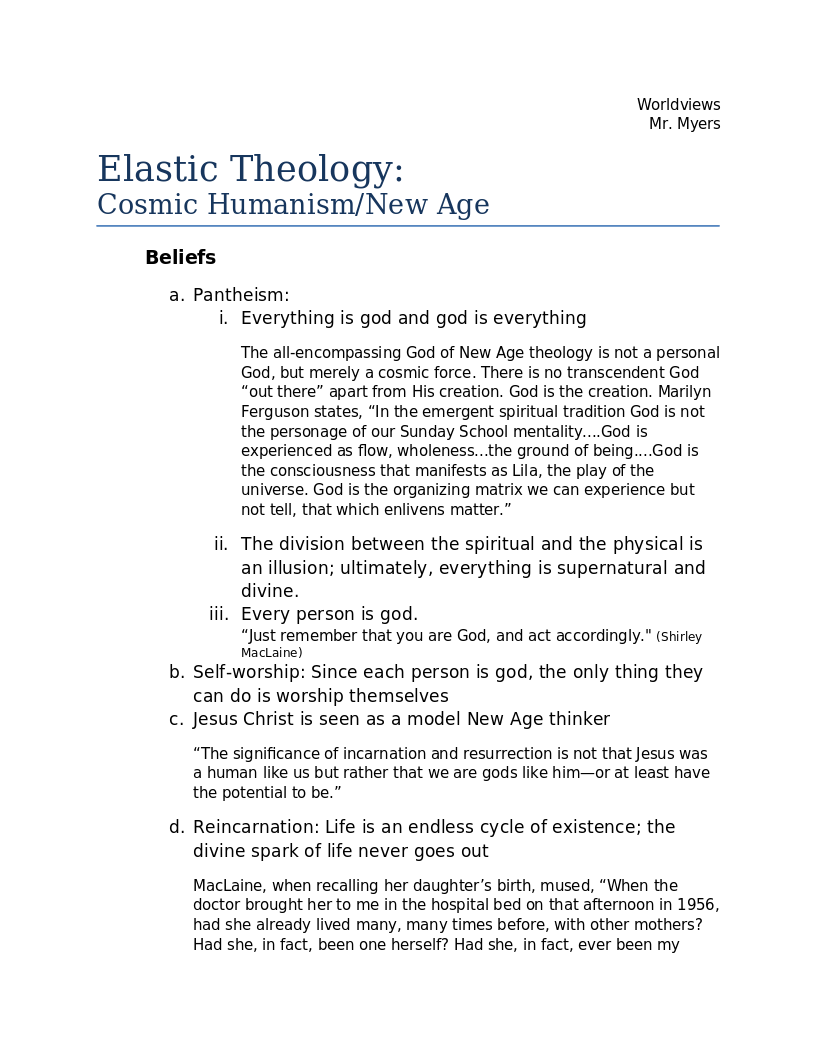
New Age Theology Kendall Myers November 15, 2017 Worldviews: Theology New Age Theology Document 00:00 / 01:04 Download Download Teacher's notes on New Age theology. Some of the basic premises are reincarnation, self-worship, reducing Jesus to a model human, and pantheism. Download Facebook X (Twitter) WhatsApp LinkedIn Pinterest Copy link Kendall Myers
- Defining the Classroom Culture
Defining the Classroom Culture Gerald Miller November 13, 2024 Teachers Week 2023 Defining the Classroom Culture Audio 00:00 / 01:04 Download Download In Gerald Miller's four-part series on classroom culture, he explores the foundational role of culture in Christian education, emphasizing its impact on teaching, learning, and spiritual formation. In the first session "Defining the Classroom Culture", he introduces culture as the underlying framework of shared values, beliefs, and norms that influences how teachers and students think, feel, and act—distinct from the more changeable "climate" of attitudes and perceptions. He stresses understanding this "underground river" to create a context where learning thrives, using analogies like restaurant service and school routines to highlight how culture affects engagement and outcomes. You may enjoy the other talks in this series for experienced teachers: Defining the Classroom Culture Evaluating the Classroom Culture Creating the Classroom Culture The Kingdom and the Classroom Culture "Defining the Classroom Culture" was presented by Gerald Miller at Teachers Week 2015, on August 4-7, held at Faith Builders Educational Programs in Guys Mills, Pennsylvania. Download Facebook X (Twitter) WhatsApp LinkedIn Pinterest Copy link Gerald Miller
- Cultivating a Servant Heart
Cultivating a Servant Heart Anthony Hurst September 22, 2023 Teachers Week 2021 Cultivating a Servant Heart Audio 00:00 / 01:04 Download Download Teaching is not merely the dispensing of information; teachers fill a place of authority. How will you exercise your authority? Anthony describes common abuses of authority and reminds us that authority is a tool to serve students effectively. In order to inhabit this servanthood authority effectively, says Anthony, we must bring our own God-given talents--and weaknesses--to bear. Download Facebook X (Twitter) WhatsApp LinkedIn Pinterest Copy link Anthony Hurst
- Ordering Your Digital World
Ordering Your Digital World Kevin Shenk July 22, 2025 REACH 2022 Ordering Your Digital World Audio 00:00 / 01:04 Download Download As our work becomes increasingly computerized, so can our sense of digital clutter and frustration. This session explores both individual and organizational strategies for and getting things done in this brave new landscape while warding off digital messiness. We’ll explore tactical strategies for creating useful folder hierarchies, managing emails, going paperless, and even transferring thoughts to your computer. Ordering Your Digital World was presented by Kevin Shenk at REACH 2022, on March 24-25, 2022, at Calvary Church in Lancaster, Pennsylvania. Download Facebook X (Twitter) WhatsApp LinkedIn Pinterest Copy link Kevin Shenk
- Preparation
Preparation Derek Overholt April 11, 2025 Western Fellowship Teachers Institute 2024 Preparation Audio 00:00 / 01:04 Download Download Am I prepared to teach school? Where do I start? What is most important? If you feel like an elephant that has been dropped into the ocean, this class will give you some techniques and strategies to help keep your head above water! This session is intended for new teachers. Preparation was presented by Derek Overholt at Western Fellowship Teachers’ Institute (WFTI) 2024. Download Facebook X (Twitter) WhatsApp LinkedIn Pinterest Copy link Derek Overholt
- Graduation--Then What?
Graduation--Then What? Glendon Strickler July 22, 2025 REACH 2022 Graduation--Then What? Audio 00:00 / 01:04 Download Download You are looking forward to graduation or graduation is still visible in the rearview mirror. Business, helping at home, Bible School, voluntary service, teaching school, industry, adventure... What is your next step? Are you at the right spot now? How should you be preparing for the future? What is God’s role and what is your role? Come to explore these questions! Graduation--Then What? was presented by Glendon Strickler at REACH 2022, on March 24-25, 2022, at Calvary Church in Lancaster, Pennsylvania. Download Facebook X (Twitter) WhatsApp LinkedIn Pinterest Copy link Glendon Strickler
- Becoming a Global Christian
Becoming a Global Christian Allen Roth September 27, 2017 REACH 2013 Becoming a Global Christian Audio 00:00 / 01:04 Download Download Allen shares practical ideas that will enable participants to process world news from a global perspective, and will enrich their prayer lives and equip them to encourage others to do the same. Download Facebook X (Twitter) WhatsApp LinkedIn Pinterest Copy link Allen Roth
- Discipline that Liberates
Discipline that Liberates Aaron Crider September 27, 2019 Western Fellowship Teachers’ Institute 2019 Discipline that Liberates Audio 00:00 / 01:04 Download Download Discipline is ultimately a liberating exercise. Students need help liberating themselves from the lack of discipline and from frivolous activities. Discipline incubates wisdom. Download Facebook X (Twitter) WhatsApp LinkedIn Pinterest Copy link Aaron Crider
- Habits of an Effective Teacher
Habits of an Effective Teacher Luke Bennetch August 9, 2010 Faith Builders Teacher's Week 2010 Habits of an Effective Teacher Audio 00:00 / 01:04 Download Download In this talk given at Faith Builders Teachers Week 2010, Luke Bennetch shares a variety of ways to grow as a teacher, including collecting books, staying organized, continued study, saving, memorizing, writing, timing procedural changes, avoiding reactions, staying on the student's level, getting proper rest, and diminishing dependence on the praise of men. Download Facebook X (Twitter) WhatsApp LinkedIn Pinterest Copy link Luke Bennetch
- Working with Generation iY
Working with Generation iY Brian Martin May 13, 2019 REACH 2017 Working with Generation iY Audio 00:00 / 01:04 Download Download What should you know about working with young people? How can you fill gaps in a young persons life that may impact eternity? What assumptions do I carry that hinders ministry? This session will attempt to address these questions, prepare to get involved! Download Facebook X (Twitter) WhatsApp LinkedIn Pinterest Copy link Brian Martin
- Word 2 Heading 2 Practice Document
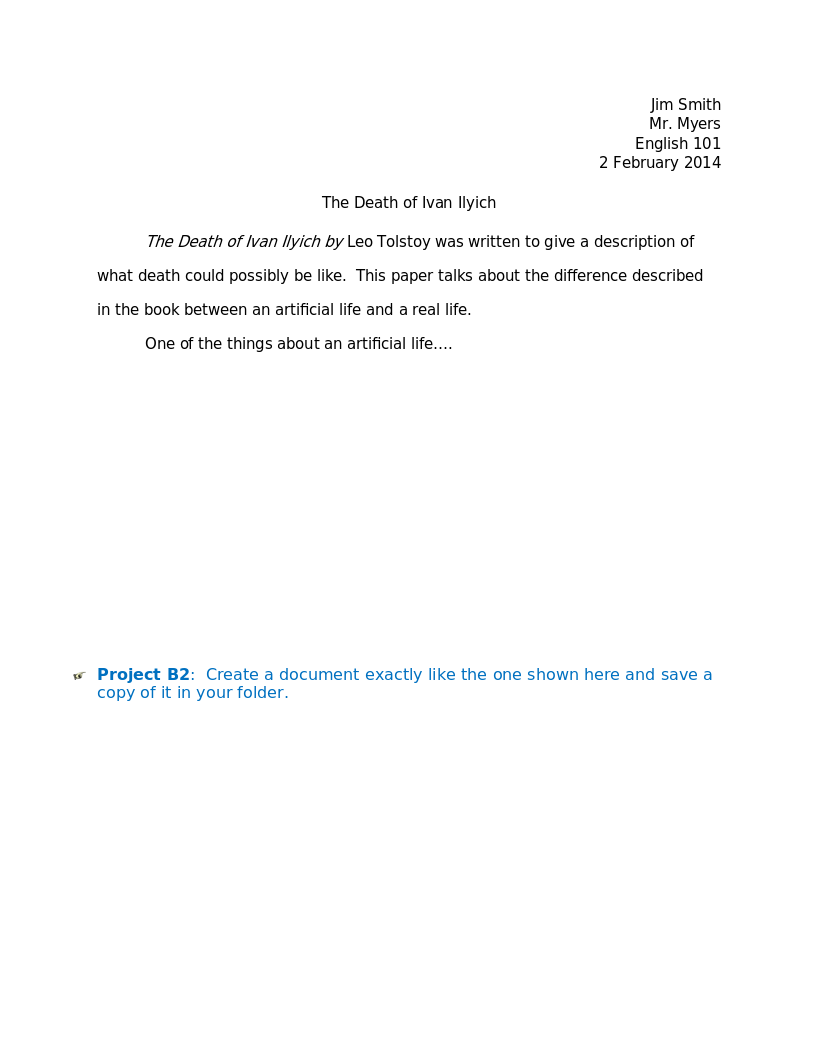
Word 2 Heading 2 Practice Document Kendall Myers November 15, 2017 Practice Projects for Microsoft Word Word 2 Heading 2 Practice Document Document 00:00 / 01:04 Download Download In this practice project for Word, students create a document that has a centered title, a heading in the upper right corner, and indented paragraphs. Download Facebook X (Twitter) WhatsApp LinkedIn Pinterest Copy link Kendall Myers
- Poetry: Writing Quotable Poetry
Poetry: Writing Quotable Poetry Jay Martin June 14, 2019 Christian Light Writers and Artists Conference 2019 Poetry: Writing Quotable Poetry Audio 00:00 / 01:04 Download Download Some poets, being dead, yet speak . . . because we are still listening. Why do we still like to hear and quote poets like Frost, Watts, Whittier, and Shakespearewhat did they more than others? Well study the crafting of poetic lines with voices that outlive the poets. Download Facebook X (Twitter) WhatsApp LinkedIn Pinterest Copy link Jay Martin
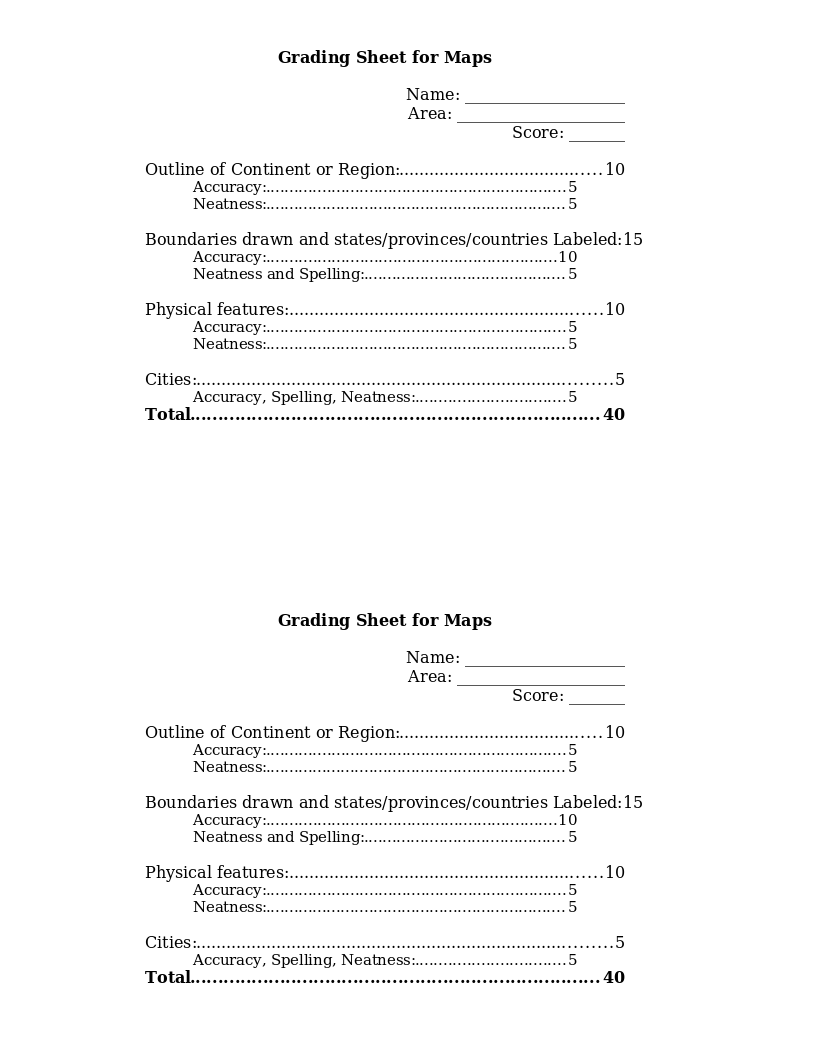
- Grading Sheet For Maps 2
Grading Sheet For Maps 2 Matthew Mast January 16, 2018 World Geography Course Materials Grading Sheet For Maps 2 Document 00:00 / 01:04 Download Download This grading rubric is to be filled out by the teacher to grade each student on part of the final map project. It grades outline of continent, country/state/province boundaries drawn and labeled, physical features, and cities for a total of 40 points. Download Facebook X (Twitter) WhatsApp LinkedIn Pinterest Copy link Matthew Mast
- Building a Culture of Reading
Building a Culture of Reading Chris Brode December 5, 2024 Teachers Week 2024 Building a Culture of Reading Video 00:00 / 01:04 Download Download Christopher Brode reflects on how teachers can build a culture of reading. He proposes that this feat starts with the teachers’ own example, but then he explores several practical tips such as dedicating time for silent reading, ensuring access to a variety of books, and incorporating reading into the school day as a valued activity. Download Facebook X (Twitter) WhatsApp LinkedIn Pinterest Copy link Chris Brode
- Resources available: Anabaptist history curriculum from Mennonite Education Agency
Resources available: Anabaptist history curriculum from Mennonite Education Agency Mennonite Publishing House August 27, 2019 Resources available: Anabaptist history curriculum from Mennonite Education Agency Document 00:00 / 01:04 Download Download The Mennonite Education Agency has produced an Anabaptist history curriculum that is freely available on their website. Running the Race is designed for seventh and eighth grade. Be aware that, as a production of the Mennonite Church USA, not all the examples and emphases reflect a conservative Anabaptist understanding. However, with titles like "A Kitchen Evangelist," "I Appeal to the Scriptures," and "Prisoners Can Sing," the stories of early Anabaptists may be valuable as additions to your own church history curriculum. The Anabaptist Dramatic Readings available on the same site may also be useful resources for church history class. Download Facebook X (Twitter) WhatsApp LinkedIn Pinterest Copy link Mennonite Publishing House
- Mysteries of Grace and Judgement
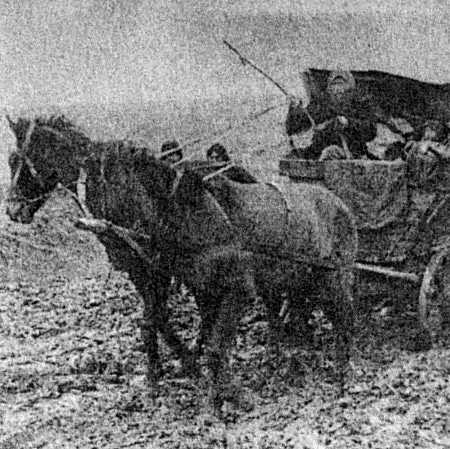
Mysteries of Grace and Judgement MCC Canada February 3, 2018 Mysteries of Grace and Judgement Audio 00:00 / 01:04 Download Download This moving recording was created by the Mennonite Central Committee Canada in 1996. Jonathan Erb received permission from MCC Canada to distribute it on The Dock. However, please note that the recording is still under copyright by MCC Canada. From the description on the CommonWord website : This performance, scripted and produced by Jack Dueck, comprises five main elements in interrelated dramatic function. Like a cantata - although it does not consist exclusively of song and music - the form is a setting for story to be told and sung but not acted. The reader represents the voice of Scripture and includes words, like those by Menno Simons, inspired by the biblical passages. The letters From Russia with Tears express the agony of suffering and of faith's testing toward a new spiritual formation - finding 'soul' even while all seems lost. The songs and music provide a poetic and sound screen against which the letters, stories and scripture are played. The songs with their celebration of a comforting faith create painful irony, a horrific sense of total loss and heart cries for answers. The stories give a felt experience of a people caught in the Russian Communist Revolution's juggernaut of community destruction: the wrenching doubts, the cry for answers, the horror of experiencing a seeming silent God, the collapse of their material and immaterial world, are all played within, and even against, the other voices. Download the album insert with lyrics and credits. Download Facebook X (Twitter) WhatsApp LinkedIn Pinterest Copy link MCC Canada
- The Role of the Church as a Safe and Healing Environment
The Role of the Church as a Safe and Healing Environment Millard Martin April 11, 2025 Western Fellowship Teachers Institute 2024 The Role of the Church as a Safe and Healing Environment Audio 00:00 / 01:04 Download Download How can the church support individuals who are dealing with mental health struggles? Millard provides several guiding principles: Responding with support and love. Instead of reacting with shame, avoidance, or gossip, churches need to foster open, supportive dialogue without stigma. Following Scriptural guidance. 1 Thessalonians 5:14 offers three admonitions for helping without judging: comfort the feeble-minded, support the weak, and be patient with all. Avoiding Job’s friends syndrome. Job’s friends wrongly judged Job’s suffering as a result of sin. In the same way, churches can tend to oversimplify mental health struggles by attributing them solely to spiritual failings. Offering practical support. Communities can offer practical help such as nutrition, routine, and rest, along with opportunities for spiritual connection. Avoiding judgment. The church ought to be cautious about assuming demonic influence but instead rely on prayer and grace. Medication can be helpful, along with tailoring emotional support to the individual’s needs. “The Role of the Church as a Safe and Healing Environment” was presented by Millard Martin at Western Fellowship Teachers’ Institute in August of 2024 at Lighthouse Mennonite School in Halsey, Oregon. Download Facebook X (Twitter) WhatsApp LinkedIn Pinterest Copy link Millard Martin
- The Challenge of Relationship in Ministry
The Challenge of Relationship in Ministry Eldon Hochstetler May 13, 2019 REACH 2017 The Challenge of Relationship in Ministry Audio 00:00 / 01:04 Download Download '- An open look at the #1 cause for ministry burnout and attrition- A look at how ministry relationship is influenced by unresolved pain issues- Caring for the hearts of ministry workers: freeing for relationship and ministry- Role of abuse (physical, emotional, spiritual, sexual) in strained relationship Download Facebook X (Twitter) WhatsApp LinkedIn Pinterest Copy link Eldon Hochstetler