The Encroaching "Zombie Student Culture"
I must admit that when I first began reading and hearing about the long term effects of the internet and screen time on students (as well as students using the internet and AI to cheat on assignments) I largely dismissed it because I thought (naively), “This isn’t affecting our Anabaptist schools because our parents know better than to let their children spend inordinate hours on the internet, plagiarize, or play online games for hours.” Sadly, I am concerned about it now.
A colleague recently shared with me the article “What’s Happening to Our Students?” and I am indeed worried, because although most Anabaptists are usually a little behind pop culture and its trends, the Internet has allowed us to be almost, if not completely, caught up with the world and its trends. We are definitely being affected by it and are headed in the wrong direction.
I have talked to several teachers who confirm that this is true in our schools as well, and all agree that they have seen the effects (although not as dramatic as in public schools) in our schools. This is especially the opinion of teachers who have taught ten years or longer. One teacher had overheard her second graders (who were tired and not focused on their work) talking to other students about staying up late and using their big brothers’ accounts to play online computer games with each other after school and in the evenings.
This makes me want to cry, or bang my head against a wall, or both. These children should be outside riding their bikes, climbing trees, and building tree forts with their fathers. Unfortunately, some of them head home from school to retreat to their bedrooms, shut the doors, and play online games, staring at a screen and interacting online with people they just spent seven hours with in real life at school.
I have two questions.
Why is this happening in our Anabaptist schools?
What are the parents thinking?
I have some suggestions for answers.
I believe that this is happening because we are just a few steps beyond secular society. Regrettably, the lure of being cool and fitting in, which is greatly influenced by social media, is extremely appealing to the parents of our students, the 25-40 year olds, many of whom are buying into the new norm of Youtube influencers, Instagram, and Facebook likes; along with all the hype, lingo, fashion, and accompanying mannerisms.
This is exactly the opposite of what God instructs us to do in His word: "Wherefore come out from among them, and be ye separate, saith the Lord, And touch not the unclean thing; And I will receive you." 2 Cor. 6:17.
Woefully, this is the answer to question number two as well. The only other option is that the parents are simply not aware or are not monitoring the activities of their children, which is equally as bad. The end of that verse is frightening. Will God receive this?
Many of our Anabaptist brethren are just steps behind the world, and the resulting consequences are becoming apparent in our schools. Students are becoming more and more tuned out, overly stimulated mentally from other more entertaining sources. They are becoming bored with maps and interesting history and science facts. They are more enthralled by computer screens and online games than they are teachers, math problems, or English grammar.
There is almost nothing the teachers can do except to gently warn our students of the dangers of such behavior. From what I have seen and heard from other teachers, the students will politely listen and then go back to their same activities. It is the parents who need to be aware of the dangers and be proactive about this hazardous situation.
We can make parents aware of what we are hearing at school, but this obviously can be unappreciated and labeled as “tattling”, unless the parents ask us directly, which rarely happens.
In conclusion, what we can do is to pray for our students, pray for their parents, set a good example ourselves, and to cling to Paul’s words: “whatsoever things are true, whatsoever things are honest, whatsoever things are just, whatsoever things are pure, whatsoever things are lovely, whatsoever things are of good report; if there be any virtue, and if there be any praise, think on these things.” Philippians 4:8


Fun Ways to Practice Spelling Words
Games like these can help to make learning spelling words competitive, creative, and fun. Of course, good, old-fashioned copying the list is still the simplest and most efficient way to practice spelling words. But this can so quickly become tedious and dull, causing students to turn their brains off. On the other hand, when student’s minds and imaginations are engaged through games and activities, their whole brain is activated to learn more effectively.

College Student Weekend 2026
College education can be an opportunity for Christians to learn more about the creation of God and interact with people from a variety of backgrounds and beliefs. At the same time, this opportunity comes with a unique set of challenges socially, spiritually, and intellectually. For example, conservative Anabaptist college students are often a minority in both their churches and colleges.
Who: We welcome applications from full-time and part-time college and university students currently in school and/or planning to begin a program in the next academic year. Registration priority is given to full-time students and students who are currently in school and will continue their studies next year.
Where: Faith Builders hosts the College Student Weekend at the River Ridge Mansion, an early-20th-century mansion built by an oil baron near Franklin, PA.
When: College Student Weekend 2026 begins on the afternoon of Friday, July 3, and continues through lunch on Sunday, July 5.
Cost: The cost of attendance is $255 per person, including two nights of lodging and five meals. The event is limited to 48 participants. Registration is required.


Science Alive 1-2
The inspiration for the creation of Science Alive began when I was teaching in a first and second grade classroom. One of the years I taught, the children had quite a bit of spare time, so we would have impromptu classes on the digestive system or whatever else I happened to field a question about. It didn’t take me long to begin recognizing that the children seemed to retain this style of learning almost better than what they considered work. I wished at that point to have a science curriculum that started out based more on input than output.
However, I didn’t really begin to do anything about this dream until I began to teach the Living Threads curriculum for history class. Then the lightbulb moment hit. I could use similar methods to teach science.
Since this curriculum is designed for multiple grades at the same time, you can guiltlessly hold a class that is amazingly distracting because they are all supposed to be involved. The curriculum is designed for grades one through three, with grade one skipping out on tests. They all take the same levels together and alternate levels for variety of learning. For example, the first-year grades one through three take level 1-2 together, the next year level 2-1. If you use this for three grades, first and third grade are a repeat level. The level is made to be taught three days a week for a 45-minute period for ½ of the term.
This curriculum is designed for the children to be paired up into partner teams. Generally, it works best to put an older child with a younger child for coaching purposes.
When teaching this class, there are a few basic structures I use to instill information. The first is constant review of facts you want them to have for life. There are a few extra pieces of information for the fast learners and for interest’s sake, but by and large, study the tests to know what they should master.
Use the experiments. If you have any that are bigger and more exciting to illustrate the point, use them. Practice the experiments before having class.
Vary the flashcard drill as inspiration hits. Let them practice together in pairs. Use your creativity.
Feel free to add or chop up lessons as needed. There are several books mentioned in this curriculum. While you may not have the exact book mentioned, the library often has good resources that will work just as well or better.
Enjoy teaching the amazing world of science!

Science Alive 2-1
The inspiration for the creation of Science Alive began when I was teaching in a first and second grade classroom. One of the years I taught, the children had quite a bit of spare time, so we would have impromptu classes on the digestive system or whatever else I happened to field a question about. It didn’t take me long to begin recognizing that the children seemed to retain this style of learning almost better than what they considered work. I wished at that point to have a science curriculum that started out based more on input than output.
However, I didn’t really begin to do anything about this dream until I began to teach the Living Threads curriculum for history class. Then the lightbulb moment hit. I could use similar methods to teach science.
Since this curriculum is designed for multiple grades at the same time, you can guiltlessly hold a class that is amazingly distracting because they are all supposed to be involved. The curriculum is designed for grades one through three, with grade one skipping out on tests. They all take the same levels together and alternate levels for variety of learning. For example, the first-year grades one through three take level 1-2 together, the next year level 2-1. If you use this for three grades, first and third grade are a repeat level. The level is made to be taught three days a week for a 45-minute period for ½ of the term.
This curriculum is designed for the children to be paired up into partner teams. Generally, it works best to put an older child with a younger child for coaching purposes.
When teaching this class, there are a few basic structures I use to instill information. The first is constant review of facts you want them to have for life. There are a few extra pieces of information for the fast learners and for interest’s sake, but by and large, study the tests to know what they should master.
Use the experiments. If you have any that are bigger and more exciting to illustrate the point, use them. Practice the experiments before having class.
Vary the flashcard drill as inspiration hits. Let them practice together in pairs. Use your creativity.
Feel free to add or chop up lessons as needed. There are several books mentioned in this curriculum. While you may not have the exact book mentioned, the library often has good resources that will work just as well or better.
Enjoy teaching the amazing world of science!

3 Teaching Positions Available at Shady Grove Christian School Mifflinburg PA
Shady Grove Christian School (Mifflinburg, PA) is looking for qualified teachers for the 2026-2027 school year for the following positions:
1st grade
2nd grade
High School
Elementary Grades are taught conventionally using CLP curriculum.
High School is individualized using ACE curriculum.
Contact Andrew Beachy: abeachy2@gmail.com


Jesus: Greater Than Moses (A Christmas Program)
This hour-long whole-school Christmas program uses dramatic recitation of Scripture, songs, and simple actions (mostly still poses) to illustrate how the life of Moses foreshadowed the life and work of Jesus. It can easily be adapted to schools of nearly any size.
Example livestream from Pilgrim Christian School: https://youtube.com/live/KfCZwHG2f1AZwHG2f1A
6196 results found with an empty search
- Confession of Faith, and Nine Reflections
Confession of Faith, and Nine Reflections Peter Burkholder May 24, 2017 Confession of Faith, and Nine Reflections Document 00:00 / 01:04 Download Download The full title of this nineteenth century work explains its content: "The Confession of Faith of the Christians Known by the Name of Mennonites, in Thirty-three Articles; with a Short Extract from Their Catechism. Translated from the German, and Accompanied with Notes to Which is Added an Introduction. Also, Nine Reflections, from Different Passages of the Scriptures, Illustrative of their Confession, Faith, and Practice; by Peter Burkholder, Pastor of the Church of the Mennonites; Written by him in the German Language, and from his manuscript translated, together with the foregoing articles, by Joseph Funk. Gameo includes this discussion of the work: 'In 1837 a book appeared at Winchester, Virginia, with the following lengthy title . The Confession is the P. J. Twisck 33 Articles found in the Martyrs' Mirror. The Introduction of 27 pages is an independent writing, designed "to adduce some testimony to prove the antiquity of our religious confession of faith and from Dr. Mosheim's Ecclesiastical History." It has been claimed that Peter Burkholder "compiled the confession," i.e., arranged for its publication in English. However, since everything which he wrote was translated from the German by Joseph Funk, as is clearly stated on the title page of the Nine Reflections, and as is stated of the additional material at the end of the book, including "Of the Administration of Baptism" (pp. 405-14), "Of the Mode and Practice of the Administration of Baptism" (414-17), and "On Predestination" (435-61), and since it is not indicated that the Introduction was translated, it is most likely that Joseph Funk, and not Peter Burkholder, was the author of the Introduction, the translator of all the material in the book, and the compiler of the volume.' For a discussion of the importance of this work in articulating the doctrine of the Mennonite Church prior to the Great Awakening, see the first of Edsel Burdge's talks on the Mennonite Great Awakening . Download Facebook X (Twitter) WhatsApp LinkedIn Pinterest Copy link Peter Burkholder
- Declutter
Declutter Nathan Yoder December 13, 2022 Western Fellowship Teachers' Institute 2022 Declutter Audio 00:00 / 01:04 Download Download All teachers face potential for great amounts of clutter in their classroom. In this workshop we will explore practical ways for a teacher to stay organized, efficient, and decluttered in their classrooms and in their minds. Download Facebook X (Twitter) WhatsApp LinkedIn Pinterest Copy link Nathan Yoder
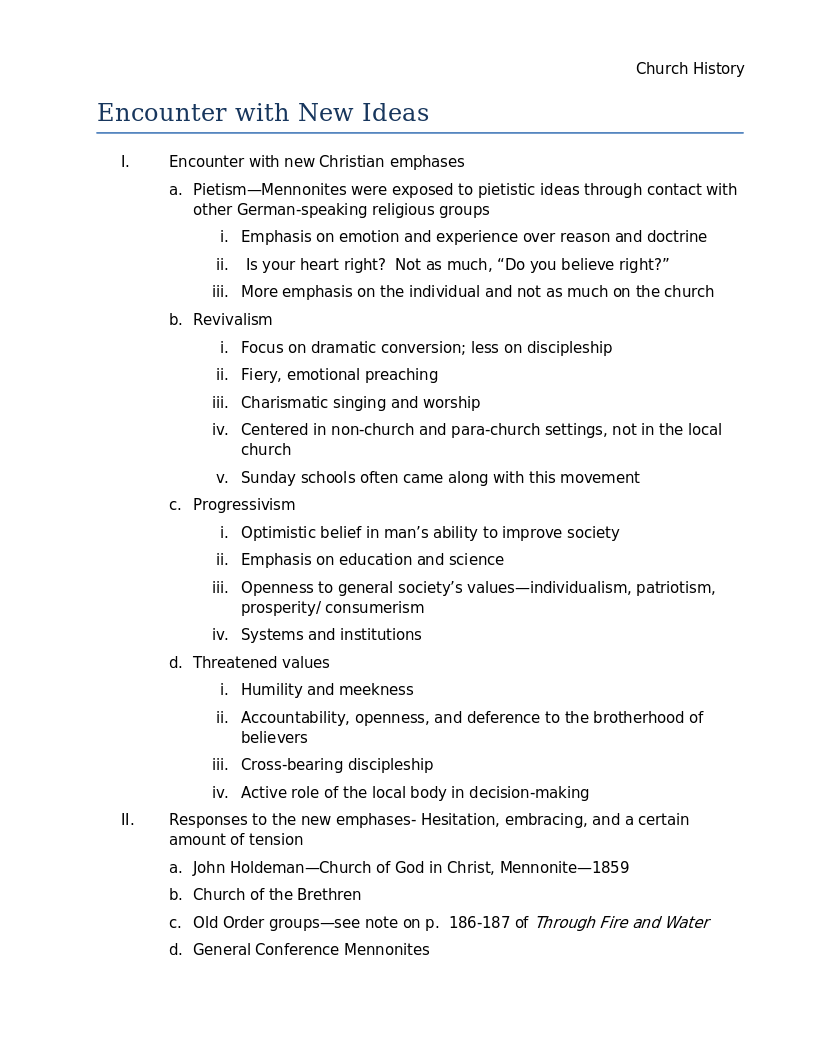
- New Ideas
New Ideas Kendall Myers October 20, 2017 Anabaptist Church History Class by Kendall Myers New Ideas Document 00:00 / 01:04 Download Download Teacher's notes on issues the Mennonite church faced in America (including Pietism, Revivalism, and Progressivism) and their responses to these issues. Download Facebook X (Twitter) WhatsApp LinkedIn Pinterest Copy link Kendall Myers
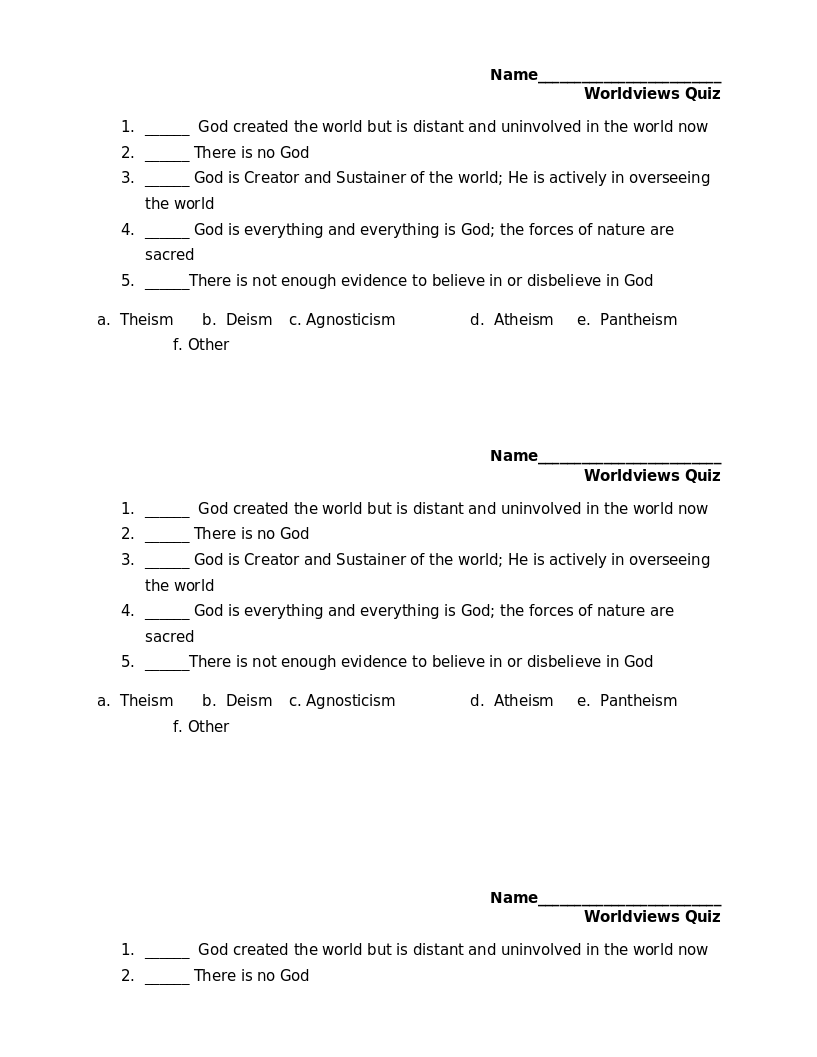
- Quiz: Names Of Theological Positions
Quiz: Names Of Theological Positions Kendall Myers November 15, 2017 Worldviews: Theology Quiz: Names Of Theological Positions Document 00:00 / 01:04 Download Download Short quiz matching these theological positions (Theism, Deism, Agnosticism, Atheism, Pantheism) with their belief about God. Download Facebook X (Twitter) WhatsApp LinkedIn Pinterest Copy link Kendall Myers
- Finding Ministry Workers
Finding Ministry Workers Richie Lauer July 21, 2025 REACH 2022 Finding Ministry Workers Audio 00:00 / 01:04 Download Download A panel discussion will explore strategies for staffing a ministry. Finding Ministry Workers was presented by Richie Lauer at REACH 2022, on March 24-25, 2022, at Calvary Church, in Lancaster, Pennsylvania. Download Facebook X (Twitter) WhatsApp LinkedIn Pinterest Copy link Richie Lauer
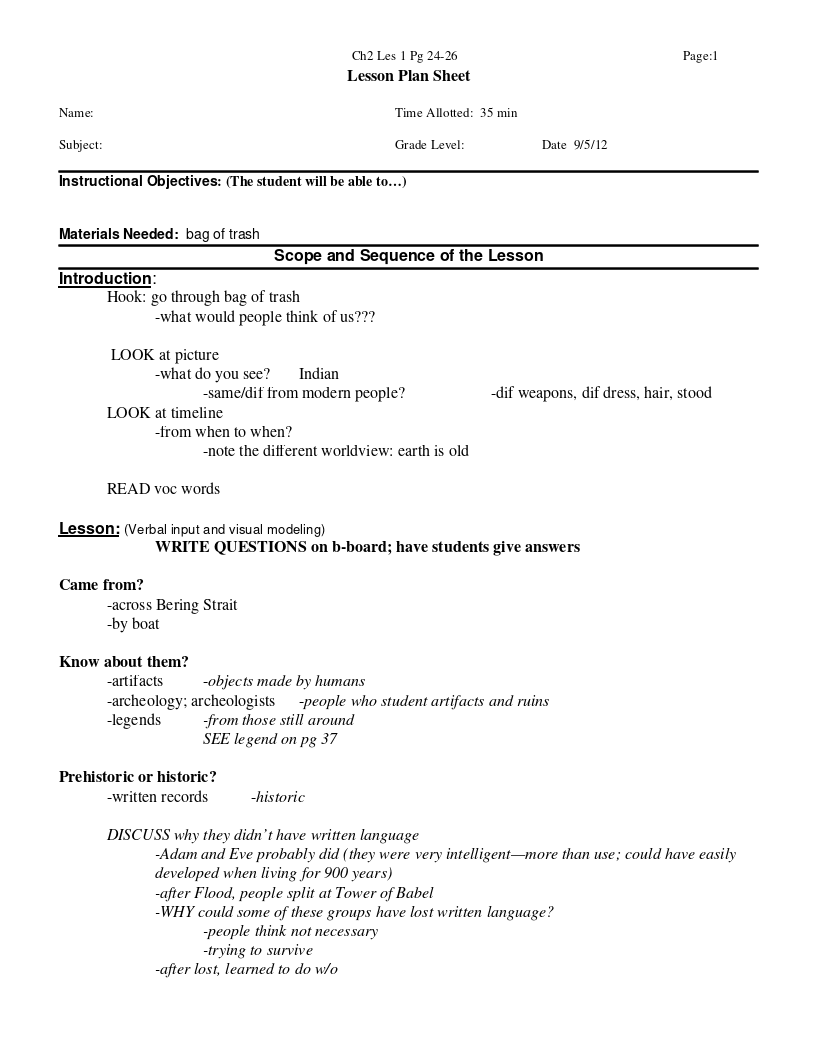
- PA History Chapter 2 Lesson 1
PA History Chapter 2 Lesson 1 Matt Peachey April 11, 2019 PA History Resources PA History Chapter 2 Lesson 1 Document 00:00 / 01:04 Download Download Lesson plan for Pennsylvania state history. Students learn about native Americans, how they came to America, and their culture and life-style. Download Facebook X (Twitter) WhatsApp LinkedIn Pinterest Copy link Matt Peachey
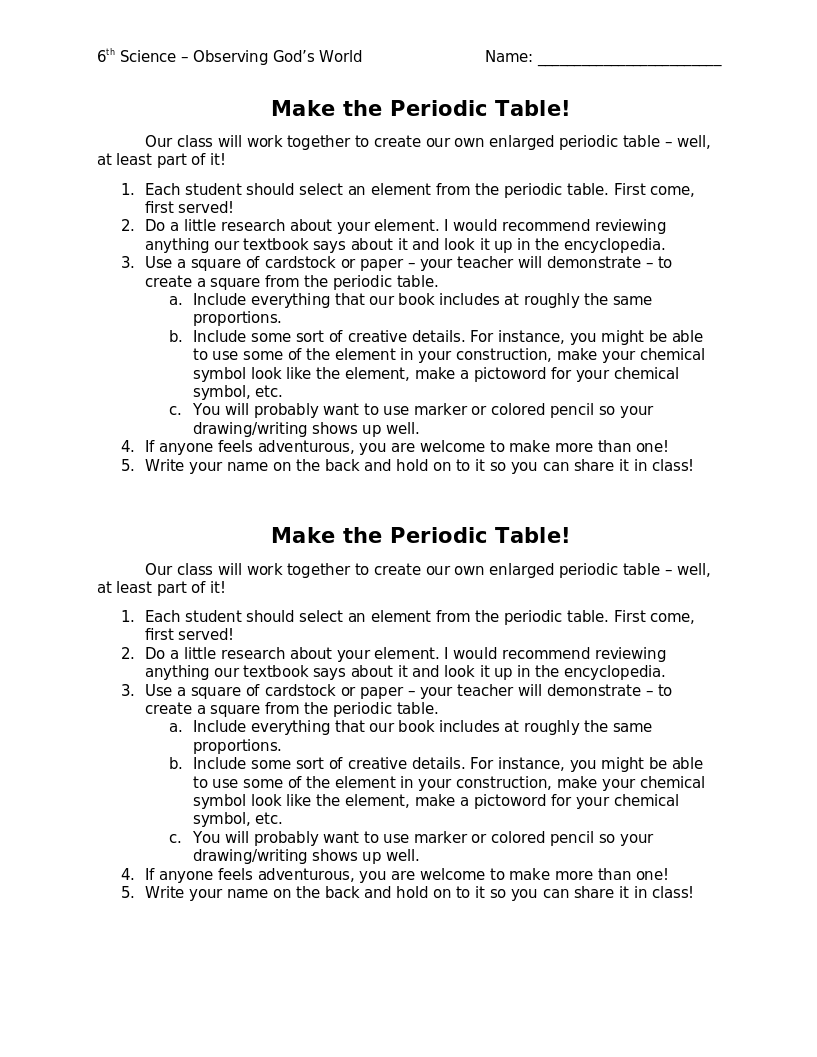
- Periodic Table Class Project
Periodic Table Class Project Daniel Strahm January 9, 2024 Periodic Table Class Project Document 00:00 / 01:04 Download Download Familiarize yourself with the periodic table by assembling an enlarged version as a class. This fun assignment offers a creative approach to interacting with the elements in the periodic table. Download Facebook X (Twitter) WhatsApp LinkedIn Pinterest Copy link Daniel Strahm
- The Role Of The Teacher, Part 1 (Anthony Hurst)
The Role Of The Teacher, Part 1 (Anthony Hurst) Anthony Hurst May 10, 2018 Teachers' Week 2012 The Role Of The Teacher, Part 1 (Anthony Hurst) Audio 00:00 / 01:04 Download Download Educator, servant, referee, counselor, and mentor: each role affords special opportunites but within specific limitations. Download Facebook X (Twitter) WhatsApp LinkedIn Pinterest Copy link Anthony Hurst
- Outline 4 Student
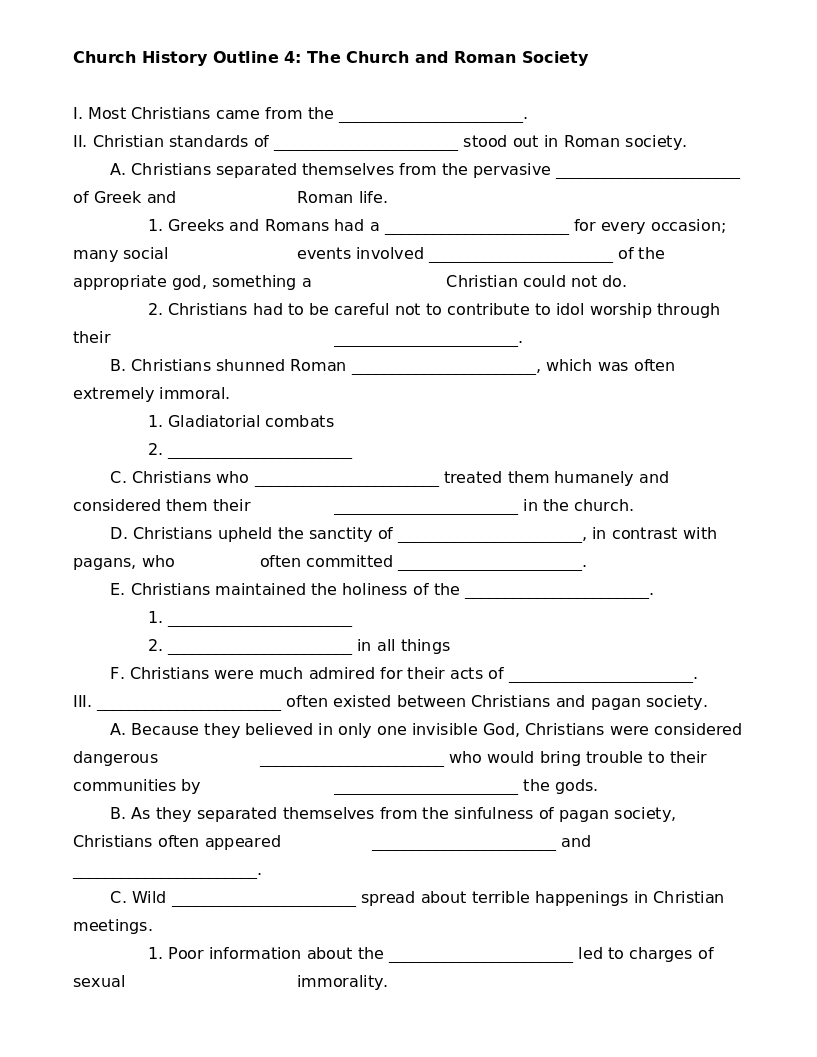
Outline 4 Student Peter Goertzen November 25, 2017 Church History 1: Christ and the Apostles Outline 4 Student Document 00:00 / 01:04 Download Download This student handout contrasts Roman society with the beliefs and actions of the early Christians. Download Facebook X (Twitter) WhatsApp LinkedIn Pinterest Copy link Peter Goertzen
- Review for Grammar and Composition Test 28
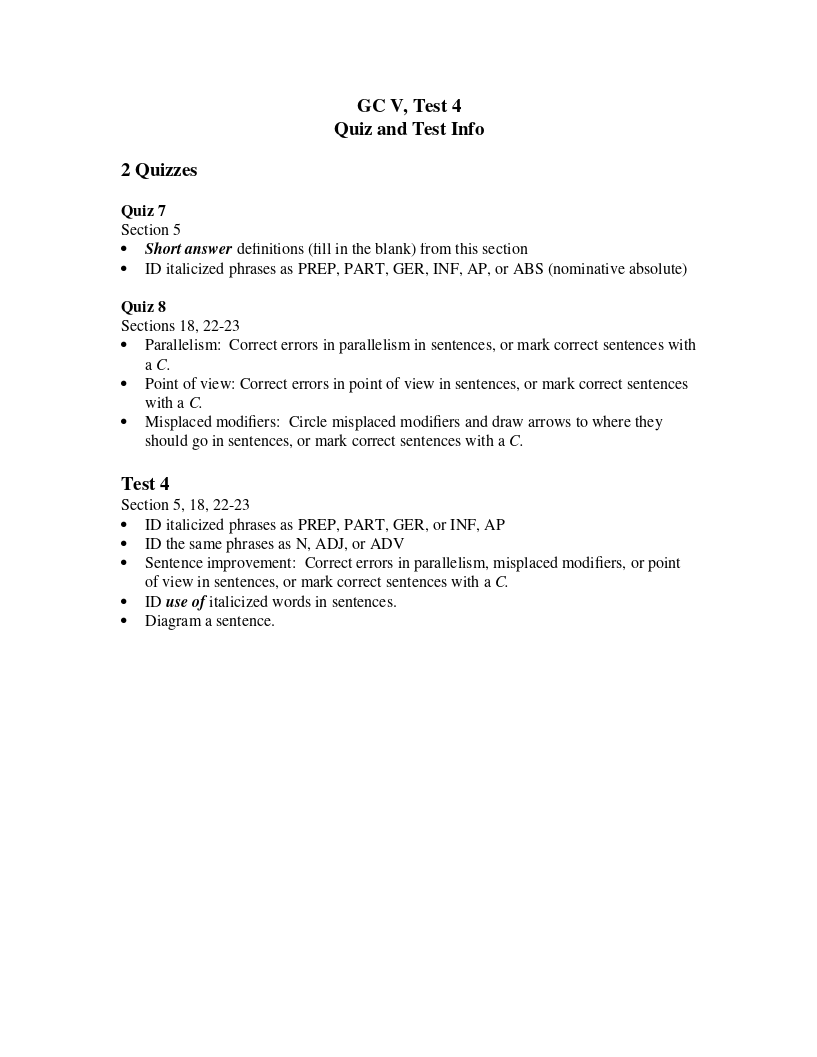
Review for Grammar and Composition Test 28 Lucy Miller July 16, 2020 Study Guides for A Beka Grammar and Composition Review for Grammar and Composition Test 28 Document 00:00 / 01:04 Download Download This study guide prepares students for two quizzes and a test in A Beka Grammar and Composition on parallelism, modifiers, and phrases as parts of speech. Download Facebook X (Twitter) WhatsApp LinkedIn Pinterest Copy link Lucy Miller
- Are The Common Core State Standards for Christian Schools?
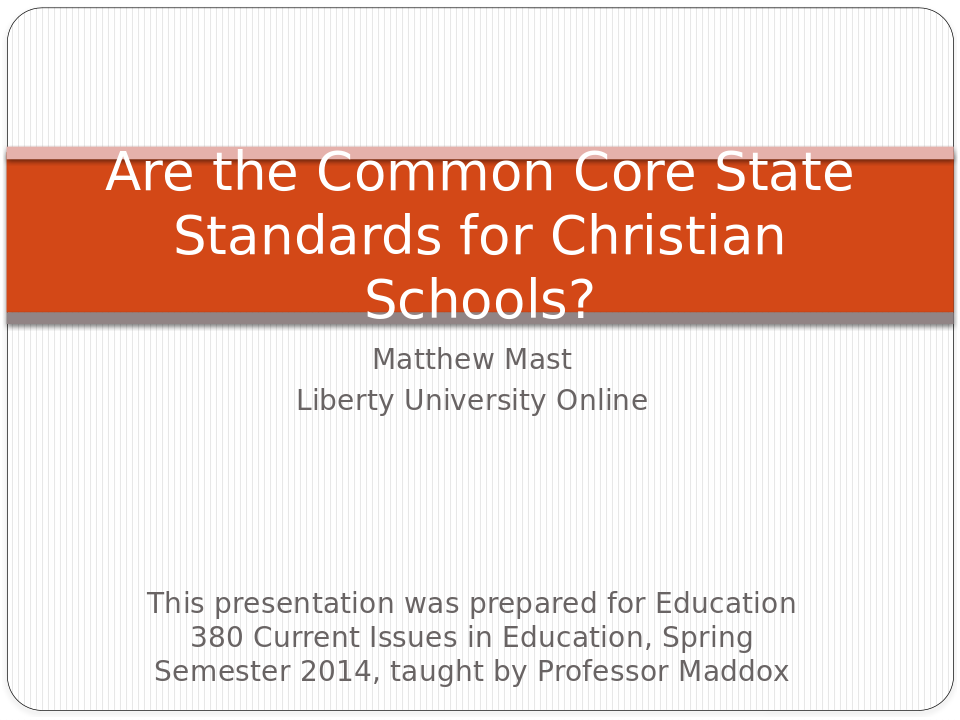
Are The Common Core State Standards for Christian Schools? Matthew Mast January 16, 2018 Are The Common Core State Standards for Christian Schools? Document 00:00 / 01:04 Download Download A college-level research project on PowerPoint. Matthew Mast begins with defining the Common Core State Standards, telling why and how they were set. He lists pros and cons of using them in our Christian schools. He gives other Christian schools' rationale for using or not using them. Note that the downloadable file includes an embedded audio narration which is not included in the preview file. Download Facebook X (Twitter) WhatsApp LinkedIn Pinterest Copy link Matthew Mast
- Christ in the Old Testament: Lesson 901.12
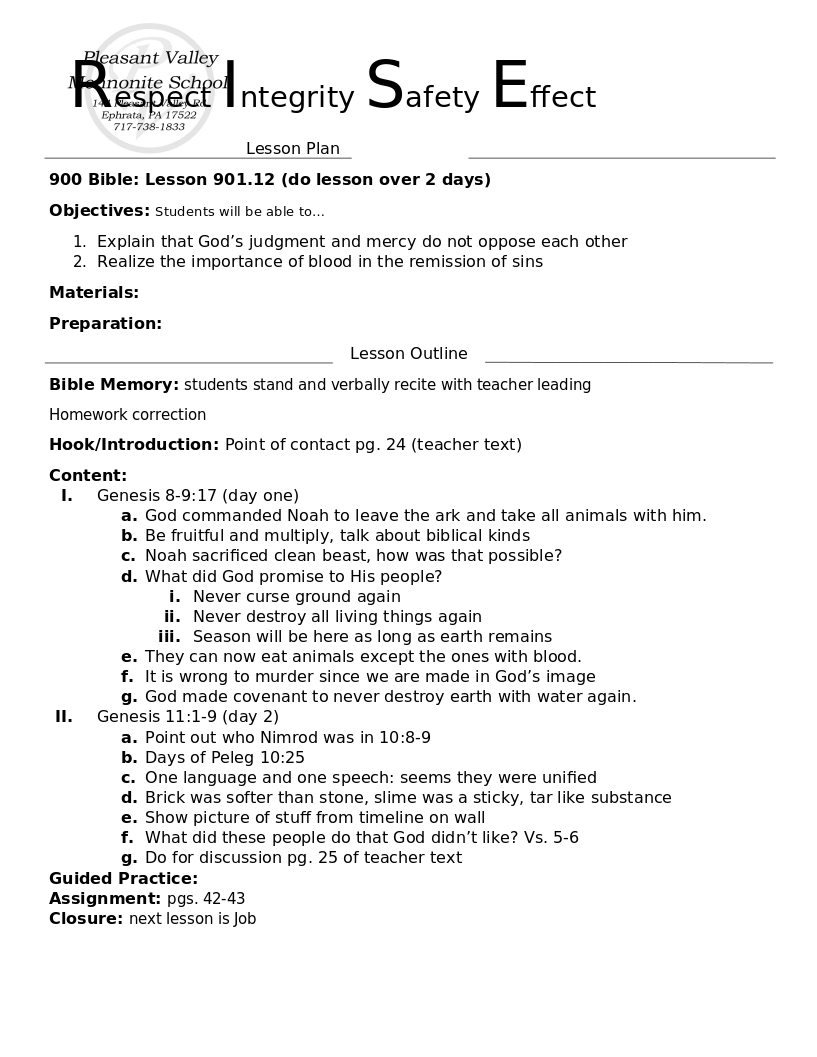
Christ in the Old Testament: Lesson 901.12 Kent Martin December 23, 2020 CLE Bible 900: Christ in the Old Testament Christ in the Old Testament: Lesson 901.12 Document 00:00 / 01:04 Download Download A lesson plan for CLE Bible LightUnit 901, Lesson 12 on God's judgment and mercy as demonstrated in the Flood and the Tower of Babel. Download Facebook X (Twitter) WhatsApp LinkedIn Pinterest Copy link Kent Martin
- Endocrine System Worksheet
Endocrine System Worksheet John Mark Kuhns July 28, 2025 High School Biology Course Endocrine System Worksheet Document 00:00 / 01:04 Download Download The human body is made of a variety of systems that work together to keep the body in homeostasis. In this assignment, students are asked to compare the endocrine and nervous systems. In addition, they are asked to define and discuss topics related to gland functions, hormones, and negative feedback loops. Download Facebook X (Twitter) WhatsApp LinkedIn Pinterest Copy link John Mark Kuhns
- Biology Module #10
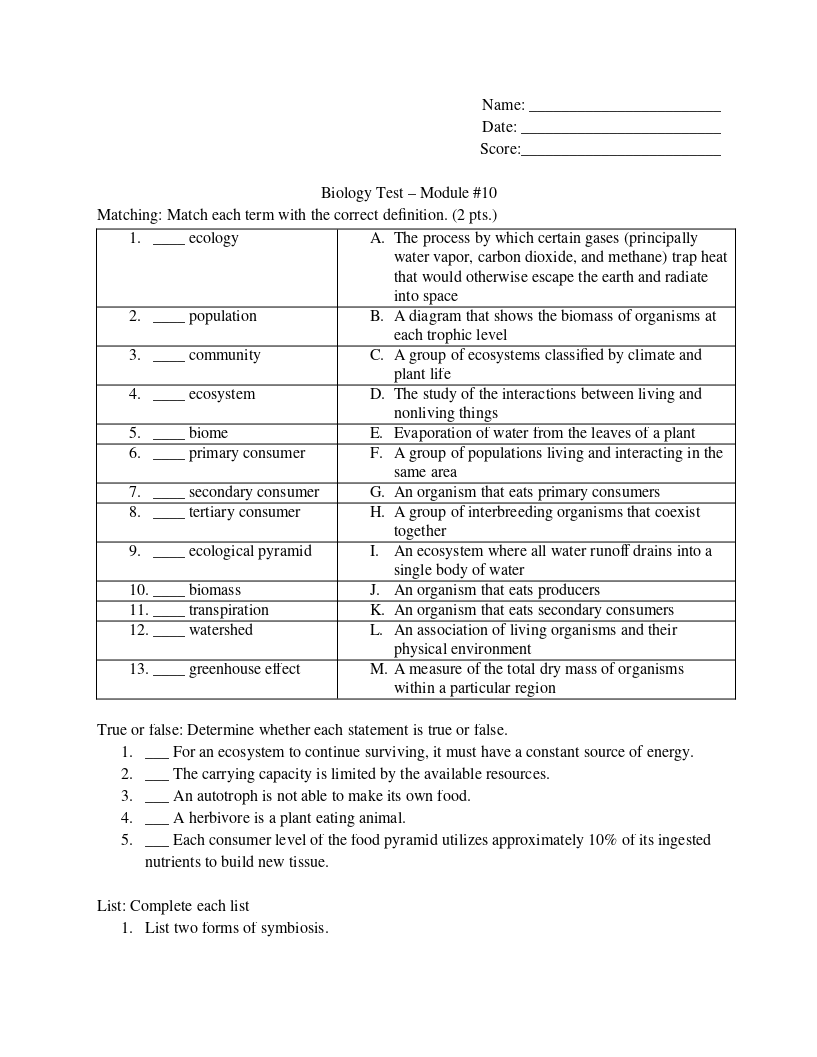
Biology Module #10 Erikson Lehman August 7, 2019 Materials for Apologia Biology Biology Module #10 Document 00:00 / 01:04 Download Download A test for Apologia Biology Module 10. Students are tested on ecosystems, consumers, and trophic levels. Download Facebook X (Twitter) WhatsApp LinkedIn Pinterest Copy link Erikson Lehman
- Humanist Chaplains
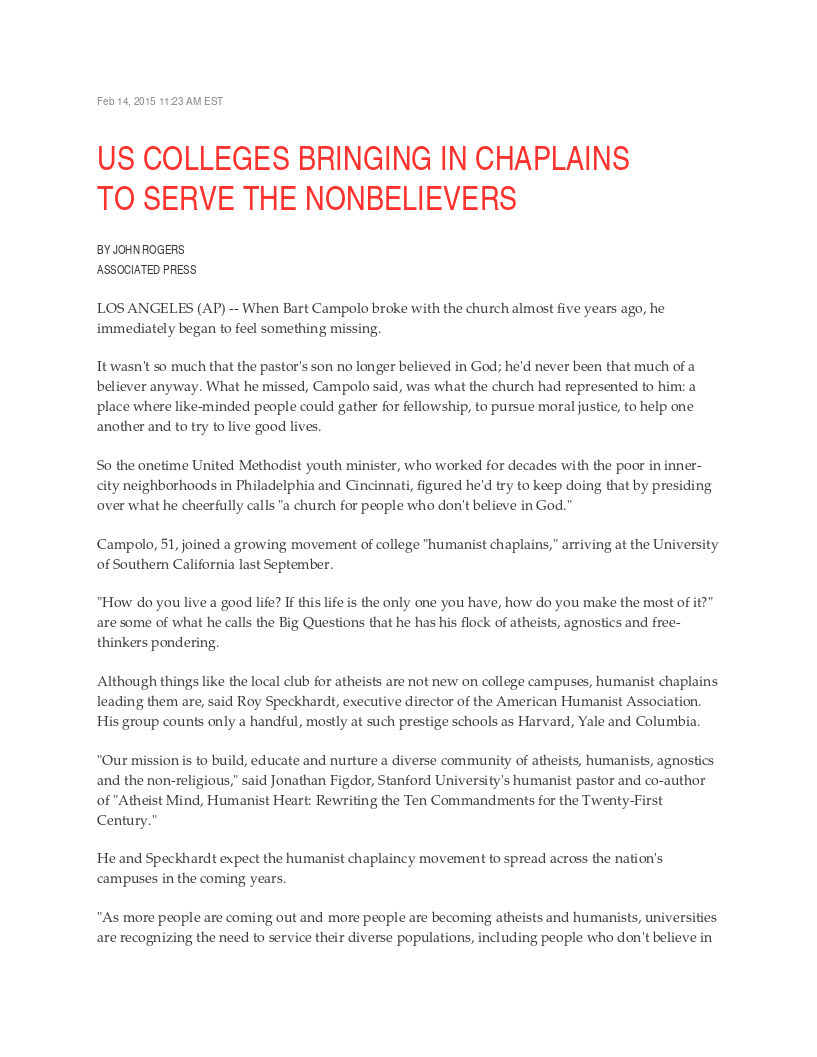
Humanist Chaplains Kendall Myers November 15, 2017 Worldviews: Theology Humanist Chaplains Document 00:00 / 01:04 Download Download Document from the Associated Press of a chaplain at a college in Los Angles who has a "church" for atheists, agnostics and non-christians. The document gives the reasons he has felt a need for a "church" like this and some of the outreach they are involved in. Download Facebook X (Twitter) WhatsApp LinkedIn Pinterest Copy link Kendall Myers
- Signposts for the Journey
Signposts for the Journey Matt Peachey July 31, 2020 Teachers Week 2019 A Kingdom Vision for Teachers Signposts for the Journey Audio 00:00 / 01:04 Download Download What should our goals be as Anabaptist churches? How should we live? How does the school fit in? Download Facebook X (Twitter) WhatsApp LinkedIn Pinterest Copy link Matt Peachey
- Acceptable Use of Technology Agreement
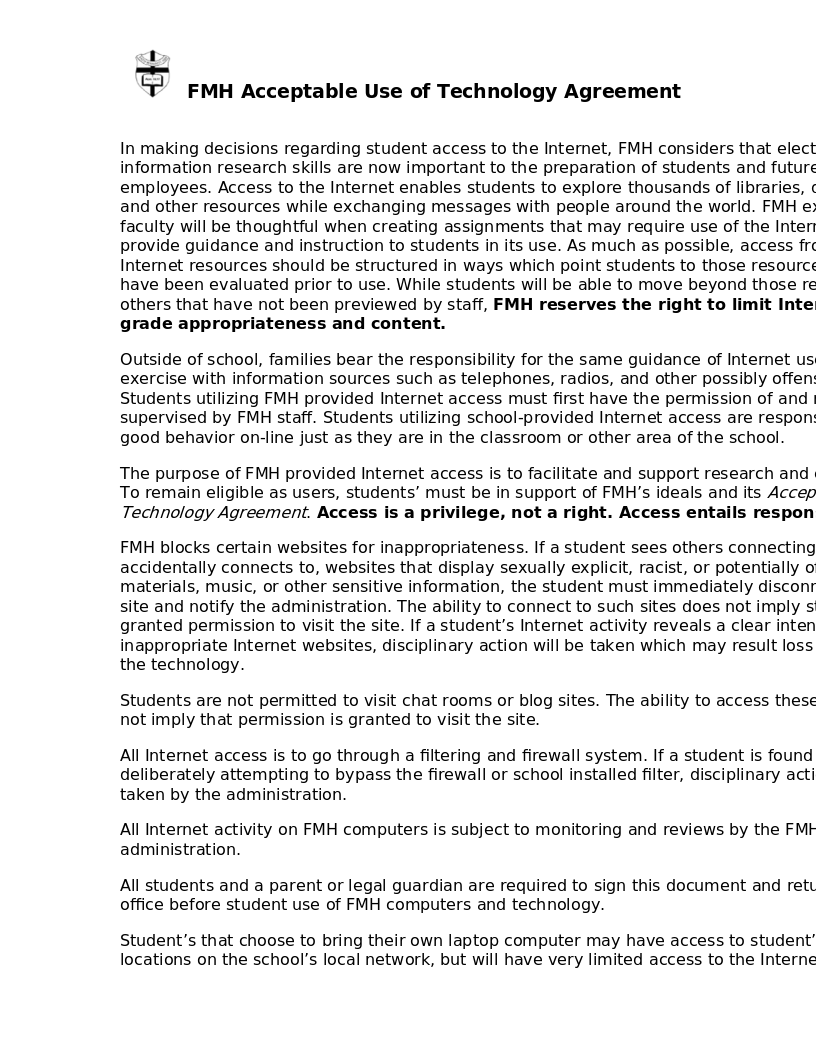
Acceptable Use of Technology Agreement Paul Harrison August 9, 2018 Acceptable Use of Technology Agreement Document 00:00 / 01:04 Download Download A technology agreement paper with guidelines for technology usage at Faith Mennonite High School. Your school may wish to use this document as a starting point to create your own technology policy. Download Facebook X (Twitter) WhatsApp LinkedIn Pinterest Copy link Paul Harrison
- Respect: Its Rewarding Influences
Respect: Its Rewarding Influences Neal Hackman September 27, 2019 Western Fellowship Teachers’ Institute 2019 Respect: Its Rewarding Influences Audio 00:00 / 01:04 Download Download In spite of current trends, respect is not out of date. All of us are called to treat one another with respect. In these three sessions, Neal explores practical and motivational aspects of this basic principle of relationships. Download Facebook X (Twitter) WhatsApp LinkedIn Pinterest Copy link Neal Hackman
- Suggested Resources for Teaching Science in Grades 1 and 2
Suggested Resources for Teaching Science in Grades 1 and 2 Carolyn Martin November 17, 2017 Elementary Science Projects Suggested Resources for Teaching Science in Grades 1 and 2 Document 00:00 / 01:04 Download Download Title: Science Enrichment Grades 1-2 Author: Daryl Vriesenga Publisher: Instructional Fair ISBN: 0-88012-913-1 Title: Berenstain Bears’ Big Book of Nature and Science Author: Stan & Jan Berenstain Publisher: Random House ISBN: 0-679-88652-4 Core Knowledge Sequence Title: What Your First Grader Needs to Know Editor: E.D. Hirsch, Jr. Publisher: Dell Publishing ISBN: 0-385-31987-8 The Magic School Bus Series by Joanna Cole Nature books by Robert McClung Download Facebook X (Twitter) WhatsApp LinkedIn Pinterest Copy link Carolyn Martin
- WMS Handbook
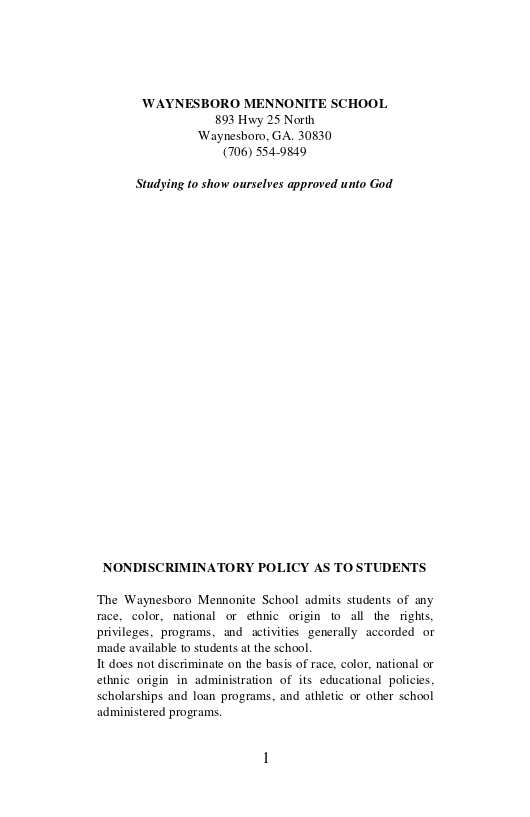
WMS Handbook Kendall Myers January 19, 2017 WMS Handbook Document 00:00 / 01:04 Download Download A school handbook outlining the organization, operation, and expectations of a conservative Anabaptist School. Courtesy Kendall Myers. Download Facebook X (Twitter) WhatsApp LinkedIn Pinterest Copy link Kendall Myers