The Encroaching "Zombie Student Culture"
I must admit that when I first began reading and hearing about the long term effects of the internet and screen time on students (as well as students using the internet and AI to cheat on assignments) I largely dismissed it because I thought (naively), “This isn’t affecting our Anabaptist schools because our parents know better than to let their children spend inordinate hours on the internet, plagiarize, or play online games for hours.” Sadly, I am concerned about it now.
A colleague recently shared with me the article “What’s Happening to Our Students?” and I am indeed worried, because although most Anabaptists are usually a little behind pop culture and its trends, the Internet has allowed us to be almost, if not completely, caught up with the world and its trends. We are definitely being affected by it and are headed in the wrong direction.
I have talked to several teachers who confirm that this is true in our schools as well, and all agree that they have seen the effects (although not as dramatic as in public schools) in our schools. This is especially the opinion of teachers who have taught ten years or longer. One teacher had overheard her second graders (who were tired and not focused on their work) talking to other students about staying up late and using their big brothers’ accounts to play online computer games with each other after school and in the evenings.
This makes me want to cry, or bang my head against a wall, or both. These children should be outside riding their bikes, climbing trees, and building tree forts with their fathers. Unfortunately, some of them head home from school to retreat to their bedrooms, shut the doors, and play online games, staring at a screen and interacting online with people they just spent seven hours with in real life at school.
I have two questions.
Why is this happening in our Anabaptist schools?
What are the parents thinking?
I have some suggestions for answers.
I believe that this is happening because we are just a few steps beyond secular society. Regrettably, the lure of being cool and fitting in, which is greatly influenced by social media, is extremely appealing to the parents of our students, the 25-40 year olds, many of whom are buying into the new norm of Youtube influencers, Instagram, and Facebook likes; along with all the hype, lingo, fashion, and accompanying mannerisms.
This is exactly the opposite of what God instructs us to do in His word: "Wherefore come out from among them, and be ye separate, saith the Lord, And touch not the unclean thing; And I will receive you." 2 Cor. 6:17.
Woefully, this is the answer to question number two as well. The only other option is that the parents are simply not aware or are not monitoring the activities of their children, which is equally as bad. The end of that verse is frightening. Will God receive this?
Many of our Anabaptist brethren are just steps behind the world, and the resulting consequences are becoming apparent in our schools. Students are becoming more and more tuned out, overly stimulated mentally from other more entertaining sources. They are becoming bored with maps and interesting history and science facts. They are more enthralled by computer screens and online games than they are teachers, math problems, or English grammar.
There is almost nothing the teachers can do except to gently warn our students of the dangers of such behavior. From what I have seen and heard from other teachers, the students will politely listen and then go back to their same activities. It is the parents who need to be aware of the dangers and be proactive about this hazardous situation.
We can make parents aware of what we are hearing at school, but this obviously can be unappreciated and labeled as “tattling”, unless the parents ask us directly, which rarely happens.
In conclusion, what we can do is to pray for our students, pray for their parents, set a good example ourselves, and to cling to Paul’s words: “whatsoever things are true, whatsoever things are honest, whatsoever things are just, whatsoever things are pure, whatsoever things are lovely, whatsoever things are of good report; if there be any virtue, and if there be any praise, think on these things.” Philippians 4:8


Fun Ways to Practice Spelling Words
Games like these can help to make learning spelling words competitive, creative, and fun. Of course, good, old-fashioned copying the list is still the simplest and most efficient way to practice spelling words. But this can so quickly become tedious and dull, causing students to turn their brains off. On the other hand, when student’s minds and imaginations are engaged through games and activities, their whole brain is activated to learn more effectively.

College Student Weekend 2026
College education can be an opportunity for Christians to learn more about the creation of God and interact with people from a variety of backgrounds and beliefs. At the same time, this opportunity comes with a unique set of challenges socially, spiritually, and intellectually. For example, conservative Anabaptist college students are often a minority in both their churches and colleges.
Who: We welcome applications from full-time and part-time college and university students currently in school and/or planning to begin a program in the next academic year. Registration priority is given to full-time students and students who are currently in school and will continue their studies next year.
Where: Faith Builders hosts the College Student Weekend at the River Ridge Mansion, an early-20th-century mansion built by an oil baron near Franklin, PA.
When: College Student Weekend 2026 begins on the afternoon of Friday, July 3, and continues through lunch on Sunday, July 5.
Cost: The cost of attendance is $255 per person, including two nights of lodging and five meals. The event is limited to 48 participants. Registration is required.


Science Alive 1-2
The inspiration for the creation of Science Alive began when I was teaching in a first and second grade classroom. One of the years I taught, the children had quite a bit of spare time, so we would have impromptu classes on the digestive system or whatever else I happened to field a question about. It didn’t take me long to begin recognizing that the children seemed to retain this style of learning almost better than what they considered work. I wished at that point to have a science curriculum that started out based more on input than output.
However, I didn’t really begin to do anything about this dream until I began to teach the Living Threads curriculum for history class. Then the lightbulb moment hit. I could use similar methods to teach science.
Since this curriculum is designed for multiple grades at the same time, you can guiltlessly hold a class that is amazingly distracting because they are all supposed to be involved. The curriculum is designed for grades one through three, with grade one skipping out on tests. They all take the same levels together and alternate levels for variety of learning. For example, the first-year grades one through three take level 1-2 together, the next year level 2-1. If you use this for three grades, first and third grade are a repeat level. The level is made to be taught three days a week for a 45-minute period for ½ of the term.
This curriculum is designed for the children to be paired up into partner teams. Generally, it works best to put an older child with a younger child for coaching purposes.
When teaching this class, there are a few basic structures I use to instill information. The first is constant review of facts you want them to have for life. There are a few extra pieces of information for the fast learners and for interest’s sake, but by and large, study the tests to know what they should master.
Use the experiments. If you have any that are bigger and more exciting to illustrate the point, use them. Practice the experiments before having class.
Vary the flashcard drill as inspiration hits. Let them practice together in pairs. Use your creativity.
Feel free to add or chop up lessons as needed. There are several books mentioned in this curriculum. While you may not have the exact book mentioned, the library often has good resources that will work just as well or better.
Enjoy teaching the amazing world of science!

Science Alive 2-1
The inspiration for the creation of Science Alive began when I was teaching in a first and second grade classroom. One of the years I taught, the children had quite a bit of spare time, so we would have impromptu classes on the digestive system or whatever else I happened to field a question about. It didn’t take me long to begin recognizing that the children seemed to retain this style of learning almost better than what they considered work. I wished at that point to have a science curriculum that started out based more on input than output.
However, I didn’t really begin to do anything about this dream until I began to teach the Living Threads curriculum for history class. Then the lightbulb moment hit. I could use similar methods to teach science.
Since this curriculum is designed for multiple grades at the same time, you can guiltlessly hold a class that is amazingly distracting because they are all supposed to be involved. The curriculum is designed for grades one through three, with grade one skipping out on tests. They all take the same levels together and alternate levels for variety of learning. For example, the first-year grades one through three take level 1-2 together, the next year level 2-1. If you use this for three grades, first and third grade are a repeat level. The level is made to be taught three days a week for a 45-minute period for ½ of the term.
This curriculum is designed for the children to be paired up into partner teams. Generally, it works best to put an older child with a younger child for coaching purposes.
When teaching this class, there are a few basic structures I use to instill information. The first is constant review of facts you want them to have for life. There are a few extra pieces of information for the fast learners and for interest’s sake, but by and large, study the tests to know what they should master.
Use the experiments. If you have any that are bigger and more exciting to illustrate the point, use them. Practice the experiments before having class.
Vary the flashcard drill as inspiration hits. Let them practice together in pairs. Use your creativity.
Feel free to add or chop up lessons as needed. There are several books mentioned in this curriculum. While you may not have the exact book mentioned, the library often has good resources that will work just as well or better.
Enjoy teaching the amazing world of science!

3 Teaching Positions Available at Shady Grove Christian School Mifflinburg PA
Shady Grove Christian School (Mifflinburg, PA) is looking for qualified teachers for the 2026-2027 school year for the following positions:
1st grade
2nd grade
High School
Elementary Grades are taught conventionally using CLP curriculum.
High School is individualized using ACE curriculum.
Contact Andrew Beachy: abeachy2@gmail.com


Jesus: Greater Than Moses (A Christmas Program)
This hour-long whole-school Christmas program uses dramatic recitation of Scripture, songs, and simple actions (mostly still poses) to illustrate how the life of Moses foreshadowed the life and work of Jesus. It can easily be adapted to schools of nearly any size.
Example livestream from Pilgrim Christian School: https://youtube.com/live/KfCZwHG2f1AZwHG2f1A
6196 results found with an empty search
- Exploring Constellations
Exploring Constellations Anna Zehr February 28, 2018 Exploring Constellations Blogpost 00:00 / 01:04 Download Download I’ve been looking for bulletin board ideas that grab and sustain the attention and learning of students without costing an inordinate amount of time or effort. In addition, as part of my goal of cultivating lovers of nature, rather than lovers of screens, I’m on the lookout for ways of teaching students to be fluent in nature. If you’ve never heard of nature fluency, that’s because it’s my personal coinage. I want my students to be able to name and watch for many pieces of God’s creation: stars, constellations, trees, wildflowers, birds, and edible plants. I share these pictures with you, not because I think this board is beautiful or even well-designed, but to share the idea of making bulletin boards that retain the background, border, and heading, but change slightly in content from week to week. For five or six weeks after our science unit about stars and constellations, we learned a different constellation each week. The stars are pieces of cardstock covered with aluminum foil. The lines between the stars are made with string. I used the illustrations in Find the Constellations by H.A. Rey to help me figure out how to replicate the constellations. To introduce each constellation, I first displayed the constellation without the label for the name. I had them tell me what they thought they saw. Then I added the label and read-aloud the pertinent section from Find the Constellations. The Great Bear, Ursa Major Gemini, The Twins But the bulletin board constellations were only an introduction . To help students identify and retain the names of more constellations, I decided to make the learning hands-on. My third and fourth graders worked with partners to choose a constellation from my stack of flashcards I printed from this link . Constellation flashcards Then they attached pieces of sticky tac to large pieces of construction paper to make bigger replicas of the constellation they had chosen. After I checked their sticky tac constellation pictures for accuracy, they took thumb tacks and poked holes where the sticky tac was. Finally, they used white crayons to draw lines attaching the “stars” and forming a picture of their constellation. We then hung these on our classroom windows and on days when it was sunny and snowy, we had glowing constellations. On other days we had odd looking black pieces of paper covering our windows! The constellation papers and bulletin boards provided an inexpensive educational tool that my students had helped to create, plus it nurtured their interest in and love of nature. Ursa Major Cassiopeia Download Facebook X (Twitter) WhatsApp LinkedIn Pinterest Copy link Anna Zehr
- Outline 31 Quiz
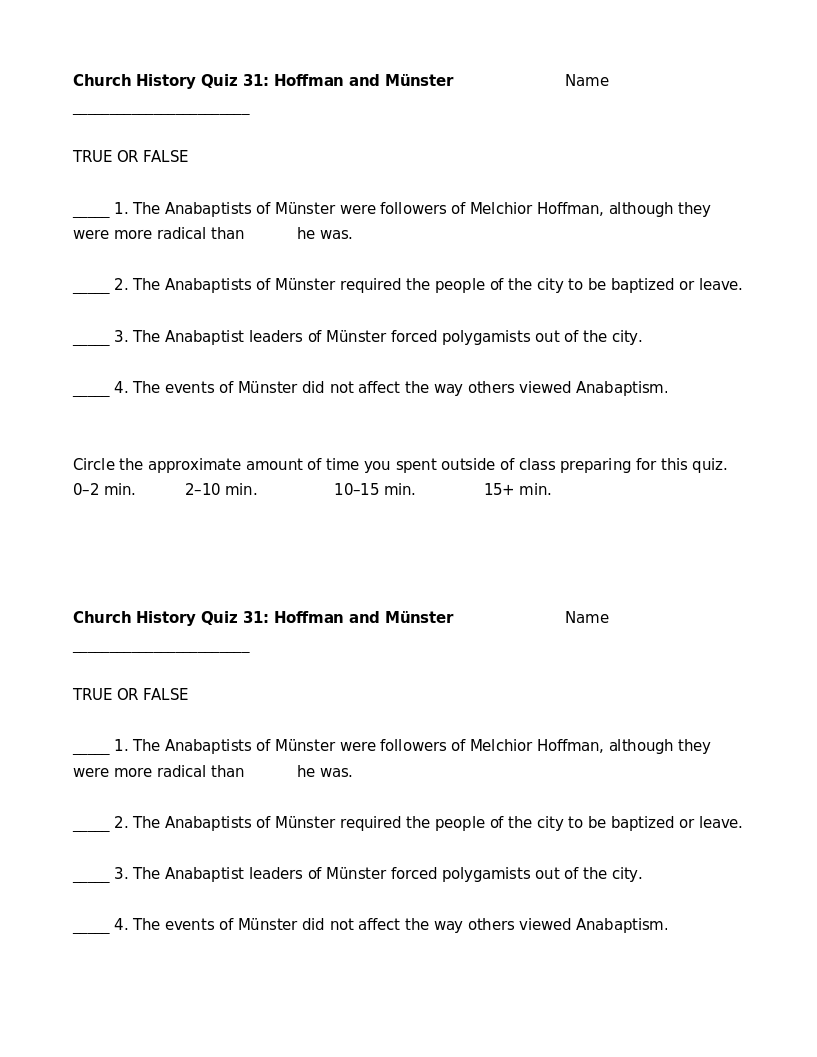
Outline 31 Quiz Peter Goertzen November 25, 2017 Church History 5: Early Anabaptists Outline 31 Quiz Document 00:00 / 01:04 Download Download This short quiz focuses on the Anabaptists of Munster. Download Facebook X (Twitter) WhatsApp LinkedIn Pinterest Copy link Peter Goertzen
- History Flashcards
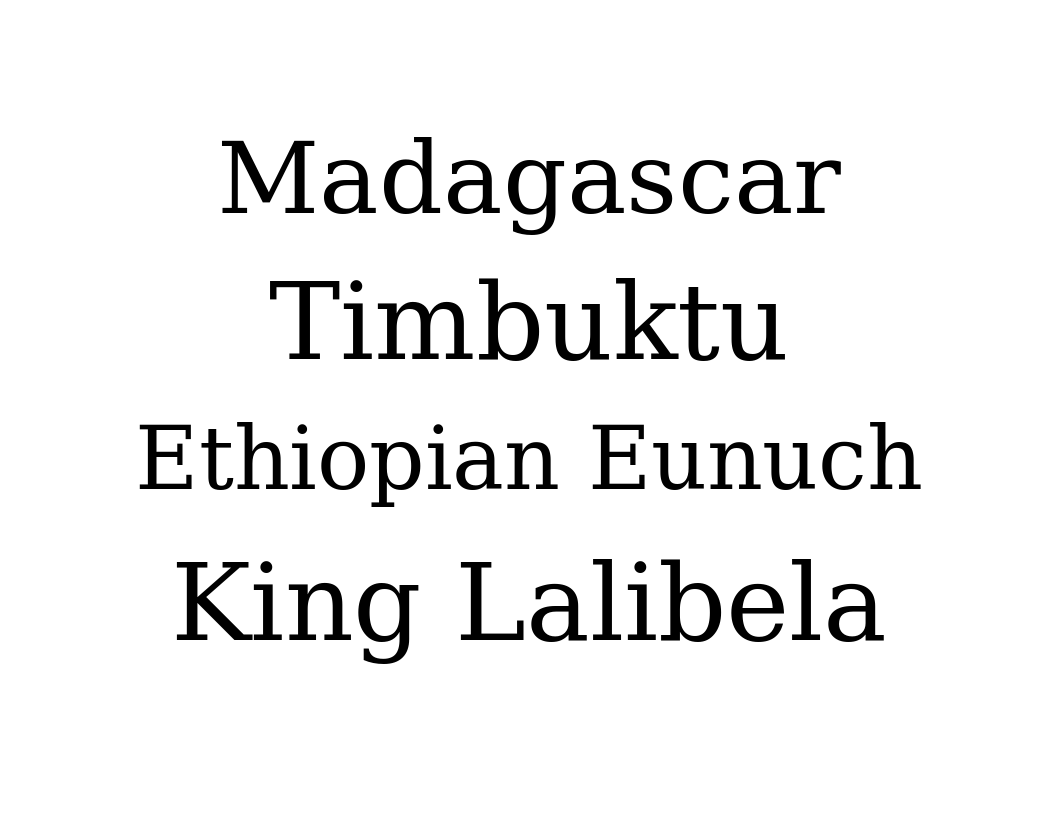
History Flashcards Karen Nolt January 31, 2019 History Flashcards Document 00:00 / 01:04 Download Download Flashcards to go with A Beka Grade 5 World History. Includes terms, locations, and people with their definition or significance. Download Facebook X (Twitter) WhatsApp LinkedIn Pinterest Copy link Karen Nolt
- Bolstering Retention in Science
Bolstering Retention in Science Eldon Ruth November 20, 2024 Teachers Week 2023 Bolstering Retention in Science Audio 00:00 / 01:04 Download Download So much content! So many terms! How will students remember everything? Science experiments take lots of time and preparation but engage students. Teaching the textbook is lackluster but covers content. Is there a best of both worlds? How can I ensure that students are engaged and retain the core material? Aimed at middle and upper grades, this class is taught by a teacher from a multi-grade setting. Bolstering Retention in Science by Eldon Ruth was recorded at Teachers Week 2023. Download Facebook X (Twitter) WhatsApp LinkedIn Pinterest Copy link Eldon Ruth
- It Can Be Done: Preparing for a School Leadership Transition
It Can Be Done: Preparing for a School Leadership Transition Austin Shenk June 19, 2020 It Can Be Done: Preparing for a School Leadership Transition Video 00:00 / 01:04 Download Download Clayton: Well, Austin, we have been in a transition for this year, and the school board has been leading us to transition from my administration to your administration of the school. We want to talk about that for the benefit of others. Tell us, in your perspective, went well with the transition?Austin: I feel very blessed by the leadership that was given by you and the school board. The fact that you sent me to Faith Builders with the understanding that I should be trained in case I'm needed as an administrator. I was not sent necessarily as, “This is for sure you're going to be doing it,” but just given the opportunity to prepare in case. That was very, very helpful because I could learn without the pressure of knowing I'm going to take the job, but learn with the understanding that I may take the job and it's very helpful for me to ask real good questions and think in that way.Clayton: One of the things that I give a shout out is to our school board, who took the time to do transition without waiting till the very, very last minute and [for me] to say, “Okay, in five years, I would like to have a replacement.” They took it seriously to begin to lock and to question. They got Steven Brubaker to come in and be a consultant for the board to look at questions like “Should it go from the founder to his son?” “Should it go somebody who's within the school already, or should it go to somebody who is new?” And he can give a fresh light and fresh concepts. And the whole idea that the school board was willing to allow you to have plenty of time to plan. Think about that one with us a little bit. Austin: Yes. I also appreciate our school board and the chairman who took time to say, “Okay, this is our timeline that we need, but we need you to tell us what you need in regards to the transition.” They gave me the freedom to say, this is what I would like to see.” I wrote it out. I talked with our chairman and talked to you and our chairman. We had a really good plan about how the transition was going to look. They put me in the driver's seat, but not fully responsible for it. They allowed me to get input from them. That was really helpful. Then part of that plan and part of my desire was to take a whole quarter of the school year, right before taking over leadership, just spending time in planning and just looking at the future and what I want to have in place so that it'll be easier to do. Because as I watched you lead for 24 years, I've seen that there was a lot of pressures on you that you can't plan for: the unknowns and the things that come at you. It's very nice to have this time now to plan, and I've been very blessed by that. Clayton: I've never been through a transition before. Our school board has never been a through transition before. We don't have a lot of practice. Hopefully, you don't have to repeat that; once every 25 years you transition from the administration. The board was serious about getting plenty of opportunities and other voices to ask other people how they have done it, to research it. It wasn't just simply a, “Oh, well, we'll see who's willing and put them in," [but] to search the willingness of other people and other men and to go out and to do a diligent search. I think that's very, very critically important. One of the things that I think about was, Austin, I've often said each generation should become better: build on the good, forgive the bad, and become better. I saw in you sitting down and saying, “Okay, how do we want to do fundraisers?” and spending several hours thinking through it. “And how are we going to do PTF's? How are we going to do…” Just every detail of the school, so that when you take over, it's not a, “Oh, whoops, I need to think that through.” It's already done. I commend you and praise the Lord for all the others who spoke into your life and helped train you to become a better man. I think the school will benefit from them. What other aspects would you recommend that other school boards would repeat if they're looking at transition? Austin: As I mentioned, they put me in the driver's seat and allowed me to say what I would enjoy. The one thing that I said I want, and they allowed, is for us to have an hour meeting every day to just talk through any questions that I have. That's been extremely precious and very helpful. They also very much cared about allowing it to become a team because you were allowed to grow with the school, and now I'm coming into a school that's much more established, and they allow it to become a three-person team. Allowing that to happen and allowing the other members of the team to join in with our discussions has been very helpful.Clayton: Very good. As we think about the boards, we think about other boards saying, “Well, I'm not in quite the same situation.” I mean, there are some people who say, “Never ever pass it from founder to his son. Never ever repeat.” And yet, is there a right or wrong way? What part of this whole transition was just simply, “Okay, God help us figure this out?”Austin: I really feel that it was bathed in prayer. I think that's very essential. I feel blessed by, as you mentioned, the board looking beyond me asking the question, “Should the son take the place?” And I was very willing, but I also through the process of the interview, through the process of all this planning have become very aware that God has to be in charge and just everyone's awareness of that has helped tremendously. I just would like to hear more about the thought process that you had to do to get the board to think ahead as well. Clayton: I said, “When I'm 60, I want to be out. I want to retire, but I give you I'm going to give you five years' notice.” I don't know why God put 60 on my heart. I've observed many men who should have retired five years sooner than they did. At 60 you could still go for a while you could still have energy and ideas, and you could run the school for way longer than 60. But why not turn it over to new energetic blood, new energetic enthusiasm? I won't retire, we'll get retreaded and we'll have some other ministry, another option.Austin: As the board led the transition for us, they also led it for the staff. At the beginning of this school year at orientation, they had a letter from the chairman that explained how it was going to work, how we are going to transition through the school year, how our principal is going to continue teaching but become the principal halfway through the school year, and I would take over your place. That explanation came from the board. Then they also planned two staff interviews this year, specifically for the purpose of finding out if there's additional stresses or things that they need to know.Clayton: I think one of the aspects that we did is to ask staff for names. “Okay, we're looking for a new administrator, and the school board is open to any and all ideas.” And so we had staff from Ohio and from Ontario, and we had staff from many places that would have names that we would not even know of. We allowed them to give names. You've been part of the staff already as a teacher, and now assuming the part administrator also helped that it wasn't a complete stranger coming in, that was going to take over that role.Austin: One of the experiences that Faith Builders gave me was an internship. During my internship at Gehman’s, they were also facing somewhat of this question, although not transition of leadership, necessarily; they were talking more of the dispersing of leadership. I got to walk beside Michael Burkholder, helping him to think through how to create a team and how the responsibilities would be divided up. And so, since now we're moving to a team I think that experience was very helpful for me in thinking about how to divide that up.Clayton: I think one of the things that we can't minimize at all—you mentioned it earlier—was God: just really dependency on God. Because the transition of administration is something you hope you don't have to do very often. There are new people on the board, there are people on the board who have never ever experienced a transition, and so for them, they're going to have to really depend on each other. We praise God, we also praise the Lord for the school board and the unity that they had, the unified direction. It worked very, very well. It can be done! Austin: Amen. It's very enjoyable. Thank you for your good leadership in the process.Clayton: Well, praise the Lord. I'm excited to hand it over to good hands. Download Facebook X (Twitter) WhatsApp LinkedIn Pinterest Copy link Austin Shenk Clayton Shenk
- Writing Biography
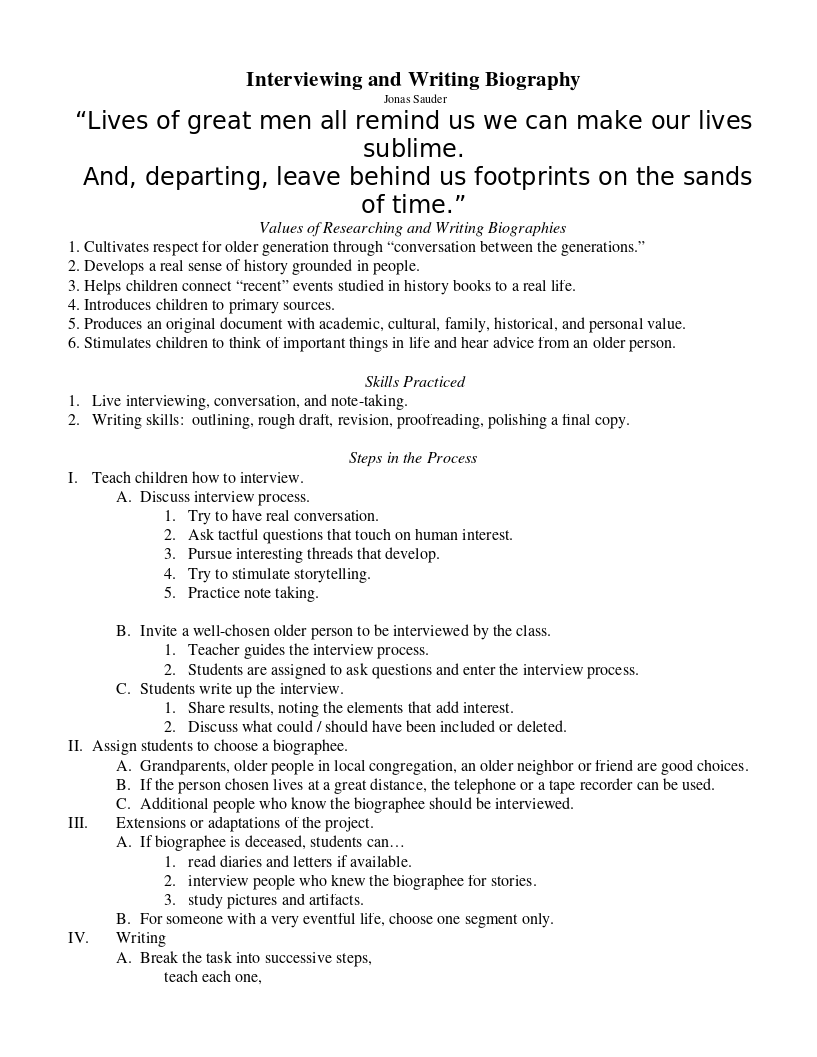
Writing Biography Jonas Sauder March 19, 2020 Preparing for Schooling from Home Writing Biography Document 00:00 / 01:04 Download Download Jonas describes the value of writing biography and offers scheduling and grading help for such projects. Download Facebook X (Twitter) WhatsApp LinkedIn Pinterest Copy link Jonas Sauder
- Nonconformity: Responses
Nonconformity: Responses Arlyn Kauffman May 23, 2017 Separation and Nonconformity Colloquy Nonconformity: Responses Audio 00:00 / 01:04 Download Download Arlyn Kauffman, Curtis Duff, and Ernest Hochstetler offer their responses to the presentations by Wendell Heatwole, Nathan Yoder, and Val Yoder. Following the responses, each of the three presenters has an opportunity to offer closing comments and clarification. Download Facebook X (Twitter) WhatsApp LinkedIn Pinterest Copy link Arlyn Kauffman Curtis Duff Ernest Hochstetler
- Panel Discussion
Panel Discussion Paul Sommers July 23, 2025 Western Fellowship Teachers’ Institute 2018 Panel Discussion Audio 00:00 / 01:04 Download Download This panel discussion covers four main topics, with specific questions and themes explored under each. The topics are: Respect in Schools School Culture School Attendance Parent-Teacher Relationships “Panel Discussion” was presented by Duane Erb, Austin Smucker, Jonah Avina, Susan Hofer, Rhonda Bear, Faith Sommers, and Paul Sommers at Western Fellowship Teachers’ Institute in August of 2018 at Lighthouse Mennonite School in Halsey, Oregon. Download Facebook X (Twitter) WhatsApp LinkedIn Pinterest Copy link Paul Sommers Susan Hofer Austin Smucker Jonah Avina
- Principles II
Principles II Gerald Miller January 4, 2017 CASBI 2015 Principles II Audio 00:00 / 01:04 Download Download Gerald offers a guide to the work of a school administrator.Courtesy CASBI. Download Facebook X (Twitter) WhatsApp LinkedIn Pinterest Copy link Gerald Miller
- Productive Teamwork
Productive Teamwork Ryan Miller May 30, 2025 CASBI 2025 Recordings Productive Teamwork Audio 00:00 / 01:04 Download Download Teamwork is the ultimate competitive advantage for organizations, particularly schools. Ryan draws from examples such as the 1936 University of Washington rowing team, Patrick Lencioni’s Five Dysfunctions of a Team , and Jesus’ leadership of His disciples to illustrate the value of teamwork. When building a productive team, it is essential to prioritize trust, healthy conflict, commitment, and accountability, while fighting against lack of trust and fear of conflict. In a healthy, functioning team, a school will experience synergy, unstoppable momentum, and a healthy culture. Most importantly, productive teamwork will maximize a school’s impact for God’s glory. “Productive Teamwork” was presented by Ryan Miller at CASBI 2025 held at United Christian School in Nappanee, Indiana. Download Facebook X (Twitter) WhatsApp LinkedIn Pinterest Copy link Ryan Miller
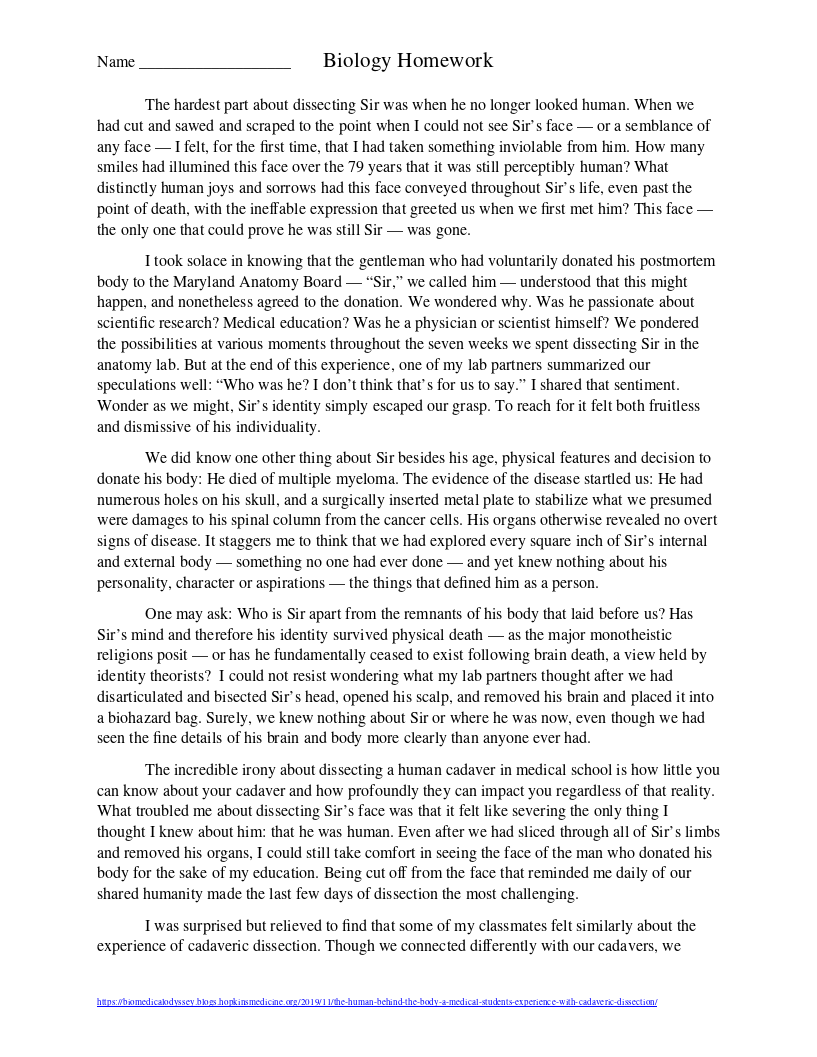
- Cadaveric Dissection
Cadaveric Dissection Brian J Martin January 17, 2024 Cadaveric Dissection Document 00:00 / 01:04 Download Download In this homework assignment students respond to questions surrounding the provided story of a medical student reflecting on the emotional and ethical challenges of dissecting a human cadaver for educational purposes. Download Facebook X (Twitter) WhatsApp LinkedIn Pinterest Copy link Brian J Martin
- Getting Along
Getting Along Arlene Birt March 17, 2021 Getting Along Blogpost 00:00 / 01:04 Download Download “These girls are just not getting along. I think at one point each one has felt left-out or bullied. I don’t know how to help them!” worried a new first-grade teacher. “Teacher, they won’t let me play with them.” “They ran away when I came to play.” “I don’t have anyone to play with.” These are comments heard after recess. On a little different note, Tara told me, “I feel like a hot dog in a bun!” because there were two other girls who were always grabbing onto her and both wanted to be with Tara all the time. Competition, jealousy, and girl drama entered in this scenario. We recently had a meeting of teachers to discuss how we can help these children to get along and be friends. I will share some of our ideas. Do role-play to show how we should play at recess. How can we include others? What can we do when someone is left out? How can we be a good friend? What do good friends do? What can I do if I want to play with someone? I would start the role-play with the teacher and another adult or older student performing. Do some scenarios the wrong way and have students identify the problems and discuss how we should act. Have students show the right ways to act. Example: One time I brought a doll and used that for my “friend” in a role-play. I did not talk to the doll, I just walked past her, and I left her out. We discussed how to be a friend, and then some students acted out a situation to show us how to walk up to someone, say “Hello,” introduce ourselves, ask “Would you like to play with me?” or whatever ideas they come up with. I suggest the teacher eat lunch with the “offenders” and talk about including others, not leaving out people, and being friendly. I do not like to see cliques at school (or anywhere!) and have addressed this in a lunch meeting. I asked specific people to join me for lunch and we chatted about being friends with everyone, not always playing with the same people, and making sure we are including others. Have a class meeting and address concerns with the whole class. Ask them to share their ideas for getting along. Decide which ideas we can implement right away. Check back on troubled situation. Enlist the help of a secure student. Talk with Jenna and tell her that Diane is feeling sad at recess and wants someone to play with. Ask Jenna if she would be a good friend to Diane and play with her. When I’ve done this, Jenna is usually pleased to be asked this and glad to be friendly to Diane. Sometimes we might need to forbid children from being together. My two boys who are conspiring and always together to the exclusion of other children, are not allowed to sit together or be in line beside each other. One time I had two students who had each told me that they didn’t have any friends. I hooked them up by seating them together, encouraging each to talk with the other, and finding commonalities for them, and soon they were friends. Pray for wisdom for yourself and ask God to give ideas and ways to work with the children. Be a model of caring and compassion and including all children.Pray for and with the children. One year when there was a lot of girl drama we had prayed about it, and then after recess some of the girls told me that they had a prayer meeting at recess and prayed that everyone would get along! Teach the children about love and friendship and being kind. This morning I am presenting a devotions lesson to two classes. We will discuss being kind, including others, and using our words to build up and encourage others. I will begin with “Sticks and stones may break my bones but words will never hurt me” and display some sticks and stones. We’ll talk about how sticks and stones really can hurt us, but is it true that words will never hurt us? Words may not hurt us physically, but they can hurt our hearts. Verses to use: Eph. 4:32, Psalms 19:14. I also use a lesson on “wrinkled hearts” (See my “Bursts of Teaching Ideas” post ). Download Facebook X (Twitter) WhatsApp LinkedIn Pinterest Copy link Arlene Birt
- Soaring in March
Soaring in March Derek Overholt September 27, 2019 Western Fellowship Teachers’ Institute 2019 Soaring in March Audio 00:00 / 01:04 Download Download If the March virus of lethargic attitude is pounding on your classroom windows, take courage! There are some ways in which the battles can be fought successfully regardless of the panes. Download Facebook X (Twitter) WhatsApp LinkedIn Pinterest Copy link Derek Overholt
- Teach Your Students to Weave
Teach Your Students to Weave Twila Groff September 21, 2018 Teach Your Students to Weave Video 00:00 / 01:04 Download Download I found this, actually, on Pinterest, where you make a loom out of cardboard. I make little slits on the top, about every half inch top and bottom. You can take a spool of thread, what I like to use for knotting comforters. They start by putting at the tops and just going in every slit, working top to bottom. Then when you're done, it will look like this. This gives them the thread to go over and under for their weaving. When we put it together, I cut strips of fabric and then I cut through the center and then they can put it together. So, it's actually like a knot in the middle; they're joined. And then you can start by weaving every other over-under, over-under all the way across. I like to use fabric that stretches like t-shirt fabric, nylon, anything; if it has a little stretch it seems to work a little better. You're going to push it down and then we get to the end, you're going to do the opposite. This one ended under, so I'm going to start over-under. You actually won't see these threads that much and when you keep building it's going to look like this. When they're done they’re going to cut the strings off the top and the bottom and they’ll knot them to keep all the material in there. And if they want to make something with it they can, [it will] be like a little mat or a little pouch or something. And you have your weaving. Download Facebook X (Twitter) WhatsApp LinkedIn Pinterest Copy link Twila Groff
- Basic Fluency Pages
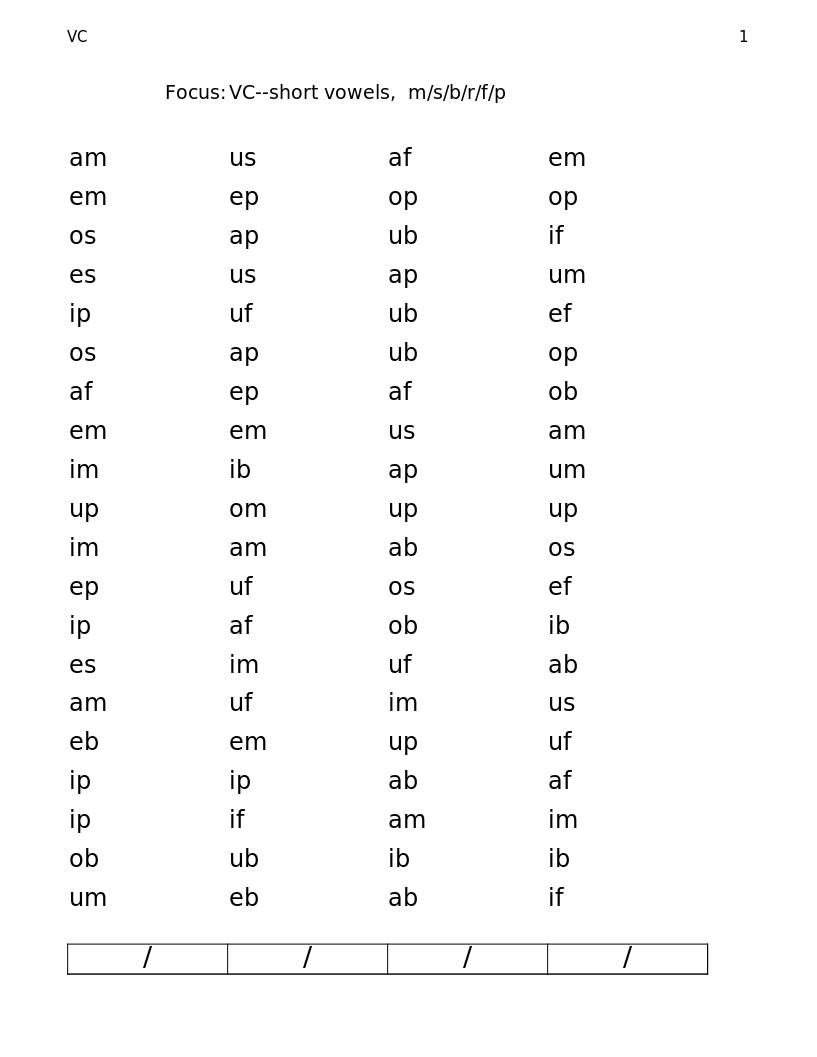
Basic Fluency Pages Lynell Nissley February 8, 2017 Basic Fluency Pages Document 00:00 / 01:04 Download Download "Basic Fluency Pages" is a set of drill sheets I created to add on to the Barton fluency pages. Barton drills include individual letter sounds and three letter combinations, but I found some of my students needed two-letter blending drills. Typical drill: set a timer for 1 minute (or 2, if preferred). The student reads until the timer goes. Count up the number correct and incorrect, and have the student re-read any that were incorrect. Jot the numbers on the appropriate chart (see last spreadsheets). Immediately have the student reread the same page for the same amount of time. Add those scores, and allow the student to graph progress. Practice that page for 1-4 days, depending on level of need, but do not drill-to-kill. Each page that is currently being drilled is done only 2 times per day, but 2 or 3 pages may be "in progress" at the same time, for a total of 4-6 reads in a row. If a page is practiced for about a week and is still very slow, it is best to mix it up by moving on and then coming back to that page later, so the student does not memorize the page. If every page is extremely slow (say, all 2-letter pages), increase intensity of practice with lower-level pages (individual sound pages). Be sure to create individual sound pages for all sound combination, including those that are spelled with 2-3 letters (sh, th, tch, ow, ai, etc.), if needed. Download Facebook X (Twitter) WhatsApp LinkedIn Pinterest Copy link Lynell Nissley
- The Dangers of Higher Education (David Horst)
The Dangers of Higher Education (David Horst) David Horst March 16, 2018 Christian School Administration Institute 2018 The Dangers of Higher Education (David Horst) Audio 00:00 / 01:04 Download Download The ability to read and write has always been a blessing to Gods people. Illiteracy was the gateway to the dark ages, where many people were not able to read the scriptures for themselves. But is it possible to go down the road of learning too far? How do we define higher education? What are some dangers that we might face in the pursuit of more knowledge? Download Facebook X (Twitter) WhatsApp LinkedIn Pinterest Copy link David Horst
- Tax Compliance Issues, Part 2
Tax Compliance Issues, Part 2 Mark Payne November 2, 2018 REACH 2015 Tax Compliance Issues, Part 2 Audio 00:00 / 01:04 Download Download This second sessions focuses on compliance and tax concerns for nonprofits. Topics covered in this session or the first one are unrelated trade or business income, earmarks treated as contributions, excess benefit transactions, state charitable registrations, and thoughts for those filing a Form 990. Additionally fringe benefit issues, the Affordable Care Act and other relevant issues may be discussed. Download Facebook X (Twitter) WhatsApp LinkedIn Pinterest Copy link Mark Payne
- Culture: the Way to Understand and Respect (3 of 4)
Culture: the Way to Understand and Respect (3 of 4) John Smucker April 11, 2025 Western Fellowship Teachers Institute 2024 Culture: the Way to Understand and Respect (3 of 4) Audio 00:00 / 01:04 Download Download Relating to other cultures can be difficult but also provide rich opportunities for growth and expanded horizons. Speaking out of ten years of experience from living in Poland, John addresses the following aspects of culture: Defining culture. What is culture, and how should a Christian interact with it? Approaching different cultures. Should a Christian adopt the culture around them? Valuing Anabaptist culture. How can a teacher model appreciation for Anabaptist culture as a framework and anchor? Evaluating traditions and family. What is the best way to allow cultural traditions to ground—but not define—a family? Balancing engagement and separation. What can be learned from how Jesus interacted with His culture? Engaging thoughtfully with culture requires wisdom and humility. “Culture: The Way to Understand and Respect” was presented by John Smucker at Western Fellowship Teachers’ Institute in August of 2024 at Lighthouse Mennonite School in Halsey, Oregon. You may be interested in the companion talks to this keynote address, “Commitment: The Way to Begin and Endure,” “Communication: The Way to Know and Be Known,” and “Change: The Way to Strengthen and Mature.” Listen to Commitment: The Way to Begin and Endure. Listen to Communication: The Way to Know and to be Known. Listen to Culture: The Way to Understand and Respect. Listen to Change: The Way to Strengthen and Mature Download Facebook X (Twitter) WhatsApp LinkedIn Pinterest Copy link John Smucker
- The Anabaptist Vision
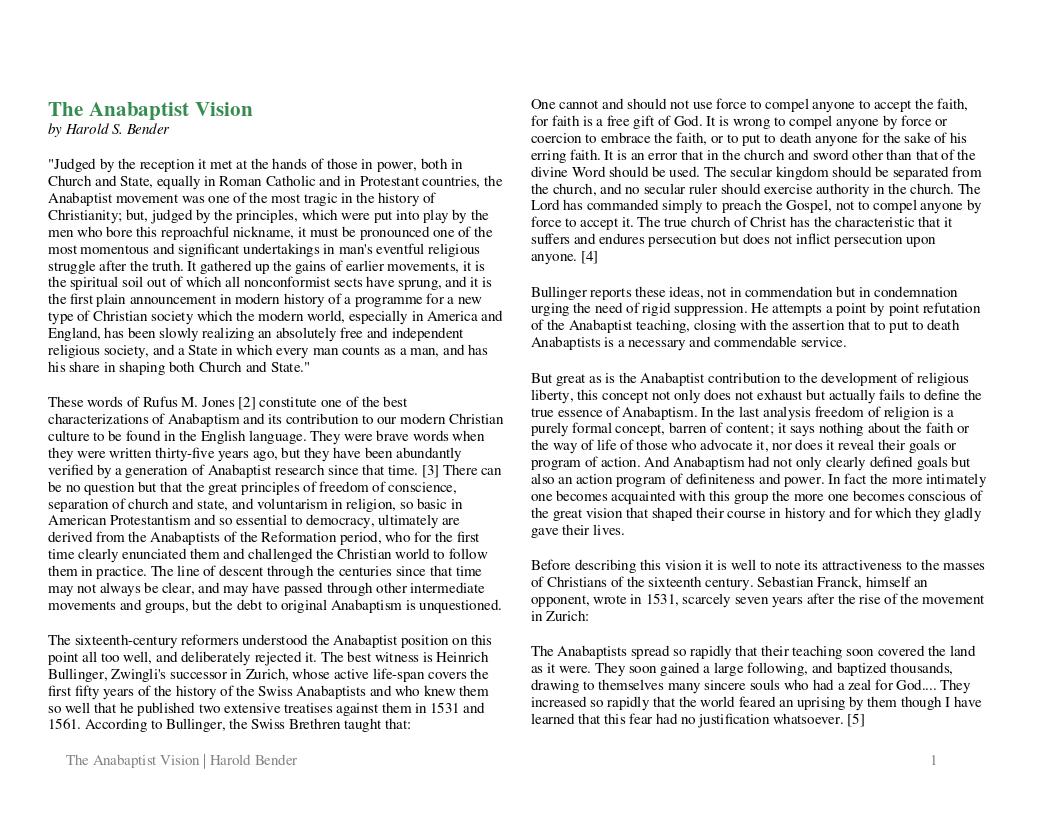
The Anabaptist Vision Harold S. Bender August 8, 2017 Documents for Church History Class The Anabaptist Vision Document 00:00 / 01:04 Download Download Harold Bender's classic essay on Anabaptist origins and ideas has given shape to the thinking of many in the conservative Anabaptist movement. Download Facebook X (Twitter) WhatsApp LinkedIn Pinterest Copy link Harold S. Bender
- The Power of Math: Session 1
The Power of Math: Session 1 Aaron Crider January 7, 2022 Western Fellowship Teachers' Institute 2021 The Power of Math: Session 1 Audio 00:00 / 01:04 Download Download What is the language of math? How do we teach it to students? This class considers mathematics as a meaningful language that tells a compelling story. Download Facebook X (Twitter) WhatsApp LinkedIn Pinterest Copy link Aaron Crider