The Encroaching "Zombie Student Culture"
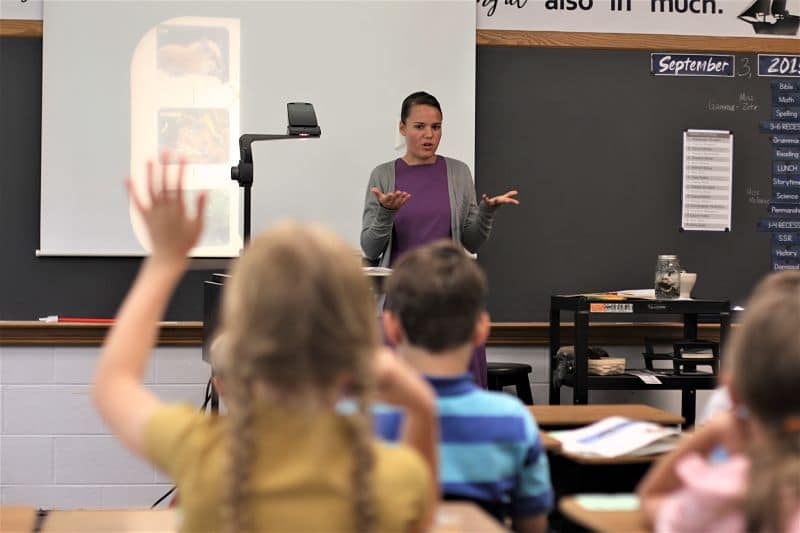
I must admit that when I first began reading and hearing about the long term effects of the internet and screen time on students (as well as students using the internet and AI to cheat on assignments) I largely dismissed it because I thought (naively), “This isn’t affecting our Anabaptist schools because our parents know better than to let their children spend inordinate hours on the internet, plagiarize, or play online games for hours.” Sadly, I am concerned about it now.
A colleague recently shared with me the article “What’s Happening to Our Students?” and I am indeed worried, because although most Anabaptists are usually a little behind pop culture and its trends, the Internet has allowed us to be almost, if not completely, caught up with the world and its trends. We are definitely being affected by it and are headed in the wrong direction.
I have talked to several teachers who confirm that this is true in our schools as well, and all agree that they have seen the effects (although not as dramatic as in public schools) in our schools. This is especially the opinion of teachers who have taught ten years or longer. One teacher had overheard her second graders (who were tired and not focused on their work) talking to other students about staying up late and using their big brothers’ accounts to play online computer games with each other after school and in the evenings.
This makes me want to cry, or bang my head against a wall, or both. These children should be outside riding their bikes, climbing trees, and building tree forts with their fathers. Unfortunately, some of them head home from school to retreat to their bedrooms, shut the doors, and play online games, staring at a screen and interacting online with people they just spent seven hours with in real life at school.
I have two questions.
Why is this happening in our Anabaptist schools?
What are the parents thinking?
I have some suggestions for answers.
I believe that this is happening because we are just a few steps beyond secular society. Regrettably, the lure of being cool and fitting in, which is greatly influenced by social media, is extremely appealing to the parents of our students, the 25-40 year olds, many of whom are buying into the new norm of Youtube influencers, Instagram, and Facebook likes; along with all the hype, lingo, fashion, and accompanying mannerisms.
This is exactly the opposite of what God instructs us to do in His word: "Wherefore come out from among them, and be ye separate, saith the Lord, And touch not the unclean thing; And I will receive you." 2 Cor. 6:17.
Woefully, this is the answer to question number two as well. The only other option is that the parents are simply not aware or are not monitoring the activities of their children, which is equally as bad. The end of that verse is frightening. Will God receive this?
Many of our Anabaptist brethren are just steps behind the world, and the resulting consequences are becoming apparent in our schools. Students are becoming more and more tuned out, overly stimulated mentally from other more entertaining sources. They are becoming bored with maps and interesting history and science facts. They are more enthralled by computer screens and online games than they are teachers, math problems, or English grammar.
There is almost nothing the teachers can do except to gently warn our students of the dangers of such behavior. From what I have seen and heard from other teachers, the students will politely listen and then go back to their same activities. It is the parents who need to be aware of the dangers and be proactive about this hazardous situation.
We can make parents aware of what we are hearing at school, but this obviously can be unappreciated and labeled as “tattling”, unless the parents ask us directly, which rarely happens.
In conclusion, what we can do is to pray for our students, pray for their parents, set a good example ourselves, and to cling to Paul’s words: “whatsoever things are true, whatsoever things are honest, whatsoever things are just, whatsoever things are pure, whatsoever things are lovely, whatsoever things are of good report; if there be any virtue, and if there be any praise, think on these things.” Philippians 4:8


Fun Ways to Practice Spelling Words
Games like these can help to make learning spelling words competitive, creative, and fun. Of course, good, old-fashioned copying the list is still the simplest and most efficient way to practice spelling words. But this can so quickly become tedious and dull, causing students to turn their brains off. On the other hand, when student’s minds and imaginations are engaged through games and activities, their whole brain is activated to learn more effectively.

College Student Weekend 2026
College education can be an opportunity for Christians to learn more about the creation of God and interact with people from a variety of backgrounds and beliefs. At the same time, this opportunity comes with a unique set of challenges socially, spiritually, and intellectually. For example, conservative Anabaptist college students are often a minority in both their churches and colleges.
Who: We welcome applications from full-time and part-time college and university students currently in school and/or planning to begin a program in the next academic year. Registration priority is given to full-time students and students who are currently in school and will continue their studies next year.
Where: Faith Builders hosts the College Student Weekend at the River Ridge Mansion, an early-20th-century mansion built by an oil baron near Franklin, PA.
When: College Student Weekend 2026 begins on the afternoon of Friday, July 3, and continues through lunch on Sunday, July 5.
Cost: The cost of attendance is $255 per person, including two nights of lodging and five meals. The event is limited to 48 participants. Registration is required.


Science Alive 1-2
The inspiration for the creation of Science Alive began when I was teaching in a first and second grade classroom. One of the years I taught, the children had quite a bit of spare time, so we would have impromptu classes on the digestive system or whatever else I happened to field a question about. It didn’t take me long to begin recognizing that the children seemed to retain this style of learning almost better than what they considered work. I wished at that point to have a science curriculum that started out based more on input than output.
However, I didn’t really begin to do anything about this dream until I began to teach the Living Threads curriculum for history class. Then the lightbulb moment hit. I could use similar methods to teach science.
Since this curriculum is designed for multiple grades at the same time, you can guiltlessly hold a class that is amazingly distracting because they are all supposed to be involved. The curriculum is designed for grades one through three, with grade one skipping out on tests. They all take the same levels together and alternate levels for variety of learning. For example, the first-year grades one through three take level 1-2 together, the next year level 2-1. If you use this for three grades, first and third grade are a repeat level. The level is made to be taught three days a week for a 45-minute period for ½ of the term.
This curriculum is designed for the children to be paired up into partner teams. Generally, it works best to put an older child with a younger child for coaching purposes.
When teaching this class, there are a few basic structures I use to instill information. The first is constant review of facts you want them to have for life. There are a few extra pieces of information for the fast learners and for interest’s sake, but by and large, study the tests to know what they should master.
Use the experiments. If you have any that are bigger and more exciting to illustrate the point, use them. Practice the experiments before having class.
Vary the flashcard drill as inspiration hits. Let them practice together in pairs. Use your creativity.
Feel free to add or chop up lessons as needed. There are several books mentioned in this curriculum. While you may not have the exact book mentioned, the library often has good resources that will work just as well or better.
Enjoy teaching the amazing world of science!

Science Alive 2-1
The inspiration for the creation of Science Alive began when I was teaching in a first and second grade classroom. One of the years I taught, the children had quite a bit of spare time, so we would have impromptu classes on the digestive system or whatever else I happened to field a question about. It didn’t take me long to begin recognizing that the children seemed to retain this style of learning almost better than what they considered work. I wished at that point to have a science curriculum that started out based more on input than output.
However, I didn’t really begin to do anything about this dream until I began to teach the Living Threads curriculum for history class. Then the lightbulb moment hit. I could use similar methods to teach science.
Since this curriculum is designed for multiple grades at the same time, you can guiltlessly hold a class that is amazingly distracting because they are all supposed to be involved. The curriculum is designed for grades one through three, with grade one skipping out on tests. They all take the same levels together and alternate levels for variety of learning. For example, the first-year grades one through three take level 1-2 together, the next year level 2-1. If you use this for three grades, first and third grade are a repeat level. The level is made to be taught three days a week for a 45-minute period for ½ of the term.
This curriculum is designed for the children to be paired up into partner teams. Generally, it works best to put an older child with a younger child for coaching purposes.
When teaching this class, there are a few basic structures I use to instill information. The first is constant review of facts you want them to have for life. There are a few extra pieces of information for the fast learners and for interest’s sake, but by and large, study the tests to know what they should master.
Use the experiments. If you have any that are bigger and more exciting to illustrate the point, use them. Practice the experiments before having class.
Vary the flashcard drill as inspiration hits. Let them practice together in pairs. Use your creativity.
Feel free to add or chop up lessons as needed. There are several books mentioned in this curriculum. While you may not have the exact book mentioned, the library often has good resources that will work just as well or better.
Enjoy teaching the amazing world of science!

3 Teaching Positions Available at Shady Grove Christian School Mifflinburg PA
Shady Grove Christian School (Mifflinburg, PA) is looking for qualified teachers for the 2026-2027 school year for the following positions:
1st grade
2nd grade
High School
Elementary Grades are taught conventionally using CLP curriculum.
High School is individualized using ACE curriculum.
Contact Andrew Beachy: abeachy2@gmail.com


Jesus: Greater Than Moses (A Christmas Program)
This hour-long whole-school Christmas program uses dramatic recitation of Scripture, songs, and simple actions (mostly still poses) to illustrate how the life of Moses foreshadowed the life and work of Jesus. It can easily be adapted to schools of nearly any size.
Example livestream from Pilgrim Christian School: https://youtube.com/live/KfCZwHG2f1AZwHG2f1A
6196 results found with an empty search
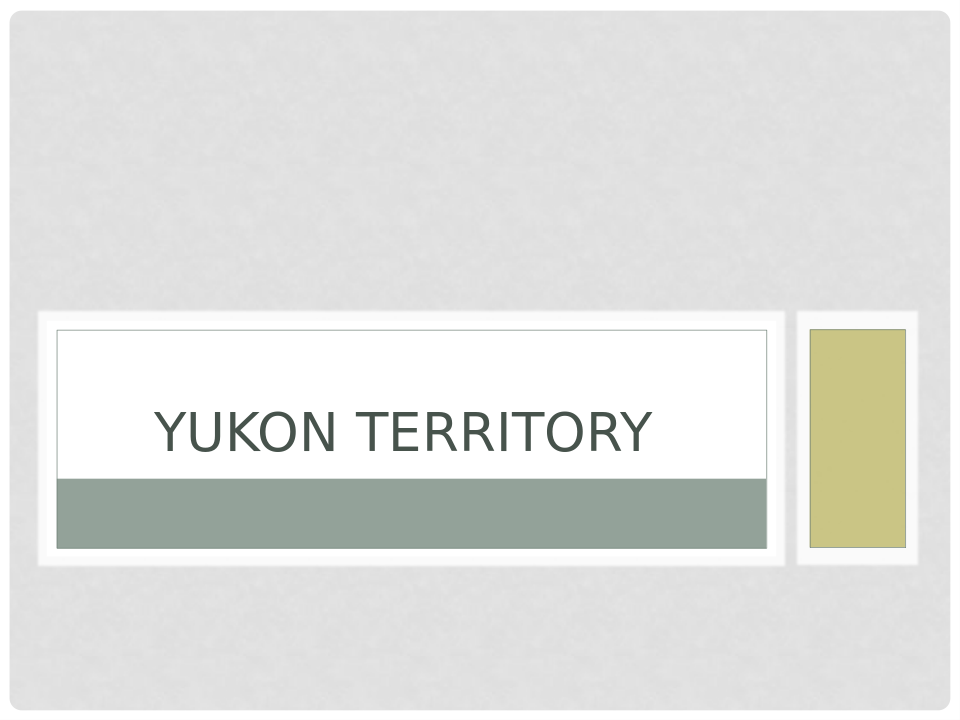
- Yukon PowerPoint
Yukon PowerPoint Delores Mast July 7, 2021 Provinces of Canada PowerPoints Yukon PowerPoint Document 00:00 / 01:04 Download Download A PowerPoint presentation on the Yukon Territory. Presentations in this series were created with the Living History Threads curriculum (Level 43) in mind, but they can also be used more generally. Each presentation covers a single Canadian province or territory, including quality photos of primary geographical features, capital city, and one or two visuals for a key historical event or other item of interest. Download Facebook X (Twitter) WhatsApp LinkedIn Pinterest Copy link Delores Mast
- Respect: Its Building Blocks
Respect: Its Building Blocks Neal Hackman September 27, 2019 Western Fellowship Teachers’ Institute 2019 Respect: Its Building Blocks Audio 00:00 / 01:04 Download Download In spite of current trends, respect is not out of date. All of us are called to treat one another with respect. In these three sessions, Neal explores practical and motivational aspects of this basic principle of relationships. Download Facebook X (Twitter) WhatsApp LinkedIn Pinterest Copy link Neal Hackman
- Wonders of the Deep (Pete Peters)
Wonders of the Deep (Pete Peters) Pete Peters April 10, 2017 CLE Workshops 2015 Wonders of the Deep (Pete Peters) Audio 00:00 / 01:04 Download Download Pete explores the glories of God displayed under the surface of the world's oceans. Courtesy Christian Light Education (CLE). Download Facebook X (Twitter) WhatsApp LinkedIn Pinterest Copy link Pete Peters
- A Slice of the Pie
A Slice of the Pie Marcus Kauffman July 20, 2022 REACH 2019 A Slice of the Pie Audio 00:00 / 01:04 Download Download We women have many competing demands for our time and emotional energy. Relationships are important to us. Family, church, ministry, and community responsibilities stretch us thin. How do we enjoy our pie, one slice at a time? Download Facebook X (Twitter) WhatsApp LinkedIn Pinterest Copy link Marcus Kauffman
- Defining Integrity (John Coblentz)
Defining Integrity (John Coblentz) John Coblentz October 16, 2012 Teachers Conference 2012 Defining Integrity (John Coblentz) Audio 00:00 / 01:04 Download Download Integrity begins with the God who embodies truth. We show integrity when our words and actions come out of the truth of our soul. Download Facebook X (Twitter) WhatsApp LinkedIn Pinterest Copy link John Coblentz
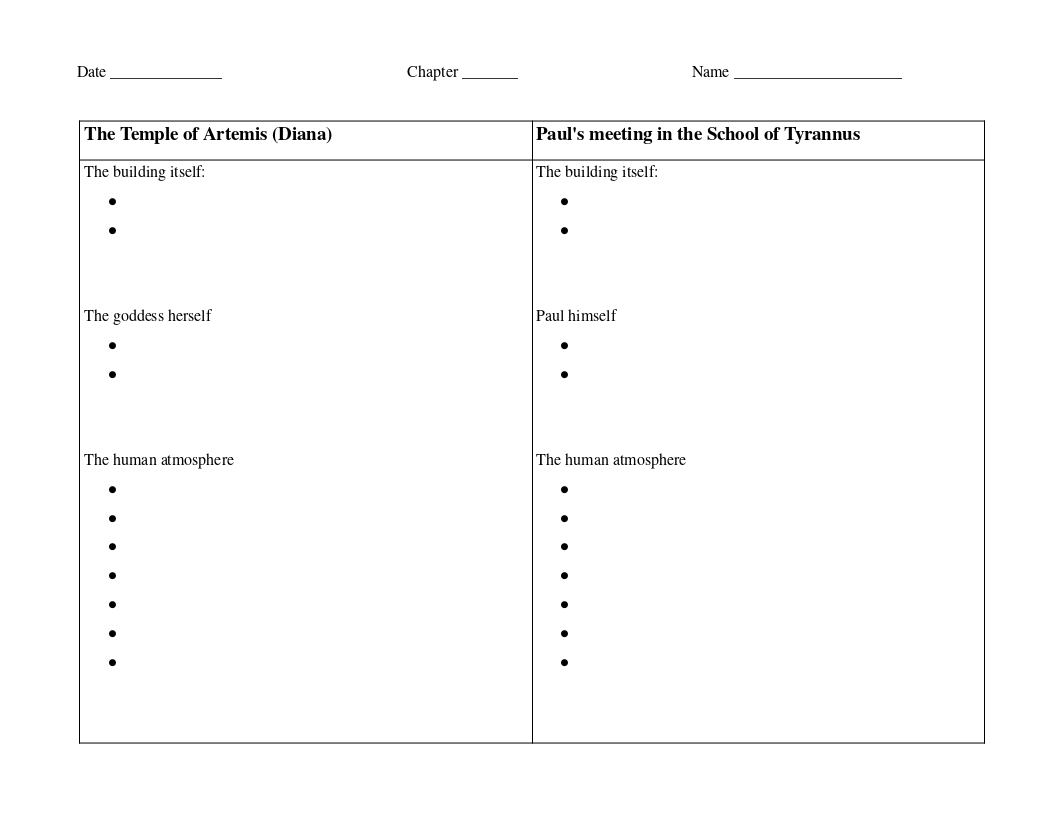
- Twice Freed Chapter 06: Visual on Temple and School
Twice Freed Chapter 06: Visual on Temple and School Betty Yoder February 8, 2017 Resources for Twice Freed Twice Freed Chapter 06: Visual on Temple and School Document 00:00 / 01:04 Download Download A chart to help students compare and contrast the temple of Diana of the Ephesians with Paul's teaching sessions in the school of Tyrannus. Download Facebook X (Twitter) WhatsApp LinkedIn Pinterest Copy link Betty Yoder
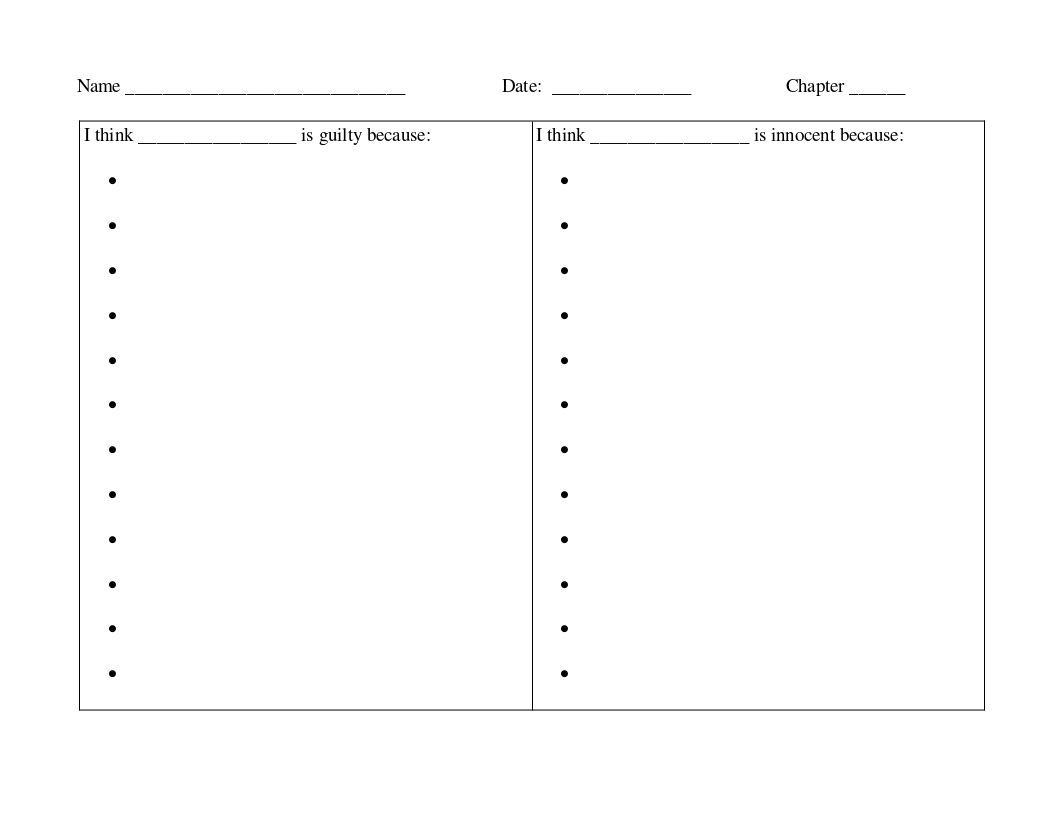
- Twice Freed Chapter 03: Who is Guilty?
Twice Freed Chapter 03: Who is Guilty? Betty Yoder February 8, 2017 Resources for Twice Freed Twice Freed Chapter 03: Who is Guilty? Document 00:00 / 01:04 Download Download A simple "Who is Guilty?" activity chart for chapter three of Twice Freed by Patricia St. John. Download Facebook X (Twitter) WhatsApp LinkedIn Pinterest Copy link Betty Yoder
- I Have a Question!
I Have a Question! Arlene Birt October 22, 2020 I Have a Question! Blogpost 00:00 / 01:04 Download Download “Mrs. Birt, I have a question!” Nelson called out. Nelson has many questions. When is God’s birthday? What does God look like? What is your name? (It is not Mrs. Birt!) I appreciate when children ask questions as they are learning and show that they are curious and wondering about their world. Children sometimes ask questions when I am reading aloud. “What is a coyote?” “What does ascend mean?” They ask questions related to our lessons. “Why does ‘know’ have a ‘k’?” Asking questions helps them learn, aids in clarifying information, and gives information. How do teachers handle questions from children? Sometimes I will ask them to find the answer. Renee asks, “Where do I put this paper?” I tell her to read the morning list: “You will find the answer.” I may direct students to reread a page or story to find the answer to a question. I may say the answer. Maybe I don’t know the answer, so I tell them I will look it up. (I need to make a note of the question, so I remember to do that!) We can then have a brief lesson on what I find. Currently I have it on my list to find out how large zebra’s eyes are! Questions are also a good teaching tool. Teachers ask high-quality questions of their students to spur thinking, begin discussions, direct understanding, and engage students. Questions are a great method of assessing knowledge retention. We are studying “Questions and Questioning” in our staff professional development sessions and thinking about the kinds of questions we ask and how we can use questions to grow in our teaching. Some questions are used for classroom management, while other questions ask for information recall, and we need these types of questions. However, for learning purposes, we want to have higher-level questions to develop deeper thinking. Looking at Bloom’s Taxonomy (table below) can help in developing higher-level questions. The words in the taxonomy can be used to plan quality questions and aid in higher level thinking. On the Evaluation level, use the “trigger words” to create questions of assessing, evaluating, or defending. You can ask students to support their answers with evidence from the text, as on the Analysis level. Table from Doherty, J. (2017). Skilful questioning: the beating heart of good pedagogy. Impact Journal of the Chartered College of Teaching. One of our PD activities was reading a text and coming up with good questions. We then asked a colleague to evaluate our questions. I realized that I need to plan ahead on questions. I need to write the questions ahead of class and not try to come up with good questions while I’m teaching. Teachers may write questions on the board and have students discuss them with a partner for a few minutes before writing or sharing their answers. The students may be required to give evidence to defend their answers. Questions may be used to drive a class discussion, or be included as part of a test or used for morning work. Students may be directed to write the questions. Here are some strategies for using questions (adapted from Doherty, 2017): On the Hot Seat: Students take turns sitting in the ‘hot seat’ and answering questions. Ask the Expert: The teacher asks questions of a student on a given topic, and encourages other students to also ask questions. Ask the Classroom: Display questions to encourage thinking about pictures or objects in the classroom. Phone a Friend: A student calls on a fellow-student to answer the teacher’s question. The first student also gives an answer. Eavesdropping: The teacher circulates in the classroom, listening in on groups, and asking questions based on their discussions. Question Box: The teacher has a box containing a series of questions. At the end of the day, or end of the week, take some time to choose a few questions for class discussion. What is the question? Provide the answer, and encourage students to determine the question. High-quality questions are powerful teaching tools. Let’s learn how to use them well! Download Facebook X (Twitter) WhatsApp LinkedIn Pinterest Copy link Arlene Birt
- Sexual Addiction among Us and the Way Forward
Sexual Addiction among Us and the Way Forward Arthur Nisly October 6, 2025 REACH 2022 Sexual Addiction among Us and the Way Forward Audio 00:00 / 01:04 Download Download Arthur Nisly addresses the pervasive issue of sexual addiction within conservative Anabaptist communities. He describes it as a powerful "tsunami" and a hidden "internal bleeding," emphasizing its devastating impact and the urgent need for action. He offers a message of hope, drawing on biblical teachings and his mentoring experiences to advocate for compassionate support, open dialogue, and practical steps toward freedom and restoration for those struggling. "Sexual Addiction among Us and the Way Forward" was presented at Reach 2022 by Arthur Nisly. Download Facebook X (Twitter) WhatsApp LinkedIn Pinterest Copy link Arthur Nisly
- Outline 49 Student
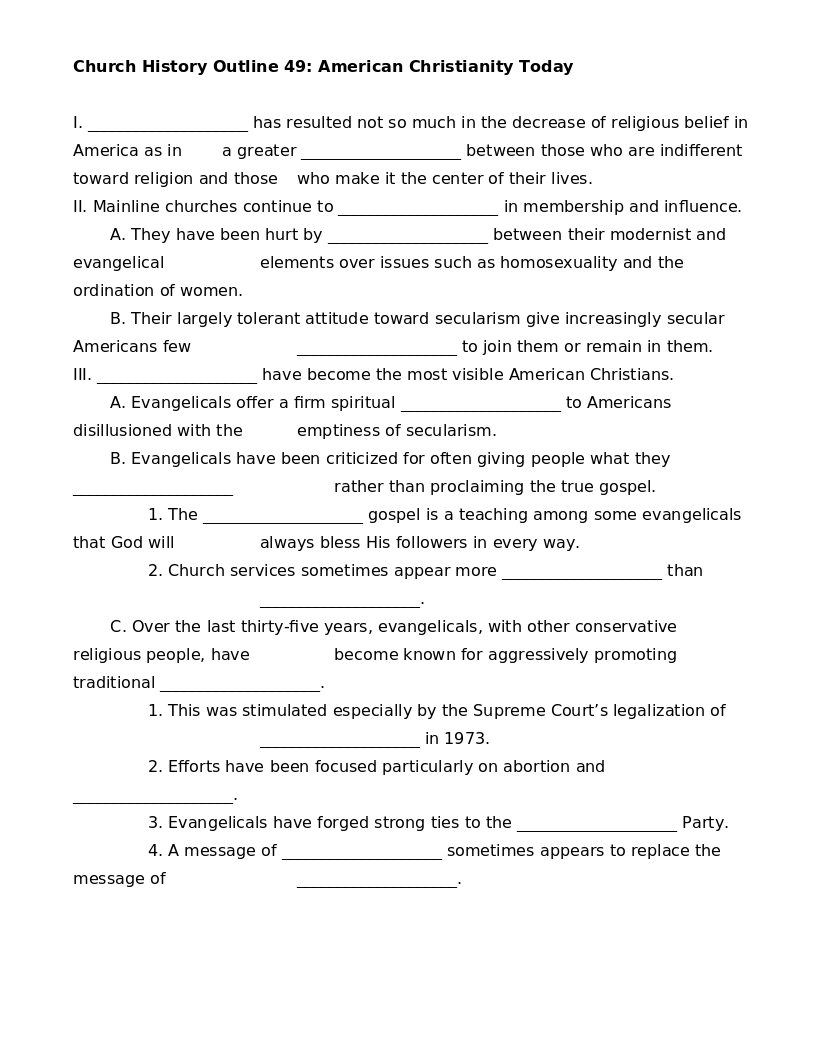
Outline 49 Student Peter Goertzen November 25, 2017 Church History 7: The Church in Modern Times Outline 49 Student Document 00:00 / 01:04 Download Download This student handout ties with the lesson outline focusing on American Christianity in the 21st centry. Because of increasing secularization in mainstream churches, many people have become disallusioned with Christianity. Evengelicals have become the most visible church, offering a firm spiritual foundation and promoting traditional morality. The emergent church movement has arisen emphasizing loving relationships with God and with others. Download Facebook X (Twitter) WhatsApp LinkedIn Pinterest Copy link Peter Goertzen
- Refreshments Will Be Served
Refreshments Will Be Served Arlene Birt July 20, 2018 Refreshments Will Be Served Blogpost 00:00 / 01:04 Download Download “Refreshments will be served.” Sometimes we hear this announced in regards to a meeting or event. Refreshments are not something I’m very good at. I don’t always think ahead, or I wonder, “What can I do quickly?” Serving refreshments can be a good means of fellowshipping or making the event a little more special. How about refreshment of the soul? I love my job and the work that goes with it, but it is good to have a time of refreshment. My mind and spirit need to be refreshed after a busy school year. One of my friends commented, “I’m sure you’re enjoying your summer break from school. It’s always good to have that time of refreshment.” I’ve been pondering this kind of refreshment. Yes, the summer should be a time of refreshing. What is this kind of refreshment? It’s easy to think, “Oh, I must do this—I need to get that done,” and just keep going with a busy schedule. One day during this summer vacation, I thought, “I’m tired. Maybe I’ll take a nap.” My next thought was, “No, I shouldn’t do that. I need to do ___________.” I stopped, and told myself, “It is summer vacation. I can take a nap!” So I did. I don’t mean to endorse laziness, but teachers do need to take some time for refreshment, for rejuvenation, for reviving. We work hard through the school year, and I had a goal of going strong until the very end. Now I need refreshment so I can be motivated to start the new school year well. I especially need the time of spiritual refreshment. I think of the verse from Acts 3:19, “when the times of refreshing shall come from the presence of the Lord.” I am refreshed as I take time for prayer and Bible study. I am refreshed as I stop working outside, sit on the bench, and just enjoy the lovely evening with its vibrant colors. Praising God in song or prayer as I enjoy His creation is refreshing. How can I find times of refreshment? At one point today when I looked at the clock, I realized, “It doesn’t matter what time it is. I have nothing scheduled for today.” I think that is refreshing, to lay aside the deadlines and schedules, busy-ness and appointments, and just go through the day. I am refreshed by being outside and working in the dirt and with the flowers. I like to pull weeds (except for that poison ivy!) and plant flowers, and watch the growth in the gardens. Often in the evening I walk around the yard and look at all the blooming plants and enjoy my Father’s creativity. Being outside watching the sky, clouds, breeze, moon, sunrise and sunset, a storm rolling in—these are times of refreshment. I keep an “Inspiration” file and it is refreshing to look back on the notes, letters, stories, quotes, and verses that I have collected. I find it refreshing to organize my folders and files at school and find ideas that I want to try and to feel like I have it together if only for a few weeks! Now I will “serve” some refreshments, a list of ideas for refreshment for your summer! Physical activity: mowing the yard, doing some extra cleaning, taking the dog for a walk Work on a hobby: coloring, making cards, sewing, painting, woodworking, gardening. Listen to music, podcasts, video clips. Travel! See a new part of the country, interact with a different culture, visit friends and family, take a personal retreat. Help someone: babysit, do chores, share advice and ideas, do something extra for Sunday School. Work ahead on a school project (This might not sound like refreshment, but it is nice to know that I have this ready prior to school beginning, so that is refreshing!) Take a nap, and don’t feel guilty. J Go for a drive and notice the surroundings. Read a book that is not about teaching or school. Plan a new unit and gather materials for it. Test a new field trip destination. Reflect and remember from the past year: the blessings, how God brought me through, what I want to do better next year. Learn something new: a hobby, a different skill or strategy for school, a new recipe. Spend time with friends and family. Today was refreshing for me. I slept in a bit, caught up on a number of little odd jobs that don’t get done during the school year, reviewed some Bible curriculum, sewed, worked outside, read, made scones for lunch, and now I’m baking chocolate chip cookies. I’ve been home all day, which doesn’t happen too often, and that was refreshing. Chocolate chip cookie, anyone? Download Facebook X (Twitter) WhatsApp LinkedIn Pinterest Copy link Arlene Birt
- Wonder through Science
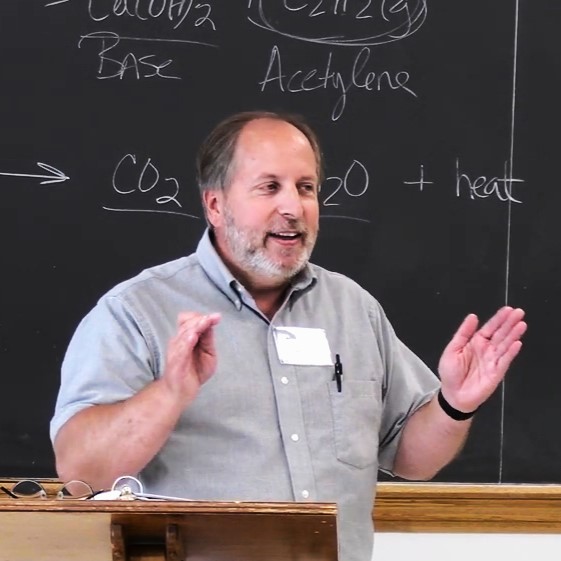
Wonder through Science Steven Brubaker March 22, 2024 Teachers Week 2023 Wonder through Science Audio, Video 00:00 / 01:04 Download Download Our interest here is thinking, how can in science class, can we help to maybe loosen the scales that are on our eyes and really see, really see the presence of God, the wonder of God in the world that he's made. So how can we teach science? How can we explore the created world that keeps that wonder, keeps that sense of awe, that sense that I'm small and this world is amazing that God is made. So, I asked the question, how can we, in our classes, take off our shoes? How can we cultivate this ability to see to where our jaws drop? And we say, "Wow. Yes. This is amazing!" And I'm going to suggest that, while the best jaw dropping is done in the context of seeing God behind it all, just dropping the jaw is in the right direction. So here are eight ways to take off our shoes. One: Look until Breathless Let's look and keep looking until I am breathless. So, this first one is about what we do as teachers. And I'm suggesting if we're going to inspire wonder, we have to feel wonder. And that means we're going to have to prepare. We're going to have to look. We're going to have to dig into our subject matter to the point where we come alive to it. If you want them to come alive to the wonder of the creative world, you have to really be alive to it. Marlene Lefever said this, "Becoming an effective teacher is simple. You just prepare and prepare until drops of blood appear on your forehead." You see, it's that kind of work that we need to do. You might say, "Oh, that's going to kill me if I do that." No. No. No. You have to push through the complexity before the simplicity comes. You have to push through some of the work before you really the scales drop off your eyes and you say, "Woah, this really is amazing!" We should not expect to inspire wonder if we don't thrill ourselves to what we’re teaching and learning together. Second, we need to identify a wonderful, a full of wonder, a wonder full focus or demonstration that can be do, that we can use. So here we're going to be talking about demonstrations. Some demonstrations have wonder built into them. I taught electricity and magnetism for many years. I've used Van de Graaff generators, which they can be, wonderful. I've made use of Tesla coils. I've used a variety of things, made little, small generators, or had the students make motors, a variety of things. But you know, I still, after years of doing that, the old (which I know many of you have seen this), but the old magnet in two is just a wonderful way of talking about electricity and magnetism. And in fact, it’s part of the reason what makes it so wonderful is that it's counterintuitive. Everybody knows that cardboard, there's no attraction between a magnet and cardboard. And now, this on the other hand is a what kind of tube? Looks like copper. It's a copper tube. Is a magnet attracted to copper? No. It is not. No attraction there. And we all know that when objects drop, they drop at 9.81 meters per second squared. That's the rate of acceleration. And if we drop that through this tube, it drops at that rate, 9.81 meters per second squared. And so, when we drop it through this, which is no different than the cardboard tube in terms of neither, subtracted to neither. When we drop it through this, it should also drop through at nine point eight one meters per second squared. But this time, I have plenty of time to catch it. See, that's a wonderful demonstration. And then we can go and talk about all kinds of things related to electricity and magnetism and so on. Two: Modify Ordinary Demonstrations And, you know, there there's lots of demonstrations that you can do. Just take common ordinary demonstrations, and by changing them up, adding features or whatever, you could turn them into something wonderful. Every child has grown up pouring vinegar into baking soda. I mean, that's just that's a right of growth or something for us. And so, you, but you can take that, and if you just did that, it would be, oh, what's the big deal? If you put it in a test tube, put a cork on it, and the cork spout it out, that would add some wonder to it. But you could also do things like... Let's just take a candle. So, what we're going to do is mix up some, you know, after we're talking after we've talked about the gas, carbon dioxide that's produced when we have baking soda and vinegar, we'll just mix them up into a container. Then we'll talk about how carbon dioxide is heavier than air and that it's a fluid, and you can pour it. And so, in order to demonstrate that we can pour it, we'll create some carbon dioxide, and then we will see if we can pour it down the trough and put out the candle. Since flames need oxygen, carbon dioxide covers it. So, I'd prefer to use a, a container like a I generally use a big gallon jar, but I didn't have one this time. So, I'm just doing it in a bucket. The bad thing about this is you can't see, the fizziness and everything. But it's producing some carbon dioxide in there. And now we will try to pour it down the trough, and boom. It's gone. Thank you. So again, you can just take some ordinary that they're used to and add some pieces to it to increase the wonder value. Three: Surprise after Content Third, content first, then the surprise. Once you have a reputation of giving discrepant events or wonderful dim full of wonder demonstrations, then you actually have some capital in the bank that you can spend by teaching content. So, if this is sitting there in front of your class, again, you can teach for an hour, and they're going to still be watching because they wonder, when are we going to get to the gun? And, but so what you do is you take, you know, your kind of maybe motion toward that a little bit, "What we're going to do today is we're going to talk about..." Maybe it's single displacement, double displacement reactions. Maybe you're just talking about balancing equations. But you can talk about, say, "Today we want to look and consider this equation and, see what's going on." We might label all of the different components. We might come along and say, well, "Is this a solid, liquid, or gas?" And so on. And so, we get in other words, we're just talking about a lot of things, maybe reinforcing, reviewing, or maybe I would take an equation like that and use it to teach a whole bunch of stuff, kind of build it around the one equation. We'll explore different parts of that. And so, calcium carbon, oh, we have some of that here. It's a rock-like chemical. And so, what are we doing? We're just putting it with water, and that's producing calcium hydroxide to form a lime. Of course, it's a base that we're producing. And then what is this thing? Has anyone ever seen it? Well, eventually, you can tell them that's acetylene, and someone will start to say, oh, we have that in tanks at our shop, and it burns. And it's okay. Well, let's see. Let's go ahead and take that gas that's produced, and this is a gas. So, acetylene we're going to take acetylene, and we're going to add oxygen to it. And what is that going to produce? It's going to produce carbon dioxide plus water, but also in the process there is heat. And we also know that, if we add a match and a fire to that, there's the potential for an explosion. So that's what this is for. So, you see the idea though is to be content rich. Talk about a lot of things, teach a lot of things, all hinting that something's coming. And what's the something? Well, we need some water. I have some water here. What we're going to do is put the water into the well. So that's going down here in this portion. And then we're going to get some of our calcium carbide. I don't want to introduce it to water too quickly. And so, we put some calcium carbide here in the... This is just a piece of PVC. Stick it in here. Now, when I turn that, that's going to dump the calcium carbide into the water. And that first equation will be descriptive of what happens, and it will be producing acetylene. So, I'm going to put... You'll notice this this cap has a little hole in it. That's where we can introduce the fire. And then, I'm going to... You may want to hold your ears when I put the fire here. It can be loud at times. So, if you're also a music teacher, you may want to hold your ears. Okay. So, we will, at this point, go ahead and turn that. Turn it a couple times and get it in. Hopefully, it's making some acetylene there for us. And then we'll see where it's pointed to. [loud noise] And there we go. There was the second equation. Now, if we wanted a little bit more excitement at this point, somebody would say, "Hey! Could we put some ammunition in this thing?" "Oh, we could try it again with that." There is enough explosive potential that you want to be sure whatever you put in here can get out or else other things will blow up and it won't be fine. So, the way it is, I generally just do not put something in just to make sure that it is reasonably safe in an indoor type of setting. Okay. So that was, content first. Four: Mystery, Discover, and Wonder Then the surprise number four. Surround your presentation with the language of mystery, discovery, and wonder. Part of being a science teacher is choosing language that that actually cultivates wonder. Back when I taught chemistry, with time I began to realize that the story of how we figured out that there are atoms and then something of what is in an atom, the protons, electrons, and neutrons, that that is a mystery story. And I started teaching it that way, and started thinking of it as a black box, and so on. And after a year or two of kind of playing around with that concept, probably the best compliment I ever got and as a teacher is when someone just came up and they said, you know, "This this is so fascinating. What we're learning about chemistry and the atom and so on. It's just like a great mystery story." And I hadn't said that that's what I was trying to do, but for them to feel that and recognize that was great. So, let's say that you are maybe you're working with titration, or, again, maybe a double displacement reaction or it's just kind of a hybrid. But, talking about this one and so we have an acid plus a base produce, in this case, sodium chloride and water. And you could do so the traditional way is to say, "It's an acid plus a base produces salt and water." And that's accurate. That's good. But see, you can also surround that with a bit more mystery, a bit more excitement if you've talked about how hydrochloric acid is the stuff that's used to clean bricks off. And if you ingest hydrochloric acid, you will cease to exist as a normal human being. And I mean, hydrochloric acid is nasty stuff. And then we talked about sodium hydroxide, and I could talk about the person that I knew that had swallowed some of that and how it ate through their esophagus before I mean, they were they survived it, but they had to put in an artificial... So, what we have here is a killer plus a killer produces believe it or not. What? Table salt! Salt water! I mean, you technically could technically you could do this equation in exactly the right proportions and drink the result, and it would be fine. See, that kind of interpretation of what we're doing helps to cultivate a sense of, of the significance of what is going on. When you can, when it is justified, make outlandish statements. Now be careful here. I've made some outlandish statements that I have had to retract because they weren't correct. And so, you want to be sure. But here's one that almost always will get high school students going, and that is, you say, you know, I have a toy gun or something. But you say, "If I have this bullet and I drop this bullet, it will take x amount of time to get from here to the ground. Now if at the same time I drop that bullet, I fire this gun. Or at the same time that the bullet leaves the end of the gun, I drop this bullet, and they're both at the same height, they will hit the ground at the same time." See, now that's an outlandish statement. That is not intuitive, and very few people... They’ll say, "I'm telling my dad." But there's when we find those things, and they're often there in science class, we can use those to kind of get the get the wonder bubbling. Five: Combine Demonstrations Fifth, we combine. Combine our demonstrations. Combine our studies with story. Include story. And these don't have to be elaborate necessarily. So, this particular... This is just a piece of glass that's been made into a mirror, but there's nothing special about it really. It’s slightly concave to keep this disc toward the center of it. This is just a piece of metal. Here's the story. Quite a few years ago, there was an engineer out in California, and he did not have quite enough work to do. So, he was sitting at his desk sometimes just kind of existing. And one day he got a quarter out and he was spinning it. Quarter was spinning there on his desk. And then he started to say, "I wonder how another, a heavier coin would spin." Then began to realize that when you spin something like this, it's actually not just spinning. It's rolling and spinning. And so, we begin to say, "Oh, well, that's actually scrolling." And that is a term. It's scrolling. It's not rolling or spinning. It's scrolling. And he got on the search for how, "I'd really like to find the optimal scroll." The way that the scrolling can happen that would maybe go the longest. And so, he tried different metals, different angles on his disc, different weights, different surfaces, and he found that this particular weight, size, and metal composition with a certain machining at the corner is one of the best. And so, we will scroll. You'll notice I didn't even really try to really spin it hard. [prolonged spinning] At this point, you would expect it to have been stopped. [ more spinning] So simple little novelty combined with story maybe can inspire things like, "Oh, what studies could I do? What could I experiment with?" Here's another one. This is a Tantalus cup. Also sometimes known as a temperance cup. Let's say, you can see it looks kind of like a wine chalice, perhaps. And if you look at it, you'll see there's some, it looks like the Parthenon, pictured on it some Greek imagery and so on. The Greeks, some say it was Pythagoras that developed this cup. And he did it in order to encourage temperance in your wine drinking. And so, the way this works is that for the person who was temperate in their wine drinking, say, you know, had a modest amount of wine, they could pour that into their cup, drink it, and everything was great. On the other hand, the person who was in temperate and they had a lot of wine in their cup, it would all drain out. I see all a little bit left there perhaps. Okay. So, you see, I couched that demonstration in just a little bit of a story about the Greeks and wine tasting and so on. But at this point, what I would actually, I might say, "Okay. Your test today is to draw what that cup looks like on the inside." And then we use that after we have discussed, air pressure. We've talked about siphons. We've talked about, yeah, basically in that arena. Use that as a test. Six: End with "Why?" Six. Sometimes ends with "Why?" See, teachers I have found, at least I know this is true about myself, is that when I have a good demonstration, I want to explain. And probably a big shift in my teaching over the last thirty years is to move from quick explanations to having the class explain what's going on. So, for example, if we have just been and we've been talking about density, I'll use this density bottle, and we observe that there's some kind of fluid, and there's white beads and blue beads, and then all we get there is shake it up and observe. [observing] Why? Describe it. I don't have to explain it if we have been talking about densities and so on and how that works. Again, I may just say, " Okay. I'm asking you now in the next five minutes to write a paragraph explaining why." Or maybe we're doing a unit on light and index of refraction. And then I bring this to the class [and] ask, "What do you see?" It's canola oil. But in addition to that, There's another beaker in there. Why does it disappear? Seven: Go Big. Get Dangerous. Number seven. Go big. Get dangerous. Another one of my favorite quotes is that "a good demonstration is one with the possibility that the teacher may die." That has a way of increasing wonder. So, for a long time, I did a little something with a ping pong ball and used a straw to blow past it and show that when you have high velocity in a liquid or a gas, that there's actually a lower pressure there. High velocity, low pressure. Low velocity in a fluid is higher pressure. And so, I might blow from a straw over a ping pong ball, and you'll see the ping pong ball rise to meet the air. Or go over to a faucet, you have water flowing. It's high velocity, but it's low pressure. So, if you take a ping pong ball on a string and bring it over close, the ping pong ball will be drawn over to the water. You can do it that way. Or you can go bigger. You can use this for your high velocity generator. And fortunately, it produces a ball for us, so we will see what we can do here. [leaf blower noise] Instead of blowing it away, it actually keeps the ball there. And we can move it a little bit because out here it's high pressure, and it's just pushing it into the low-pressure area, keeping it clear. Can you go higher with it? [leaf blower noise] Of course, we can go to the point where it won't stay in. You've probably taken, say, soda cans, put a little water in them and then heated them up so that things would expand inside, turn them upside down in water, they implode. Well, that's great. But then you think, "Oh, you know what? We could go big. We could get a gallon metal paint can and do the same thing with that." But you can say, "Oh, we could go big." And then you get a fifty-five-gallon drum and do that. So just be thinking bigger, Have you seen those air blaster? Forget what they're called exactly, where you can do smoke rings with them and so on. Those are great. But you can also get a big trash and create a mammoth one that will produce these humongous smoke rings. Go big. That has a way of increasing wonder, not just for high school students, but for teachers as well. I was at the garden sale here a couple years ago and found this. It's a martini glass, if you know it. A big one. You know, what a great way to do, color change demonstrations. So, in this case, I have potassium iodide solution in there, reasonably clear. In the cup, I have lead nitrate. So, this will be double displacement. We're going to produce potassium iodide. The potassium's going to mix with the nitrate, potassium nitrate, and we're going to have lead iodide. Lead iodide is coal. So, let's mix this together and see what we got. Now you could do that in a little beaker or something, and that's really cool, but there's something would you agree? It's a little bit more wonderful by having it larger, bigger, and so on. Eight: Point to God in Authentic Ways Finally, point to God in authentic, fresh, unique, creative ways. Now, I want to say again that the students having an experience is saying, "Wow. That's pretty neat. That's amazing! That's incredible! Wonder how that works? You know, that's really interesting!" That is in the right direction. You don't it doesn't always have to be directly connected to God. A posture of wonder is a very Christ like posture. It's a humble posture. It's the kind of posture that we need to be seeking to cultivate. But I find that there are ways in which, in those moments, you can point to God that's not tacky and it's not cliched, and it caps things off. So, I offered some questions. And where you get them thinking about, you know, what all is behind. So, ask good questions. Sometimes quotes can help you here. I'm going to give an example in just a moment. But there are some scriptures. But be careful here, folks, because we have this tendency to just tack a scripture on to something that really does not connect with hardly anybody. I remember seeing an I remember seeing an egg separator you buy at a Christian bookstore, remember seeing an egg separator you buy at a Christian bookstore, and it was, yeah, it was a real egg opener, you know, to kind of put the egg in, you put the thing down and puts in a whole bunch of pieces. And then she had a bible verse on it. Nothing can separate us from the love of God. Okay. Let's avoid that. But say, like, the passage there in Deuteronomy 6, the Shema, "The Lord is one." I have found that passage to be so helpful in actually making connections. "The Lord is one." The heavens declare the glory of God. Psalm 19 And we could go on. And then, you know, I find that that songwriters often get this right. So, we've already mentioned, "This is My Father's World." "I Sing the Mighty Power of God." Some of the songwriters really have brought together the creative world and the creator in ways that I think we can use sometimes in our classes that might feel fresh. But above all, I would just say, to stay tuned to your students. What are the ways that authentically connect them to God? That that don't feel tacky to them, that feel genuine. And you're going to have to learn it. You might even have to change. I have to use a different language now than I did twenty-five years ago in order to do some of those things. We can look for ways to even sometimes obliquely turn the attention of our students toward not just the wonderful thing that we've done, but a recognition of the one who's behind it. If I were to do this in a classroom setting, I would lead a discussion on what are the five most important numbers in mathematics. And those numbers are zero, one, π, e, and i. And these numbers are the numbers that you could say are behind the major mathematical disciplines. [I] won't get into that, but I would talk about each one and how each one is absolutely phenomenal. It's an incredible number. And how numbers like π, you know, 3.1415927 ad infinitum forever number, amen, non repeating, non terminating. And then e, a similar kind of number, and I talked about, and and I can't. I want to. I wanna talk about e because e is so amazing. All of these numbers are amazing. And then after we talk about those four, then we talk about how i is even in kind of in a different league. It's in a different world. And and so we have these really strange numbers, and yet we can put all five of them together like this: e raised. We're using not multiplication, division. We're using we're using powers here. e^πi+1=0 Now, I need to build that up in order for us to feel the wonder of that. But that's amazing. And then you see, after we'd explored kind of some of that, then I would end with this quote. And this is a quote from an MIT professor, an atheist. He said, "There is no God, but if there were, this formula would be proof of his existence." That's an oblique way, and I think compelling way, a non cliched way to point our students to the God behind, not just science in the creative world, but mathematics as well Download Facebook X (Twitter) WhatsApp LinkedIn Pinterest Copy link Steven Brubaker
- Christian Perspective On Law And Politics: Student
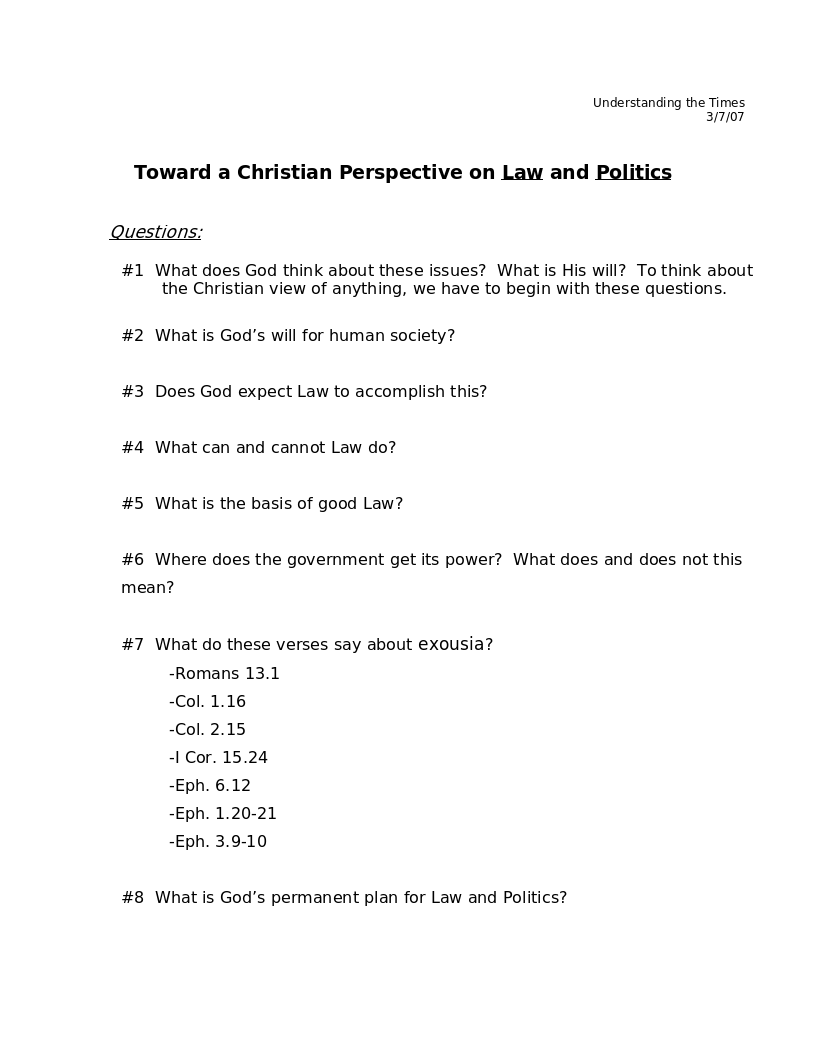
Christian Perspective On Law And Politics: Student Kendall Myers November 15, 2017 Worldviews Class Materials Christian Perspective On Law And Politics: Student Document 00:00 / 01:04 Download Download Questions for students about what a Christian's view of the government should be. Bible verses are given. Download Facebook X (Twitter) WhatsApp LinkedIn Pinterest Copy link Kendall Myers
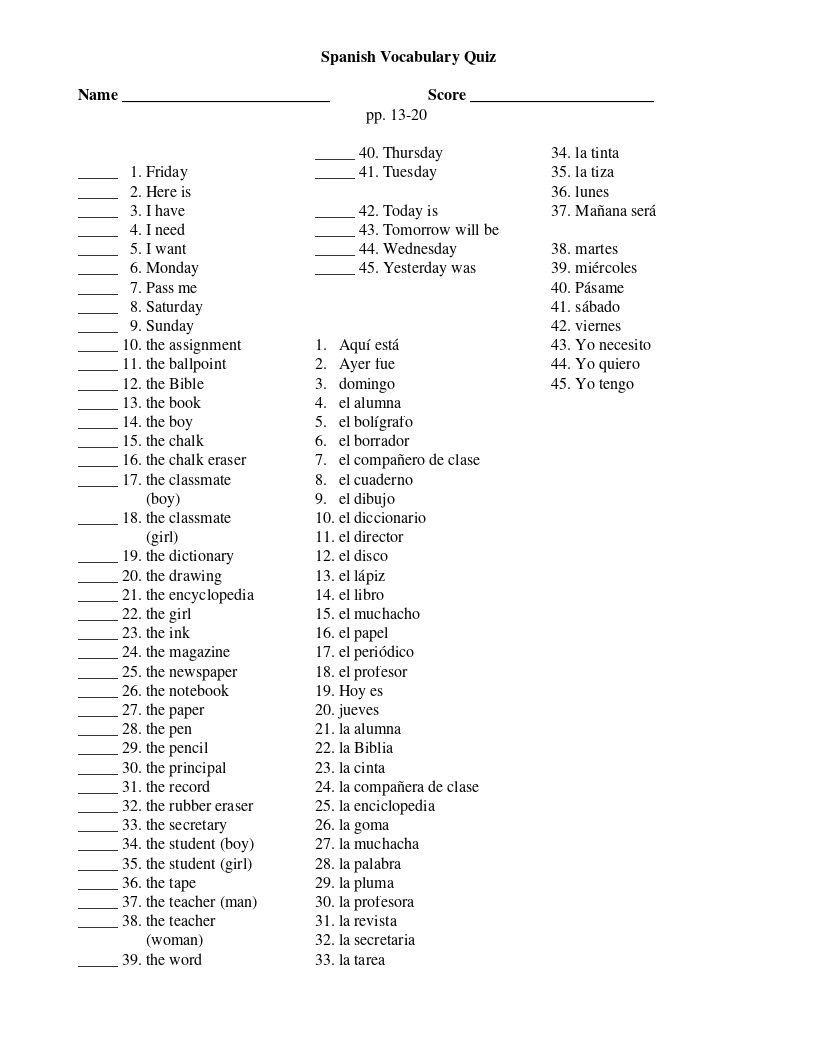
- Spanish Vocabulary Quiz 13-20 for Abeka
Spanish Vocabulary Quiz 13-20 for Abeka Enos Stutzman September 29, 2017 Quizzes for Abeka Spanish I Spanish Vocabulary Quiz 13-20 for Abeka Document 00:00 / 01:04 Download Download This quiz covers vocabulary from pages 13-20 in Abeka Spanish 1. Download Facebook X (Twitter) WhatsApp LinkedIn Pinterest Copy link Enos Stutzman
- World History 20A The Great War Part 1
World History 20A The Great War Part 1 Kendall Myers December 22, 2017 Supplementary Materials for BJU World History World History 20A The Great War Part 1 Document 00:00 / 01:04 Download Download Powerpoint showing key people, places and causes at the beginning of World War I. Download Facebook X (Twitter) WhatsApp LinkedIn Pinterest Copy link Kendall Myers
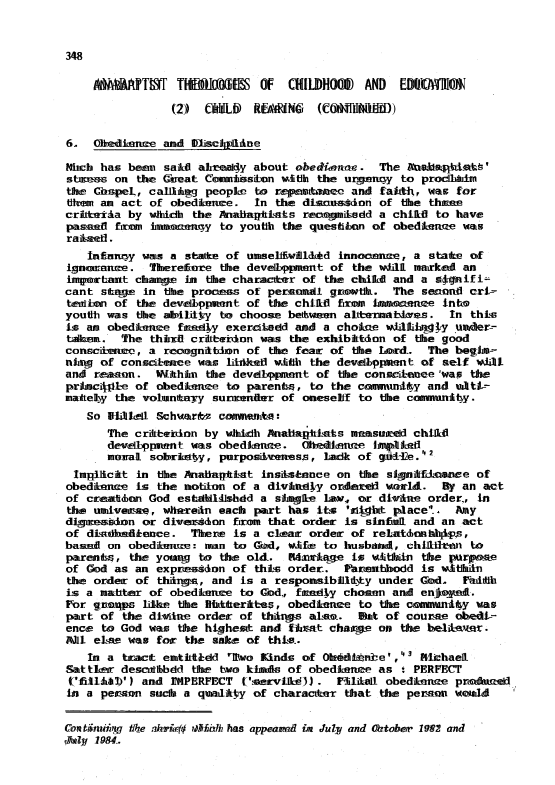
- Anabaptist Theologies of Childhood and Education: Child Rearing, part I
Anabaptist Theologies of Childhood and Education: Child Rearing, part I Unknown Contributor January 23, 2017 Anabaptist Theologies of Childhood and Education Anabaptist Theologies of Childhood and Education: Child Rearing, part I Document 00:00 / 01:04 Download Download In this series from a British Baptist journal, David Tennant examines the implications for education of the Anabaptists' doctrines concerning children. In this section, Tennant examines the practices of child rearing as they flowed from Anabaptist theology. Baptist Quarterly 30.8 (October 1984) Courtesy James Tennant/Baptist Quarterly. Download Facebook X (Twitter) WhatsApp LinkedIn Pinterest Copy link
- The Church Comes To Life Notes on Powerpoint
The Church Comes To Life Notes on Powerpoint Kendall Myers September 29, 2017 Introduction to Church History Class by Kendall Myers The Church Comes To Life Notes on Powerpoint Document 00:00 / 01:04 Download Download Basic Powerpoint to help students take notes during the lecture on the church's beginning. Download Facebook X (Twitter) WhatsApp LinkedIn Pinterest Copy link Kendall Myers
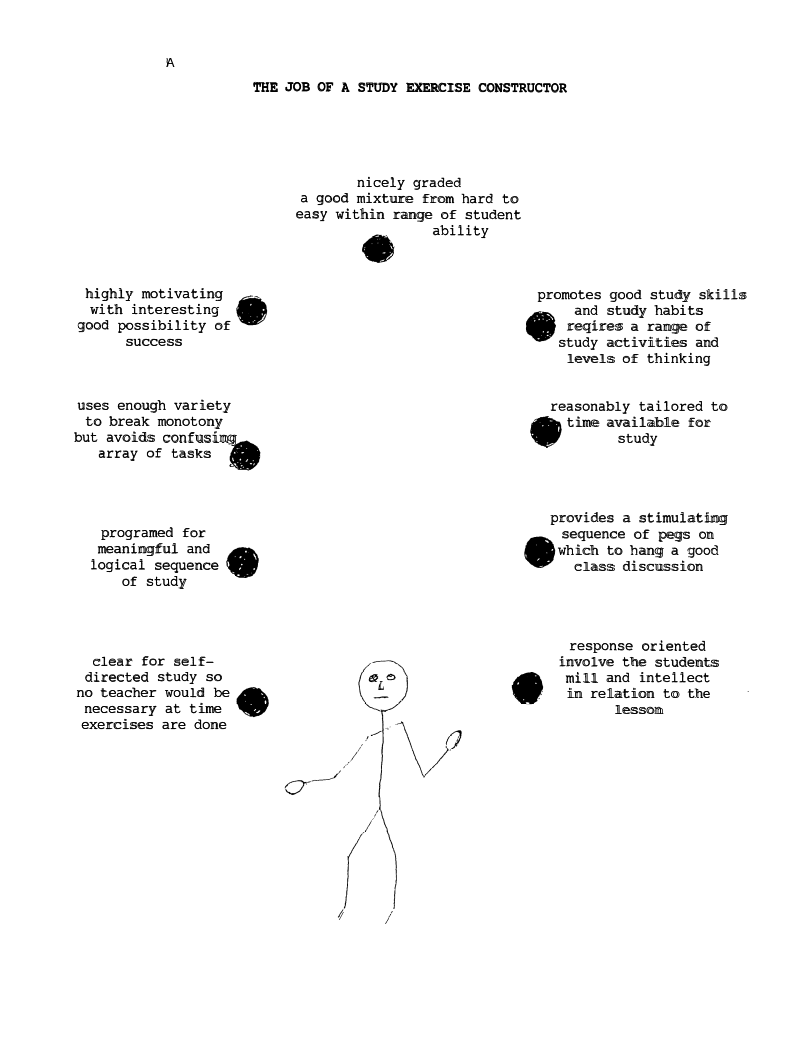
- Job of a Study Exercise Constructor
Job of a Study Exercise Constructor John Swartz January 23, 2017 Job of a Study Exercise Constructor Document 00:00 / 01:04 Download Download This document contains two sections, one with general rules for constructing study exercises, and one with exercises to identify Bloom's taxonomy levels in questions. Permission to share via John Swartz. Courtesy John Swartz. Download Facebook X (Twitter) WhatsApp LinkedIn Pinterest Copy link John Swartz
- Plant Reproduction Worksheet
Plant Reproduction Worksheet John Mark Kuhns July 31, 2025 Worksheets for BJU Biology Plant Reproduction Worksheet Document 00:00 / 01:04 Download Download In this worksheet, students will learn more about the processes and structures of plant reproduction. Download Facebook X (Twitter) WhatsApp LinkedIn Pinterest Copy link John Mark Kuhns
- Creating Kingdom Citizens
Creating Kingdom Citizens Meghan Brubaker September 12, 2024 Creating Kingdom Citizens Blogpost 00:00 / 01:04 Download Download What if I told you the most important thing you can teach your students is not in a textbook? I believe this is true, though I hold learning in the highest regard. As a teacher, your job is to teach content, striving for academic excellence and robust learning. But that is not your only job. As a Christian teacher, your job is also to help shape your students to be lovers of God and lovers of others. This can happen through the teaching of academic content, certainly. But you’re also spending up to 180 days with young souls who need to be pointed to Jesus. And you are in a unique position to point them there. One way that a teacher can lead their students in following Jesus is by giving them opportunities to serve. This might come in in simple, organic ways as you have your eyes open to immediate needs around you. Did the wind blow the dumpster open, scattering garbage all over the school yard? Take a few minutes as a class to collect the trash. Did another class play outside in the rain and track mud all over the hallway? Get each of your students to grab a paper towel and clean one section of the hallway. Do the younger students need help getting their mittens and boots on before going outside in the winter? Have your students help them. But you can also give your students opportunities to serve beyond the random, momentary opportunities that will pop up. With a bit of planning and minimal preparation, you can create other ways for your students to be servants. Here are a few ideas to get your imagination rolling. Acts of Service Look into your immediate community for needs that your students can fill. Maybe you can do yard work for the neighbours. Maybe you can go door-to-door or to a retirement home and sing Christmas carols. Maybe you can make artwork for your nursing home aide friend to pass out at her place of work. Beyond encouraging your students to serve in their local community, you can also look for needs within your church or the churches of your students. Make cards for a shut-in, write thank-you notes to the pastors, or do yard work for the elderly. On an even smaller scale, don’t neglect to look for regular opportunities around your own school. There may be a maintenance or cleaning task that needs to be performed regularly that is within your students’ abilities to perform. Volunteer to have your class take care of it. Fundraiser Another great way to serve is to help your students conduct a fundraiser, then give the money to a good cause. It is so healthy for our students to learn how to work hard for monetary gain, then use that money to help people who are needier than they are. I’ve heard many stories of teachers who have found creative ways to raise money with their students, such as baking and selling Christmas cookies, selling chocolate bars or soda pop at a profit, making a hot lunch for the school body and charging per meal, or selling hot chocolate on a cold day. Once you’ve accrued enough money, students especially enjoy getting to have a voice in where the funds go. You could offer a list of ideas and let them vote. Or you could find an organization that lets you purchase things like cows, pigs, chickens, etc. for needy families in underdeveloped countries. Students love hearing about the ways different animals could help to change someone’s life and choosing several to sponsor. Encouraging Others Some of my favourite memories from my years as a teacher were what I called “Encouragement Days.” (The title wasn’t all that original, I admit). I taught sixth grade, so I started by talking to my students about how they are leaders among the elementary students. Then, we worked together to make little cards of encouragement for all the younger students. I had a few templates for them to choose from, usually with a simple drawing and a punny saying. (For example, a cartoon donut saying, “Donut give up!” or a cute fish saying, “You’re o-fish-ally awesome!”) Each of my students was assigned the names of several students so that all of the children in the younger grades were divvied out. They made a card for each of their assigned students, writing the child’s name at the top and signing it, “Your Secret Encourager.” This was the part that was especially fun. Children love to be in on a secret, and they love to be sneaky. We attached a small snack to the note, maybe a little baggie of goldfish crackers or a piece of candy. Then, I let my students leave the classroom one at a time to deliver their notes to the younger children’s cubbies. They would come back giggling and glowing, bursting with stories of how they “almost got caught” or had to duck to avoid being seen by someone. We usually did this at the end of the day, and it was pure delight to watch my students’ faces gleam with barely-concealed satisfaction at the buzz that permeated the school at dismissal as the younger students reacted with shock and wonderment at the secretive packages. The anonymous nature of this activity was intentional. Needing to be stealthy made the whole experience more memorable and fun, and I also wanted my students to learn something of what it means to do a kind act and not get recognized for it. Secret Agents of Good After the highly successful Encouragement Days, one year I decided to come up with another way to capitalize on my students’ delight in secrecy. That’s when I came up with “Secret Agents of Good.” I share this here not because I think you need to do this exact thing, but as one example of how you might use some creativity and out-of-the-box thinking to encourage your students in kind, servant-like behaviour. I divided my students into two teams and allowed them to come up with a team name (of course, because that’s more fun). For the purposes of this explanation, though, I’ll simply refer to them as Team A and Team B. In addition, I let each student come up with their own “Secret Agent” name. This was also fun and hilarious, as they ranged from things like “Sneaky Snake” to “Bob.” Then, each week, I’d assign them a secret mission. These secret missions varied, but were ways they could practice being thoughtful, kind, unselfish, or diligent. They were things like holding doors open, saying please and thank you often, letting others go before them in line, making only encouraging comments while playing sports, double-checking their spelling lists before handing them in—basically areas that I wanted them to work in developing themselves as a person. I’d write that week’s secret mission on pieces of paper and distribute them. All of Team A was given the same mission, and all of Team B was given the same mission. Their goal was to complete the action as many times as they could throughout the week, recording each instance in a little notebook I had given them. They would receive points for each time they successfully completed the mission. One week, for my own delight and pleasure, I gave both groups the mission of participating extra well during grammar class. I’ve never enjoyed teaching grammar more, and I dare say they had never learned grammar so well. The other way we made it competitive and fun was that they could also receive points for correctly guessing the other team’s mission. This meant that they had to be sneaky when they were completing their own secret mission so that the other team wouldn’t easily figure it out. And of course, I pointed out to them that the best way to keep the other team from guessing their secret mission was to do lots of other kind and thoughtful things as a decoy. They loved it. And I loved seeing them delight in doing good while also unconsciously making those actions a more habitual part of their lives. Church and Community Needs Don’t neglect letting your students offer suggestions for service. The more ownership they take of these acts of service, the more invested they will be. Ask them to come up with ideas of how to serve. Perhaps they know someone with cancer, or someone who just experienced a house fire, or someone who just lost a loved one. Brainstorm together how you could bless that person in the unique need they are facing. Your students are creative in ways you as an adult might not be. Use that creativity to bless others in beautiful ways. We live in a world that is increasingly individualistic and self-centered. As believers, we know that Jesus compels us to serve. But our sinful, selfish hearts get in the way. Our students may need help to think outside of themselves and their own little worlds. But when they are given opportunities to serve, they can start to experience the joy of becoming more like Jesus. Download Facebook X (Twitter) WhatsApp LinkedIn Pinterest Copy link Meghan Brubaker