Avoiding the Mid-Year Drift
I had a rather amusing revelation recently. It struck me that my classroom has seemed more peaceful and orderly in the past few weeks than what it did earlier. I wondered why this could be, because the natural tendency is for things to head in the opposite direction if I am not careful. I could not recall any extra effort on my part to keep my students quiet and focused. And then I laughed when I remembered the one thing I had changed: I outlawed slime a few weeks ago.
I may be a more permissive teacher than some, and in general I make very few rules about what students are or are not allowed to have at their desks. Some students are, in fact, able to focus better if they have something small to play with while listening in class. I have also seen countless fads come and go, so I am not quick to outlaw specific things. When slime became all the rage among my students near the beginning of the school year, I thought the craze would soon wear off. Unfortunately, it didn’t. I soon needed to put some limits on when students were allowed to play with it, but I did not ban it entirely. Students still played with it during story time and in various pockets of free time and when they finished all their assignments in study time. If someone had a big container of slime, other students wanted to borrow some, and so passing globs of it around became a distraction. Soon most students were spending all their spare time playing with slime instead of reading books and creating artwork. I knew the slime had to go.
When I realized how happy I was with my newly slime-free classroom, I was reminded of times when this has happened before, not specifically with slime, but with other objects or activities in the classroom that became a hindrance to learning. It is easy to allow a gradual slide into bad habits if I do not keep a constant effort to steer my ship in the right direction. Just because I started the school year with good procedures and routines does not mean I can sit back and let things drift into autopilot. It is my job to make adjustments when I see the need for them.
Making mid-year modifications to rules or routines can be difficult. We may have subconscious excuses: It’s too much work to enforce this. I don’t want to upset my students or take away something they enjoy. We’ll do better after all the excitement of Christmas. We’ll do better after our schedule stops being disrupted by snow days and delays. I write this as much for myself as for anyone, because know that I am proficient at making excuses like this, and I know that my classroom is a better place if I do not give in to those excuses.
I like to have little talks with my students now and then about how we are doing, prompting them to think of ways to adjust their habits and to make our classroom a better place for learning. Sometimes I am surprised at the things they point out. Together my students and I can renew our awareness and recognize ways we have become blind or indifferent to what we ought to be doing.
At the same time, we need to allow grace—for ourselves and for our students. We face realities of sickness, disrupted schedules, and various external factors over which we have no control. This year I repeatedly need to make peace with the fact that my classroom is often noisier than I would like it to be. I have many students in a small space, and my class contains some big personalities. While I do need to stand guard and not let noise hinder learning, becoming a control freak over this would serve no purpose. My expectations need to be realistic.
If you have been on the fence over whether to implement a new routine, ban a particular activity that has been bothering you, or establish better habits in your classroom, perhaps now is the time to do it. Each day you can take small steps to urge your students to excellence.


TEACHERS NEEDED, 2026-2027
Do you want to make a difference in Childrens Lives??
At Bethel Dunkard Brethren School (located in Bethel, Pennsylvania) we have several teaching position open for the 2026-2027 school year. Kindergarten position which has classes Tuesday, Wednesday and Thursday.
We also have teacher openings in First, Second, Third and Fourth grade.
We use the Abeka ciriculum.
Our goal is to equip our student with quality academics and Bible teaching.
Please feel to reach out for my info: contact Jeff Eberly, 717-821-7433 or Eberlyjeff@gmail.com


When the Students Become Teachers
I am a teacher. That means my main job is to teach things to students, isn’t it? I teach and they learn. Perhaps this is true, in a way. But I have found that one of the first requirements for being a good teacher is to be a life-long student, and sometimes that means that my students are my teachers. And no, I do not teach high school. I teach third grade. These children were babies only eight years ago, and yet I have gained a wealth of knowledge from these little teachers.
What have I learned from my students over the years? Here are a few things that come to mind:
My students teach me wonder and delight. In her lovely poem “My Work is Loving the World,” Mary Oliver says, “Let me keep my mind on what matters, which is my work, which is mostly standing still and learning to be astonished.” It is a shame that somewhere in the path to adulthood, most of us forget how to be astonished by the incredible world that surrounds us. One of the best cures for cynicism is to look at the world through the eyes of a child, and my students teach me this continually. We watch caterpillars turn into butterflies, and for them it is complete magic. I let them look at things under a microscope, and they are enthralled. I teach them to sing round songs, and they are thrilled by the wonders of harmony. When I feel weighed down by the daily grind of the ordinary, I need my little teachers to remind me that everyday life is a gift to be savored.
My students show me generosity. Children are the best givers. My students sometimes put me to shame in how quick they are to share with each other. A student who accidentally left his lunch at home may end up with more food than he needs, as his classmates rally around and share what they have. When students give me gifts, I love to see the light in their eyes. They are learning the joy of giving, and I am constantly learning it with them.
My students exemplify forgiving and forgetting. A friend of mine recently switched to teaching second grade after working with high schoolers for several years. She said that one big difference in teaching young children instead of teenagers is that second graders don’t hold grudges. I have much to learn from this wonderful trait of children. They tend to forgive and forget and move on much more quickly than adults. Two students may have a huge disagreement one day, and the next day they will be the best of friends and behave as though nothing had happened. Earlier this year, I had a difficult day with one student. I was not sure that I had used the right approach in correcting her behavior, and I was afraid she might be upset with me. But at the end of the day, she gave me a hug on her way out the door and said, “I love you. Thanks for teaching!”
My students have taught me to slow down. We live in a hurried world. Children are adept at teaching us the art of slowing down. Unfortunately, this can often be annoying and inconvenient. I read John Mark Comer’s book The Ruthless Elimination of Hurry recently, and an important point he makes is that it is hard to love when you are in a hurry. I see the truth of this in my classroom. The times when I am most likely to be exasperated with my students are times when I am in a hurry to get through a lesson or to finish a project. Then I view their neediness as an interruption instead of an opportunity to show love and patience.
My students often show me ways that I relate to God. Sometimes I have recognized that the words coming out of my own mouth while talking to a student were really God’s words to me. It seems that every year I have at least a few students who are constantly rushing ahead and are so concerned with getting the next thing done that they miss important instructions in the present. As I considered why this is so frustrating to me, I realized that it is precisely the way I relate to God sometimes. I can think of many instances where I may never have gotten through to a student, but God got through to me.
What are you learning from your students? As we take time to listen and discover, our students can lead us to become better teachers.

6th and 7th Grade Teacher at Maple Grove Mennonite Academy in New Holland, PA
Maple Grove Mennonite Academy in New Holland, PA, is looking for a 6th and 7th grade teacher for the 2026-2027 school year. We are a Waldorf-esque school in our sixth year and have around forty students from diversified backgrounds and a variety of conservantive Anabaptist churches. Responsibilities include teaching math, English, spelling, science, and history. Perks include four field trips a year, as well as choir, band (including a marimba ensemble), and art classes every day. Please contact Deana Swanson at littleflock7@gmail.com for more information.

Recess Games for Upper Elementary and Middle School
Group recess games are a staple of every school playground, but sometimes teachers and students alike can grow weary of playing the same ones over and over again. Here are a few recess games you might consider adding to your rotation.
FRISBEE/TENNIS BALL GOLF
Materials needed: A frisbee or tennis ball for each student. (Using tennis balls instead of frisbees makes the game easier, especially if students are not proficient at throwing frisbees.)
Considerations: Works best outdoors.
The aim of the game: Like golf or disc golf, to complete the “course” in the least number of throws.
Instructions: This game is, quite simply, disc golf without fancy tees or baskets. Create a plan for a course that stretches around your school property. You will want to choose a succession of starting points (tees) and ending targets (holes). This will be things like “start by standing on first base of the baseball diamond and try to hit the second maple tree beside the playground.” You can either instruct your students about the “tees” and “holes” verbally or create a little map for them.
Students start on the tee and try to throw their frisbee/ball to hit the hole. Wherever their first throw lands is where they will stand to throw their second shot and so on, until they hit the final target. They keep track of their number of throws.
If you have a small number of players, you could travel through the course as a whole group. With a larger number of players, you will want to divide them into small groups and have them start at various places along the course.
POST TO POST
Materials needed: A large outdoor space with 3-5 “posts.” These posts are merely stopping points in the game; they could be a tree, a base on the softball diamond, the corner of a building, a strategically-placed cone, etc. You will want these posts to be arranged in a somewhat circular pattern around the property.
The aim of the game: To be the first player to complete the route three times.
Instructions: Start by choosing the posts and making sure each student understands where they are and what route they must run in order to reach each post in succession.
Choose several players to be “it” (probably around 10-15% of the players). They are trying to tag as many players as they can.
The other players will go to any post to start the game. While on the post, they are safe and cannot be tagged. Their goal is to run from post to post without getting caught. Those who are “it” may hide around corners, behind trees, etc., in order to catch players unawares as they run by.
Each player is attempting to be the first to run three complete circuits (at which point they are declared the winner). If a player is tagged, they must return to their starting point and start that circuit all over again.
If a player gets tagged three times, they also become “it.”
Options for variation:
We used to play that players were allowed to take seven steps from a post and still be considered “safe.” This allowed for them to get a bit of a start from the post without being in danger of getting tagged, which helped the game keep moving. Once a player took an eighth step, they were then able to be tagged from that point onward. This is an optional rule.
You might choose to allow students to reverse their course throughout the game and run around the route in the opposite direction. However, specify that they may only change directions at the post on which they started the game. That way, students can easily keep track of how many complete circuits they have made.
WAVE
Materials needed: A cone or landmark (such as a step, post, tree, etc.) to be the home base.
Considerations: Works best as an outdoor game.
The aim of the game: To be among the last players to be caught and to help free those who have been caught.
Instructions: One person is chosen to be “it.” They close their eyes and count to fifty (or some other chosen number) while everyone else runs and hides somewhere nearby. The person who is “it” may circulate freely to try to find people. If they see someone, they catch them simply by calling out their name.
If a player’s name is called by the person who is “it,” they must go to the home base. They will stay there until they see any player who has not been caught waving at them. If they see someone waving, they may run away and hide again. If the person who is “it” is nearby and sees them escaping, they may call out their name again, in which case the player must return to the base and wait to see another wave.
You will want to make it clear that players need to escape within around thirty seconds of seeing a wave, otherwise the wave is “too old” to count anymore.
Choose a certain number of students that the person who is “it” must have caught at one time before the game is over. It usually works best for that number to be around 50-60% of the total number of players.
TUBES
Materials needed:
An assortment of balls; dodge-ball type balls work best, though soccer balls could be used as well. You will want somewhere between 10-20 balls.
“Tubes.” You need one tube for each player. These can be created out of a wide variety of materials. My school had large PVC pipe (around 4-5 inches in diameter) cut into chunks, each creating a free-standing tube around 12 inches tall. The same could be done with stiff cardboard tubing. Another option would be going to a department store or flooring store and asking for old carpeting tubes.
Alternatively, you could collect large empty jugs (at least gallon-sized or larger) and use those as your tubes.
A rectangular playing area with a central dividing line.
Considerations: Could be played inside or outside, though a contained space like a gym will more conveniently keep errant balls from getting away.
The aim of the game: To keep your own tube standing and knock down the opposing team’s tubes.
Instructions: The group is divided into two teams. Each team goes to one side of the dividing center line and sets their tube upright on the ground. The balls are placed along the center line. Players are not allowed to cross the center line.
Once the game begins, players may run to grab the balls. They then try to throw them at the opposing team’s tubes and knock them over. Each player is also trying to stop balls from hitting their own tube. If a player’s tube is knocked over, they are out of the game and watch on the sidelines until the game is over (which happens once all the tubes of one team have been knocked over).
Options for variation:
You could also play that once a player’s tube is knocked over, they join the opposing team.
Another variation is to delineate a narrow section at the back ends of the playing zone. When a person’s tube is knocked over, they go to the back end behind the opposing team and try to knock down tubes from there. If they successfully knock a tube down, they may return to their side and set up their tube again.
MANHUNT
Considerations: This game works best if played outdoors on the whole school property.
The aim of the game: To be the last player to be caught.
This game is essentially like tag, though it is played in a very large area. One or two people start as “it.” As each player gets tagged, they become “it” as well and help to catch as many players as they can. The game continues until every player has been caught.
SPUD
Materials needed: A dodgeball or soccer ball
Considerations: Can be played indoors or outdoors, though if you have a lot of players a gym will not be enough space.
The aim of the game: To be the last player to spell SPUD.
Instructions: For this game, you will want to have the students in groups of approximately 5-7 players. For the purposes of explanation, I will assume a group of 5. Start by giving each student a different number from 1-5. (These numbers should be a secret from the other players. Either let them choose a number written on a piece of paper in a dish, or whisper it in each student’s ear, being sure to assign the numbers randomly so that initially the players don’t know who has which number.)
The game begins with all the students standing in a clump, with one student holding the ball. They will throw the ball straight into the air as far as they can. As soon as the ball is in the air, the person who threw it will yell a number from 1-5 (not their own number). As soon as the ball is thrown and the number is shouted, all the players scatter, except the player whose number was called. That player tries to catch the ball (or grab it as soon as they can). Once the ball is in their possession, they shout, “Spud!” At this point, all the other players must freeze exactly where they are.
The person with the ball may take three steps in any direction towards a frozen player. They will then try to hit the player with the ball (only shoulders and down). The player who is being thrown at is allowed to try to catch or dodge the ball, but they may not move their feet.
If the person throwing the ball doesn’t hit the other player or the ball gets caught, they “receive a letter” (the first time they get an S, the next time a P, and so on until they have received four letters and spelled SPUD). If the person being thrown at gets hit by the ball, they receive a letter instead. Each player must personally keep track of how many letters they have and does not have to reveal that information to anyone, even if asked.
The game then continues by everyone gathering in a central spot again. This time, whoever’s number just got called is the person who throws the ball up and calls a new number.
To add a fun twist, once a player has received all four letters of SPUD, they are then “poison.” Anyone who calls their number when throwing the ball in the air or who hits them with the ball receives a letter themselves.

"I'm All Done!" (But I Didn't Understand It)
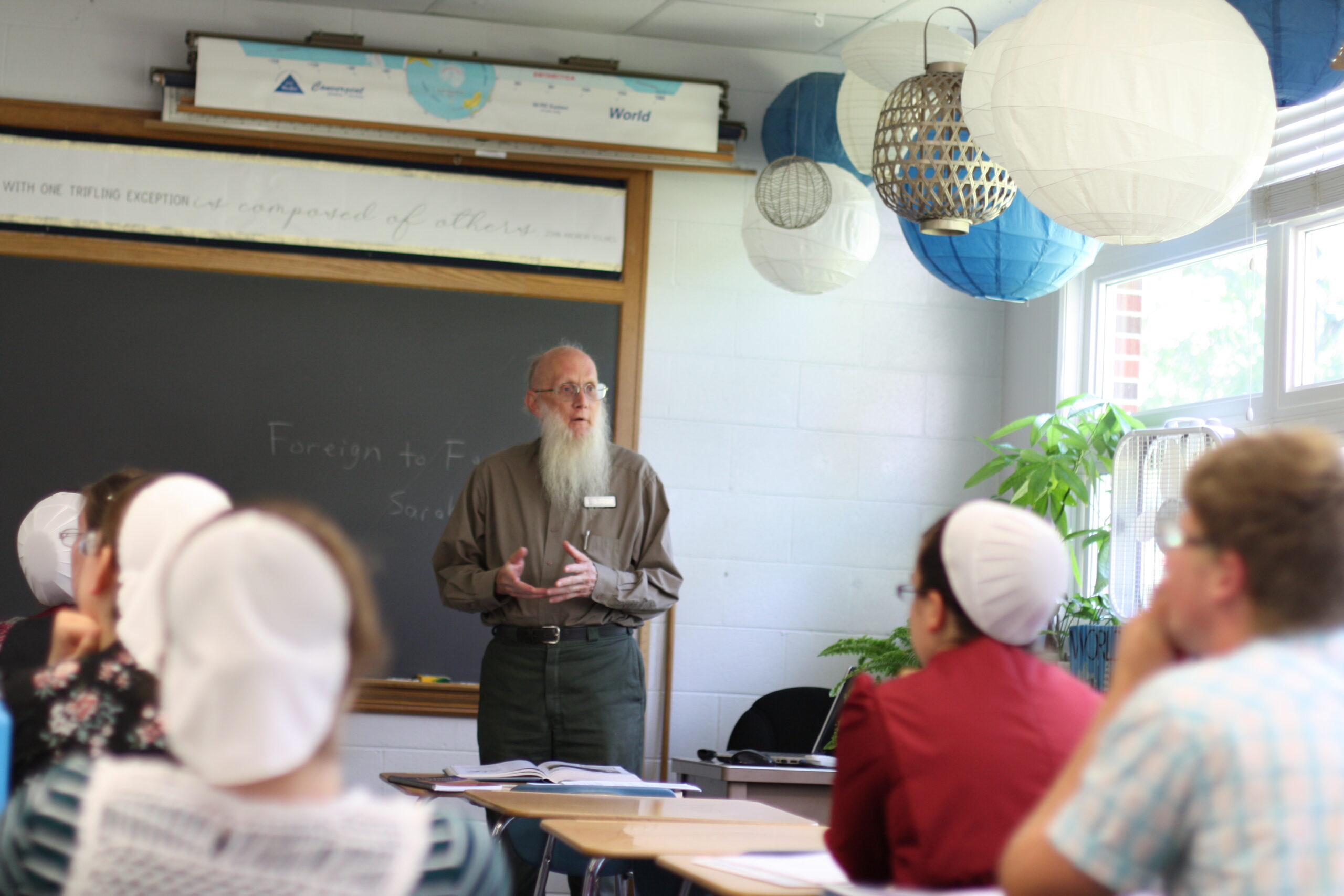
In today's educational climate, much emphasis is placed on reading decoding with the science of reading. While being able to read the actual words is vital, understanding what they mean is just as important. "Being a mindful reader involves not only reciting the words, but also understanding what those words mean in context," say Zimmermann and Hutchins (155). So if Sarah turns in incomplete and uncomprehended activities about World War II aftereffects, the teacher may need to re-teach the lesson, guiding her through comprehension activities.
Source Cited: Zimmermann, Susan and Chryse Hutchings. 7 Keys to Comprehension. New York, Three Rivers Press, 2003.
Washing Feet
Ah, the challenges in gaga ball.
Justin sorrowfully reported after recess, “They were ganging up on me and trying to get me out! I asked them why they were ganging up on me, and they said, ‘Because you’re the littlest.’”
Curt and Derek immediately chimed in, “We saw it happening and we stuck up for Justin.”
I was blessed to hear that they cared for and championed Justin. We talked about being kind and about playing at recess, and so on. What I’m thinking of is how Curt and Derek “washed” Justin’s feet. Literally washed his feet in a gaga game? No, but they served him by sticking up for him.
What does it look like to “wash feet” at school—students’ feet? parents’ feet? colleagues’ feet? I’ve pondered this since our faculty devotions on this topic. We read from John 13 about Jesus washing the feet of the disciples. How can we apply this example at school? We may give physical service, academic help, or behavioral guidance as our washing of feet. It may be encouragement, parental support, or coaching a new teacher.
Feet washing will be different for different people. This is going to be different for a first grader than for a coach. It will be different for a struggling 7th-grader than for a fellow teacher.
Parent-teacher conferences were approaching at the time we studied this topic in staff devotions. So how can I wash parents’ feet? I can listen during the conference. Sometimes parents just need to talk with someone and share their concerns and worries for their children. I think of Joanne, who related how she had difficulties in school, and is concerned now that her child is having challenges. I will show that I care about their child. I listen as the parents discuss a physical need of their child, and I make a note to myself to remind this child to go to the bathroom (and make sure I do this). I offer a spelling retest for the three children who missed many words on the latest test. I agree to find and print off books for a child to read at home after father says they don’t know what to have him read. (This is washing feet, because I don’t care for this task.) I will communicate with parents, sharing positive aspects of their children as well as areas to reinforce and work on.
I should wash the feet of my fellow-teachers. I may do this by sharing supplies, giving advice and ideas, or planning and taking care of all the parts of a shared field trip. I leave my door open before and after school so I am accessible for a colleague who needs to talk, has questions, or wants advice.
I’ve written before about serving students, but I want to include them, as well. How can I wash the feet of my students? For my first graders, it may be sharpening their pencils, helping them with band-aids, or comforting the homesick child. This one lasted all day. Kari was very “sick” in the morning, and after a while I said, “I know what’s wrong—you’re missing your family.” She agreed and cried. Her parents were on a trip and she was staying with friends, without any of her siblings staying with her. I told her she could come to me when she needed to that day, and she came often for reassurance. I washed her feet many times that day! I may “wash feet” by keeping patience with the child who rarely knows the directions yet confidently goes ahead and does things wrong.
For teachers of older students, you may be listening, advising, helping with a project, tutoring, consoling, working out “girl drama,” attending events in which your students participate, or helping with friendship issues.
Washing feet is thought of as a lowly job. This is a job for the servant! Serving others can be a lowly job. Let’s follow the example of Jesus, as he said, “If I then, your Lord and Teacher, have washed your feet, you also ought to wash one another’s feet. For I have given you an example, that you also should do just as I have done to you.” (John 13:14-15 ESV)
(Credit to Paul Harrison for getting my thoughts going on this topic, and for some of the thoughts in the second and third paragraphs.)

Recess Games for Lower Elementary
Group recess games are a staple of every school playground, but sometimes teachers and students alike can grow weary of playing the same ones over and over again. Here are a few recess games you might consider adding to your rotation.
Johnny Johnny
Materials needed: Two end zones, either opposite walls of a gym or cones/other markers to delineate two safe areas. Ideal spacing depends on group size and age of the players.
Considerations: Can be played inside or outside.
The aim of the game: To be the last player to be caught.
Instructions: Choose one player to be “it.” They will stand in the middle of the playing field, halfway between the two end zones.
The rest of the players will go to one of the end zones. They will then call out in unison, “Johnny, Johnny, may we cross your bridge today?”
The person who is “it” will then respond, “Only if you’re wearing the color ___.” At that point, anyone who is wearing the specified color may cross to the other end zone, unhindered. Anyone who is not wearing the specified colour must wait until the person who is “it” says “Go!” At this point, they must try to get safely to the other side without being tagged. Anyone who gets tagged will then join the person who is “it” in the middle and help them tag players in consecutive rounds.
This repeats until everyone is caught.
Options for variation:
If your group size is large, you may want to choose two people to be “it” to start.
Another twist on this game is to allow the person who is “it” to allow crossing based on something other than color of clothing. They may make up whatever stipulations they want to, such as, “Only if you had cereal for breakfast” or “Only if you have a dog at home.”
Freeze Tag
Materials needed: If outside, a way to mark a contained area, such as the boundaries of a baseball diamond, or a rectangular area marked with cones.
Considerations: Can be played inside or outside.
The aim of the game: To be the last player to be caught and to help free those who have been caught.
Instructions: This game is like regular tag, only when someone is tagged, they must freeze in that position until another player comes and “frees” them by touching them. If a player runs out of the boundary lines, they need to freeze on the line and wait to be freed.
In order to keep the game from extending into infinity, it works well to instill a rule like “If you’re caught three times, you also become ‘it.’”
Options for variation:
If your group size is large, you may want to choose two people to be “it” to start.
Young children may enjoy a twist called “Chicken Tag” (or cow tag or dog tag or whatever animal you want), in which they must cluck like a chicken the entire time they’re frozen.
23 Skidoo
Materials needed: Two end zones, either opposite walls of a gym or cones/other markers to delineate two safe areas. Ideal spacing depends on groups size and age of the players.
Considerations: Can be played inside or outside. We also used to enjoy playing this one while skating on the rink during the winter.
The aim of the game: To be the last player to be caught and to help free those who have been caught.
Instructions: In this game, players try to run from one end of the playing field to the other without being tagged by the one or two people who are “it”. While in the end zones, they are safe and cannot be tagged. If a player is tagged, they must go to the middle of the playing field and stand with their arms outstretched.
Other players can free those caught in the middle by touching their hand or shoulder and counting aloud to twenty-three. If there is danger of being tagged while they are counting, they may run off at any time. At that point, the player who is caught in the middle may call out whatever number the counting left off at (for example “sixteen!”) At that point, any other player who comes to free them may continue counting from sixteen until they get to twenty-three. After the person counting gets to twenty-three, they must say “Skidoo!” at which point the caught person is free to run back to a safe zone and continue playing.
Option for variation: You can instill a rule like “If you’re caught three times, you also become “it.” This helps the game move faster and doesn’t tax those who are “it” as much.
Wave
Materials needed: A cone or landmark (such as a step, post, tree, etc.) to be the home base.
Considerations: Works best as an outdoor game.
The aim of the game: To be among the last players to be caught and to help free those who have been caught.
Instructions: One person is chosen to be “it.” They close their eyes and count to fifty (or some other chosen number) while everyone else runs and hides somewhere nearby. The person who is “it” may circulate freely to try to find people. If they see someone, they catch them simply by calling out their name.
If a player’s name is called by the person who is “it,” they must go to the home base. They will stay there until they see any player who has not been caught waving at them. If they see someone waving, they may run away and hide again. If the person who is “it” is nearby and sees them escaping, they may call out their name again, in which case the player must return to the base and wait to see another wave.
You will want to make it clear that players need to escape within around thirty seconds of seeing a wave, otherwise the wave is “too old” to count anymore.
Choose a certain number of students that the person who is “it” must have caught at one time before the game is over. It usually works best for that number to be around 50-60% of the total number of players.
Tennis Ball Softball
Materials needed:
Tennis racket
Tennis ball
Baseball diamond
The aim of the game: For your team to get the most runs.
Instructions: This is simply a twist on regular softball where the bat and ball are replaced by a tennis racket and tennis ball. This has several advantages, particularly for young students. One is that ball gloves are not needed. Another is that young students can hit a tennis ball with a racket much more easily than they can hit a softball with a bat. This keeps the game moving much more quickly (and makes it much easier for a lone teacher who is often trying to pitch and give batting assistance at the same time!)
This is a perfect way to introduce young students to the concepts of softball rules (how to run around the bases, how to play outfield, etc.) with less stress and hassle than a bat and softball create.
Tubes
Materials needed:
An assortment of balls; dodge-ball type balls work best, though soccer balls could be used as well. You will want somewhere between 10-20 balls.
“Tubes.” You need one tube for each player. These can be created out of a wide variety of materials. My school had large PVC pipe (around 4-5 inches in diameter) cut into chunks, each creating a free-standing tube around 12 inches tall. The same could be done with stiff cardboard tubing. Another option would be going to a department store or flooring store and asking for old carpeting tubes.
Alternatively, you could collect large empty jugs (at least gallon-sized or larger) and use those as your tubes.
A rectangular playing area with a central dividing line.
Considerations: Could be played inside or outside, though a contained space like a gym will more conveniently keep errant balls from getting away.
The aim of the game: To keep your own tube standing and knock down the opposing team’s tubes.
Instructions: The group is divided into two teams. Each team goes to one side of the dividing center line and sets their tube upright on the ground. The balls are placed along the center line. Players are not allowed to cross the center line.
Once the game begins, players may run to grab the balls. They then try to throw them at the opposing team’s tubes and knock them over. Each player is also trying to stop balls from hitting their own tube. If a player’s tube is knocked over, they are out of the game and watch on the sidelines until the game is over (which happens once all the tubes of one team have been knocked over).
Options for variation:
You could also play that once a player’s tube is knocked over, they join the opposing team.
Another variation is to delineate a narrow section at the back ends of the playing zone. When a person’s tube is knocked over, they go to the back end behind the opposing team and try to knock down tubes from there. If they successfully knock a tube down, they may return to their side and set up their tube again.
Photo by Elizabeth Dunne on Unsplash

Union Center Christian School - Teachers needed for 2026-27 School year
Union Center Christian School UCCS is located in Nappanee, Indiana. We are a growing school in the middle of our 3rd year (2025-26) with 65 students enrolled in K-12th grade.
The school is operated by Salem Mennonite Church. It is open to area church families and the community around us. Our goal is to provide a good Christ-centered education for our church families and the families in our community.
For 2026-27 we are in need of a high school teacher and a learning support teacher.
The learning support teacher works in cooperation with the home room teacher to provide specific support and tutoring as required by the student. This includes using the Barton reading program and more.
For more information contact Ken Miller (board chairman) 574-847-1369 or fill out an application here: https://form.jotform.com/231857891291164
Lighthouse Christian School
2026-2027 term
Now Hiring: Inspiring High School Teacher
Join Our Mission. Shape Tomorrow’s Leaders.
Are you a passionate educator who believes teaching is more than a job—it’s a calling? Our private school is seeking a dedicated High School Teacher who is committed to academic excellence, character development, and creating a positive, engaging learning environment for students.
What You’ll Do
• Teach and mentor high school students in a supportive, faith-centered environment
• Inspire curiosity, critical thinking, and a love for learning
• Build meaningful relationships with students and families
• Collaborate with a team of caring, mission-driven educators
• Contribute to school events, activities, and a vibrant campus culture
What We’re Looking For
• A passionate teacher with strong classroom management and communication skills
• Ability to connect with teens and motivate students of varying abilities
• A heart for serving, leading, and helping students reach their full God-given potential
• Energetic, dependable, and committed to excellence
Why Join Us?
• Supportive leadership and a family-like atmosphere
• Small class sizes that allow you to truly invest in each student
• Competitive pay and opportunities for professional growth
• A safe, faith-based environment where values matter
• The chance to make a lasting impact—every single day
⸻
If you’re ready to teach with purpose, we’d love to meet you!
Submit your résumé to [office@crf.farm] or call [618-218-5397]
🎶 Full Time Music and Drama Teacher 🎶
We are looking for a full time music and drama teacher to lead our K-12 students. We would be looking to this staff member to lead a refreshed arts program to instill in our students a love for music and drama. This would include teaching music theory, leading upper school choir, directing drama performances with upper and middle school students, and more! This would be a first full time position at our school so growth and development opportunities would abound. Starting compensation for a qualified candidate would be around $40,000.
2026-2027 High School Teaching Position
Zion Christian School is a small K-12 school located in beautiful Mesopotamia, OH and operated by Zion Christian Fellowship. The projected enrollment for the 2026-2027 school year is sixteen students. We have an experienced teacher who will teach grades two through four. The high school room will have eight high school students and two students in junior high.
We are looking to add to the team of involved parents, school board members, and teachers by hiring a high school teacher. Zion Christian School offers a competitive compensation package and is a well established school that has been operating for over 60 years. If you are interested in this opportunity, we would love to have a conversation with you. Please reach out to Steve Kaufman at (330) 647-1290 or Kenneth Petroski at (216) 502-5287. Email us at kenneth@zcsmiddlefield.org.
6196 results found with an empty search
- How We Built a Little House
How We Built a Little House Darrell Hershberger March 3, 2018 How We Built a Little House Video 00:00 / 01:04 Download Download So last year we had a group of three twelfth grade boys and there's an eleventh grade boy as well who was included in the group. These students were very strong in academics but I wanted to ground them in some practical skills. And I wanted to do a project with them that would that would teach them some of the trades, as well as give them a place to work on leadership skills and to help them develop other skills that you use in business like talking to people on the phone and planning things--just thinking through a project step by step and doing it. There's lots of trades that we think would be valuable for our students to know—the common trades that are very useful in everyday life, in many situations, no matter where you are. Skills that have to do with house building like carpentry, plumbing, electrical—and these are things we talked about doing in one way or another but were never quite sure how to pull it together. And then it hit me that a tiny house project might be the answer. And what a tiny house is, is a tiny house. It's a very small house and often they are on a trailer frame and they're usually, you know, ten by twenty or ten by thirty or something—not very many square feet at all. And it is a movement that's been growing. There's a lot of information out there about it. The board was good with the idea. The students were excited about it and we started talking about building a tiny house and that would give experience in all these different trades all at one time and it would pull it all together and show them how they are connected to each other. Then another opportunity came up and that was building a house for another brother who needed a place to live. So my deacon wanted to provide this man with a place to live. And so he had already started this house project and it ended up being a very small house. It’s not technically a tiny house but it was actually about ten by thirty two or something like that and it was kind of modeled after storage building concept but it was much more beefed up than the typical storage building. So my students and I had to decide which project to go with and up so part of that the project was having students give a PowerPoint presentation trying to advocate for one of the projects. There were actually four projects that we were looking at. And it became clear as it went on that this particular project for my deacon and for this brother was the one to work on because it was helping somebody with a real need. So we studied up on building skills at school before we started. We had some text books. We watched a video on tiny house construction. And then we went to work. And how we did this was, one day per week the boys would go out and work on this project. They usually started around eight o'clock and often worked until four, four-thirty, five o'clock cleaning up. They put a lot of time and dedication into the project which—I was really, really pleased with how they plugged in. The boys took turns leading the group. So one week one boy would be in charge. For the whole week preceding the time they went out he would be trying to think about what they were going to do. Him and I would be talking about how to do what they're gonna do and we'd be reading up or we’d be calling people. We'd be getting supplies lined up. He would be making calls to the building supply company. He would be making trips to Lowe’s sometimes. No one really had any construction experience. I mean they obviously they knew how to run a drill and they knew how to pound a nail and run a saw. They had some very basic tool experience, I think, but one of the first things was teaching them how to run an air nailer. And one of the brothers from church who loaned us his air nailer, he came out and he had a little safety demonstration for them. He wanted to make sure that they were safe with this thing. We try to make sure they had a really good idea of how to do what they're gonna do but when they went out there they were actually on their own. Which was not ideal in many ways but in many ways it did give them an experience of having to figure things out on their own, having to exercise leadership. It gave them a real sense of ownership. Along the way, we would ask people how to do stuff. So we had a framing people we talked to, roofing people, plumbing, electrical, all of those things. We would talk to people, get people come out and talk to the boys about how to do something, but for the most part after the explanation was over it was up to the boys to actually do it. At one time during the project the funds ran low because the funds for this project were donated. And so the boys prepared a presentation to give at church. And they showed what all they had done so far. And they also had to come up with an estimate of what it would take to finish. And so different of the boys were assigned to come up with an estimate on how much it costs to do the insulation, how much it would cost to do the flooring, how much it would cost to finish what we were currently working on. And they put a lot of work into this and presented a presentation to the church. It was very interesting. And the funds did come through. One of the things that kind of pushed the boys along was the knowledge that the inspector would come and he was going to look at all this stuff and decide if it was good enough or not. And that was a big worry: “Is our work gonna be up to par?” And so the day came when the inspector came. He was coming out to inspect the framing and the plumbing and the electrical. And I don't think it passed right on the first go, but it was very close. There was just a few very, very minor things. And was a great day when we got the approval for the work they had done. They earned a credit and a half for this. It was kind of a tough call on exactly how much credit it was worth. We ended the project in March or so about three quarters into the school year because that was the timeframe we had to work with at school. And they weren't finished. We didn’t get as far as we thought we might. But still we got that we got the rough-in plumbing and electrical done. We got the framing up, the roof on, the windows and doors in, and from then it was a matter of other people finishing it. It was a group of students that it worked very well with and to their credit they were very mature responsible people. And it wouldn't work if your students were irresponsible. This particular situation is never going to happen again, but I keep thinking about the tiny house idea, because that would be more portable—you could do that anywhere, and wondering if we can't do that in some form with another group of students. Of course, lots of mistakes were made along the way. That was kind of the story of the whole project, was all this trial and error that happened. And you could consider that wasted time, but really it was a very valuable learning experience. Download Facebook X (Twitter) WhatsApp LinkedIn Pinterest Copy link Darrell Hershberger
- Computer-Assisted Geometric Experiments
Computer-Assisted Geometric Experiments John Goering July 3, 2017 Computer-Assisted Geometric Experiments Document 00:00 / 01:04 Download Download Wingeom is a powerful tool for creating geometrical diagrams. The user can make a diagram and then quickly see what happens as points are moved. Wingeom makes it easy to measure lengths, angles, and areas. Wingeom can locate special points in triangles, draw special circles associated with triangles, draw conic sections, and perform dilations, translations, and rotations. Nothing can replace the educational benefits of physically using a straightedge and compass. However, computer software enables us to rapidly perform geometric experiments. These activities make use of the free program Wingeom. It is recommended that an instructor work through an activity before assigning the activity to students. While doing the activity, he should make an answer key. Some of the answers can vary significantly depending on how points are placed in the diagram. Other answers should be the same (or almost the same) for every student. The instructor should indicate on the answer key the distinction between the types of answers. The zip file also includes a PDF with instructions for more than twenty geometry activities. Wingeom was created by the late Richard Parrish. The author had granted permission for the free distribution of the program. Thanks to John Goering for submitting Wingeom to The Dock. For other software by Richard Parrish, see the archived Peanuts Software page . Wingeom is a portable program: it runs when opened without requiring installation. Download and extract Wingeom.exe with instructions Download Facebook X (Twitter) WhatsApp LinkedIn Pinterest Copy link John Goering
- Ready for the First Day
Ready for the First Day Carolyn Martin July 27, 2021 Ready for the First Day Blogpost 00:00 / 01:04 Download Download Photo by Kuanish Reymbaev on Unsplash “I can’t wait for the first day of school,” commented my ready-for-second-grade niece one day at the end of June. There are others anticipating the first day too. Some of you are looking forward to starting this new occupation called teaching. Beginning teachers fall into varying categories. You may have dreamed about this day since you were an elementary student. Some of you have not given teaching much prior thought but are willing to take up the challenge God has presented you. Some of you are teaching more because of necessity than because of a dream. Some of you have known for months that you will be teaching come fall. Some of you have only given your consent a month or two before the beginning of the school year. There is one way you are all alike. You are not sure exactly what you may be in for. You can plan and dream but until that first day happens and the first months go by, you cannot know what you will be working with and how you will need to respond to the various challenges thrown your way. Teaching is the same as many other things: with practice it will go better. To all the beginning teachers, I say, “Welcome!” Welcome to one of the most satisfying careers you could have. Welcome to new relationships. Welcome to new learning. Welcome, also, to new challenges and frustrations. Welcome to times of satisfaction when things are going well and to times of uncertainty when things are not going well. Welcome to a job that should leave you dependent, not upon your own strength and knowledge, but upon God and His direction. It is good to have you as part of this life we call school. The first day of school is approaching and it is time to start getting ready. But where should you start? Let’s look at some areas of preparation for the new term and think about possible options and priorities. First of all, know what the expectations of the school are. You don’t want to plan a classroom theme that does not fit in with school policy. You will want to know what the curriculum plan involves to know how to schedule classes. You will want to know if you are responsible to supervise playtimes, if your students clean the school on Fridays or not, and anything else you aren’t clear about. Does your school have a plan of action established for discipline or do you need to make your own set of rules and consequences? Maybe all these decisions are left up to you. Maybe your school has clear expectations they wish to have followed. Find out what your school expects. Figure out the course of study. Do you know the subjects you are to teach and how much material you are expected to cover? Schools do not all prioritize the subject matter in the same way. Acquaint yourself with the general ideas contained in the material. If you are teaching Algebra 1 for the first time, you may need to work through the material yourself. To be the most effective, you need to thoroughly understand what you are teaching. Because teaching means covering the material in a way that the students understand while, at the same time, you monitor the classroom and make sure students are engaged. It is difficult to do this if you keep your nose in your teacher guide. If the course material is unfamiliar, request an extra set of student books and work through them yourself. This is more important than having the classroom readied to the nines. Work out a classroom management plan. Make your rules be few but your procedures and expectations be detailed. Remember, rules require consequences. Rules and procedures will need to be clearly communicated, modeled, and practiced. If you are a new teacher, don’t make the mistake I did the first year I taught. I went over my rules on the first day of school and tacked a small list on the wall and then was frustrated when my first and second graders continued pushing the boundaries. But I hadn’t taught them what I expected. I felt they were being disobedient when they were really just six-year olds being six-year-olds. I wasn’t giving them a clear message of what I expected. A few rules to consider: follow procedures; talk only with permission; keep your hands, feet, and other objects to yourself; be on time; leave your seat only with permission. A few procedures to consider: hand signals for requests for permission to do certain things, line up before dismissals and after recess, how and where you hand in completed assignments, what to do in the mornings upon arrival at school, how to set up papers for assignments, how to participate in class, and so on. Think through your school day and have a working plan for whatever you anticipate doing. Younger students will probably need more detailed procedures but older students will also benefit from group standard procedures. Rules and procedures can change if they aren’t working. However, if they change, make your expectations clear to your students. Plan out a weekly and daily schedule. Which days will certain classes or events happen? What time will math class be? Take care of the record keeping needs. Fill out student names in the grade book. File any student information you receive. Store tests and quizzes until needed. Make sure you have the books and materials you and your students will need. Make a seating plan. You will want to create a positive atmosphere in your classroom. Be intentional with your attitude toward this. Work toward a team effort where teacher and all the students pull together. You are in charge but you are on the same team, not pulling against the students but with them. Love all your students. Look for the good in each one, especially those who add the bumps to your teaching career. Be aware that incentives can add spice to a school atmosphere but don’t depend on incentives to run your classroom. Make your walls and bulletin boards work for you. They should not only be pretty decorations. Use them to set the tone of your classroom. A frivolous, cutesy display may say, “Let’s have fun this year.” Displays of interesting facts and learning posters can say, “School is interesting and informative.” Decide what you want your room to communicate to your students and say that with your displays. As you prepare for those first days of school, talk to other teachers: those you will be teaching with, the teacher you are replacing, and other teachers you meet. Listen to their advice with open ears. Learn from their mistakes. Ideally you will find a mentor you can run ideas past and get their feedback. And then, use what you’ve learned from others and take your place in your classroom. May you be able to say, “I can’t wait for the first day of school!” Download Facebook X (Twitter) WhatsApp LinkedIn Pinterest Copy link Carolyn Martin
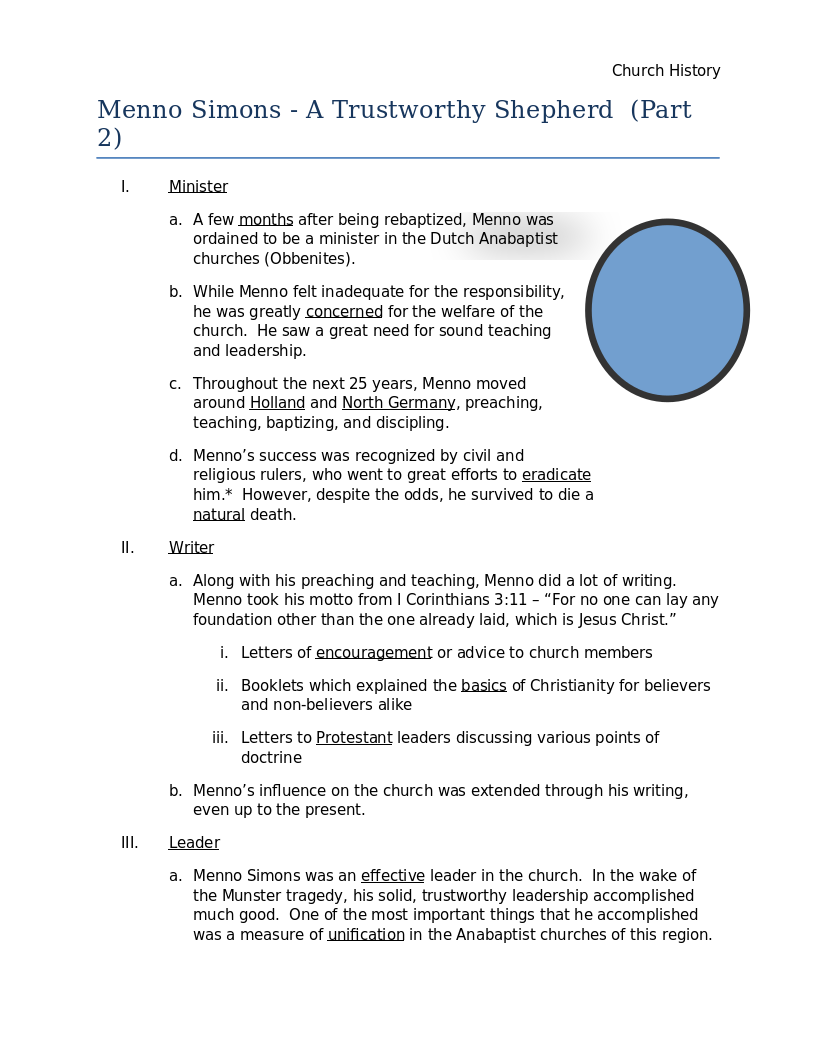
- Menno Simons Part 2
Menno Simons Part 2 Kendall Myers October 20, 2017 Anabaptist Church History Class by Kendall Myers Menno Simons Part 2 Document 00:00 / 01:04 Download Download Teacher's notes on Menno Simon's life as a leader in the Anabaptist church. Download Facebook X (Twitter) WhatsApp LinkedIn Pinterest Copy link Kendall Myers
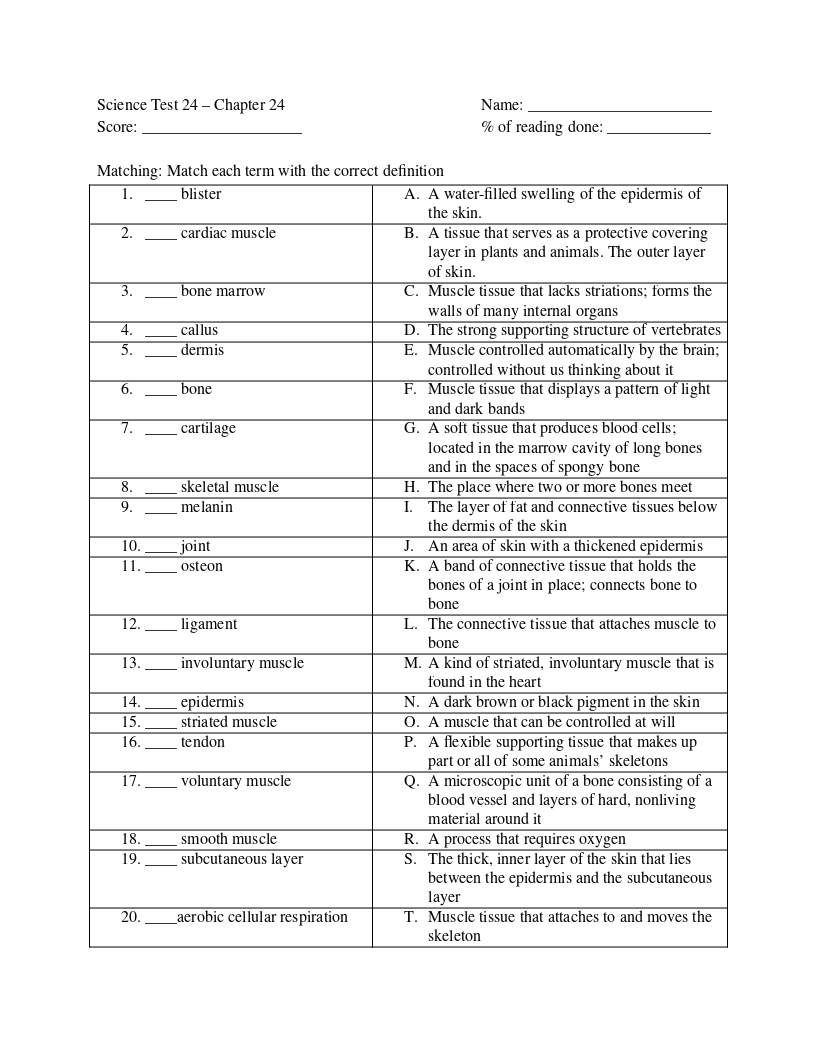
- Life Science Test Chapter 24
Life Science Test Chapter 24 Erikson Lehman August 7, 2019 Erikson's Materials for BJU Life Science Life Science Test Chapter 24 Document 00:00 / 01:04 Download Download A test for chapter 24 of BJU Life Science, Grade 7. Students are tested on the skeletal and muscular system in humans. Download Facebook X (Twitter) WhatsApp LinkedIn Pinterest Copy link Erikson Lehman
- Cultivating Anabaptist Values
Cultivating Anabaptist Values Ken Miller January 4, 2017 CASBI 2015 Cultivating Anabaptist Values Audio 00:00 / 01:04 Download Download Nurturing Anabaptist values in an increasingly hostile world is an essential role of the school. Miller explores several important Anabaptist values and methods and reasons for cultivating these values through education. Courtesy CASBI. Download Facebook X (Twitter) WhatsApp LinkedIn Pinterest Copy link Ken Miller
- Pre-Algebra Class Work 1.1
Pre-Algebra Class Work 1.1 Brian J Martin December 28, 2017 Pre-Algebra Class Materials Pre-Algebra Class Work 1.1 Document 00:00 / 01:04 Download Download This class work gives students practice working with number order and opposites. Download Facebook X (Twitter) WhatsApp LinkedIn Pinterest Copy link Brian J Martin
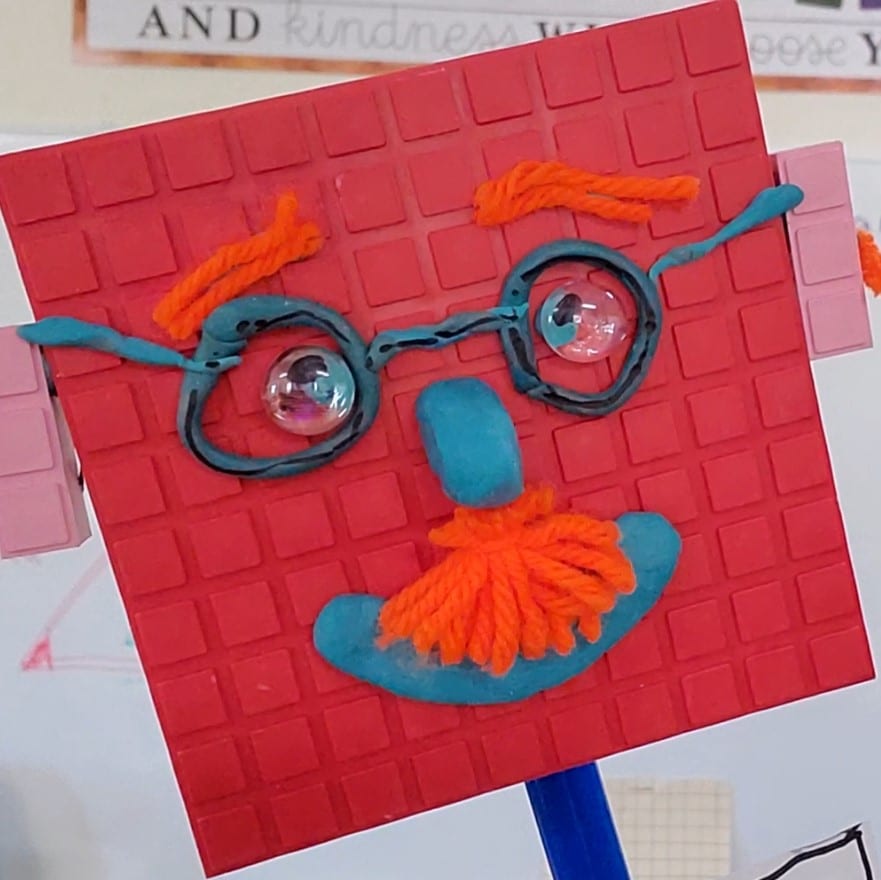
- Little Video Teaching Assistants
Little Video Teaching Assistants Trennis Hostetler April 24, 2020 Little Video Teaching Assistants Video 00:00 / 01:04 Download Download If you feel lonely in front of your camera, Trennis has an idea: Hire some small assistants. Trennis writes:At first I started really simple by using them as a little intro to my videos to break up the boredom. But as I progressed and became more comfortable, I found ways to make them relevant to the class I was teaching and started using them as "lesson hooks". Download Facebook X (Twitter) WhatsApp LinkedIn Pinterest Copy link Trennis Hostetler
- Effective Multi-grade Classroom Procedures
Effective Multi-grade Classroom Procedures Jaydon Schrock December 13, 2022 Western Fellowship Teachers' Institute 2022 Effective Multi-grade Classroom Procedures Audio 00:00 / 01:04 Download Download A session for novice teachers on effective procedures for managing a multi-grade classroom. Download Facebook X (Twitter) WhatsApp LinkedIn Pinterest Copy link Jaydon Schrock
- Best Practices of Servant Leaders
Best Practices of Servant Leaders Gary Paul Miller July 20, 2022 REACH 2019 Best Practices of Servant Leaders Audio 00:00 / 01:04 Download Download What makes a leader stand out? What are the keys that make a difference in leading well? In this session, we consider trademark values, motivations, and strategies of successful servant leaders. Download Facebook X (Twitter) WhatsApp LinkedIn Pinterest Copy link Gary Paul Miller
- Teachers That Nurture God Love (Steven Brubaker)
Teachers That Nurture God Love (Steven Brubaker) Steven Brubaker May 31, 2018 Teachers' Week 2013 Teachers That Nurture God Love (Steven Brubaker) Audio 00:00 / 01:04 Download Download Who we are (being), what we think (beliefs), and what we do (behaviors) are interrelated and inseparable. The life of Jesus will anchor our wrestling with the kind of being, beliefs, and behaviors that cultivate God-love in our students. Download Facebook X (Twitter) WhatsApp LinkedIn Pinterest Copy link Steven Brubaker
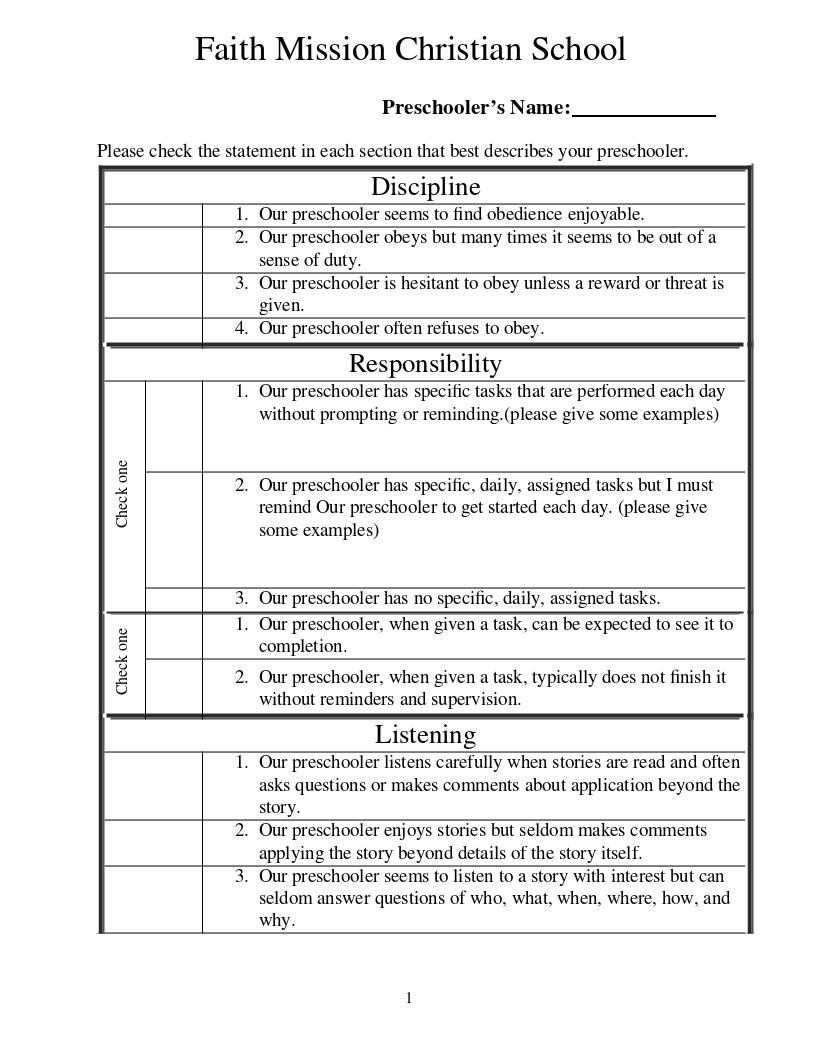
- Preschool Checklist
Preschool Checklist Randall Yoder May 31, 2018 Preschool Checklist Document 00:00 / 01:04 Download Download This document offers parents a way to assess their child's readiness for school. Your school may wish to adapt this list and share it with the parents of future students. Download Facebook X (Twitter) WhatsApp LinkedIn Pinterest Copy link Randall Yoder
- Beyond the Books: Teaching Character and Instilling Life Values
Beyond the Books: Teaching Character and Instilling Life Values Lyndon Martin August 12, 2022 Teachers Week 2021 Beyond the Books: Teaching Character and Instilling Life Values Audio 00:00 / 01:04 Download Download What tests should a Christian student pass to be a graduate from a Christian school? Are high GPA and SAT scores the sole metrics for success in Christian education? Lyndon discusses the breathtaking opportunity and accountability in teaching character, developing work ethics, and instilling kingdom values beyond the books. This breakout is presented from the heart of a grades 7-10 teacher and dad. Download Facebook X (Twitter) WhatsApp LinkedIn Pinterest Copy link Lyndon Martin
- World History Culmination Project
World History Culmination Project Byron Dueck January 21, 2020 World History Culmination Project Document 00:00 / 01:04 Download Download This document outlines ideas for a final project in world history, and provides topic ideas and guidelines that apply across projects. Download the document or view it below. Download Facebook X (Twitter) WhatsApp LinkedIn Pinterest Copy link Byron Dueck
- Being a Contributing Board Member
Being a Contributing Board Member Douglas Meyers January 22, 2025 CASBI 2023 Being a Contributing Board Member Audio 00:00 / 01:04 Download Download As a School Board member you have been entrusted with the school - it is your job to leave it in a better position than you found it. In this talk Douglas offers you practical advice on what development, engagement, and execution should look like on a healthy board. Do you have a vision for Christian education? Do you know what your state policies are? Are you willing to put the hard work of investing into the school, parents, and teachers? Are you a team player who is able to listen and learn? All these and more will be covered in this talk that calls for committed action. "Successful board members," Douglas says, "are not really defined by what they know, but by how they can work together." Envision (New Members) Why Me? Recognize talents; be teachable and willing to work. Accept the Position Build on past foundations; leave the school better. Commit to Christian Education Value eternal impact over temporary gains. Desire to Learn Study school operations; ask questions. Know Board Members Build relationships and a shared vision. Engage (Relationships) Show Up Attendance is essential. Listen and Communicate Listen more, criticize less; build trust. Do Background Work Understand teachers and community. Blend In Work as a team; control ego. Execute (Teamwork in Action) Prepare Background work informs decisions. Collaborate Understand others; allow all to speak. Support Decisions Stand united; avoid gossip. Mentor Pass on vision (experienced members). Stay Motivated Remain committed long-term. Being a Contributing Board Member was presented by Douglas Meyers at CASBI 2023 held at Pleasant View School, Arcola, IL on March 3-4, 2023. Download Facebook X (Twitter) WhatsApp LinkedIn Pinterest Copy link Douglas Meyers
- Math Tricks
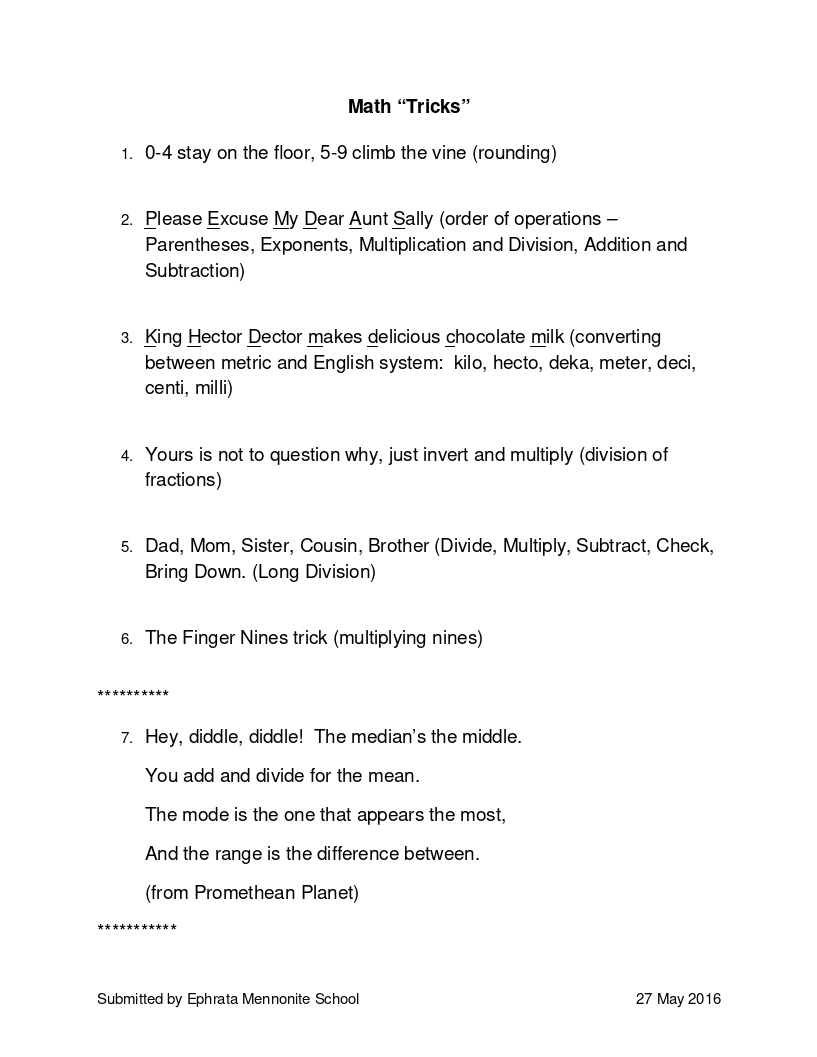
Math Tricks Arlene Birt February 8, 2017 Math Tricks Document 00:00 / 01:04 Download Download Rounding, fractions, percentages, and more: this 2-1/2 page document offers tricks and ditties to make teaching math faster and more fun. Download Facebook X (Twitter) WhatsApp LinkedIn Pinterest Copy link Arlene Birt
- Tech Tools (Matt Landis)
Tech Tools (Matt Landis) Matt Landis November 2, 2018 REACH 2015 Tech Tools (Matt Landis) Audio 00:00 / 01:04 Download Download This presentation takes a practical, hands-on look at some new and some mature tools that are becoming affordable/accessible to make your ministry more efficient. Download Facebook X (Twitter) WhatsApp LinkedIn Pinterest Copy link Matt Landis
- Plant Stems Worksheet
Plant Stems Worksheet John Mark Kuhns July 31, 2025 Worksheets for BJU Biology Plant Stems Worksheet Document 00:00 / 01:04 Download Download This document will help students learn more about botany by focusing on one part of the plant: the stem. Download Facebook X (Twitter) WhatsApp LinkedIn Pinterest Copy link John Mark Kuhns
- Not by Might, nor by Power, but by My Spirit
Not by Might, nor by Power, but by My Spirit Stephan Gingerich August 6, 2020 Not by Might, nor by Power, but by My Spirit Video 00:00 / 01:04 Download Download How can you move into an uncertain school year with confidence? Stephan reminds us that the challenges we face are our opportunities to notice the good work of God. Watch the Wednesday Session Watch the Thursday Session Download Facebook X (Twitter) WhatsApp LinkedIn Pinterest Copy link Stephan Gingerich
- The Basics of Teaching (Melvin Lehman)
The Basics of Teaching (Melvin Lehman) Melvin Lehman May 31, 2018 Teachers' Week 2013 The Basics of Teaching (Melvin Lehman) Audio 00:00 / 01:04 Download Download Schedule, simplify, prioritize, organize, and set positive expectations. These and other habits help teachers teach and students learn in the classroom. Download Facebook X (Twitter) WhatsApp LinkedIn Pinterest Copy link Melvin Lehman