
All Content

Lower Elementary Creative Writing Lesson Plans
In one document, Regina offers creative writing lesson plans for an entire year in grades 1-3.
Download the lesson plans now or preview them below.
What is Bullying? And Does it Happen Here?
A study in questions
“And the King shall answer and say unto them, Verily I say unto you, inasmuch as ye have done it unto one of the least of these my brethren, ye have done it unto me.” Matthew 25:40- For the third time this week, a child slumps helplessly into a corner, breathless with laughter, while a younger, stronger child tickles her unmercifully. She is laughing so uncontrollably that no one can see her panic. How will she escape? Again?
- All in the classroom are invited to an after-school event, with snacks and games. All but one: the wild one who gets high on sugar and makes a lot of noise and tells jokes on the teachers and teases the girls. He hears the buzz at school about the party, the party, and he waits for his invitation, which does not come. He is seven years old.
- A teenager misses many afternoons of school for reasons not easily apparent, and bears the brunt of classmates’ jokes surrounding his choices. They like ribbing him. Always him. He is a scapegoat when one is needed, the outlier, the easy target for humor. He’s a good sport and laughs along. He’s so dumb he doesn’t even know it, haha, just kidding.
- On the edge of the gaggle of girls, a lone and sober child stands waiting to be included in the conversation, although she cannot think of anything to say. She has not been given relational tools. Her dress was made for someone else, and her hands are behind her back, nervously picking at each other. The other girls chatter and giggle. One of them casts her a sidelong look, and at some unseen signal, the pack leans into a tight circle for a whispered interchange. She is left upright, outside.
- Beneath a tree on the church property stands a boy with grass stains on his knees, and burrs in his white Oxford shirt. He is looking up into the tree at two other boys, whom he has asked to join and been denied. They have led him on a merry chase through the woods, all in fun of course, and no hard feelings. They are just children playing. His hands are torn, and he is fighting tears.
- A child runs across the road in front of a moving vehicle. Fortunately, the vehicle is not moving fast. It is the fourth dare she will take this week from her friends. The first was to step out of line in the hallway without getting caught. The second, to throw away a sandwich instead of eating it. The third, to get anything but an A on her math test. She can never say no to a dare, and they know it.
Which of these stories qualifies as bullying? A younger child picking on an older? A laughing accomplice provoked into courting his own damage? A child shunned for failure to blend in?
All of them.
Synonyms offered in a thesaurus for the verb bully may capture only a portion of the whole, but they include words like domineer. Hustle. Coerce. Strongarm. Oppress. Persecute. Nag. Intimidate. Torment. Press. Tyrannize. Cow. Push. Oblige. Hound. Goad. Force. Pressure.
If we broaden our understanding of bullying, we may see it happening: not out there in the big bad high schools and the dark alleys, but sometimes—here. In our own celebrations and school hallways and church parking lots.
I have been bullied, and I have bullied others. My children have been bullied, and they have bullied others.
Is that impossible? Is it conceivable that our children, our high scorers and great runners and joke tellers and Bible reciters and well-adapted kids—crowds of children who fit or exceed the mold—are pushing around the weak ones who look okay? There is no physical shoving. Not in public. What we see is a neat row of heads in Sunday school and on the gym bleachers, all present and correct.
Who are the isolated ones on the periphery?
Where are the unprotected?
Whose heart is in turmoil because of the treatment she receives from her peers?
Are we willing to take a closer look on behalf of those who will never speak for themselves? Or do we think our community’s stance toward outliers is understandable, and there’s not a lot we can do about it? Are we sure of our own compassion—or are we subtly giving our children permission to sideline and harass the people who don’t fit?
Bullying behaviors come from derisive attitudes, and derisive attitudes are easily excused when we care more about being on the inside of a circle ourselves than looking to see who is outside it.
How are we setting a standard of respecting all people, no matter what?
Are we gentle and humble?
Do we accept those unlike us and enjoy them for who they are, even when we require them to grow?
How did our Friend love the unlovely, he who said Blessed are the poor and the hungry, the sorrowful and the persecuted, because they are mine?
We cannot perfect our relationships to a state of flawlessness, or remove bullying from society—even from Christian society. Any of us, and any of our children, may be cruel in ways we do not even understand. Here is my question:
When it happens, are we taking it seriously, and repenting, and bridging back across the gaps?
We have the opportunity to build a place where people are connected and at rest, where attitudes of arrogance and groupthink are laid down in favor of charity, joy, and friendship. When we do anything less, we mar the body of Christ and impoverish our own communities.
Rejection costs dearly. Who pays the price?
For more information on defining, discussing, and preventing bullying, see stopbullying.gov
Letter to My Father
Faithfulness, Part III
 Photo by Nick Morrison on UnsplashClayton Shenk founded Tidings of Peace Christian School in York, PA, and led the school for 24 years. In 2019, he passed the leadership of the school to his son, Austin. Shortly thereafter, he was diagnosed with cancer. On Christmas Day, 2019, Clayton passed on to his reward. This post is Austin�s tribute to his father.
Daddy,
I�ve always been amazed at your huge heart and boundless energy. Now that cancer has taken that boundless energy, your huge heart is in such great pain because you don�t have the energy for service. I want to assure you that God, others, or I, are not judging you based on your service. We�re all too busy catching our breath. Your life of faithful service has been a whirlwind of activity. It is only now that the whirlwind has ceased, that we have the leisure time to contemplate the magnitude of your service. There are three specific areas of faithful service for which I�d like to thank-you. They are: always loving mommy, always having time to talk, and always challenging me to forgive the bad and build on the good.
Although I don�t remember my first day, all that I�ve grown up seeing or experiencing has convinced me what you said and also believed: �The best thing you could do for me was, love my mother.� I felt secure knowing that you were always infatuated with her. It was so reassuring when I�d walk through the dark hallway on my way to bed to hear the soft murmur of your voices and sometimes joyful laughter. I knew your public displays of affection were not an act, but the real deal right down to the core. I didn�t understand the magnitude of your sacrifice when you left her for five months to take us boys on the Appalachian trail. Now that I understand more, I realize it is impossible to ever thank you enough for that time of separation. It is also impossible to thank you enough for how you both loved us together whether doing family night, teen encounter, or ministry in our home. Thanks for loving me by loving mommy.
A person doesn�t need to know you long to understand your ability to talk, but the deeper the relationship the more obvious was your gift for listening.
I wrote this much of the letter eighteen days before you went to be with Jesus. Oh, how I wish I would have delivered it sooner. The rest of the letter will be solely for the benefit of others.
A person didn�t need to know you long to understand your ability to talk, but the deeper the relationship the more obvious your gift for listening. I always knew you were a busy man, but I also knew you would always take time to listen to me. Whether it was the middle of the day or late into the night, I can�t remember a time you told me to wait till later to talk. This was an amazing gift to me as your son, but I know many other people were also blessed by your willingness to listen. This is one area of good I hope to build on from your example.
Speaking of what to build on, I greatly appreciate your humility in training me to build on the good and forgive the bad. You lived a life that backed up that statement. You were quick to ask forgiveness when you did wrong or to clarify if something was bad and not something on which to build. As I reflect on the good to build on, this is a strong foundation for my life. Thank you for all the good you gave me! Your children�s children will be better for it.
Your love for mommy, your willingness to listen, and your admonition to build on the good are priceless examples of faithfulness to me. I know your desire to see your grandchildren grow into faithful Christians was with you to the very end. Although you are no longer around to teach them, my 2 � year old daughter still talks about the Christmas eve goodnight kiss you gave her before going to be with Jesus the next morning. Your faithfulness to the end is the seed you planted that God and I will take from here for a bounteous harvest.
Thank you, Daddy!
Love, Austin
Homework
- Re-read the letter and pick out any attributes of faithfulness you plan to build into your life. Then make and work a plan.
- Write a similar letter to your father. If he is not alive you may send it to someone whom you respect and trust.
- Repeat steps one and two with your class.
https://thedockforlearning.org/contributions/modeling-faithfulness/
https://thedockforlearning.org/contributions/faithfulness-toolbox-faithfulness-part-ii/
Is Your Classroom a Place of Peace?
Is your classroom a place of peace?Peaceful classrooms allow children to learn, says Sheldon. Even those with learning disabilities benefit from structure, order, and grace. In this excerpt from a talk at Teachers Conference, Sheldon points out that peaceful classrooms don't result from a single factor. Are there any missing ingredients in your classroom?This excerpt was taken from a longer talk, Peaceful Classrooms: What Are The Ingredients and Why Do They Matter? presented at Teachers Co
Classroom Economic System
This document provides an overview of a classroom economic system, including expenses, income, job application form, and more.
Download the overview now or preview it below.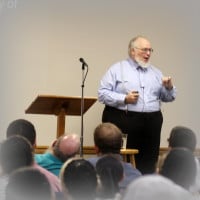

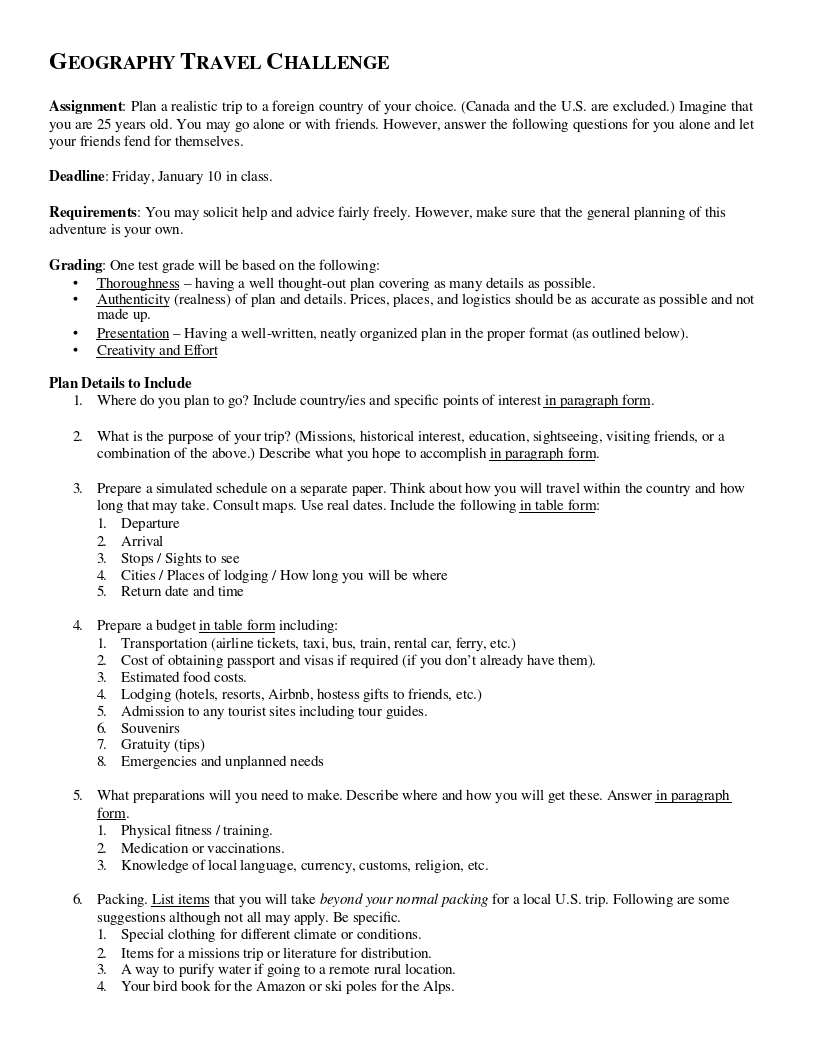
Geography Travel Challenge
Traveling the world: Sounds like fun! In this independent activity for high school students, students learn that it takes some coordination, too, and costs some money.
Harness your students' dreams of travel to build math, research, and organizational skills.
Download the document now or preview it below.

Random Acts of Integrity: An Easy Way to Keep Students Accountable for Self-Checking
Self-checking: I think it's a great opportunity for them to learn at a young age. Sometimes I wonder if we put a little too much temptation on too young students, and then maybe expect them to have a higher level of integrity than what they have matured to. That has always been a problem. Probably most students at some point get caught with cheating in their score and they don't do it properly.
It used to be, back when I started teaching, that I would spot check every book that was handed in for a test, and that just got to be cumbersome. It�s a lot of work the teacher shouldn't have to be doing.
Lately what I've been doing, and it seems to be working better than anything that I've ever tried before, is I have a randomizer app on my phone. I�ve got all the students' names in it in a list. Usually after lunch or after last break or something, on days that I remember, I just pull it out. I take the third name that comes up and that student is the checker. Then I take the next two third names that come up and those are the ones that get checked. Then I've got a list of the subjects and I randomly pick a subject, and those two students bring that subject and the checker gets the answer key and checks the last lesson that they did in it.
If it's perfect, then I give them a little award. If it's got problems, they erase it and do it again. If it's got real problems, then the penalties get bigger. If it's bad enough, they erase the entire Light Unit and start over. If you happen to be on Lesson 14 or something, you have to redo two or three weeks worth of work in that subject. It's pretty good motivation.
Again, I would like to see them do it because it's the right thing to do, not because they're afraid of what's going to happen if they don't. But that has really helped. No one knows when they're going to get called and no one knows which subject is going to get checked. It seems to really keep them on top of it.

The Treasure Challenge
Find the treasures in each day!
I thought of this from a book I read to my class�the boy was disappointed when it was rainy and he couldn�t fly his new kite, and then when the weather cleared, he was sick and couldn�t go out to fly the kite. He found the treasures that God put in each day�he had time to think of a name for his kite, he had time to read about kites, and he enjoyed putting the kite together.
I gave myself a challenge of finding treasures in each day. Some days are not what I would have liked: That lesson did not flow as I planned; This child has a pile of unfinished work and seemingly no motivation to finish; It is another gray and rainy day; I am tired, cold, worried, etc. What treasures can I find?
- Friday�my treasure is the lovely snow we had this morning!
- Saturday�the treasure was sleeping in and then having a nap in the afternoon.
- Sunday�the little note with random letters, presented to me by a Sunday School student
- Monday�the pictures and notes given to me by my students, and the pictures from their little siblings, too
- The treasure of humor: As my students were making Christmas cards for their parents, Shana offered to write �Merry Christmas� on the board. I was busy with something else, so agreed that she could do that. I realized later, after the children had copied from the board, that they were writing �Marry Christmas� in their cards. J
- The treasure of scripture�the verse that comes to mind just when needed. �We don�t know what to do, but our eyes are on you.� 2 Chronicles 20:12
- �Can I do something for you?� asks Kaylie, and she willingly cleans up a big mess of stickers and cards. This is a treasure!
- My administrator taking time to advise me.
- Coming home to a clean house!
- Tuesday�s treasure: the sunshine!
- Treasure of encouragement�Finding this in a student�s �I Am Thankful� book: �I am thankful for school.�
After I read the book to my class, we talked about being thankful and having gratitude on all kinds of days. We thought of things we are thankful for and I wrote them with Sharpie around the sides of a pumpkin.
Some other ideas for recording treasures:
- Write the treasures on sticky notes and deposit them in a treasure chest. (I have a small tin chest�probably an antique, which is colorful with gold accents and fascinating to my students. They like to put the notes in it.)
- Post notes of treasures on a bulletin board.
- Discuss finding treasures in each day and serve Hershey�s Treasures candy. Make cookies with treasures in them�wrap the dough around a bite-size Snicker�s bar and bake. Find treasures in the day as you eat the cookies and discover the candy treasure inside.
- Realize the Bible is a book full of treasures and share verses that are treasures.
- Tell stories that have treasures�little lessons, surprise endings, or nuggets of truth.
Take the challenge to find treasures in each day and keep a running list of your treasures. On a rough day refer to the list and remind yourself of these treasures�blessings that God puts in each day!
The book that we read: God Cares When I'm Thankful

Increasing the Vocabulary of Our Scholars
Studies done on children are showing a huge difference in vocabulary—a gap of up to 15 million words by the age of five. The studies have shown that even by two years old, the vocabulary gap is evident between children who have been in a language-rich environment and children who have not been exposed to or interacted with as much language.
Due to the “exposure discrepancy” of the language a student has or has not been exposed to in their environments before coming in to your classroom, you may have students struggling with an area of content simply because they are not understanding the terms used in the textbook. Vocabulary, and especially academic vocabulary (science-specific terms such as “electron,” “proton,” and “neutron” or literature-specific terms such as “principle,” “style,” and “theme”), is largely the responsibility of the teacher. More than likely, the students will only encounter this kind of vocabulary within the classroom. Therefore, it is absolutely necessary that as educators, we go out of our way to help students develop their language. (Himmele and Himmele, 2009)
In order to set your students up for success, I encourage you to spend time with the vocabulary before entering a unit of study. I have compiled a list of ways to introduce academic vocabulary to your students that will require them to engage with the vocabulary before encountering the words in your study unit.
Classifying and Categorizing Words
When entering a new unit of study in science or history, students are usually introduced to a list of vocabulary words that they will need to understand in order to understand the unit, interact with the material, and use in speech and writing to show evidence of their learning. Those vocabulary words are often highlighted, italicized, or written in bold throughout the unit. As a teacher, you can use a variety of methods to introduce this vocabulary to your students and help them to think about how the words fit within the larger picture of the unit, how the words relate to the others, and how they can be filed away with the schema or the learning the students already have on the topic.
- You can compile several as a class, on a worksheet to be done independently, or have them create their own using the new vocabulary word list. This exercise often works best as a whole-group activity.
- Paired-Word Sentence Generation. The students use a list of vocabulary words and combine as many new words as they can into a sentence or paragraph.
- Semantic Mapping. The students cut apart the words from the list. Using a large paper or poster board, they organize the vocabulary words into a web or map. For example, if their word list included “taste” and “delicious,” “taste” could be placed under a heading entitled the “5 senses” and “delicious” could branch out underneath “taste.” Have the students work in pairs then share their maps with the rest of the class. For a free semantic map printable, check out this basic option as a starting point.
- Concept Circles. This activity is beneficial before starting a unit of study in science or history. The students place the vocabulary words into two or more circles and label the circle with a broader concept. For example, with a unit on the human body, the vocabulary words “tibia,” “femur,” and “humerus” could be placed in a circle called “bones.” The words “liver,” “lung,” and “heart” could be placed in a circle called “organs.” I recommend you conduct this activity as a group.
- Categorization.
- Have a list of words such as “generals,” “troops,” “armies,” and “warriors,” and they choose the word in each group that categorizes the other words: “warriors.”
- Have a list of words and the student chooses the word that does not fit.
- Have a list of words and an empty spot for them to write or draw a word of their choice that also fits with the list.
Developing Word Meanings Through Stories and Writing
When reading stories or a chapter book to your students, you can tend to think of this time as a break. Sometimes no planning or thought goes into the book of your selection other than, “I like this book, and I think my students will like it too.” Being intentional about discussing the vocabulary within the book is one way that you can go further with this teaching moment in your day.
- Vocabulary-Rich Book. Choose a vocabulary-rich book with words that your students do not use in their every-day language. For example, within Charlotte’s Web you will find the following words: “salutations,” “runt,” “enchanted,” and “specimen.” Quickly scan the chapter before reading it, choose five words, and write them on the board. After brainstorming possible meanings of the words, have students listen for those words while you read. They can evaluate whether their definitions were accurate according to how the word is used in the story.
- Semantic Analysis to Writing. After each chapter, have the students compile a list of three to five words that sum up the theme of the chapter. In Charlotte’s Web, Chapter 1, push your students to change their words such as “sad,” “not-fair,” and “worried” to “dejected” and “injustice.” You can do the same activity at the end of the book to sum up the theme of the book.
Vocabulary Development and Intervention
With the words that your students have been introduced to, can you be intentional on having them use those words throughout their day? As much as possible, you do not want the words kept in isolation. Rather, you want them to connect the words to the rest of their life and their daily conversations. You want to keep the focus higher on word knowledge and usage rather than correct pronunciation.
- Indoor Recess. Create a laminated Candy Land board, Jeopardy board, or Sorry game board (really, any game can be tweaked) and write the current vocabulary you are discussing on the boards. As the students play and land on words, they need to use those words in sentences.
- Listening Ears. I know of several teachers who used a tallying system for any student who heard a vocabulary word being used outside of the classroom environment such as at church, on the radio, or in adult conversations. The student needed to remember the context/conversation with the word and report it to class the following day. The total number of vocabulary conversations heard outside of the classroom were tallied each month. Normally, some type of prize was given to the one who contributed the most tally marks that month or given to the entire class if the tally marks exceeded the previous month.
In this post, I have offered ideas for implementing vocabulary learning for all the students in your classroom (whole-group learning). In a future post, I plan to give you a few tools to help students to develop word definitions when coming across new vocabulary. As teachers, it is our job not only to teach them academic vocabulary but also to give them strategies on what to do with new vocabulary when they encounter it in the world outside of the classroom.
Source: Himmele Pérsida, & Himmele, W. (2009). The language-rich classroom: a research-based framework for teaching English language learners. Alexandria, VA: ASCD.Christmas in the Hands of a Child
The wise men are flattened this morning, not by the glory but because a small person has pillowed their heads on Smarties. They look extremely relaxed.
A sheep is creeping up on the manger, and various four-hoofed things are strewn about. Most of the camels and donkeys are aligned in a careful half-circle around Mary, eager to be near, though at times I find the Mother administering disciplinary action to a rogue lamb.
Her porcelain hands are chipped away from too many tumbles off end tables, too many postures of reverence, too many journeys across the piano keys.
Joseph, fixed in wonder with a hand on his heart, has lost his staff by now but not his worship. He is a loyal attendant, enjoying conversations with the wise men and lying prone from time to time as needed, because he can’t stand on the carpet.
A little golden book about the Christmas story lies open on the floor. Each scene from the illustrations is painstakingly arranged with the principal players by small fingers, and then the page is turned and the stage set again. Occasionally, the book lying open is Little House on the Prairie, and the crèche characters double as pioneers. Mary is the link on which all hinges. Joseph easily becomes Pa, and the angel, who ordinarily goes by Evelyn, changes her name to Laura.
Baby Jesus is wearing a slender yellow elastic around his head, wrapped twice to stay in place. With a bit of imagination, one can see it is a crown to honor an infant king. When he has not been born yet, he is secreted behind the stable, to be brought out at the proper time and placed in his tiny manger. Again and again. And again.
He has been invited to tea parties, where he enjoyed raisins and pretzels and little chocolate cakes. He has been rocked to sleep, lost for days and found again, cupped in dimpled hands, kissed, and tenderly bathed in a Tupperware bathtub. His fair neck has a ring of glue around it from old injuries.
With the eyes of my soul I see the Lord himself, no porcelain now but spirit and flesh, receiving to his heart the loving ministrations of a child. Who is he to be a stranger to the mundane? Is he likely to reject the clumsy and common, the yellow hair elastics and the raisins?
He who entered here into our world and lay on grasses dried for the feeding of animals is familiar with the workings of plebeian life. This is not the first time he was offered an unusual beverage. He is a man of sorrows and acquainted with grief. He is with us, for us, in us: Emmanuel.
I like to see his likeness resting in my daughter’s lap.

Short, Fun, and Often: Using Journals to Spark Creative Composition
Today, I'm going to share with you something that I found really useful in this last year of teaching. I've taught for two years previous to this, and this is the first year I've started doing journaling. Journaling was something I learned at Faith Builders when I went to Teachers Week last year, and I found it very useful in my classroom.
Before this, I had really struggled with composition grades. I struggled with ideas. I struggled with marking them because it was this big stack of long essays and corrections and groans from my students.
I try to do about one fun assignment a week. What this looks like is different every week. Sometimes it will look like painting, drawing, doing a map of their house, doing an invention, creating something that they think would be fun, maybe a career they would like to do or something that gets their imagination going. A country they would like to visit and why, or places they want to go. Vacation spots. Draw something that you think has never been drawn, something like that, and they always have a lot of fun with that.
I also maybe get them to do some language assignments. In our books—we do A Beka language, and so in there there's writing assignments, and sometimes it tells them to write a story about—maybe, for one example, it's a monkey and a gorilla. So a really fun way to do that is to simply print out a cartoon monkey and gorilla from the computer, give them to them and tell them "Today we're going to do this in journal!" And suddenly it seems so much more fun than it did if they were just doing it in their diagramming books or their notebooks or had to suddenly write down a paper. They were expecting it. They knew it was coming and they were just excited to know what today was going to be.
So I'm going to read you an example just to get your minds rolling. Then we're going to take a look at doing these and filling them in on your paper.Joy. Joy is bright green. It tastes like orange juice. It smells like sunshine. It looks like fireworks.
I found that really helped with language assignments as well, and it was really fun when they came to that page, then just skip over it and it feels like less language as well. The idea of having something short and fun for the students, and for myself, with different ideas and lots of different styles of writing, was really inviting to me.
One thing that I found useful was to buy notebooks that were really fun, not just your ordinary school notebooks. They had to be colorful and I allow my students to decorate them however they want, so it's their own personal space.
Another rule I have for my journals is that they're their books. I'm not going to be sharing their content with every person that comes into the classroom. I always tell them that their parents will probably be reading them as well as me, but beyond that it's their books.
I try to keep them really short. We do about 15 to 10 minutes of journal every day. It depends on what the project is, but we try to keep it short and often, so that they know what's coming and they get very excited.
For grading, mainly I put their grades in under composition and some of them, especially if it's a language assignment, sometimes I mark it as a quiz and put it under their language grade. A main part of it is completion. So, if I give them a specific assignment—so sometimes I'll tell them they need to write a paragraph. It needs to be fully functional, it needs to be have everything proper. If I lay that all out, I will mark that on completion. I always let them know which ones are graded, and which ones are not. Some things like a painting one, I don't grade it all, and it's just a fun project. I usually tell them which ones are being graded and which ones are not, and then I put them under assignments. The bigger ones, something like poetry or a longer story, I will put as a test mark.
I've had a lot of positive feedback from parents. I have heard conversations spilling over into lunch from my students discussing what they are—what they invented or what fun thing we're going to do next, or "We should do this for journal." I feel like it's a really fun way to bring the classroom together, and a really fun way to do writing. I thank Deana Swanson for the idea, and I just really enjoyed composition this year.

Why Should We Teach Government?
Image by Ann Dixon via Pixabay
In a recent email exchange, David Yoder asked, “What would be your response to a student asking about why we as an Anabaptist, largely non-politically involved, school teach Government?”
Below is a selection of responses.
If we understand how our government functions, we can appreciate the amazing work, sacrifice, etc., they put into the work God called them to do.We can also teach them that the government is not the only entity that God has established.
He also created the church for his glory, and we should be passionate about it. And give our life for his eternal mission.
–Austin Shenk
- Informed respect and prayer
- Determine our responsibilities relating to the law
- Helps us better understand current social problems and tensions
- Laboratory for examining human behavior
- Develops critical thinking skills
- Understanding how government policy affects the economy allows for informed business decisions
- Understanding how the past informs the future (the historic part of studying government)
–Darren Fox
We asked that question several years ago, and are working to answer it. Below I've excerpted some of the goals that I would highlight as being key motivations for us. I've gone from feeling like it's a required course that we creatively try to redeem to feeling like this is an essential course that I would want to require regardless of state regs.We are getting ready to run this for the first time next semester.
Course GoalsUpon the successful completion of this course, students will be able to:
Unit 1 Goals--Bible Survey (excerpted)
- Identify, summarize, and embrace the Scriptures that are key to understanding God’s design for civil government. (Unit 1)
- Compare, contrast, evaluate, and appreciate various forms of government and their associated economics systems. (Unit 2)
- Appreciate the breadth and complexity of governmental systems. (Units 2-4)
- Identify key terms and ideas associated with government. (Units 1-2)
- Describe the principal provisions of the US Constitution. (Unit 3)
- Describe the roles and functions of national, state and local government. (Unit 4)
- Develop a Biblical framework for dealing with questions relating to the following: (Unit 5)
- My duty to my community, to my nation, and to humanity as a whole
- My expectations from my government, and my response if these expectations are not met for myself or for others
- Operate Biblically within any country or locale. (Unit 5)
Students will be able to
Unit 2 Goals--Political Science (excerpted)
- Analyze how the Bible
- views civil government and its
- expects and/or instructs God’s people to interact with government
- Formulate a Scripturally defensible view of God’s design for civil government
Students will...
Unit 5 Goals--Being a Christian Citizen (excerpted)
- Recognize the validity of non-Western (non-American) perspectives relative to government.
- Understand the inadequacy of a simplistic view of government.
- Appreciate the breadth and complexity of governmental systems.
Students will be able to…
- Identify the opportunities/challenges that Christians may face in various forms of government
- Identify the priorities that motivate a Christian citizen.
- Craft a course of action consistent with these priorities on current or theoretical situations that call for decision.
–Arlyn Nisly
Christian School Options
In this article, Edward reviews strengths and concerns with several models of Christian schooling. What other considerations would you add?
1) Church Schools
This is when a single church or a collection of churches with a like Christian faith come together to create a school to teach the children of church members. These schools are non-profit and are supported through the church.
Positives
The doctrines and values are governed by the church, and so are reliable if the church is firmly established in the word. These schools should have students with solid upbringings if the church is solid and parents are raising their children well.
Drawbacks
These schools might be financially costly for a church to maintain if operating on their own.
A school established by a collection of churches might see disagreements in some aspects of operating the school or funding of the school.
2) Mission Schools
This is when a school is established with the backing of a church or Christian organization for the purpose of spreading the gospel. These schools have a foundational group of students that come from solid Christian homes and also a proportion of non-Christian students. The hope of these schools is that the solid Christian curriculum, Christian teacher mentors, and Christian students will make a positive impact on non-Christian students and influence them to become followers of Christ. This school would collect school fees from students, but might also be subsidized through a church or Christian organization. Mission schools are non-profit and often become financially self-sustaining over time.
Positives
This model often provides a very effective way to spread the gospel to non-Christians and is especially effective in foreign countries.
The non-Christians are helping to pay for the costs of the school.
Drawbacks
The non-Christian students may potentially influence children in a negative way.
The percentage of Christian to non-Christian schools might limit the effectiveness of this type of school. For example if only 10% of students were Christian and 90% atheist, then peer pressure might mitigate the positive influence of solid Christian curriculum and Christian teacher mentors.
Non-Christian parents might steer the school away from its mission if the school leader becomes too enticed with profit instead of mission.
3) Homeschool
This is often a good option for parents because parents can very carefully control the curriculum and instruction, can focus on character development, and develop family relationships further. Homeschooling requires that one parent stay at home and teach, which requires a significant commitment.
Positives
Children are usually able to get a personalized curriculum, which is geared towards their academic level and interests.
Students do not need to rush and can slow down on days when the content needs extra attention and also speed up on days when the content is easy for them.
Character development is given significant attention in addition to academic development.
Students who are homeschooled are typically more advanced academically and better established in the skills of self-management.
Families can take field trips as often as they want, which allows for excellent learning experiences.
Siblings develop stronger bonds in homeschool.
There are no outside negative influences.
Helps parents to develop patience and perseverance.
Drawbacks
Finding personalized curriculum, prepping lessons, and teaching takes time and commitment.
4) Private For-Profit Christian Schools:
These schools are owned by an individual or group and their primary goal is profit with a secondary goal of promoting Christianity. These schools make use of a Christian curriculum and hire Christian teachers to teach students. These schools usually open in areas where there are no church schools or mission schools in the hopes of better marketability. Since these schools are for-profit their fees are significant; however many parents are happy to pay such fees if the quality of instruction is good. For-profit schools that are well establish often have nice facilities and equipment.
Positives
These schools might promote an authentic Christian faith and have strong academics, which attract non-Christians and thus spread the gospel.
The non-Christians are helping to pay for the costs of the school.
The facilities, materials and equipment would typically be of higher quality than Church Schools and homeschools.
Drawbacks
Profit is always the first priority: These schools are marketed to both Christians and non-Christians and might focus on academics and include sports programs in order to maximize non-Christian enrollment; a solid foundation in the Bible, character development, and godliness might be given less attention.
Facilities, materials, and equipment might not be provided or of good quality if the owner thinks this will not negatively impact enrollment.
In order to maximize profits some for-profit schools pay teachers a low salary and thus get lower quality teachers.
*Please note: These are generalizations. Each school is different in its mission and effectiveness, but hopefully this overview helps to explain the general differences.
For more resources visit Edward's site.
A Command: Personal Reflection
When we think of commandments in the Bible, these come to mind: �Be ye kind one to another,� �Love your neighbor as yourself,� and the �Ten Commandments.� But how about the phrases or sentences beginning with, �Consider�? Throughout the Bible, the author calls the reader to take time to consider ninety-eight times. The word is found eighty-one times in the Old Testament and seventeen times in the New Testament (using the King James Version).
Recently, upon going through a study with my church body, I was challenged to do a word study on �consider�. Luke 12:24-32 was my first passage of study.
Consider the ravens: for they neither sow nor reap; which neither have storehouse nor barn; and God feedeth them: how much more are ye better than the fowls?And which of you with taking thought can add to his stature one cubit?
If ye then be not able to do that thing which is least, why take ye thought for the rest?
Consider the lilies how they grow: they toil not, they spin not; and yet I say unto you, that Solomon in all his glory was not arrayed like one of these.
If then God so clothe the grass, which is to day in the field, and tomorrow is cast into the oven; how much more will he clothe you, O ye of little faith?
And seek not ye what ye shall eat, or what ye shall drink, neither be ye of doubtful mind.
For all these things do the nations of the world seek after: and your Father knoweth that ye have need of these things.
But rather seek ye the kingdom of God; and all these things shall be added unto you.
Fear not, little flock; for it is your Father's good pleasure to give you the kingdom.
After pondering the passage, I was struck with the fact that Jesus is not simply asking me to not worry. It goes deeper than that. He is very clear on the directive to not worry about our life, our bodies, what we eat, and what we wear.
But. To. Seek. His. Kingdom. We are supposed to take all that time and energy that we were spending on the physical worries and invest it instead into the spiritual realm, His Kingdom.
He gives us a DO NOT and a DO.
The study took me about five to ten minutes. It was not huge or deeply profound, but God further revealed His calling on my life when I took the time to consider and evaluate myself by His standards.
How about you? When have you last taken the time to really evaluate yourself by God�s standards in His Word? And out of the evaluation and reflection, can you identify the what, why, how, and who that He is specifically calling you to?
Let�s Make It PracticalAs an educator, you are constantly giving, doing, and teaching others. Are you taking the time on a regular basis (daily, weekly, monthly, yearly) to consider, reflect, and grow? I am not talking about your daily devotions, prayer, and Bible reading. That is important, and this could be incorporated into that time, but can we go deeper?
As a personal stipulation for myself, I am committing myself to take the time to pause and consider for ten minutes a day, one hour a week, and one day a month. During that time, I plan to continue my word study of the �consider� passages within the Bible (Matthew 6:28, Matthew 7:3, Mark 6:52, 2 Timothy 2:7, Hebrews 12:3, Deuteronomy 8:5, 1 Samuel 12:24) as well as take the time to more intensely study the books of reflection and personal evaluation, Ecclesiastes and Lamentations.
As you are reading, considering, and personally evaluating, keep these questions in the back of your mind:
- the WHAT: what am I being called to do with the individual gifts and talents entrusted to me in building His Kingdom?
- the WHY: why am I doing what I am doing?
- the HOW: am I using the most effective method/mode/strategy/tool in accomplishing the job He has entrusted to me?
- the WHERE: where am I called to serve and build in His Kingdom?
- the WHO: who am I called to impact for Christ at this time in my life?
We are all familiar with the �New Year� craze of setting goals and resolutions for the upcoming year. There is value to setting smart goals for yourself. However, before you take the time to do that, I encourage you to spend adequate time reflecting, considering, and evaluating. Because, after all, to consider is a command.
Sources(Luke 12:24-32). Retrieved from https://quod.lib.umich.edu/cgi/k/kjv/kjv-idx?type=DIV2&byte=4686401.
Showalter, C. L., & Showalter, N. D. (2018). Discovery Handbook. Lancaster, PA: LMC.