
All Content

Ready to Meet? How to Prepare as an Attendee or Chairperson
If you're on a school board, and there's a meeting coming up, you should read the past minutes. You should really get familiar with the past minutes, especially the previous meeting, possibly one or two more. Get familiar with the past minutes.
If you've been assigned some work, some research work, perhaps, be sure it's done. You have an obligation. You were assigned that work. You you agreed to it.
You need to get your homework done. Read and ponder the agenda, if there is an agenda�and a school board meeting should have an agenda. Not all meetings will have agendas. I'm not going to unpack that too far. In the business world, we sometimes have meetings that don't have agendas by design. School board meetings should have agendas, so if there is an agenda, get familiar with it.
Now, if you're the chairperson, prepare for it. And there's a couple extra things for you that matter. You know, as a chairperson� and I'll just share some personal things on this point. As a chairperson, what I will do in my life is very kind of driven by calendar and by schedule, so I will literally carve out of my schedule. I'll carve out thirty minutes or forty five minutes to prepare for a meeting. What I call that is a meeting with myself to prepare for a meeting. This is when I read the past minutes. This is when I become familiar with the agenda. This is when I think about the setting. This is when I would email all the attendees to say, �Just a reminder, we're going to we're going to meet at seven thirty, you know, at the school or whatever.� This is when I kind of do that prep work. In that reminder message, I would suggest that you should send out a copy of the agenda, either in the body of the email or in attachment�attachments are nice for this� as well as previous meeting minutes.
Highlight names for people that that have specific action items. Call them out in your agenda or in the body of your email. List the agenda items, the leftover ones from a previous meeting. So be sure to review the past. What's left over, what didn't we conclude? Be sure to list those.
In the school setting, think about agenda items that are more seasonal in nature, programs, for instance, that happen annually that need to be discussed: school picnics, school trips. Some of these things are seasonal. Get them. Think about that. Get them on there so that they're not kind of an afterthought at the meeting: �Oh, yeah, we need to do this as well.� Try and think about the seasonal things that that, yes, are repetitive, but that the need to get on to the agenda.
You're the chairman. You're driving the meeting. You own the agenda. Agenda items are interesting. If there's agenda items that require a decision, note that on the agenda. What is the outcome of this agenda item, this particular item? If you know that we need a decision at the end of this meeting, note it so that the discussion can kind of launch from that premise. We need a decision, or alternatively, if you know that this is discussion only, decision later, maybe note that on the agenda so that the attendees� expectation is set.
Here's the caution. Be careful as a chairman. Be careful not to impose your agenda on the agenda. This can happen in a very subtle way. You need to be deliberate about not doing this. Solicit agenda items from others. This could come from staff, probably will come from staff. You own the agenda, but seek agenda items from other staff. Seek agenda items from other board members. You can do this in your kind of reminder messages, or you can do it at the beginning of the meeting.
As a chairman, you're responsible to to choose the setting. So pick the time of day, the location, all of those things that match the meeting and the style of meeting that you want. All right. I'm going to move into more of a little bit more on format and setting. Format and setting is important�how you maximize your efficiency of meeting, how you maximize the potential outcome of the meeting. These things are important.
Meetings should be organized and prompt. It's the chairman's responsibility to ensure meetings start on time. This is basic stuff. It's his responsibility to make sure everyone's comfortable. Do we have enough chairs? Are they comfortable? Are they too comfortable? It's his responsibility to make sure the setting is correct.
Interesting thing on dress code, and I've observed this over the years. Be formal about your formal meetings. There's actually value in this. As you allow your dress code to kind of go from formal to informal and almost to the point of no formality left, the meetings will tend to follow that trend. The discussion will tend to follow that trend. There's a time to be formal and there's a time to be informal. Meetings should, in my opinion, have a formal component, including dress code. It changes the dynamic of your meeting, and there's something really healthy about that.
How you sit is important. Everyone should be able to see each other. If you're using a room, try the best to match the the room size to the group size or the group size to the room size. Don't have five men meeting in a gym. Right. You can do that, but it changes the dynamics. Also don't have 15 people in a 10 by 10 room. Right. I mean, try and match the group to the room sized. Tables are the best. I'll even go as far as, say, that oval tables are better than square tables. There's actually a reason for this. People can see each other better. I've observed this in the business world. The shape of the table makes makes a difference.
Everyone needs to stay alert, but the chairman, like probably no one else, needs to maintain alertness and composure throughout the meeting. He needs to position himself in such a way that he can see everyone around the table very well. Maybe it's a circle. Maybe you don't have a table. And then there is, I understand, a range of schools and school settings. And what I described is kind of the optimum. But you can dial it back and change it up if you have to.
Board meetings, I believe, should start with some inspirational thoughts or even a devotional. We don't need a lengthy devotional, but something that's really punchy and inspirational at the beginning. Start with a prayer. That's very, very fitting.
As a chairman, you should preface every meeting with a short vision statement. If your organization has a vision statement or even a short term goal, something you want to achieve in 2019, you should preface your meeting with that statement. In the school setting, you might have a vision statement. You might have a sentence or two that simply encapsulates why we do what we do. Start the meeting with this. This is powerful. I've seen this. I've seen this in the business world where, as a leader you, you start with that. You preface every meeting with "this is why we're here." It's going to feel like you're over communicating. You're going to hear yourself say this over and over and over. And by the time 2020 rolls around, you've going to have said this hundreds of times. It's actually powerful. As you move through the meeting, you will come back to that. That vision statement becomes a filter for every decision we make. Does it meet the criteria? Does it meet the test? Does it actually do what we said we're going to do? Will this decision enhance our vision?
I would highly suggest we adopt that in our board meetings. I believe that all meetings should have an anticipated end time. That doesn't mean that every in time is carved in stone. As you move through a meeting, whether it's in the school setting or in a business setting. There are times when we when we go over time, there are times when we close it off early. But set the expectation. As the chairman, I believe it's healthy for you to actually take a minute and say, "All right, group. We have these agenda items. What can we agree to for an end time? We're starting at seven o'clock. Can we end by ten o'clock? Is that reasonable? Let's agree to it.� I like doing that as a chairman because it helps me to stage my discussions.
As a chairman, you are managing the meeting. It's not your agenda. You're driving it, but it's not you and only you. When you look at the agenda, I don't necessarily advocate taking them line by line by line. If you have ten items on your agenda, and that's likely too many, but if you do, they're not necessarily listed in order of importance. So if we get to ten o'clock and it's time to quit, which of those ten can wait till the next meeting? Decide that before you get to ten o'clock, take 30 seconds at the beginning of the meeting, and agree is a group which of these items are the most important and which could wait if we run out of time? So the way this works is, is you have the agenda. I just take a pen and I write in. I seek the group kind of input. Which ones are first, which ones do we want to tackle first? And we itemize them, and we go through them in that in that order. Sometimes we juggle based on conversation, but I like to take thirty seconds at the beginning of the meeting. It gives structure, and it gives clarity as we move through the meeting.
I've said this before, but be crisp and clear as you enter into an agenda item. What is the anticipated outcome? "Gentlemen, we need a decision." Or, if that's not the expectation, "Bretheren, when we're done, we are not going to reach a decision. We are going to plan to not reach a decision, but this is long term. "We need to think about this. Let's talk about this for the next 15 minutes. I want you all to share, and we're just going to engage." If that's the expectation set the expectation before you enter into the discussion. Is the outcome of this discussion a decision or is it simply a conversation to set the stage for a future decision?
I've been to meetings where the secretary does minutes on a laptop in real time, puts it up on the screen. Some of that is good. I've wondered already if that's more of a distraction for us than it is a help for us. At board meetings, I would be I would probably hesitate to put those minutes up on the screen. That's just my experience. I don't feel strongly on that.
Freely share your own ideas, but don't be afraid to openly challenge your own thoughts. If you're a person that's quick to talk, be conscious about this. Be deliberate about nudging others to speak up. You can say things like, "Hey, Joel, I haven't heard you say something for the last ten minutes. Before we make a decision on this, I'm really interested in hearing your thoughts on this. I don't want to put you in the spot, but I'd love to hear what you got to say." This helps kind of kind of generate healthy discussion and sets the premise for challenges, because that's what we need to do.
I believe the chairman should be slower to speak. He should not be the first one to share his opinion. He should be slower to speak. At the same time, he shouldn't hold back when the time is right. He should be more conscious of giving opportunity to everyone else than he should be about sharing his own, his own opinion, but not hold back when the time is right. You don't want to stifle conversation and input from others just because of who you are and because of your trump card. You need to be very aware of this.
Just imagine you're at a meeting, you're in an intense discussion, conversation, conflict, if you will, and there's an impasse. We have five men. Three of them feel one way. Two of them feel the other way. These things can happen where there's strong opinions, and they're polar opposites, if you will. There's nothing really wrong with that, but how does how does the chairman handle that? One suggestion I would have is when you, especially in the school setting, where we are brethren. We sit there. We understand that in the multitude of counselors there is safety. We all want the best outcome. Stop, have a little prayer meeting, go around the group, everyone prays from their heart, and then start up again.
The other one�and I've never I've never seen this happen at a board meeting. I have set the stage for this to happen in a business setting. I've also never done this in a business setting, but I believe it would work. So I need to be just up front with that. We had a meeting where there was multiple there was a few different departments sitting around the table. The discussion involved a topic where there was a lot of protection of turf going on. And because of that, it was passionate and got kind of personal. There is really no right or wrong, but we had we had to come to a united kind of agreement. There was good, healthy conflict going on, but it wasn't moving forward.
Finally�I was chairing the meeting�I said, �Look, what we're going to do is I'm going to give it another five minutes or so. If we don't if we can't kind of get to get to an agreement, what we're going to do is everyone is going to get up, and you're going to rotate by one chair, and you're going to pick up the position of the person who's chair you are filling.� Now, these people weren't throwing things at each other. It was it was healthy. It was good, but it just wasn't moving. We had to shake things up and move it. There's other ways. Sometimes you need to stop, stretch. Sometimes you need to postpone.
Ask yourself, do we need to make a decision on this, or would more information be helpful? Many times, it's not. Many times, we should make a decision. A successful meeting always ends with results where actions are taken.
To the chairman personally, leave some time. If you need to be done by 10 o'clock, wrap it up at quarter to ten and then start summarizing. And if you need to, reach out to the secretary, and say, "Mr. Secretary, read us the official minutes as you recorded this decision." Ultimately, it's going to go on record officially how the secretary wrote it. Be sure everyone understands the decisions in the same way.
If you don't have clarity leaving the meeting, you're soon going to be in defense mode. The summary period is critical to clarity. There's so much that we can learn from kind of doing things right at the end of the meeting. There's been good meetings that I've attended that have ended badly because there was no kind of summary and wrap up and action. And that's sad because there's a lot of energy that went into making decisions. But then the ball was kind of dropped.
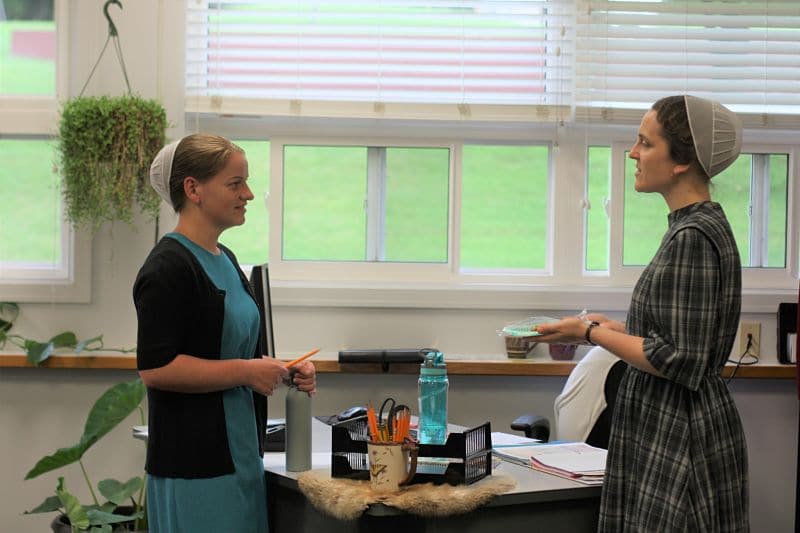
School Has Started!
�How was your second day of school?� I asked a new teacher.
�Not so good,� she replied. �I�m finding more things I need to learn and figure out.� She wondered how my day was. I noted that it was going well, but I was very tired. She agreed and wondered how long that lasts. I told her it was usually a couple weeks until we were feeling adjusted and not so worn out from the days at school. I remember going home and just lying on the couch, reading and resting. The new teacher found it comforting that even after 33 years of teaching, I am still exhausted at the end of the second day of school. She was also consoled by the fact that I still make mistakes, even after all these years of teaching.
I chatted with another new teacher. She was beating herself up because she had messed up with one of her classes. We talked about it��We all make mistakes� and �This was only your first time � give it some time.� �Give yourself grace!� We need to give ourselves grace as we begin the year and learn new procedures and methods.
To the new teacher (and experienced teacher, as well!) I would like to share things I�ve learned in my years of teaching. I have learned from the new teachers, too. Take heart, new teacher!
Be open to learning and receive teachable moments for yourself.
A new teacher and I were discussing one of my students with whom we both work. This child needs a lot of supervision. I shared a lesson I�ve learned: �Praise publicly; correct privately� and that this can be challenging to do. I felt bad because I did call out this child�s name in front of the whole class. He was tipping his water bottle over someone�s head and I called him out on that inappropriate behavior. The new teacher was concerned then because she had yelled at some boys as they ran out on the soccer field. We agreed that sometimes we have to correct in front of the class, depending on the situation, and she commented, �I want to make it a teachable moment.�
Ask questions; ask for advice.
Most people like to share and feel affirmed when you ask questions, so don�t be afraid to ask. �Where is this supply kept?� �How can I prevent so much talking from the students?� �What do you do when�.?� Experienced teachers are willing to help and guide new teachers, I�ve found.
Be open to corrective conversations.
A new teacher asked how to handle a situation. She hoped she could learn from someone who had dealt with the same thing.
Watch a more experienced teacher.
The first day of recess, the new teacher went outside with her class so she could see the procedures for lining up and coming inside. She said she wanted to watch the procedures and learn from the way the experienced teacher did it.
Ask someone to check over your communications.
It�s helpful to have feedback from someone else who has been communicating with parents and students and knows the families. Ask if you�ve included all of the needed information and how your writing might sound to families. Communications reflect on the sender.
Enjoy your days!
I asked another new teacher how it was going, and he commented, �I can�t wait for the weekend.� I understood that. I was weary, too, and looked forward to the weekend schedule.
Make sure to take some time to rest and relax, and not �live at school.� I know this can be hard. After 33 years I am still at school late many times. Sometimes I just have to stop working. I used to change bulletin boards each month, but one year when I was very busy I did not get that done. I realized that nothing bad happened because my bulletin boards were not changed! I needed to let some things go.
The new teacher shared that everyone has been so helpful and supportive � thank you to staff for helping new teachers, and to new teachers for joining us and working together!
Blessings to new and experienced teachers in your new year of school!

Teaching Fluency through Choral Reading
One of my memories as a seven, eight, and nine-year-old involves reading to my little sister for hours at a time. Naomi was five years younger than I and must have been a remarkably patient listener. I remember reading many of the Thornton Burgess and Laura Ingalls Wilder books to her. Apparently, I’ve forgotten all the other books I read to her because my mother says that when Naomi began to read to herself, it was years before she read many books that she hadn’t already heard.
As I observe some of my third and fourth graders stumble and sweat while reading aloud, I wish each of them, too, had an eager little sister to listen to them for hours on end. When I read to my sister for the sheer delight of enjoying the stories together, I didn’t realize that these experiences were also preparing me for rapid, comprehension-filled, independent reading. These are the precise skills I’m hoping to build in my third and fourth graders.
I can’t replicate with each student the same rich oral reading encounters I enjoyed, but I can encourage them to read at home to their little siblings by sending home fun read-aloud picture books. In my classroom, I can offer other opportunities that are especially helpful to my challenged readers, such as choral reading, the practice of reading aloud together as a group.
As I’ve listened to students read orally by themselves, I’ve learned to predict which students will struggle with choral reading. They’re the hesitant readers who misread small words, struggle to chunk bigger words, and read in a choppy manner. During choral reading, these same readers may mumble along and not follow the text with their eyes. These behaviors indicate that these students are not gaining desperately needed reading skills through the practice of choral reading. These are precisely the students who need focused, intentional choral reading the most.
I’ve found that poetry reading, Bible Memory practice, and reading directions are three simple ways to integrate choral reading in my class. The mundane practice of reading directions orally offers an opportunity to grow hesitant readers into confident, expressive, and smooth readers.
Following are three engagement techniques for reading directions that help me to pull in those hesitant readers. You will need to adapt and adjust these techniques to your situation, but I offer the specific language and techniques I use for two reasons. Firstly, I want to emphasize how consistent and explicit your instructions need to be. And secondly, I want to be clear about how critical it is to require 100% participation of your students. The benefits go way beyond reading class.
Rhythmic Beginnings
I make sure students are sufficiently cued to focus in on the directions before we begin. It can be more complex than you would think for some students to engage their eyes, voices, and minds all at once, but that’s what’s required to read and absorb directions. I find that when we start together, we can stay together. So I say something like, ““Let’s read the directions for number one aloud together. Rea-dy, begin!” I try to be very predictable, saying the same thing at the same rate each time. I explain to students that when I say “ready, begin” they should be taking a breath so that their voices are ready to start immediately. We read the directions with my voice slightly leading theirs, both in volume and pace. In a week or two, I can abbreviate my instructions to “Number One, REA-dy, beGIN!”
Without a rhythmic beginning, I would estimate that only about half of my class is ready to read the directions. When I include a rhythmic beginning, I find that typically about 80% of the students are with me as we read the directions. The problem is that this still leaves 20% who are somewhere else, and this last 20% of the class is the group of students that most need choral reading to develop their reading fluency. They won’t benefit from this critical reading activity unless I can engage their minds, eyes, and voices as well.
Nonverbal Prompts
As I say, “Let’s read the directions…” I move toward a student who is disengaged and I point to the directions in the book to focus the student’s eyes and mind. As we begin reading, I listen for that student’s voice. Unless I can hear that voice, I take my nonverbal prompt a step further, leaning down and reading into the ear of that student. Usually at that point the student engages, which results in a big smile and thumbs up from me. It only takes a few weeks for these nonverbal prompts to pay off. My consistent awareness of that student’s engagement and my nonverbal prompts, which consist of pointing to the text, reading in their ear, and responding with great joy when I see improvement, results in almost 100% of my students engaging in the process of reading directions together.
Individual Conversation
Individual Conversation
But there are still a few students who either do not read my cues accurately or do not understand the necessity for complying. In either of these situations, a private talk is probably necessary. I usually start by saying something like, “I’m so excited by what happens to our minds and to our ability to read aloud smoothly and well when we all read directions together. I’ve been concerned though that you’re not getting a chance to grow as a learner in these ways because I’ve been noticing that I can’t hear your voice and I can’t see your mouth moving when we read directions. Can you tell me why that is?” After giving time for a response, in which some students will insist that they are helping to read directions, I will reiterate that the only way I know if they’re helping is if I see their mouth moving and am able to hear their voices when I bend down close to them.
After this, I find that these students learn to comply over time especially if I do two things. First, I gently remind them of our conversation by commenting to the whole class about the value of reading for fluency. “Class, I like how I’m hearing each voice helping with the directions. That tells me you’re growing as a reader. Over time, you’ll find that you can read aloud more smoothly and quickly and that’s because of these little things we do like reading directions together. Great job! Be sure you’re always ‘Jonny on the Spot’ and ready to read!” Secondly, I follow up with that student by “inclining my ear” towards them as I am commanded to do in Isaiah 55:3. This reminds the student that I’m listening for their voice. In response, the voice of the student rises in volume, focus improves, and mumbling stops. Now the student can begin the process of gaining better oral reading habits.
A recent study recorded sixth grade students making progress in gaining smooth, expressive, and rapid oral reading through engaging in as little as sixteen minutes of choral reading per week.
This study and others have profoundly impacted my thinking about choral reading, causing me to experiment with ways to increase the effectiveness of my students’ choral reading experiences. We don’t have hours to sit on couches and read aloud to patient little sisters, but I’m learning to maximize the oral reading we’re doing throughout the day, creating richer, more engaging opportunities for practice, without needing to carve extra time from other subjects.

Habits
During the summer the 25-mph speed limit sign was moved up the hill a few hundred yards. This morning on my way to school I realized that, once again, I cruised through it at a higher speed, only slowing down as I approached the bridge that had previously marked the lowered speed zone. A habit formed from thirty years of traveling that road five days a week is hard to break.
My thoughts then traveled to the habits we want our students to form. We are at the beginning of a new school term. Now is the time to work on the habits we want to see and perhaps work on breaking the old habits from previous years. The first step in forming a new habit is to become aware that it is necessary. Then we need to put effort into performing that habit continually until we do it without thought. Good habits take much more effort than bad habits. One must be vigilant and persistent to form good ones.
Many habits we want to see in school are not necessarily good or bad but are just the method we want to see something happen. It does not exactly matter where on a paper the student puts his name, but most of us do want to see it at a consistent place each time. So, we need to show, remind, and possibly reinforce where to write one�s name. It doesn�t really matter which on side of a desk students get out of but many times one side works into the classroom flow more easily. The habit needs to be practiced. Many school routines should become habits to help the classroom function smoothly and efficiently.
We need to help our students form good habits on the playground. Good sportsmanship does not come readily to most children. It takes teaching, modeling, and trying again to help students learn to play fairly, honestly, and kindly.
Reinforcement must be given to help students form good habits. At times reinforcement will be negative in recognition of not following the habit. (If the local town policeman stopped me for forgetting to slow down soon enough, I would remember for a long time.) Just as important is positive reinforcement when a student demonstrates a good habit.
The other day our junior high teacher asked me, �Do you still make your first graders hold their pencils correctly?� Well, I try but sometimes the effort it takes to form a correct grip habit is greater than the time I have to spend on it and students slip by without forming the correct habit. She always reminds me of what I did to help her and her classmates correct their wrong grip when she was in first grade. To help it stick in their minds, I used Frank Gilbreth�s (of Cheaper by the Dozen fame) idea for teaching his children to type. He stood behind them and whenever they made a mistake, he thumped them on the head with a pencil. So, in my class, a wrong pencil grip while they were writing got a mild thump on the head. It did help her to form a good habit, though I haven�t tried it since because I�m not really sure it was a good idea.
Teachers, too, need to develop habits in the classroom. We need the habit of being consistent in discipline. We need the habits of kindness, punctuality, neatness, organization, fairness, and persistence just as much as our students do. With new school procedures put into place because of COVID, I�m finding it takes work to change my old habits to fit the new. It takes effort.
I have driven through the new speed zone enough now that I do remember most times. But I have to consciously make the effort to remember. If my thoughts are elsewhere, I do not remember until I find myself automatically slowing from habit once I get to the bridge. This habit is going to take a lot more work until it has changed to something I do without thinking about it.


Does Curriculum Matter? Is the Ladder Leaning Against the Right Wall?
In school and at home, children encounter so many influences. Which ones are important? Jonathan urges us to take seriously the influences we place on our children. Each teacher in our school is curriculum, a system of living values by which our student learns. Our community culture is curriculum present in our schools. And of course, the course books present are curriculum too. This is intended to be a reminder about influence, heroes, and how our lives and our school shapes children’s worldvie

Free Image Resources
- Although most of the pictures are free, some of these sites also carry ads for paid stock photos.
- The fact that an image is free doesn't mean you don't have to give credit to the author. In some cases, you are not required to give credit--but it's still a respectful thing to do.
- Some of these sites carry a range of images, including inappropriate ones. Some sites offer a mature content filter to block these from your view.
Sources for Free Images and Illustrations
| Creative Commons Search | Pulls in CC-licensed images from a number of sources. |
| Wikimedia Commons | Free images, many of which need to be attributed |
| Pixabay | One of the broadest selections of free images |
| Stock Pictures for Everyone | India images for free (nonprofit rate) |
| Library of Congress images | Public domain images, many of historical interest |
| Site Builder | A search engine that catalogues a number of free image sources; limited, but good quality |
| Web Gallery of Art | Fine art from the past |
| Unsplash | An emphasis on artistic photographs |
| Flickr | Some images with Creative Commons licenses; on search results page, filter by license (drop-down at top left). |
| Burst | Free stock photos intended for ecommerce, but with a variety of subjects. |
| Pexels | Free stock; includes some video. Some of these are sourced from Pixabay, so content is not necessarily unique. |
| Freepik | Emphasis on backgrounds and vectors. Also has premium offerings. |
| RawPixels | Free and premium offerings; tend to be good quality and less stock-looking |
| Life of Pix | Scenic and minimalist |
| pxhere | Registration (free) required to download; free with a focus on scenic and atmospheric |
| EveryPixel | Searches across 24 free image sites, including Unsplash and Pixabay. |
| Awesome Stock Resources | Large collection of links to sites offering free photos, videos, and graphics resources |
| Europeana | Great trove of cultural items--letters, photos, paintings--from Europe. Many but not all are free to use. |
| Free Illustrations | Doodles and illustrations intended for the web Images in this post come from a link listed there. |

Preschool Preview
When four- and five-year-old children think about school, what do they imagine? Do the smatterings they hear from older siblings, cousins, and friends give them a fun picture or a bleak one? I was curious to find out, so I asked. This is what they said.
What do you think school will be like?- It feels like rest time, I think. Cuz it�s really quiet and comfortable.
- Ummmmmmmm. Like church.
- At the first I know I�ll feel a lil scared maybe? At the first. An then I think it might be fun. At the end of school I will want to go back, and when I get used to it, I think I�m gonna like it.
- Colorin� pictures.
- You will get teached a lot.
- Fun! To ride on a school bus. I�m excited that I can color. When do they do coloring?
- I�m gonna miss my mom. And I hope she�s gonna miss me.
- Be like? I don�t know� Be quiet and write words. And write pictures. That will be easy because I already know how to write people. But not hands. I just do a line down, and then arms across, and then a head, and then two dots, and then a nose that�s a dot, and a smiling face. And then umm do legs. Actually I know how to make another kind of people�
- I don�t know. Maybe easy. I like writing in books so that�s gonna be my fun thing.
- Hard. Cuz of colorin� pictures. I don�t like colorin� pictures.
- Easy. Because. Because� I KNOW that it�s gonna be easy. You just gotta sit still. Easy! I can already write good. But I�m gonna have to learn to write words before I go to school. Because I needa write words on my books. Kinda hard. I might have to practice.
- At the first it will be hard an� then it will be easy at the last. Cuz I�m not gonna know the teachers.
- It will be easy in first grade, but then harder. Because there is more stuff to do when you get older.
- Yeah. Easy!
- Hard. Because I needa do math and do doublecase numbers. And doubleknot my shoes.
- No.
- Chloe. One of my girlfriends. All the people that are kids go. But that�s gonna be fun on the bus. Is there beds on the bus? Awww. I LOVE sleeping.
- Kelly and Regan and Aarick. And me. I�m GONNA go to school. And my doll. Hahahahaha. No, she didn�t go to school.
- Makenna has some sisters that go to school, and Ellie goes to school but now she�s sick, and I can�t talk much else.
- Devon. That�s all.
- I don�t know because I like so many stuff. I don�t know.
- Letters.
- I wanna know how to do everything.
- I want to learn how to read so I can read my own books.
- How to listen and how to read stories to the children. How to write letters. And write my name, and write letters RIGHT.
- I wanna learn about Jesus.
- Well, math. And umm� Breaktime!
- How to count to one hundred and ten.
- About snakes.
- I wanna learn about letters and numbers and taking care of a real baby. And making good soup and carving good, and cleaning dishes and sharp knives.
All in all, not a bad impression. A little bit easy and a little bit hard, book learning mixed with a few real life skills, and being away from Mommy but getting to ride on a school bus?
They�ll take it.
*Thanks to the mothers who asked their children these questions for me, and shared their audio recordings of the results. Social distancing does not automatically prohibit interviews. Yay!

More than Math and Science: Caring for the Emotional Needs of Your Students
The teacher's job is to impart knowledge and to train skills. But students are more than knowledge acquisition machines. Anthony calls us to follow Christ's example in caring for children's needs for belonging, closeness, and blessing. As we care for children as whole persons, we prepare them to grow academically as well.Download the audio instead

Attitude Adjustment
Bop! �I need an attitude adjustment,� Loren announced, as he hit himself on the head to give the adjustment.
�I smell your attitude, and it�s stinky!� Rachel informed her older sister.
Today I had a serious chat with my student, Calvin, regarding his work.� He has been performing very poorly, is very messy, and getting many answers incorrect.� His head was hanging, and he didn�t seem to care.� I asked him to look at me, which he did rather defiantly.� So I also addressed his attitude.� When I commented, �It seems like you don�t care,� he sullenly replied, �I don�t.�� I had already figured that out!�� Now I need to figure out how to help him and how to get him to care.� I was concerned about his attitude, as he didn�t want to complete his work, he wouldn�t smile, he was grouchy, and he was putting minimal effort into school.� He glared at me and challenged my authority.
I wanted to help Calvin to be happy and to be successful with school.� How could I do that?� I tried to find any underlying problems.� Is he feeling insecure?� Is he physically well?� Is he dealing with problems outside of school?� Is he feeling unsuccessful in his work and studies, so he�s putting on an attitude of defiance and unconcern to cover up his feelings?� Does Calvin have social problems?
I didn�t know the answers to all of my questions, but I could observe Calvin and his interactions and start to find some answers.� I see that he has friends and is playing soccer at recess; he is involved with the other children and not seeming to be left out.� (I wonder if he is responding to negative peer pressure?� I don�t think so � he seems to be a leader.� I�ll have to watch that he is a good leader!)� He is struggling in some of his lessons.� This may be affecting his attitude.
I will try to build on his interests and find a motivation for him.� I decide to �call in the reinforcements� so I communicate with Calvin�s parents.� We conference and they set up a motivational plan at home and talk to him about his attitude.
Calvin�s attitude did improve when he realized that teacher and parents were working together to help him.� Having a motivation boost with the plan at home helped him in his work and I think the improved work helped improve his attitude.
Obviously, the teacher will not be �bopping� children on the head to give attitude adjustments, so how we can help students to improve their attitudes?
- Pray over the child. Sometimes I stand beside a child and pray silently for him.� I might put my hand on his shoulder and pray silently.� I sometimes sit at a child�s desk (or stand beside it) before school and pray for that child and for me as I work with her.� I pray aloud with a child.� One day after we had worked through a behavior challenge, I asked Brenda, �Shall I pray for you?�� She quickly agreed, and we stood in the hallway and I prayed for her and that seemed to relieve her.� I pray for wisdom in working with the children.� I may need to pray for myself to have the right attitude about the child.
- Consult with parents. Ask for their input.� Discuss what is motivating for their child.� What is important to their child?� What does the child say about school?� Come up with a plan to help the child.� For Calvin, whenever he earned a certain grade on his spelling test he received a sticker at home.� When he had filled his chart with stickers, he could go shopping for a favorite hobby item.� He was excited about the plan and kept me up-to-date on how it was going.� He let me know when he was going shopping.
- Give the child a special job or responsibility. This helps the student feel needed and gives him a special role.� I purposely asked Chad if he would be in charge of emptying the pencil sharpener.� It was not a big job, but gave him some importance and he was pleased that he was the only one who had that job.� When the sharpener was full of shavings, I would call him over to take care of it.
- Build relationships with students. One day I noted, �Vernon has been very cooperative and thoughtful to me this afternoon.� He was one of the culprits this morning (in a scissors incident!)� He has not had a good attitude some days and has not been respectful to me.� I think what made the difference is that he had lunch with me today!� He chatted and asked questions, and I said if he wanted to share anything he could, and he told me some things.� He wondered if I get lonely when I eat by myself.� Is that why I invite them to eat with me? =)� It made me realize again the importance of building relationships and listening.�
- Is the attitude problem a heart issue? This may require prayer and asking for wisdom to deal with it.
- I need to examine myself. Maybe a change of heart is required in me.� Some children are more challenging to work with.� Maybe I need to have more patience, love, and understanding for this child.� As I pray for the child and myself, and purpose to care for her, I can have an attitude of love for her.

Recommended Reading Lists
During my childhood, my mother had a habit of regularly visiting the local library and bringing home stacks of books. When we finished reading these stacks, we turned to our bookshelves, because my mother was also an astute thrift store book shopper, filling our home with many classics and not-so-classics. The authors of books on our shelves offered a wide range of writing quality, style, and topics, from Laura Lee Hope to Enid Blyton to Christmas Carol Kauffman to Lucy Maud Montgomery to Jules Verne to Jane Austen to William Shakespeare.
Not all of us children took to reading easily in our first years of school, but we all became voracious readers. I believe both the stacks of library books and overflowing bookshelves in our home were the “secret sauce” that enriched us in our formative years. Those books established our reading lives and strengthened our abilities to learn in school.
Last spring as we stripped education back to the essentials, I found myself especially focusing on the reading of my students. I wondered how to mitigate the negative effects of the long summer slide after a truncated school year. Reflecting on the joy and richness of our childhoods that were jam-packed with books, my co-teacher and I created a series list for Grades 1-4.
We shared this list with the parents of our lower elementary students, in hopes that the list would do several things. First, we wanted to enable moms to get books at local libraries all summer long. In our area, libraries allowed curbside pickup only, which eliminated the opportunity to flip through books to check for quality and soundness. Anticipating that this series list would introduce parents to authors and books their children would enjoy, we hoped the process of choosing books would be less stressful, thus making library books more accessible to every family.
In addition, by offering lists of series, we hoped to reach the struggling and reluctant readers in our classes. While series are often not the best quality literature, they do offer a gateway to reading for reluctant readers. Many children find the predictable plot lines easy to follow and enjoy meeting the same unchanging characters in book after book. The vocabulary in beginning to read series is usually not challenging, allowing students to gain reading fluency and confidence that will prepare them for bigger and better books.
As a teacher, I’ve recommended series to parents, even series of poor literary quality, because these series may pique the interest of students and build their reading stamina, getting them ready to enjoy the best and richest of books. Our series list was only the means to a greater end, which was to create another list—a list of high-quality literature that feeds minds, nourishes souls, and forms hearts of children and youth.
Standing on the shoulders of giants, we took the recommended reading list our bookstore, Christian Learning Resource, had offered since time immemorial and we expanded it to create a must-reads list for pre-school to grade 12. It’s not a perfect list; it’s a work in progress. But we think it has potential as a resource for parents, teachers, and even students who want to know what to read next. Teachers may find it helpful to reference this list when looking for engaging books to read aloud in story time or excellent books to study in literature class.
We teachers can enable the parents of our students to offer the great gift of broad, deep, and wide reading to their children. One way to do this is to share recommended book lists with them. Bookshelves overflowing with quality books make every home and school more beautiful. Take these lists with you to a library, thrift store, or bookstore today!
View the lists:
https://thedockforlearning.org/contributions/must-reads-book-list/
https://thedockforlearning.org/contributions/recommended-book-series-for-elementary/

Recommended Book Series for Elementary
From two elementary teachers, this list suggests series that provide your child with material to grow into reading. The list is in progress; download the file and edit it to fit your situation.
Download the list or preview it below.
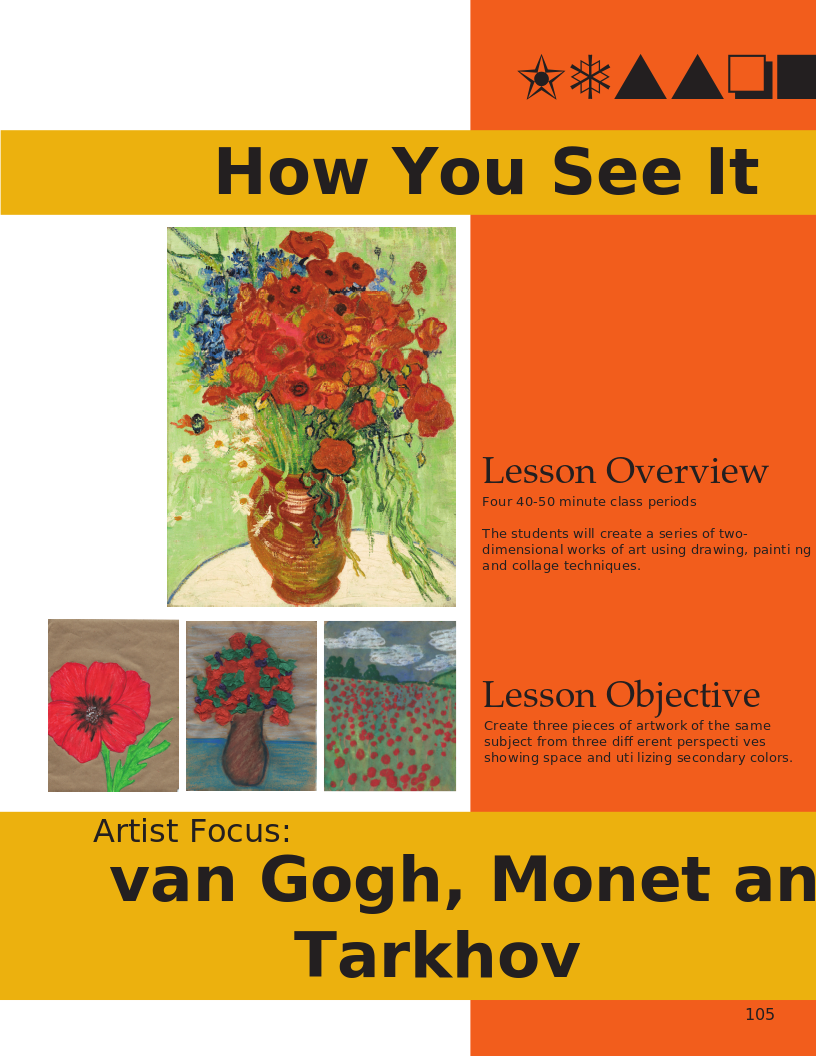
Studio ARTiculations Art Curriculum Sample Unit Plan
Studio ARTiculations Art Curriculum was born out of the dream to help Christian school teachers and homeschool families gain access to a quality art education without burdening the teacher with excessive planning.
Over the past two years Studio ARTiculations has offered the curriculum on a subscription basis, mailing unit plans out to subscribers every month. This year, Studio ARTiculations is excited to offer the entire curriculum in book form, a compilation of the past two years lessons. Currently there are four levels: Level 1 (Grades 1-2), Level 2 (Grades 3-4), Level 3 (Grades 5-6) and Level 4 (Grades 7-8). A high school introductory course is in the works and new lesson plans will be uploaded to the Studio ARTiculations website throughout the year.
Head over to the website for more information. Like us on Facebook and Instagram to stay updated with the latest lessons and offerings!
Below is a sample lesson plan taken from Level 1.
Download the lesson or preview it below.
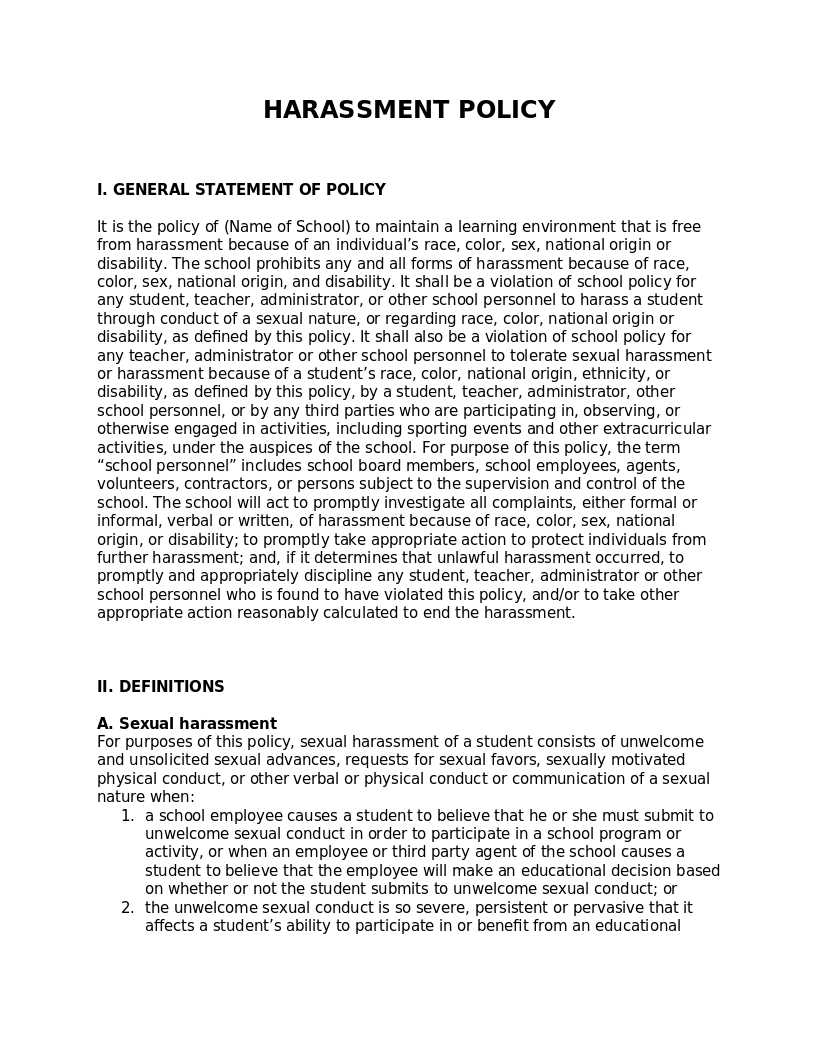
Harassment Policy Template
None of our schools intends to allow sexual harassment or discrimination because of race, ethnicity, or disability. But ignoring the possibility of such harassment does not mean it won't happen. In this sample policy, a school specifies the kinds of behaviors that are unacceptable, and the steps to be taken when a person believes harassment has occurred.
Download the document or preview it below.

Hope Emerging
One day, a squirmy thing full of legs and brown stripes was carried into my classroom. It was a caterpillar, but an unusual one. Shades of brown and tan patterned its body, giving it a snake-like appearance. The children were awed at the strand protruding from its end. Was it a hair? Or maybe a tail?
Our new pet nestled into a glass jar. Before long, another one of its kind was found to join it. We learned they were sphynx caterpillars. They needed leaf juices from the tree with sacuanjoche flowers that stood on our playground. The students nurtured them, stuffing huge leaves into the opening of the jar. The efforts paid off, for the caterpillars stretched greatly in length. Thick white feet carried their plump bodies over the arms of their owners and around in the jar.
Then one day, huddled beside the leaves, lay one caterpillar--black and dry and still. What happened? we wondered. At last we pitched it onto the dust outside. One tender-hearted lass buried it as a final gesture of affection.
The other caterpillar continued to grow. Then one day, he disappeared. We spotted him beneath a cluster of leaves. He was dry, much as the other one had been. What now? We clung to a bit of patience and decided to save him just a little longer.
Not long after, we saw it: a beautiful cocoon in that clump of stuff. Brilliant orange lines contrasting with black glowed through the shell. Thrilled, we watched and hoped and watched some more. One weekend, with no big eyes peering into its transparent home, our caterpillar wrestled out of its cocoon. It hung on the side of the jar, alone. It perched, a sphynx moth at last, with a fuzzy appearance of whites, blacks, and browns. The next week, the students released it into fresh air and blue sky, where it belonged. No more barriers holding him back. He was free to soar!
What about his former companion? Perhaps we had buried him in the middle of his life cycle! Had we given up hope too soon?
Around this time, my co-teacher and I stood outside the door at the beginning of recess. Branson, a first-grader, skipped around the corner past us on his way to play.
My co-teacher commented on his happy expression. “That boy has really changed,” she said. “He’s not as bratty as he used to be.”
Slightly surprised, I considered her words. And I remembered.
One day, several months earlier, Branson had entered my classroom. He was a first-grader, a five-year-old barely beyond toddler stage. In academics he was sharp, but in social interaction he lacked. He amused the other students by chasing dragonflies during recess and annoyed them by picking fights. “I am not caught!” he whined during recess. He clashed with a classmate who was also high-strung.
I tried to calm him down. I tried to stay calm myself as I dealt with the combined wills and energies of all my students. I reminded and lectured and put marks on the board for misbehavior. I asked a veteran teacher for advice and spilled my frustration to Mom. “I’m a teacher, not a mom!”
Now, looking back, I could see a difference. Branson’s cocoon was splitting open, and he was finding freedom to soar above life’s petty annoyances. The change had been so gradual that I had barely noticed it.
Yes, we still had our recess struggles. But they were not nearly as bad as they had been. What if I could not have seen results in April because I thought Branson impossible to deal with in January? What if I had given up hope too soon?
I thank God for the special people who have not given up hope on me. Those special people have prayed for me throughout the years, through telephone lines and across countries, during sunrise hours and twilight shades. They have kept on loving and encouraging no matter what. They have blessed my life more than I realize.
I want to be one of those people—one who does not throw away a work in progress. One who sees beyond what a child is now. One who keeps urging and loving despite another mess-up. One who recognizes the most itsy-bitsy step toward improvement. One who sees the likeness of God in a child, despite his immaturity. One who beholds a splendid moth in a humble caterpillar.
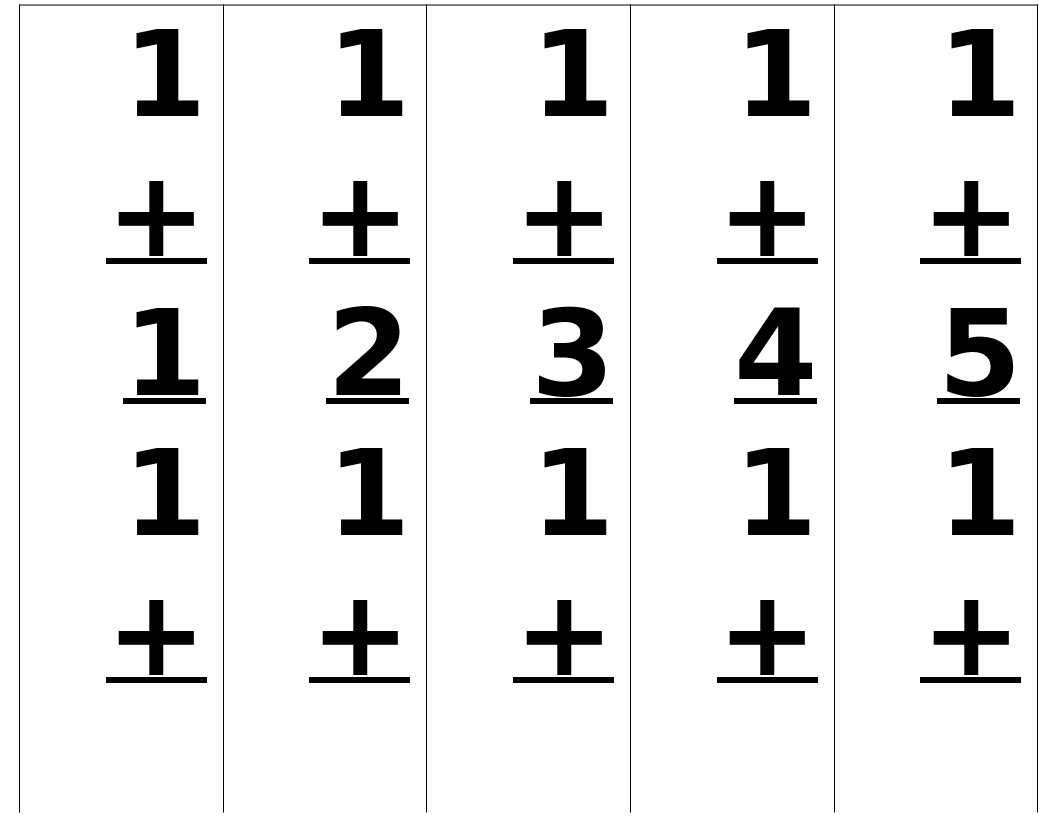
Addition and Subtraction Flashcards
Download and print this document to create 202 flashcards drilling basic addition and subtraction facts.
Download the flashcards or preview them below.

Dear Second-Year Teacher
Dear Second-Year Teacher,
Welcome back for another year in the classroom! It�s good to see that you stuck around, that you were brave enough to try it again. It would be a shame to let all the learning you did last year be wasted.
The second year is supposed to be easier. What makes it that way?
Whether you consider your first year a grand success or an utter failure�in reality it was probably neither�you likely hit rough patches along the way. You probably found that the actual teaching experience didn�t exactly fit the idea of that teaching experience in your mind. You found that you were working with frail, willful human beings, not robots waiting your programmed command. You found that the clock went faster than you thought it did. You found that your superior knowledge was still not enough to help every child understand every time. You found that your supply of patience was less than you thought it was. You found�lots of things that didn�t go like you thought they should.
As you go into this new year you can make proactive plans. You now know a little better what you will be working with. You know that many students need help curbing their selfish desires (we don�t sit in a hard seat and work on difficult material just because we want to). You know that students are happier when they�ve learned self-control (we aren�t happy when we procrastinate, argue, or sulk in a corner). You know the rough places in the curriculum. You see the whole picture better. You now have an idea of where you want to end up before you start. You are better prepared to meet the challenges.
As you plan your new year, think about the areas that went well. Was your schedule effective? Did your method for passing in books work? Was your system for dealing with class disruptions successful? Don�t throw away the things that worked for you.
In your plans for the next year, give a lot of thought to the trouble areas of the past year. Was the book/craft corner a place for disruption, whispering, and distraction? How can you change that? Could you limit the number of people who can be there, or specify the time period students use it (say, only in last period if their work is completed), or be more specific in your expectations of the privilege, or eliminate it altogether? Did students have trouble getting their math completed on time? What might be a solution�more flashcard practice so they speed up, or do you need to move math to a longer class period so they have a larger chunk of time to work on it? Was the problem that hands waved constantly over the classroom? Are you spending enough time in class, or do you need to spend more time in review and drill, or do you need to teach your students to pay attention during class time? One advantage you have this year is that you better know the trouble spots and can prepare yourself and the students for them.
You learned much in your time last year, but teachers are just like students. Throw too much new material at us and we only catch part of it. We also need review and reminders. One way to prepare yourself for this year is to go back over all the beginning teacher material you were given last year. You will probably find a few nuggets you didn�t notice last year. Here are a few you may have overlooked.
- Routines are very important. Students thrive when they understand and know what to do. Teachers who let routines work for them are less harried and have more time for the important things.
- Routines must be communicated, modeled, and practiced for them to be successful.
- Rules (different from routines) must be enforced�remember, to have a rule is to invite someone to break it. The solution is not to have no rules. The solution is to have a consistent, non-emotional method of reinforcing the rule. (Getting angry, frustrated, or complacent will not work.)
- Rules must also be communicated, modeled, and practiced.
- Students perform to the level of your expectations. Do you expect them to sit quietly? If you are pretty sure they can�t, you will be correct. Do you expect neat work? If you don�t, you will have sloppy papers. Do you expect students to memorize the multiplication tables? If you think that is too hard for them, they will not get the facts memorized. As teachers we must be realistic in our expectations but many times, we expect too little.
- Students need to see, hear, and handle material to understand. Teaching is not a one-way tunnel where the teacher funnels in all the information and learned students come out the other end. Students need to interact and grapple with the material. The teacher facilitates the interaction.
- Parties, prizes, and treats do not make a successful school year. Rewarding a job well done is not wrong; however, hinging student performance or classroom management on a tangible reward system will not bring about satisfaction or success.
- Realize that teaching for the teacher and book work for the student is hard work and not play. Spice in the classroom should be spice and not flour or sugar. That does not mean that learning and hard work cannot be interesting. But spice should not be added just because it�s time to do something fun. Putting pepper in cookies doesn�t work, but adding some cinnamon is pleasing.
Yes, teaching the second year is easier. But there are areas where you as a second-year teacher may find it more difficult. For one thing, the enthusiasm of your first year is hard to surpass. As we teach longer, we start to realize how much work certain things take and we shy away from projects and activities that demand so much from us. We have also learned how hard a job teaching can be. We realize more realistically that teaching means being on-demand for six straight hours. It means we never quite get away from the classroom. It means working with various personalities and various parental expectations. Teaching a second year brings with it a greater sense of responsibility.
Another challenge you may face is when you teach the same students that you had the year before. Those students come back to school expecting the same experience of the year before. When you try to make changes, the students may provide some push-back. If your reasons for the change are well thought out, you can calmly and firmly stand on those reasons but you must be on your guard. It may take students a while to adapt to the changes.
So, Teacher of the Second Year, welcome back. I am glad to see you again! And, as it was last year, I�m still happy to help you with the questions you have. I�m still willing to listen to your struggles, success stories, or times you feel you�ve failed.
May God bless your year!
~A teacher who once stood in your shoes
Learning Paths for Teachers
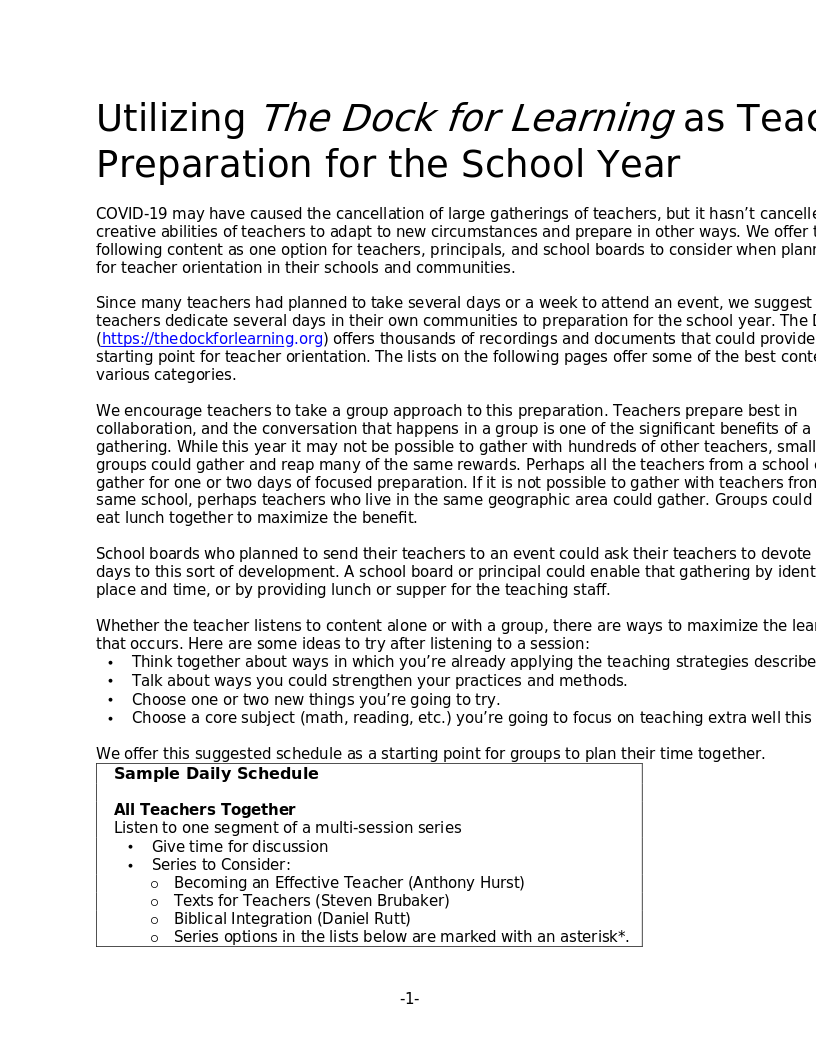
Utilizing The Dock for Learning as Teacher Preparation for the School Year

Planning intentional development through The Dock
This guide was originally developed as a resource for teachers who could not attend large events during COVID-19. Though we are grateful for the return of in-person events, these learning paths remain highly useful guides for exploring the resources on The Dock.
We offer the following content as one option for teachers, principals, and school boards to consider when planning for teacher orientation in their schools and communities. The Dock offers thousands of recordings and documents that could provide a starting point for teacher orientation. The lists below were curated by long-term educators to highlight some of the best content in various categories.
We encourage teachers to take a group approach to this preparation. Teachers prepare best in collaboration, and the conversation that happens in a group is one of the significant benefits of a large gathering. Perhaps all the teachers from a school could gather for one or two days of focused preparation. If it is not possible to gather with teachers from the same school, perhaps teachers who live in the same geographic area could gather. Groups could plan to eat lunch together to maximize the benefit.
School boards could ask their teachers to devote several days to this sort of development. A school board or principal could enable that gathering by identifying a place and time, or by providing lunch or supper for the teaching staff.
Whether the teacher listens to content alone or with a group, there are ways to maximize the learning that occurs. Here are some ideas to try after listening to a session:
- Think together about ways in which you’re already applying the teaching strategies described.
- Talk about ways you could strengthen your practices and methods.
- Choose one or two new things you’re going to try.
- Choose a core subject (math, reading, etc.) you’re going to focus on teaching extra well this year.
We offer this suggested schedule as a starting point for groups to plan their time together.
Sample Daily Schedule |
| All Teachers Together
Listen to one segment of a multi-session series |
| · Give time for discussion |
|
| Breakout 1
Split into grade level groups to watch or listen.
All Teachers Together Discuss the content experienced so far.
Listen Together |
| Eat a meal together. |
New and less experienced teachers could round out their preparation by listening to at least one presentation from each of the following categories: learning difficulties, classroom management, and class culture. In addition, they should take in as much content as possible from the most relevant grade level section to their teaching position. The grade level sections below are Lower Elementary (Grades 1-3), Upper Elementary/Middle School (Grades 4-8), and High School (Grades 9-12).
Besides learning about methods of teaching core subjects such as math and reading at their grade level, new teachers also need to spend time thinking more generally about how to plan lessons and assess the learning of students. The shaded section in the New Teachers category provides videos and lesson plan templates to help teachers start thinking about these important topics.
The lists below include more content than any school could hope to cover in a few days of teacher orientation. In addition, these are only some of the resources available on The Dock. In many cases, related items are listed on the page for each item; those related items may offer additional help in a given area.
We hope that this material will assist teachers in their preparation for the school year ahead. We pray that God will bless the efforts of school boards, principals, and teachers as they engage in the challenging work of this year!
Preparation for New Teachers—General
The items below will help new teachers start to think about the vital topics of planning lessons and assessing the learning of students. Some of the documents are templates that can be edited.
| Speaker | Title | Format |
| Anthony Hurst | *Becoming An Effective Teacher | Audio
4 sessions |
| Steven Brubaker | *Texts for Teachers | Audio
4 sessions |
| Jonas Sauder | Essential Personal Qualities of Teachers | Audio
1 hour 24 minutes |
| Deana Swanson | Incorporating Good Books into Any Curriculum | Audio
1 hour |
| Paul Harrison | Start with Simple: Tips to Make the First Year Less Stressful | Video
5 Minutes |
Preparation for New Teachers—Lesson Planning and Assessment
| Speaker | Title | Format |
| Peter Goertzen | What do Teachers Do? Focusing Your Lessons with Objectives | Video
6 minutes |
| Rolin Martin | The 4 Ms of Effective Objectives | Video
15 minutes |
| Brian J. Martin | More than a Grade: Assessment as a Teaching Tool | Video
5 minutes |
| Betty Yoder | Help for the Beginners and the Experienced | Document for new teacher orientation
25 pages |
| Jonas Sauder | Basic Lesson Plan Template | Document |
| Arlene Birt | Introduction to Teaching Master Document (includes lesson plan template) | Document |
General Interest for Experienced Teachers
| Speaker | Title | Format |
| Daniel Rutt | *Biblical Integration | Audio
30-40 minutes each session; Video summaries, 2 clips 5-6 minutes each |
| Daniel Rutt | Biblical Integration Summary | Video
2 clips 5-6 minutes each |
| Kyle Lehman | *Swords to Ploughshares: Knowledge to Wisdom | Audio
30-40 minutes per session 4 sessions |
| Gerald Miller | *A History of Christian Education | Audio
1 hour per session 4 sessions |
| Sharon Martin | Called to Teach | Audio
1 hour |
| Sheldon Kauffman | Peaceful Classrooms | Audio
1 hour |
Content for Lower Elementary Teachers
| Speaker | Title | Format |
| Carolyn Martin | Welcome to First Grade Part 1 and Part 2 | Audio
1 hour per session |
| Verlin Miller | Teaching Elementary Math | Audio
50 minutes |
| Glenda Miller and Ruth Anna Kuhns | The Exciting Journey: Guiding Your Class to Successful Reading | Video
12 minutes |
| Ruth Anna Kuhns | Making Elementary Math Come Alive | Video
2 clips 2-3 minutes each |
| Yvonne King | Show Them, Tell Them; Techniques to Share the Story of the Bible | Video
3 clips 6-10 minutes each |
| Becky Bollinger | Sing, Chant, Learn: Making Memorization Easier with Songs and Chants | Video
8 minutes |
| Martha Stoltzfus and Karen Yoder | Helping Struggling Readers | Video
5 minutes |
| Marla Bear | Children Thrive on Routines: The Power of Rhythms for Individualized Classrooms | Video
8 minutes |
| Yvonne King | Responding to the Challenge: Teaching Lower Elementary | Video
6 minutes |
| Yvonne King | 10 Resources for Elementary Math Review | Document |
Content for Upper Elementary/Middle School Teachers
| Speaker | Title | Format |
| Sharon Yoder | 3 Components for a Successful Reading Class | Audio
1 hour |
| Sharon Yoder | Teaching Fictional Elements in the Reading Class | Audio
1 hour |
| Jonas Sauder | Developing Levels of Reading Comprehension | Audio
2 hours 14 minutes |
| Jonas Sauder | Speaking Skills Across the Curriculum | Audio
1 hour |
| Amy Zimmerman | Making Your Curriculum Work For You | Audio
1 hour |
| Melvin Lehman | Teaching Math | Audio
1 hour 40 minutes |
| Bethany Peachey | STAR in Reading | Video
5 minutes |
| Rebecca Beiler | Turn and Learn | Video
5 minutes |
| Denise Martin | Ways to Call on Students | Video
4 minutes |
| Amy Zimmerman | Too Long, Too Hard: Making Your Curriculum Work for Your Class | Video
6 minutes |
Content for High School Teachers
| Speaker | Title | Format |
| Sharon Martin | Conquering Subjectivity in Assessments | Audio
1 hour |
| Dana Atkinson | The Hills and the Valleys: Geology from a Young Earth Perspective | Audio
1 hour |
| Dana Atkinson | Astronomical Adventure: Is Orion’s Belt a Waste of Space? | Audio
1 hour |
| Rolin Martin | Girls and Math: How Going Beyond the Rules Helps Students Engage with Math | Video
9 minutes |
| Peter Goertzen | Teaching Church History | Video
5 minutes Linked Resources |
| Peter Goertzen | World Cultures and Geography | Video
5 minutes |
| Sharon Martin | Rubrics | Video 3 minutes
Document: 3 sample rubrics |
| Brian J. Martin | Now They Know: Why and How to Differentiate Instruction | Video
5 minutes |
Content on Learning Difficulties
| Speaker | Title | Format |
| Lynell Nissley | Exceptional Learner: Defining the Terms
A series of blog posts that should be read first to give an overview to this complex topic. Dyslexia is a common disability that teachers will encounter, so special attention could be given to these blog posts. | Blog Posts |
| Anthony Hurst | ADHD | Audio
1 hour |
| Becky Bollinger | Dyslexia: Signs, Symptoms, and Solutions | Audio
1 hour |
| Becky Sue Kreider | Trauma: How Can I Teach This Child? | Audio
1 hour |
| Deana Swanson | Accommodating Special Needs in the Classroom | Audio
1 hour |
| Hannah Johnson | Memory | Video
8 minutes |
| Wesley King | Coping with RAD | Audio
1 hour |
| Lynell Nissley | Resources to Consider | Document |
Content on Developing Class Culture
| Speaker | Title | Format |
| Anthony Hurst | Components of Classroom Culture | Audio
1 hour |
| Jeremy and Diana Sauder | Improving Communication with Your Students Part 1 and Part 2 | Audio
1 hour each |
| Melvin Lehman | Authority in Action | Audio
50 minutes |
| Sheldon Kauffman | Peaceful Classrooms Excerpt | Audio
7 minutes |
| John Mark Kuhns | Relationships with Students | Video
4 minutes |
| Joseph Shantz | Enjoying School, Delighting in God: Classroom Culture | Video
5 minutes |
Content on Classroom Management
| Speaker | Title | Format |
| Conrad Smucker | Managing a Multi-Grade Classroom | Audio
50 minutes |
| Brian Martin | Setting Up Your Classroom to Enhance Student Learning | Video
4 minutes |
| Karen Nolt | Sample Classroom Procedures (5th grade) | Document
|
| Regina Martin | Classroom Management Plan (Grades 1-3) | Document |
| Amy Zimmerman | Code of Conduct | Document |