
All Content

Creative Writing in the Middle School Classroom
Once upon a time . . . and they all lived happily ever after.
Creative writing that uses phrases like these shows up often in elementary writing. Once a student enters middle school, inventive writing often gets pushed aside. According to recent research, however, creative writing still offers benefits for the student beyond sixth grade.
Researcher Marissa Despins states that creative expression allows students to be able to voice emotions and build confidence. Non-academic writing also gives the writers the opportunity for thinking imaginatively, a skill that can be used for problem solving in all sorts of life areas. Even though creative writing has fewer restrictions than academic writing, it can still allow students to build writing skills, such as using new vocabulary, forming varied sentences, and finding their voice. Additionally, the skill of creative writing can also allow older writers to entertain, clarify thinking, and simply learn to read and write (Essex).
Sometimes instructors find teaching creative writing difficult. What topics do you assign? What steps of the writing process do you require? How do you grade creative pieces? Typically, creative writing works best when the writer goes through the basic writing process of planning, drafting, editing, and publishing. But the parameters might be more lenient than those for an academic writing project. For example, planning might consist of drawing a picture of the setting of a story. Or publishing might mean handwriting a poem in script to hang on the wall. Grading is easiest with a set rubric given at the beginning of the assignment. This might include categories such as “time spent on project,” “details given about characters/setting,” and “use of images.” Typically, word count is not an important factor in grading creative assignments.
Topics for creative writing can extend well beyond the typical writing assignment. Students can be allowed to choose their topics, but often they request some suggestions. Here are a few suggested topics for different genres of creative writing.
- Poetry: Write an abecedarian poem. This is a poem where each line begins with the next sequential letter of the alphabet. The poem does not need to rhyme (although it can), and sentences can continue through several lines. Brian Bilston wrote “An Attempt To Write an Abecedarian Poem In Praise of the Dictionary”; the first lines read,
“An unfaltering ability
Bring clarity to the English language
Constitutes your
Defining quality.”
(You can read the entire poem here.) This type of poem is one that works well to display for other students to read; the poet may also want to illustrate the poem.
- Devotional: While this might be a more informative writing, devotionals provide a strong creative opportunity. Typical guidelines might include to choose a topic and find a Scripture passage that corresponds. Then write two to three paragraphs that tell a story that illustrates the passage. End with a paragraph that explains the point being made. This writing works well to be published in a booklet including the class’s responses–students can use this booklet for an actual devotional time.
- Bible story script: The student can choose a narrative Bible passage and write it in the form of dialogue. Include stage directions and small props. Make sure that the character amount and extras do not exceed what the class can produce, and publish by acting the script as a class project. For this one, the teacher might want to approve topic choices before the student proceeds to make sure that they are class appropriate (e.g. avoid violence and romance).
- Story picks: On small slips of paper, the teacher should write ideas for a main character, the setting, one object, and one conflict. The students should draw one slip from each category and use those picks to create a story. Sample story picks might be
- Characters: a chef, an artist, a mechanic, a farmer, an archaeologist, a mother, a deep-sea diver, a mountain climber
- Setting: Antarctica, a desert, an inner city, a field, a bookstore, a warehouse, a train, a rocket
- Object: paintbrush, road sign, globe, flower pot, pickup truck, icebreaker ship, shovel, vine
- Conflict: thunderstorm, being chased by a dog, the electricity goes out, lack of water to drink, a broken arm, a displeased customer, a falling brick, a screaming child
Works Cited
Despins, Marissa. “Benefits of Creative Writing in Middle School.” ELA Matters. 30 Nov. 2022. https://elamatters.com/2022/11/08/benefits-of-creative-writing-in-middle-school/. Accessed 20 Dec. 2023.
Essex, Christopher. “Teaching Creative Writing in the Elementary School.” ERIC Digest. ERIC Clearinghouse on Reading, English, and Communication. https://www.readingrockets.org/topics/writing/articles/teaching-creative-writing. Accessed 20 Dec. 2023.
Photo by Thought Catalog on Unsplash


Build-an-Atom sixth grade science assignment
Please pick an element from the periodic table to construct an atomic model of. No repeats are allowed! I would like you to work with 1-2 other students to do this. To keep things relatively simple, no atomic numbers above 20 are allowed, but you will probably want to choose an atomic number less than 10. Do your best to discuss, plan, and divide up tasks. You may use the following materials:
- Whoppers
- Lemonheads
- Spray paint x3
- Fishing line
- Hot glue or pins to bind the nucleus together
- Anything else!
I ask that you make all protons green, neutrons red, and electrons yellow. You can use the spray paint to this effect.
Remember that your nucleus needs to be clustered together in the center of the atom with the electrons circling it.
IMPORTANT: You not only need to include the correct number of electrons but also place them in the correct shells. For simplicity’s sake, let’s all put the first electron shell 8” from the nucleus and the 2nd electron shell 3” beyond that.
Your whole atom should be suspended from the ceiling in some out-of-the-way place of the basement. Next to it, hang a card stating the name of the atom and the number of each subatomic particle.
Image by Gerd Altmann from PixabayThis assignment was stressful, but I do think it was helpful, and the end results were mostly impressive. The main issues were…
- Painting all those Whoppers. Having Gumballs/Fireballs that we wouldn’t have to paint would be really helpful.
- Getting the Whoppers to cohere together was challenging, although the hairnets really helped.
- High atomic numbers were challenging. I wouldn’t recommend using any atomic numbers over 6-8 max to reduce the number of electrons required.
We also might try to size/scale/space the particles more accurately. In reality, the electrons would likely be much further from the nucleus.
The Method of Science
So I want to start by clarifying some basic definitions of what I'm talking about when I say "science." In the dictionary, science usually has a number of definitions. In in my Webster's dictionary, the definitions mostly have something about "systematized knowledge."
And to me, you could split this into two parts. The one is the knowledge that's obtained from the system of science, what you might call the scientific facts. And the other is the method or the system by which the knowledge is gained.
And when I think about science, I'm mostly thinking about the method, because that's the context for the knowledge. And I certainly think that that's how it should be thought about, and I'm assuming most of you think at least somewhat in that way. I think it's almost like the difference between understanding or memorizing what a text says and being able to read the text for yourself. I'm hoping you all agree that it's a lot more useful to a student to be able to read the text than to just tell them, "This is this is what it says."
And I think the goal should be, for a science teacher, to teach methods of science and not just the facts, this is either scientific facts. And the result, hopefully, is that if you understand the method, then you're in a better position to determine how reliable any purported scientific facts are or scientific knowledge is. And I'm not saying that if you know the method, you can test every hypothesis out there. It's just kind of like reading. Even if you know how to read, you're never going to read all the books that are out there. But you'll have a certain framework with which to help determine how reliable, a scientific knowledge is.
And another way of saying this is that the context matters. The context that if, say, science has concluded this, okay, "Under what context did they did they conclude this?" And my basic take home message for this part of the talk is that the overwhelming majority of science deals with very specific questions that scientists try to answer within well-defined frameworks.
So I'd say these are examples in my own work where I'm trying to answer fairly narrow questions using well-defined and established scientific methods.
But what is the scientific method more broadly? The core basis is hypothesis testing. And this is true. I think that is a good way of describing it. However, it is incomplete. It is not the full story.
There's been a rather long debate among philosophers of science about how to really fully describe the scientific method. There's this one view, broadly speaking, from at least the Seventeen Hundreds into the present and probably even before that, which describes the scientific method in kind of almost sort of heroic terms. It says that a scientist is willing to question everything and anything and to hold it up to the light of evidence, and, in kind of a single-minded pursuit of truth, you're willing to discard anything that is not supported by the evidence. And I think it's kind of a stirring image. At least it stirs me. There's something there's something powerful about that. You know? You know, be willing to question everything and hold it up to the light of evidence and do this in just this single-minded pursuit of truth. The problem is that's not actually how science works.
The philosophers of science make a pretty strong distinction between what they call "a normative" and what they call "a descriptive." And the normative is more of "how should science work?" And then there's the descriptive part. "How does science actually work?" You know, the analogy to Christianity. "How do people who call themselves Christians actually behave?"
And this heroic view is very normative. It's kind of, "This is how it's supposed to be." If you actually look at it, it's not how it works. You could say that the problem with this view of holding everything up to the light of evidence, discarding everything that's not supported. That view itself is not supported by the evidence. Another way of saying it.
There's a rather small but hugely influential 1962 book called "The Structure of Scientific Revolutions" by a historian and philosopher Thomas Kuhn. And he really drove this point home. The basic thing that he that he mentions, that normal science operates within a paradigm, within a framework, and that framework itself is not questioned. That, I think, is entirely accurate.
So far, I have tried broadly to make two points. The first is that to really understand science, you have to understand the scientific method. And the second is that the standard explanation of the scientific method, which is based on hypothesis testing, is broadly true, and it should be taught. But it is incomplete because the hypothesis testing itself takes place within an assumed framework, a paradigm, you might say, even if that paradigm, that framework, is never discussed, and even if scientists themselves are not aware that they're even working under a paradigm. It occurs within certain frameworks.
So what is this assumed framework? What is this paradigm, this overarching paradigm, within which the scientific method is practiced? And to answer this question, I'd like to go through a brief historical overview of the history of science and just look at some of the frameworks, some of the paradigms within which science developed. The history of science— it includes some ideas from Greek philosophy and a number of ideas from what you might call the Abrahamic faiths of Judaism, Islam, Christianity.
And Wagner and Briggs, "The penultimate Curiosity" authors —they in particular really trace these ideas, that developed, the ideas that that sort of developed into modern science, they trace them back through the Greek philosophers, and they point out that in four or five hundred years before Christ there were some Ionian philosophers that were beginning to push back against the dominant idea of their time. This I'm quoting from this book here that "anything that happened to the natural world could be attributed directly to actions of one or another god. " And so they push back against that idea and develop... had this idea that there was more of this, they call, this "divine arche" that that was behind nature. "That was the origin of all things and whose nature was to encompass all things and direct all things."
But there was a shift in that they were searching for mechanistic models to explain how nature works instead of just attributing every aspect directly to God. And, you know, pushing back against some of the ideas of God, you can imagine where some of this might have led to. You know, it was deemed impious, you're religious, you know, to challenge the gods in this way. And in some way, they were pushing God back a step instead of God being directly, involved in Nature, they were they were saying God is the force behind it. And they mentioned that in Athens there was this philosopher who was condemned for impiety because he declared the sun to be a mass some red -hot metal, and he was forced to leave Athens. You just don't do that, because that's insulting the gods to even consider that there might be a mechanistic model for how the how the sun moves.
And, again, I'm just pretty much quoting from this book here. But they mentioned that Socrates was strongly influenced by these ideas, but he tried to find a reliable basis, not just for the natural world, but also for moral action. And he tried to extend the underlying physical order to include an underlying moral order. And they quote Justin Martyr actually. Well, they say, "According to Plato, Socrates developed a distinctive ethical position as described by Plato that it was better to suffer evil than to do it, and that one should not return evil for evil."
They say that Justin Martyr, the first century AD philosophical convert to Christianity describes Socrates as a Christian before Christ.
So Socrates was not really a scientist, but he provided sort of the big picture framework within which then people who came after him could do their studies of the natural world. So Plato I think was one of the students of Socrates. And he had his view of the natural order and his idea of the world and the forms and more mathematically focused, geometrically focused. He had these perfect forms and the platonic solids. Very briefly, it was perhaps a little more math oriented.
And, Aristotle, I think was a student o f Plato, or at least they overlapped. His was more observational, a little more biology focused. He did a lot of a lot of descriptions of plants, of animals, sea life, and so on. And he also had his idea of forms, which I think he meant a bit different things than Plato did. But according at least to, Wagner and Briggs, the dominant philosophies in the Greek culture that came after Socrates and Plato, was not what they say was stoicism and epicureanism... was not so concerned with knowledge, but with what they called "peace of mind" or "apatheia." The science or the knowledge of the natural world did grow, but it didn't flourish. It sort of started, but it just wasn't quite the right environment for it to flourish.
And then just sort of moving very swiftly through history, there were some Christians in the first centuries, Fourth (I forget —Fifth Century) who wrote, who were students actually in some Greek academies and they push back against some of the ideas of Aristotle. And then they had some great ideas of their own. And then you had Mohammed, the spread of the Islamic religion, and then there were some Islamic centers of learning and knowledge in Baghdad and other places of the Islamic world. Like, the Twelve Hundreds in Western Europe, there was a formation of some of the universities like Oxford and Cambridge, University Paris. There were Characters like Roger Bacon [who] were quite influential. There were just a number of things that happened that sort of led to sort of a mixing of ideas and thinking of new ideas like the fall of the Byzantine Empire. There were some Greek speaking scholars that apparently moved into the West. And so the West was entirely Latin speaking, and so the Greek speakers brought in some ideas from the Greek text that they had that the Latin world didn't have access to.
round that, or the Fourteen Hundreds, I think, was the invention of the printing press which just as it was in in religion, it was hugely influential for science as well. It started with religion. The Bible was the first thing printed, but they also printed many, many other things. You know, all the early Christians. They printed the works of the Greeks and so on and so forth. You had characters like Galileo, Copernicus.
And in the middle of that, you had the Protestant Reformation. That seems to have definitely contributed to a rise of, at least an environment that, produced an environment within which you could sort of present or come up with new ideas about how the natural world worked.
So that when the reformation is not just, "Oh, this is this is how it is. That's what the church tells me." It's more like, "I get to read the Bible for myself, and I get to come up with my own explanations or my own interpretations." And, of course, that can be taken way too far, but there's still something about that space in which you don't just have to say, "Oh, that's what Aristotle says. That's how the world works. That must be how it is." You get to sort of challenge that idea and make your own observation.
Here, I'm quoting some points from, [Nancy] Pearcy and [Charles] Thaxton. They would say that some of the key assumptions, that these folks worked under were that, for one, nature is real, which seems so obvious to us. But they say that there's some teaching such as Hinduism says that the sensory world, the world of the senses, is actually an illusion. Apparently, the term of their "maya." And also that God made the world good. And sort of related to that, working in the material world is good as well. Work is good because science involves work. You don't just think about it. You actually go out and you perform an experiment. A rational god, an orderly world. So there's some parts of nature that are you know, sort of seem very orderly. The sun comes up every day type of thing. There's also a lot that appears very chaotic, but they assume that, if the rational, orderly god that created the universe, there must be some rationality, some order to it. And with that in mind, they went out into nature and looked for the order that they thought had to be there.
And, also, you know, the idea of a natural law or laws of nature. The idea of laws of nature was developed before they found them. It wasn't that they just looked at nature like, "Oh, wow. There's Laws all over the place." No. They had an idea that there probably are. There must be a law -giving god. There must be some rationality, some consistency, some laws of nature out there, and they went looking for them, and then they found some laws of nature. So that that's [Nancy] Pearcy and [Charles] Thaxton in " The Soul of Science."
In "The Penultimate Curiosity," they come up with a very similar list. You know, what are the features, in what they call the "metaphysical curiosity," the big curiosity that have contributed to the strength of science. The basic argument of this book is that science rides behind in the slipstream of the bigger framework, of the bigger philosophical religious context.
And so they say, "What are the features of the ultimate curiosity that allows for science to develop or have contributed to a strength. And so they would say, similar to Pearcy and Thaxton, "The idea of a single, beneficent, rational agency whose rationality could be both expressed in mathematics and read in the humblest aspect of creation." Kinda like, you know, the one God who's out... Creator God type of thing.
Kinda like, you know, the one God who's out... Creator God type of thing. And "The idea that this agency could not be identified with anything within the universe but gave to the whole a law like character."
And I think they chose the words rather carefully there. They are not saying that you can't, you know, go out in nature and sort of find God, so to speak. But you can't say that, "Oh, here is God. Like, this tree is God." Or, "Oh, that that light in the sky, that's God right there." Or wherever you might point, God cannot be identified with a certain thing like, "That thing is God."
And they say that, "The idea that truth is not the exclusive property of any single Civilization." That's an interesting one, but I think it's true. A lot of the advances in science happened with a mixing of ideas. And there were some Greek ideas, Islamic ideas, Christian, a bunch of, you know, strange characters tossing in ideas, and through all that, the best ideas seem to rise at the top.
And, also, "The idea that truth could not be imposed by force but involve the right, even the duty, of individual investigation and experiment."
So those are some of the characteristics of the bigger framework, that according to these authors allowed science to flourish.
First of all, to really understand science and scientific knowledge, you have to understand the scientific method. Or, in other words, you have to understand the context within which the knowledge was acquired to really grasp it. And that the standard explanation of the scientific method, which is based on hypothesis testing, is broadly true. It should be taught, but it's incomplete. Because hypothesis testing takes place within an assumed framework, a paradigm, even if that that basic framework is rarely discussed or considered in normal science. And that the framework within which hypothesis testing takes place comes from the broader, you know, religious, philosophical, metaphysical worldview. And in other words, science follows after these bigger questions. And then finally, the broad framework within which science developed and flourished was, you might say, a largely a monotheistic worldview. And especially for modern Science in particular. It arose out of, Judeo Christian Islamic, we call [it] "Abrahamic faith," worldview and framework.
If science continues to operate, it's going to have to operate at least assuming, even if it doesn't really have a basis for the assumption. It's at least going to assume many of the assumptions that come from a broadly Christian worldview.

Pedagogical Moments: Questions
A group of men clustered on the temple floor. In hushed tones they discussed their problem. There was a teacher among them who had many followers. Their position and authority were threatened by this teacher’s wise teachings. They needed a plan to disgrace the teacher and rid the city of him.
They sent out a delegation to confront this Great Teacher. “Master, we know you are true, and you teach the truth of God. You are not partial to any man no matter his political or social standing. Tell us then, is the tribute money a lawful tax?”
The Great Teacher understood their trap. “Show me the tribute money,” he requested. “Whose image and superscription are on this coin?”
Questions create an active learning encounter. Questions pull the listener from a passive role into a participatory one. Using the right questions, a teacher can take a student from the unknown to the known more effectively than merely telling them would do.
Questions for review
An obvious place to use questions is when reviewing material previously learned. That is part of checking for understanding. A good teacher will start a class with a few questions of review to tie together previous knowledge with the new that is to be learned. Classes such as reading, and history will often end with a few questions to check how well the lesson was comprehended. Questions at the end of a class should also recap the written work students may be doing on their own.
When students need reminders about a procedures and routines, such at the beginning of the school year, a teacher should ask the students for the information rather than just telling them again. If students need to respond in some way, they are actively engaged and are less likely to let the teacher’s words roll off their backs like a duck sheds water. Here the use of question is only for review and practice. The teacher has already clearly taught what the expectations are.
Questions as introductions
A good question can also introduce a lesson. The answer to the question will be found in the lesson. Asking young students, “What did Abraham Lincoln store in his hat?” or “What was the purpose of the Lewis and Clark Expedition?” will keep them looking for the answer as class proceeds. This type of question can be used to find out the information students already know and give them a reason to engage in the lesson.
Questions to check for understanding
Use questions as you move through the lesson to keep students engaged with the material. Don’t wait until the end of the lesson to check if students understand what is being taught. Use questions throughout the lesson to make sure they know what is going on.
Ask questions as you go through history and science texts or a reading story. Some questions may be to summarize what has just happened and some may lead into the next part. Questions such as, “What do you think is going to happen next?” don’t need a vocal answer. Students can each internalize their answers.
Methods of requesting answers to questions
In my first-grade classroom, the purpose for asking questions is to invite active learning from my students. The more they are engaged the better they understand. Therefore, when I ask a question, I usually want a response from the whole class. There are various ways I do this depending on the type of response a question needs.
- Group response: If the response to a question is a one-to-three-word definitive answer I will ask for a group response at the given signal. Example: “What shape has three angles?” Group answer, “Triangle.”
- Partner response: If the needed answer is less objective or is longer than a few words we tell the answer to our partners. This works well for review purposes and for open-ended questions. Sometimes questions are just to get students to start thinking; I don’t necessarily need to hear the answer. Often I can tune into their responses or I may ask a few to share their response. In the case of review questions, I may state the correct answer after they have all shared with a partner.
- Individual response: Sometimes they take turns saying an answer or I will call on a raised hand. I use this method when I’m checking for individual understanding or when I have a harder question for which only a few of the class might have an answer.
These types of responses work well for younger students. Teach students how to respond properly. Making use of signals in group and partner responses help students to know when to respond. Observe the students’ responses. Are they all engaged? Are they answering correctly?
Allow a “wait time”
An important part of receiving answers to questions is to allow a wait time of three to five seconds for students to form a response. Moving too quickly to the next person or for the choral answer deprives the brain of interaction with or the retrieval of the required information.
Invite the students to participate in your classes with questions. The more interaction they have with the lesson, the less likely they will be to lose focus and attention. Questions ask students to do something besides absorb what the teacher is telling them. Questions can also propel thinking and grappling with subject matter beyond what the teacher can state. Questions allow students to own their answers. A good teacher knows when and how to use good questions.
Guns or Frying Pans?
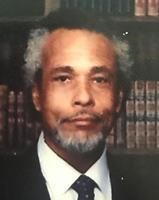
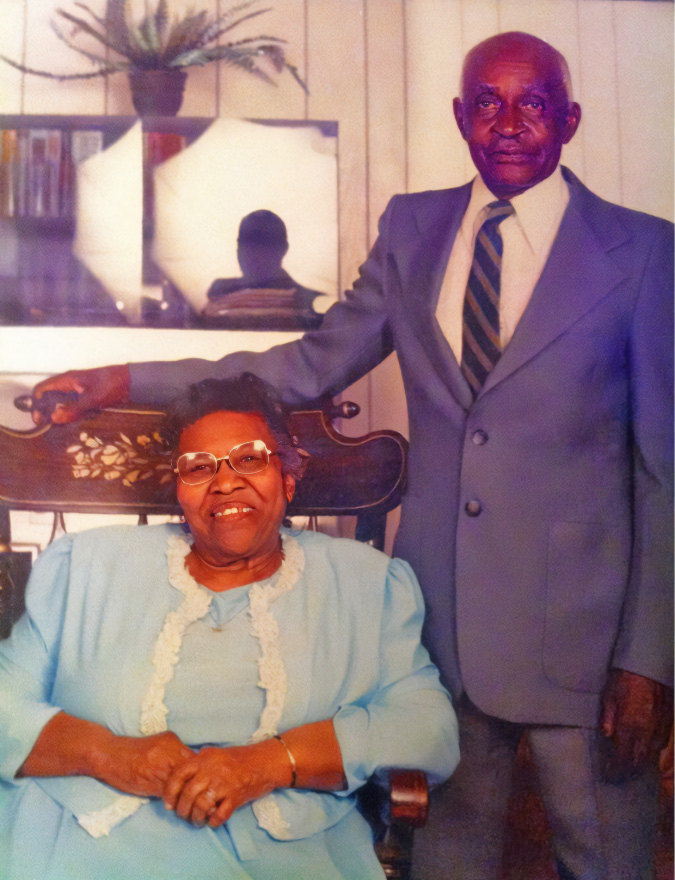
“Young man, you put that gun down!" Louise Degrafinried commanded firmly as Riley Arceneaux burst into her home pushing her husband, Nathon, ahead of him at gunpoint. “Young man, I’m a Christian lady and don't believe in violence," she continued. "You put that gun down right here. Son, you must be starving. Now, how do you want your eggs?"
Several days earlier on February 18, 1984, Riley, along with five others, had escaped from the Fort Pillow Correctional Facility in West Tennessee where he was serving a 25-year prison sentence for second-degree murder. He was cold, wet, desperate, and lonely as he stumbled onto the home of Nathon and Louise, a God-fearing couple in their seventies, who were active members of the Mt. Sinai Primitive Baptist Church. The entire community was on edge because of the escaped convicts. Louise was on the phone with a friend of hers about this very subject when Riley and Nathon burst into the house. She simply said, "Well. they're here now," and hung up the phone.
“I haven't eaten in three days," Riley growled as he cooperatively laid his gun by the sofa. Louise quickly whipped out her trusty frying pan and soon the tantalizing smell of African American "soul food"—frying bacon, eggs, toast, and coffee—filled the small house. Louise set out her best napkins and sent Nathon to bring Riley a pair of dry socks. Louise began asking about his family. Riley mentioned that Louise reminded him of his grandmother who had recently passed away. “I have no one who cares anything about me. No one cares if I live or die," Riley lamented.
"Young man, I love you, and God loves you. God loves all of us, every one of us, especially you. Jesus died for you, because He loves you so much," Louise assured him as she patted his leg, and a tear ran down his cheek. As Nathon, Louise, and Riley sat down to eat their breakfast, Louise took Riley by the hand and thanked God for the food and that Riley was safe. She asked Riley if he had anything to say to God. Undeterred by his disinterest, she coached Riley through a simple prayer, "Jesus wept”.[1]
As they ate, the elderly couple entreated him to simply give himself up to the authorities. In Louise's own words, "I went to giving him Bible.” Louise told Riley, "When we do wrong, we have to be punished.”
Unknown to Riley, Louise's friend, who she was talking with at the beginning of the confrontation, had notified the police. As the threesome enjoyed their breakfast, they heard the sirens in the distance. "The police will kill me. I know it!" wailed Riley.
"No, I won't let them. You do what is right, and I won't let them hurt you;' Louise assured him.
Soon the yard was filled with police cars with officers crouched behind their car doors with their guns drawn, fully expecting a criminal to burst out of the door shooting for his freedom. Instead, they were met by a 73-year-old grandmother with her hands on her hips. "Y'all put those guns away, I don't allow no violence here. You put those guns down. This fellow is going to give himself up, but he needs to finish his breakfast first;' she instructed with the same authoritative voice she had used on Riley several moments earlier. The police reluctantly agreed but remained wary.
Several moments later Riley stepped out onto the porch with his hands above his head, Nathon and Louise on either side with their arms around him. He was arrested without incident and taken back to Fort Pillow prison. Newspaper headlines highlighted how this woman with her Bible and frying pan did what all the law enforcement in West Tennessee was unable to do!
Less than 12 hours later, Paul Windrow, a fifty-nine-year-old local tire dealer as well as a church elder, was grilling steaks on his patio. He had also heard about the convicts being on the lam, and he had taken the precaution of carrying his pistol on his belt at all times. Ronald Freeman and James Clegg, who along with Riley Arceneaux had held a family hostage two days before, came bursting out of the kudzu covered bushes behind his house. Paul fired two shots, neither which struck the convicts, before they fatally shot him. Underscoring Jesus' words, "They that take the sword will perish with the sword."[2]
The pair then burst into the house and took Paul's wife Elizabeth hostage, and forced her to drive them several hours to East Tennessee, where they left her at an interstate rest area, and fled. She was unable to cope with the memories of her husband's murder and her kidnapping and had to leave her home. She moved to a new location in an effort to bury the trauma.
While Riley went back to prison, he didn't drop out of Nathon and Louise's life. Louise asked for a picture of Riley which she put in their family album. The police asked them to press charges against Riley, but the Degrafinrieds refused, "Because that boy didn't do anything to us,” they said. Riley still received an additional 20 years added to his sentence for escaping and for his involvement with an earlier kidnapping. Louise continued to visit him in prison and wrote letters in spite of the fact that her arthritis made writing legibly difficult.
Unfortunately, Riley didn't respond to the Gospel immediately. Four years after his initial escape, he attempted to escape from prison again. While he wasn't successful in this attempt, he was sent to solitary confinement for a time. While he was by himself for 23 hours a day, he began to think seriously about the claims that God had on his life. He remembered especially the testimony of Louise Degrafinried, and he realized this was what real Christianity looked like in real life. Louise continued to write letters in which she encouraged him, "I believe in you. Trust God to work in your life. Be patient, study your Bible and look for the good in everybody." Riley said the lack of fear that Louise showed convinced him to become a Christian in 1988. "She (Louise) was real Christianity. No fear;' Riley said. When Louise prayed with Riley on a visit to the prison, she began her prayer by saying, "God, this is your child. You know me and I know you:' Riley knew that was the relationship he wanted with God.
The Degrafinrieds worked to get Riley released from prison, which finally happened in 1995. Riley moved to Nashville, got a job, and began to build life instead of destroying it.
Louise died in August, 1998. Among the crowd of 300 mourners at Mt. Zion Missionary Baptist Church was Riley Arceneaux, who was serving as a pallbearer. He also spoke to the crowd in his eulogy, "This woman was a real Christian. No fear! It was through her that I turned my life around:' He reassured the family that he was staying out of trouble. "It's not just a jailhouse religion like some guys get. It does stick with some people. To me it's how much you really seek after God while you're in there;' he said.
By this time, he was working as a foreman at the Crown Tent & Awning Co. He was living in Nashville with his wife and young son. His was truly a life redeemed.

What will be your weapon of choice? Gun or frying pan? Are you willing to beat your guns into frying pans?
[1] John 11:35. When someone asked her later, “Why did you tell him to say ‘Jesus wept’?” she said, “Because I figured that he didn’t have no church background, so I wanted to start him off simple; something short, you know.”
[2] Matthew 26:52
This article first appeared in the October 2019 Calvary Messenger. Published here by the permission of the author. Also see https://jimandnancyforest.com/tag/louise-degrafinried/
Smooth Transitions and Routines
We have just finished a math test, and students are engaged in various free-time activities that they began as they completed the test. Some are buried in books. Several are drawing or coloring pictures, and one is doing a puzzle. I say, “OK, class, it’s time to get ready for science. Please put your other things away.” There is no immediate response. After a few moments, students slowly begin to prepare for science class. One student who is lost in a book makes no move at all until he suddenly sees that everyone else is ready.
I used to be frustrated by this kind of scenario, until I began to contemplate how much I would hate to shift from one activity to another without warning, as I was expecting my students to do. I like to know what is expected and to have time to prepare. Perhaps the problem in this situation was not so much the students’ negligence as my own lack of management.
So now I use a new approach. In the type of transition described above, I will give a warning or two: “Class, it looks like almost everyone is finished with the test. We will be starting science class in just a few minutes.” And then I always give at least a one-minute warning: “Science class begins in one minute. Please put your other things away and try to be ready in a minute or less. You may stand beside your desk when you are ready.” This has resulted in much more smooth and peaceful transitions.
Students thrive on routine, and although surprises and spontaneity can be fun on occasion, students in general like to know what to expect. It is helpful to have the day’s schedule posted in plain sight. I did not do this in my early days of teaching, and I was amazed by the difference it made in my classroom when I started posting a detailed outline of the day’s activities. Somehow students seem to find security in this. Also, I no longer need to field as many questions like, “When’s lunch?” or “What’s after this?”
Most of my third graders cannot yet calculate time very well. Although they may be able to tell you that it is 11:15, they do not know that this means it is fifteen minutes until our 11:30 lunch break. So, I have found that telling them how much time they have left for a particular activity is another helpful tool in managing transitions and letting students know what they can expect.
For example:
“You have ten more minutes to work on your art project right now.”
“You have five minutes left to work on the test. If you don’t finish now, you will need to finish in study hall.”
“We will spend five minutes playing this flashcard game, and then it will be time for break.”
I also use a countdown occasionally, especially when we are doing a turn-and-tell activity, or if the students are doing another short activity in small groups. Slowly counting 5-4-3-2-1 gives them a bit of time before they need to be quiet and back in their seats.
A fun activity I like to do with my students every year to teach them to be prepared and to think about what is coming is a challenge I call Beat the Bell. At the beginning of the school day, after our morning break, and after lunch, a warning bell rings. Two minutes later, another bell rings, and by that time students are expected to be quiet and sitting in their seats. Except for those few little risk-takers who try to spend as much time on the playground as possible before going in, most students are usually in their seats with plenty of time to spare before the second bell rings. If left to their own devices, they will be sitting there chattering and giggling with no thought of preparing for the next class.
For our Beat the Bell challenge, I teach students to be prepared for the next class by the time the second bell rings. This means having a sharp pencil ready to go and having books and other necessary materials out on their desks. If any students are unprepared when the bell rings, the bell scores a point (I put tally marks on the board to keep track of this). If the bell does not score any points in a day, I write up one letter of a mystery word or phrase. The mystery word or phrase is a treat or privilege that the students will get when they have earned all the letters.
Sometimes I can’t help but chuckle to myself when I see how well this little motivational tool works. My students will come in from break saying to each other eagerly, “Beat the bell!” If they see someone who is unprepared, they will be likely to say, “Hurry! Get your books out!” The challenge of trying to figure out the mystery word as more letters are earned becomes part of the fun. And even after the challenge is completed, and the students have received their reward, I find that they usually carry on the habit of being prepared for class.
Taking small steps to help students know what to expect and to help them think ahead and be prepared for the next thing can make a big difference in the long run.
Your Student Isn't Perfect?
Are you struggling to understand how to relate to one of your students? This talk will help you think about how to support both yourself and your student. Conrad discusses parents, school admins, teachers, and students: all are part of the solution. This session draws from Conrad's experience in private and public schools, daycare, and therapeutic camping.
Wholesome Living for Effective Teaching, Part 3: Physical Health: Preparing for the Rigors of Teaching
Teaching school makes strong demands on the teacher at multiple levels. Teachers are givers and need large reserve input reservoirs to draw from for sustainable life-giving teaching over the long haul. What are these input reservoirs and how do we keep them full? In this session, Part 3 of the series, Melvin discusses the disciplines of the body that enable sustained investment in the classroom.
Wholesome Living for Effective Teaching, Part 2: Essential Social Habits that Stabilize
Teaching school makes strong demands on the teacher at multiple levels. Teachers are givers and need large reserve input reservoirs to draw from for sustainable life-giving teaching over the long haul. What are these input reservoirs and how do we keep them full? In this session, Part 2 of the series, Melvin suggests social habits teachers can develop to anchor their presence.
Wholesome Living for Effective Teaching, Part 1: Cultivating Spiritual Virtues that Energize
Teaching school makes strong demands on the teacher at multiple levels. Teachers are givers and need large reserve input reservoirs to draw from for sustainable life-giving teaching over the long haul. What are these input reservoirs and how do we keep them full? In this session, Part 1 of the series, Melvin discusses the spiritual virtues that energize our work.
Trauma, Part 2: How Can I Teach this Child?
Johnny shows no physical signs of developmental delay, but early trauma has a part to play in the missing pieces of his development. Although not the only ones affected, foster and adopted children likely experienced trauma in their early life. Becky discusses how teachers can help trauma children grow in their ability to cope with life and learn all they can in the classroom.
Teaching in a Loud World 2: Personal Organization
How would you rate your personal organization? Whether you are a 1 or a 10, says Joey, there are likely ways you can better manage your time, tasks, and information flow. Why does this matter? Because disorganization has a direct effect on your ability to serve students. Joey offers practical and conceptual help for organizing commitments.
Teaching in a Loud World 3: Intentional Study
Teachers know things their students need to learn. But teaching is not merely about imparting a static body of knowledge. Do you model for your students a life of growth in understanding and wisdom? Joey offers seven principles that should inform your study habits.
Teaching in a Loud World 1: Healthy Habits
We are surrounded by the noise of a dysfunctional world. How do we not only survive but serve others in this world? Joey reminds us that the world not only produces noise; it influences our motivations. Are your habits making you the kind of person you should be?