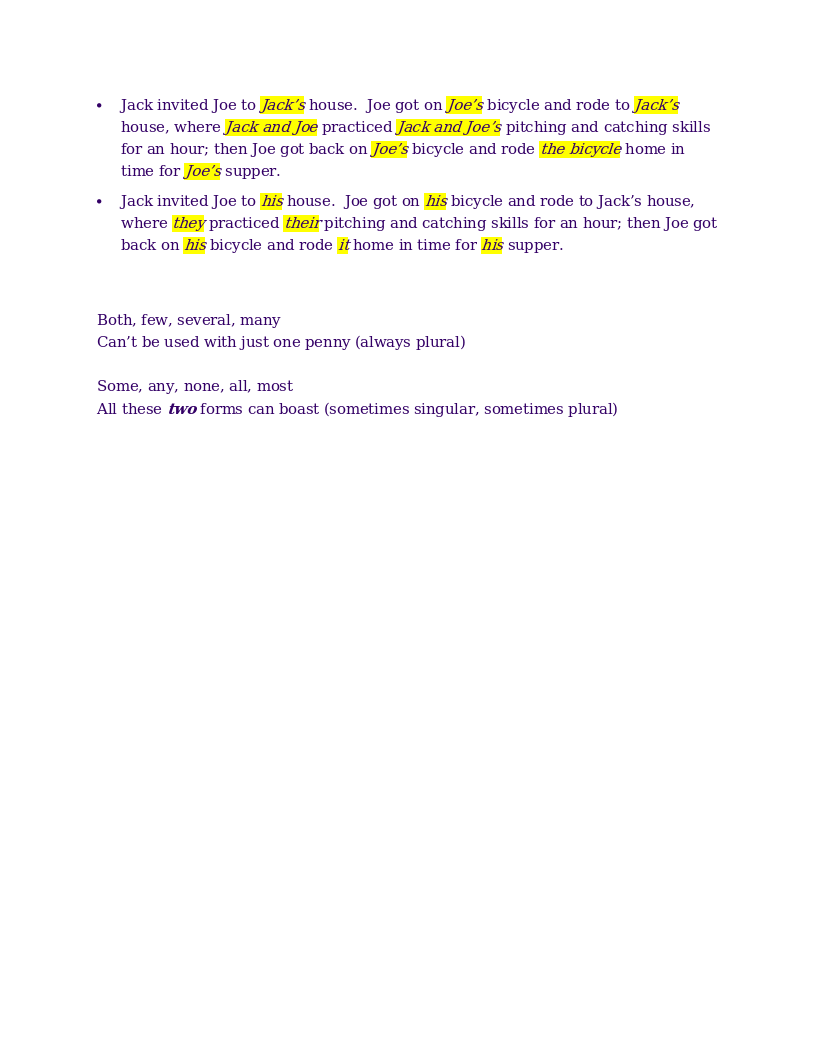
A handout that describes and models possessive, singular, and plural pronouns.
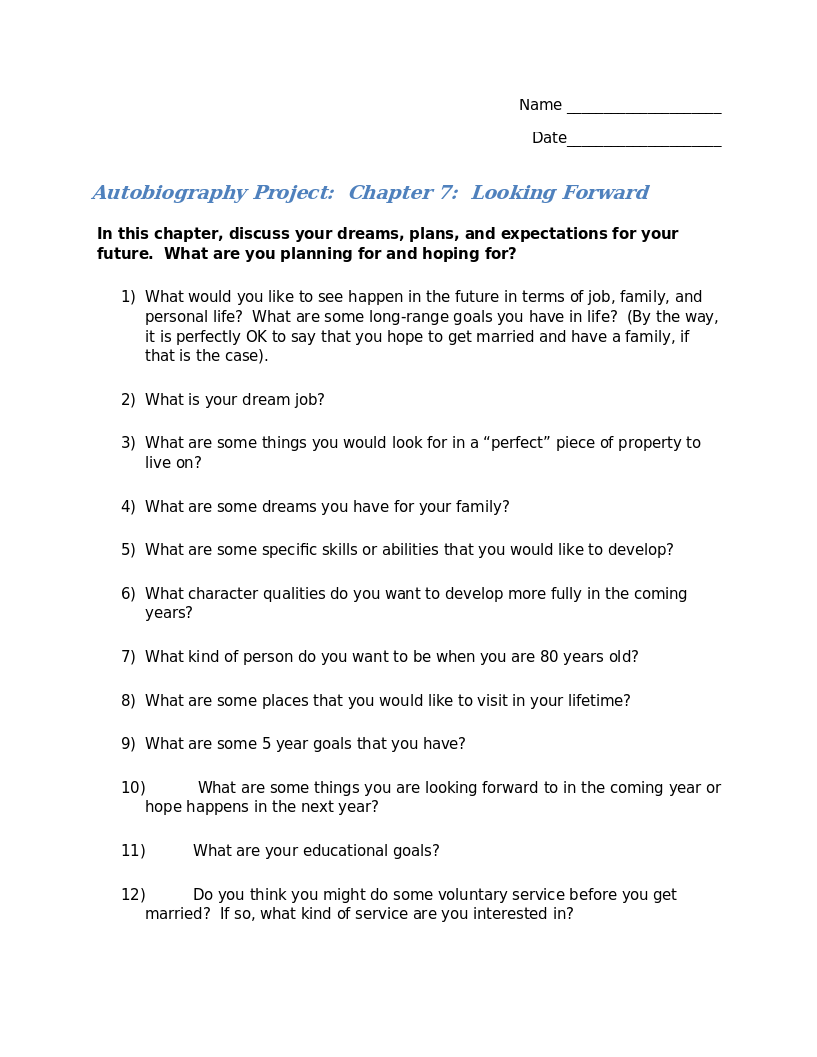
This writing guide prompts students to discuss their dreams, plans, and expectations for the future.
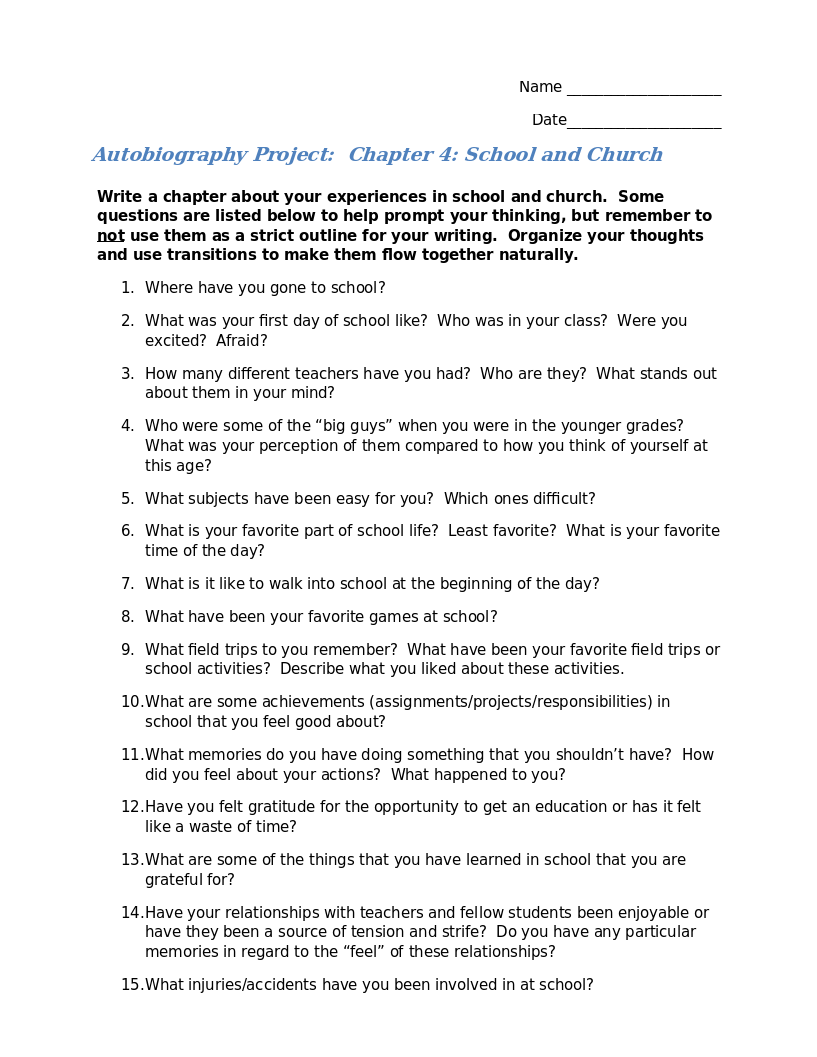
This writing guide prompts students to recall and record their experiences in school and church.
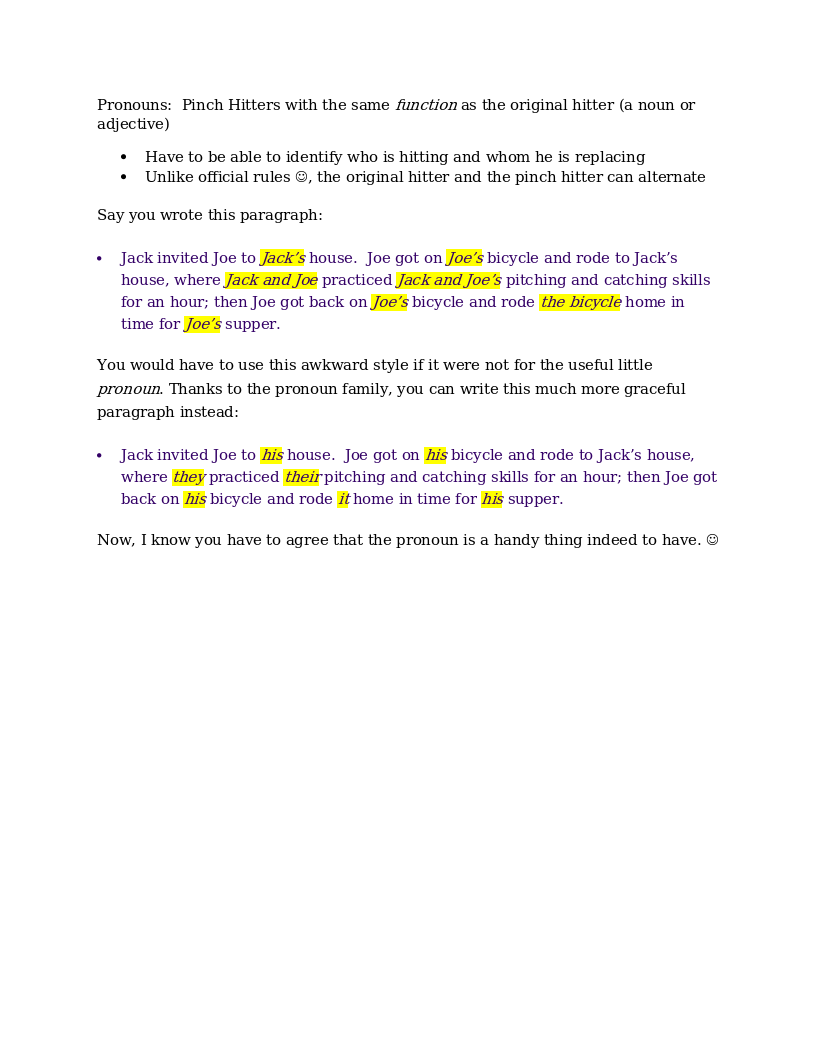
A lesson hook that introduces the concept of pronouns with a baseball metaphor.
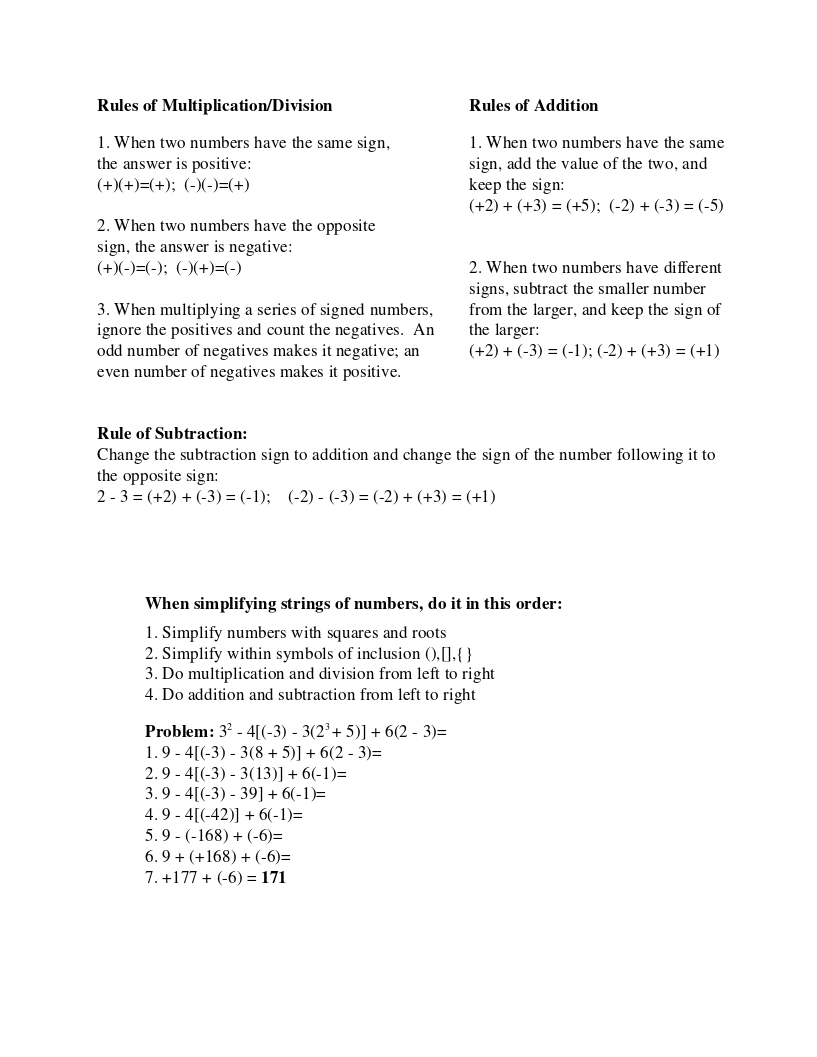
A handout that explains sign rules and demonstrates how to simplify strings of numbers.
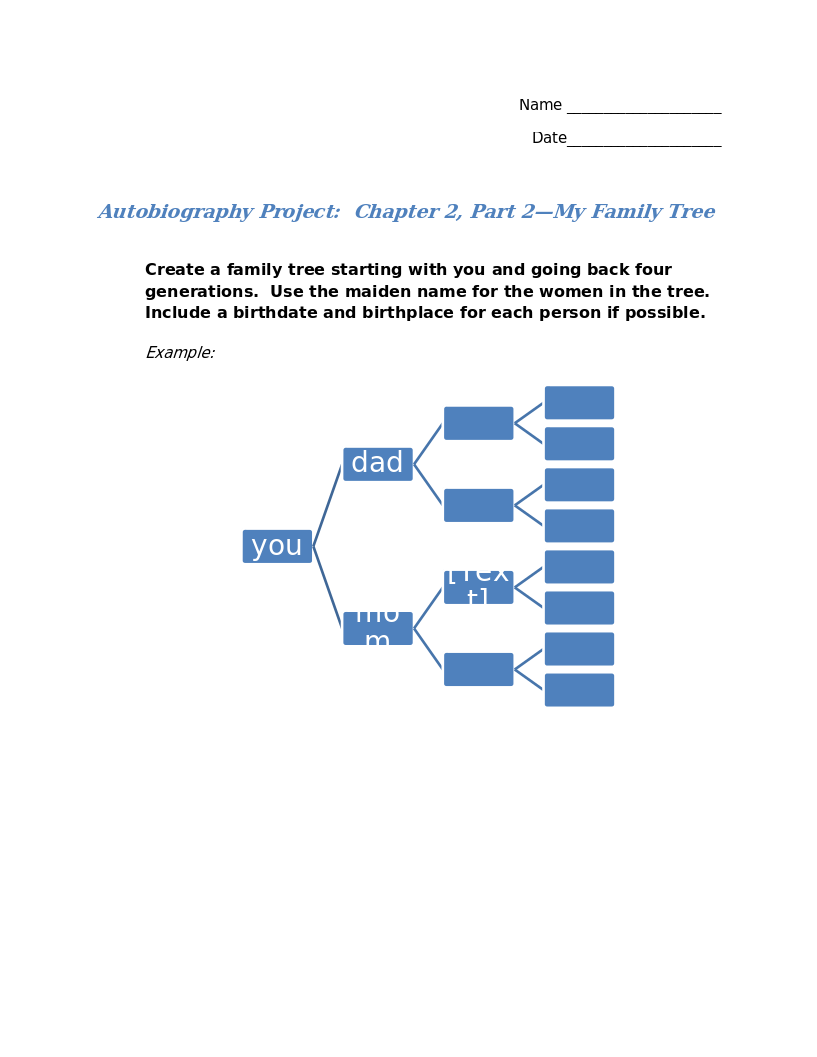
This handout helps students construct a four-generation family tree as part of their autobiography chapter on family.
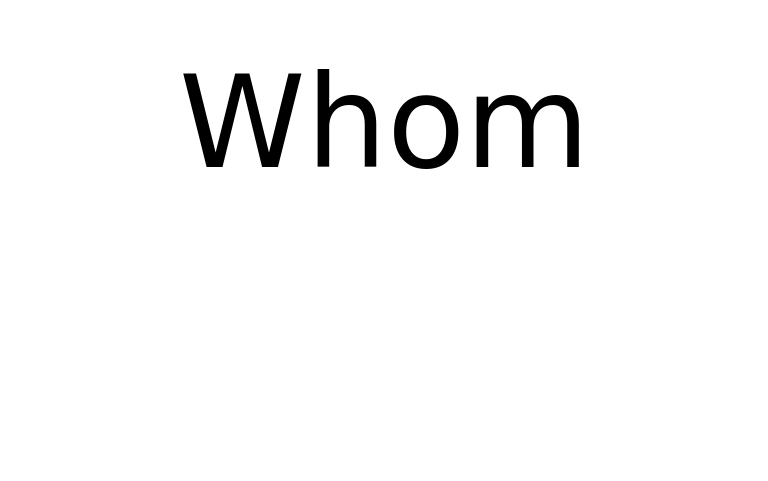
Flashcards that support the teaching of pronouns who, whom, whoever, and whomever.
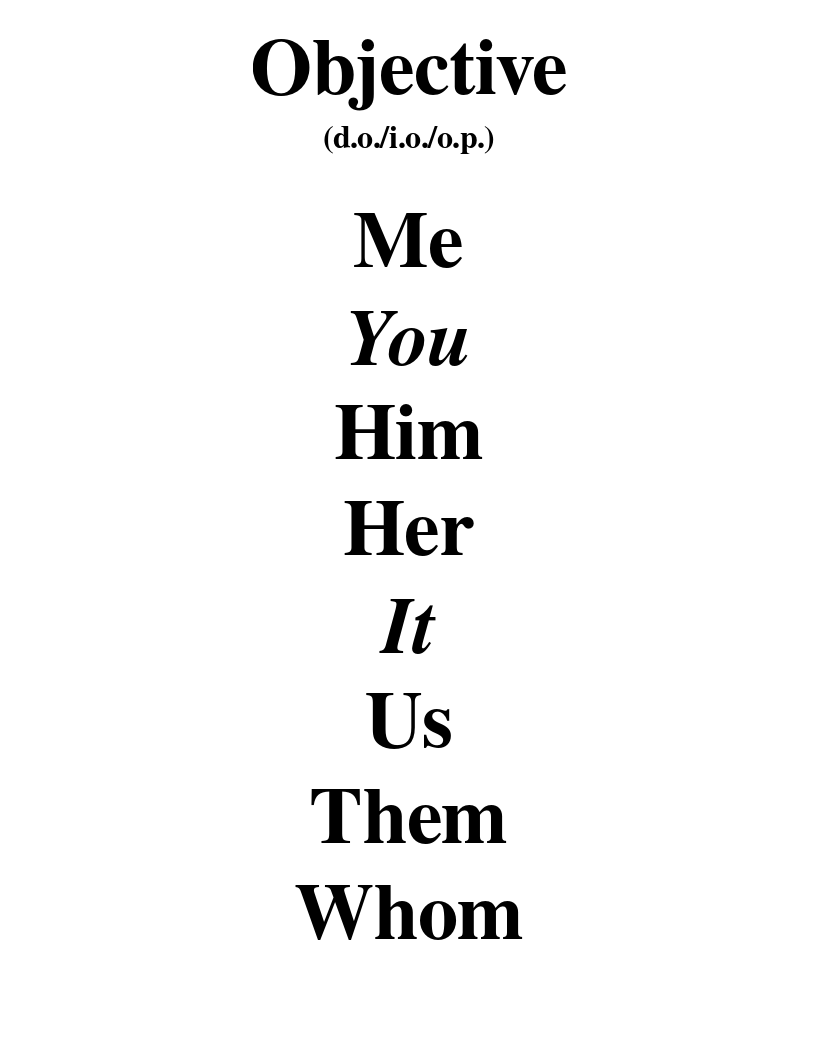
A chart that lists objective pronouns: me, you, him, her, it, us, them, whom, and whomever.
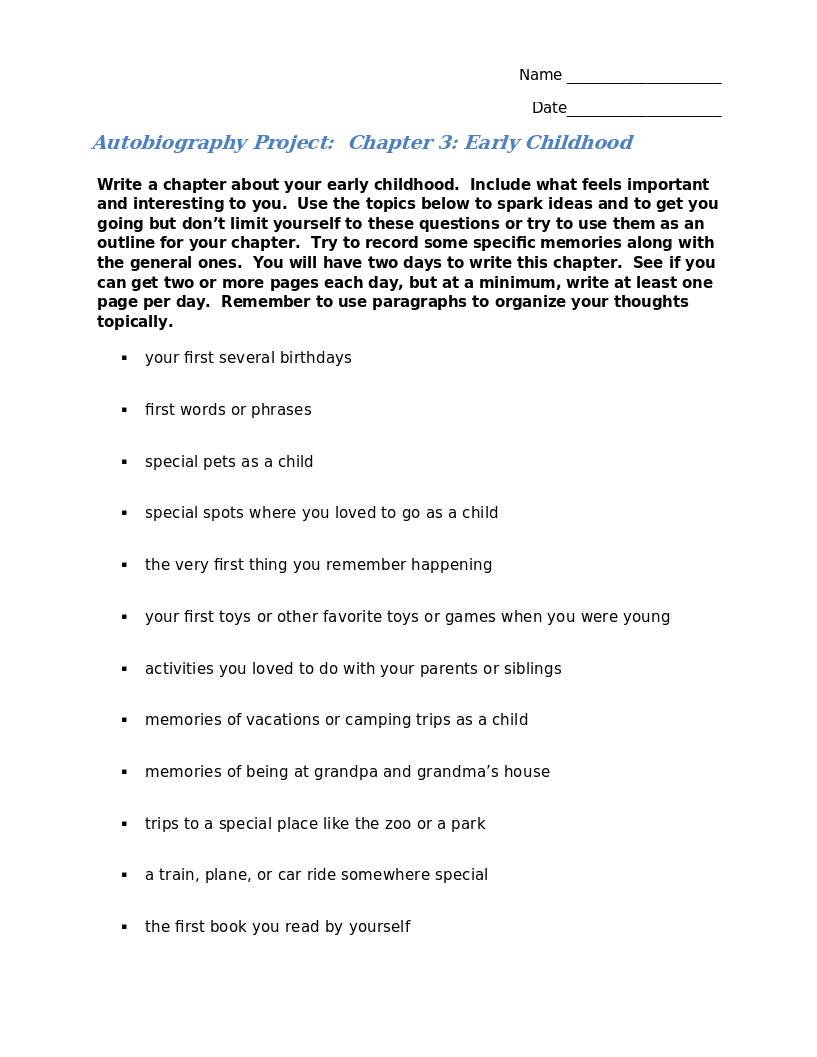
This writing guide prompts students to recall and record significant memories from early childhood.
Flashcards that support the teaching of possessive pronouns its, her, his, and their.
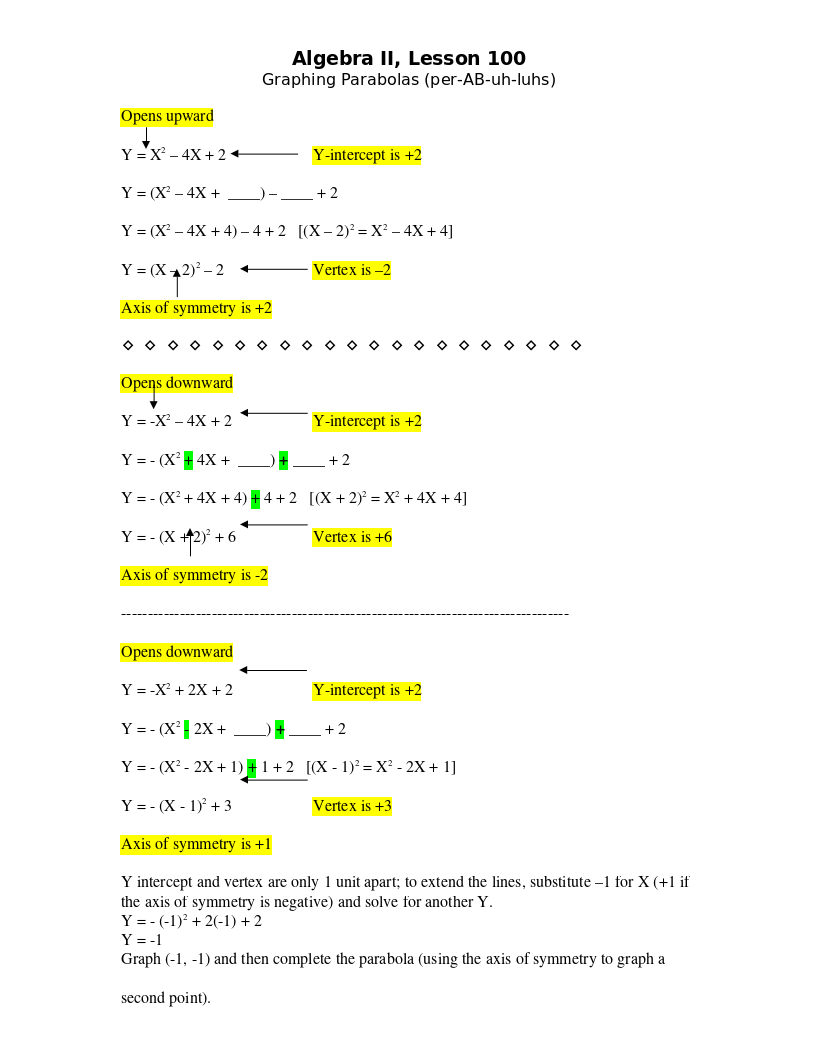
A handout for algebra students that demonstrates how to interpret parabolic equations and graph parabolas.
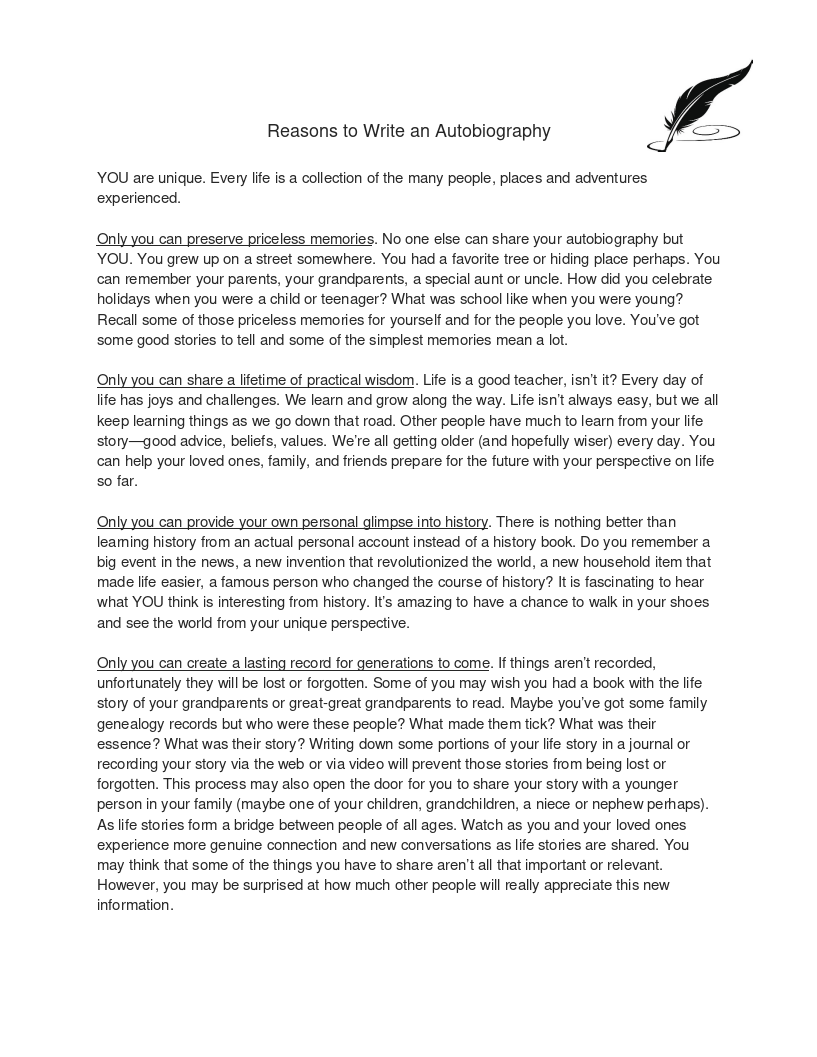
This handout provides a rationale for writing an autobiography.
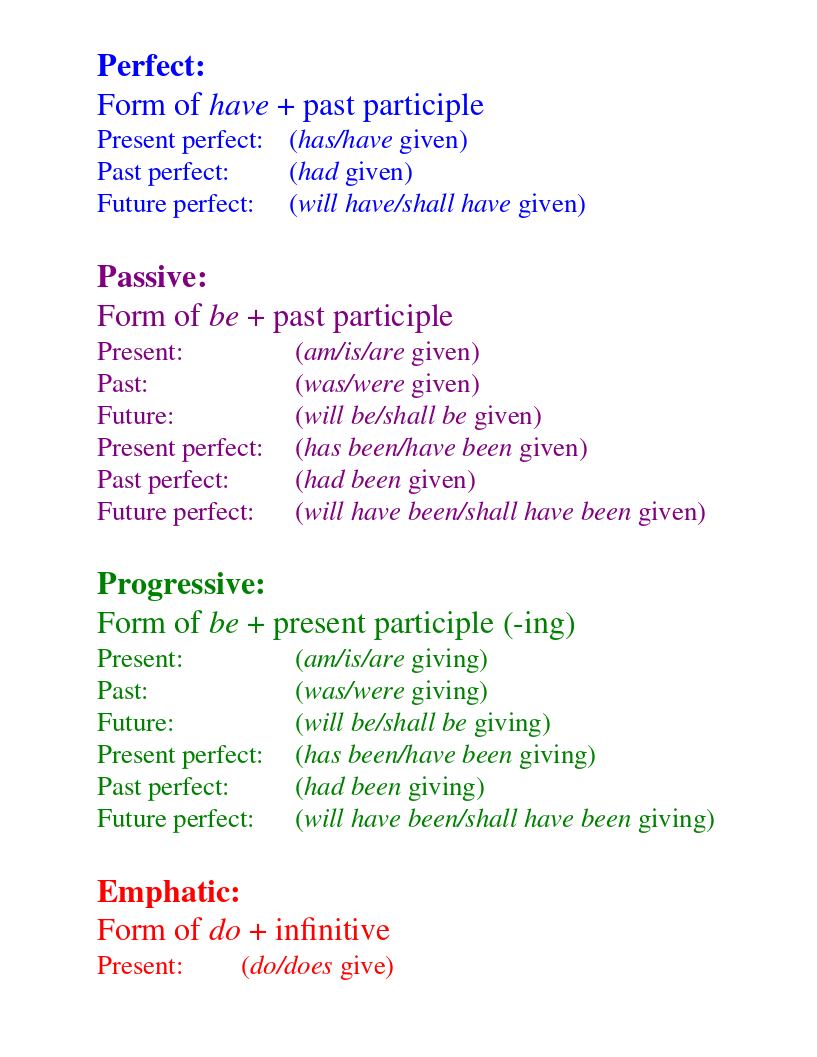
A handout that lists and describes English verb tenses.
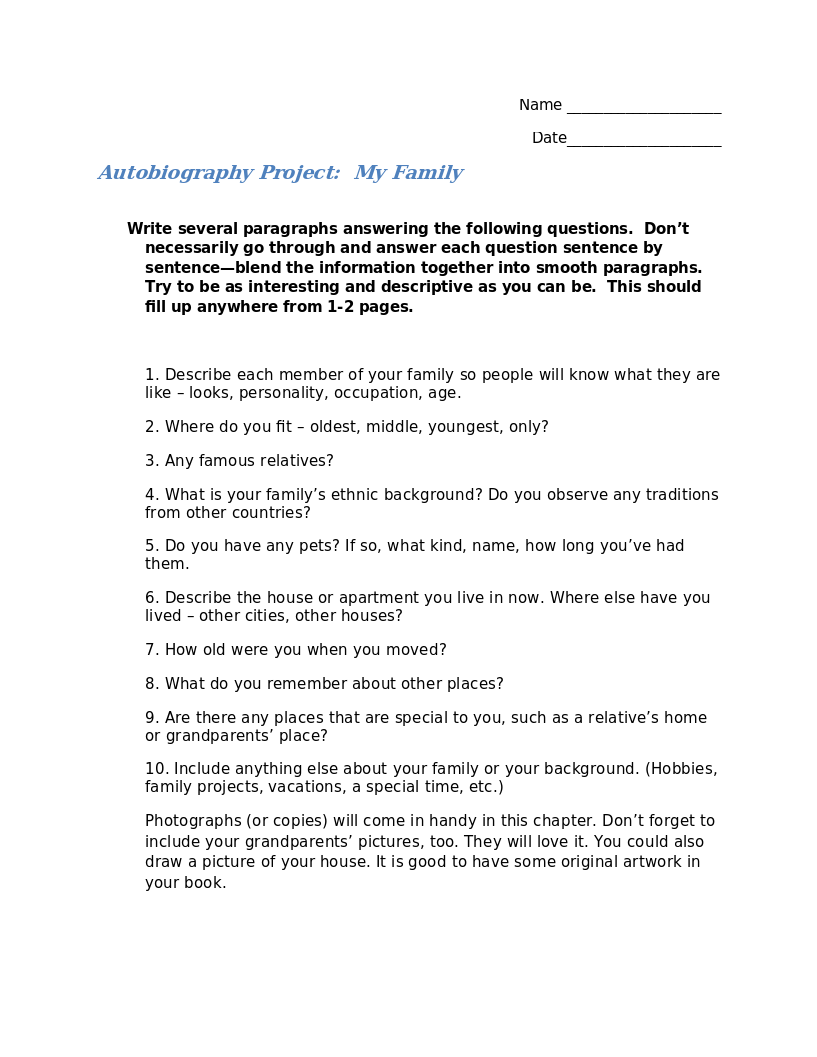
This writing guide prompts students to describe their family.
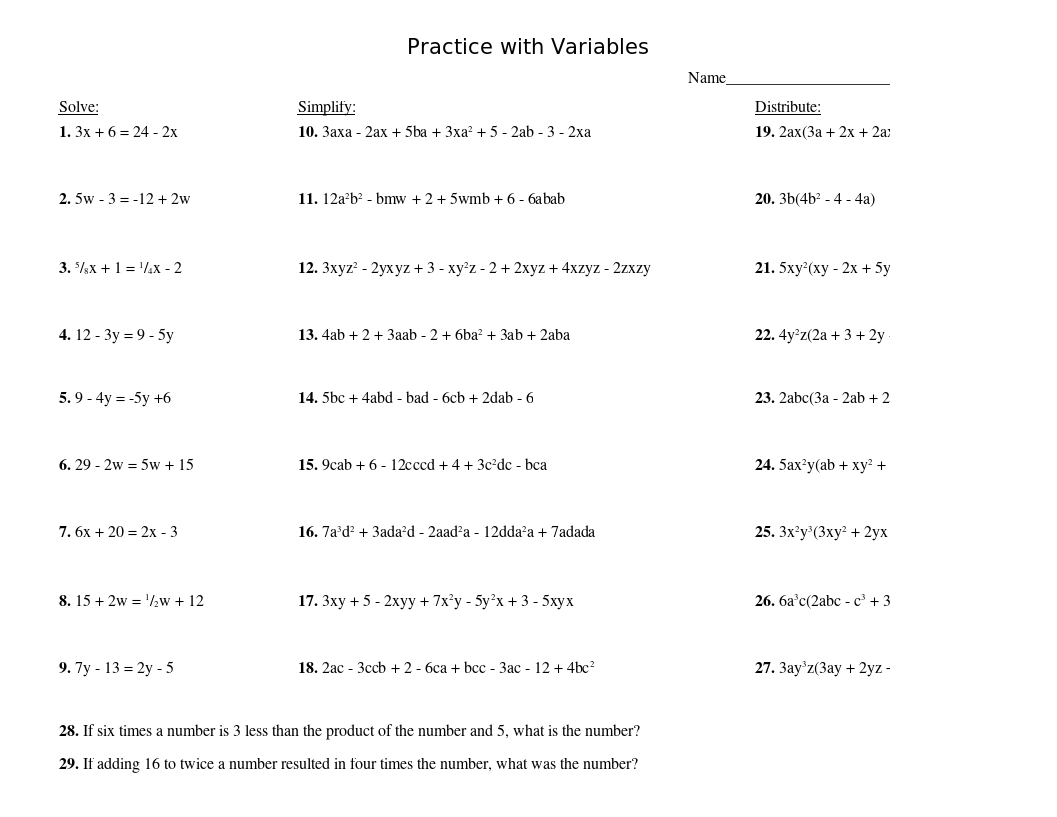
A worksheet that gives algebra students practice with variables and equations.
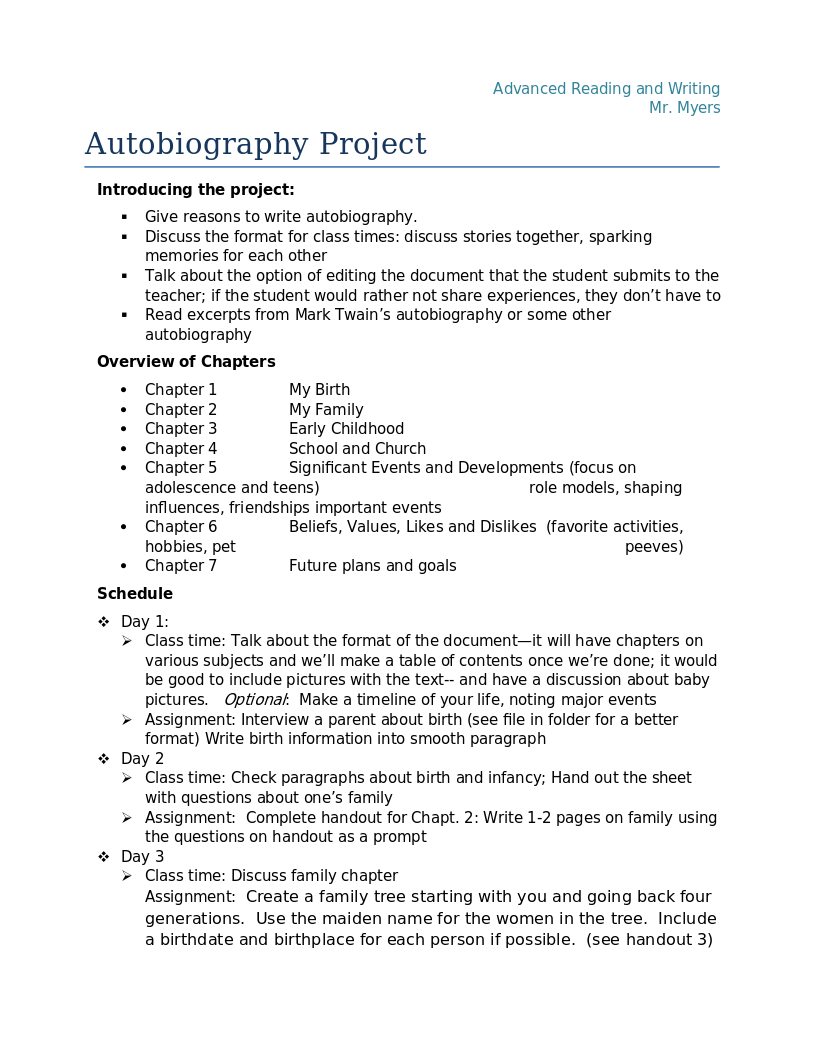
A detailed, 20-day schedule for the autobiography project, including descriptions of class activities and assignments.
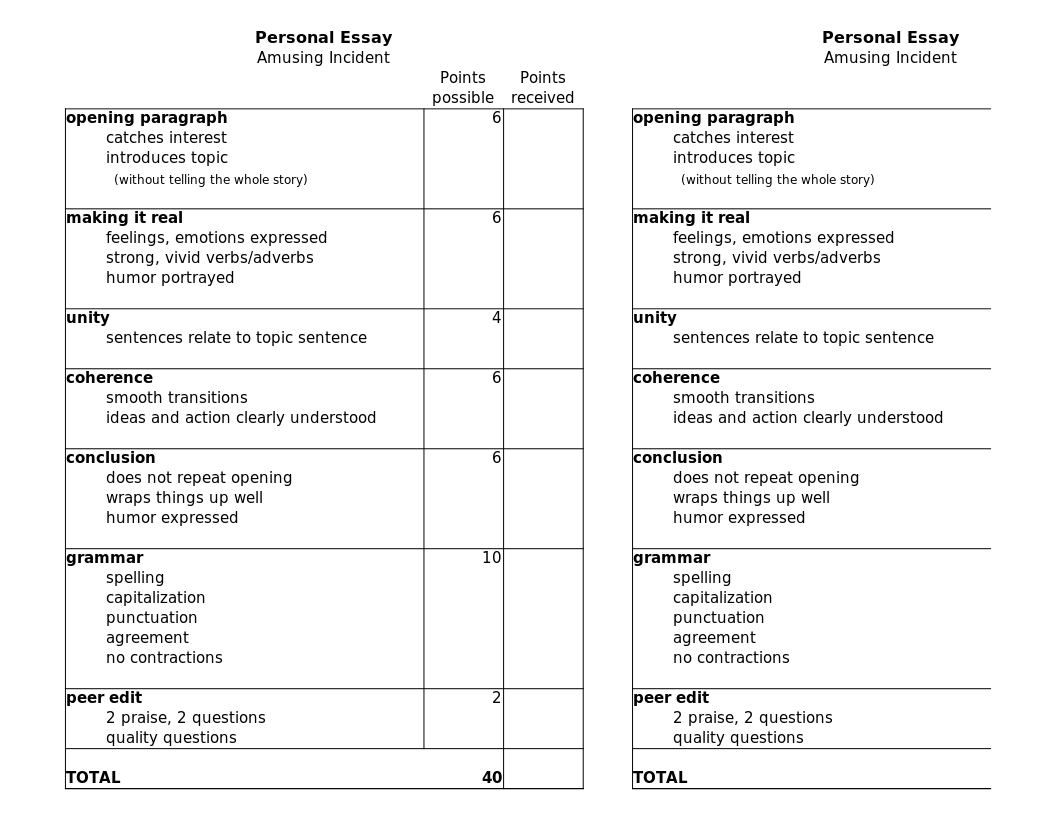
A rubric for grading personal narrative essays. The rubric is specifically designed for essays relating an amusing incident, but can be adapted for any topic.
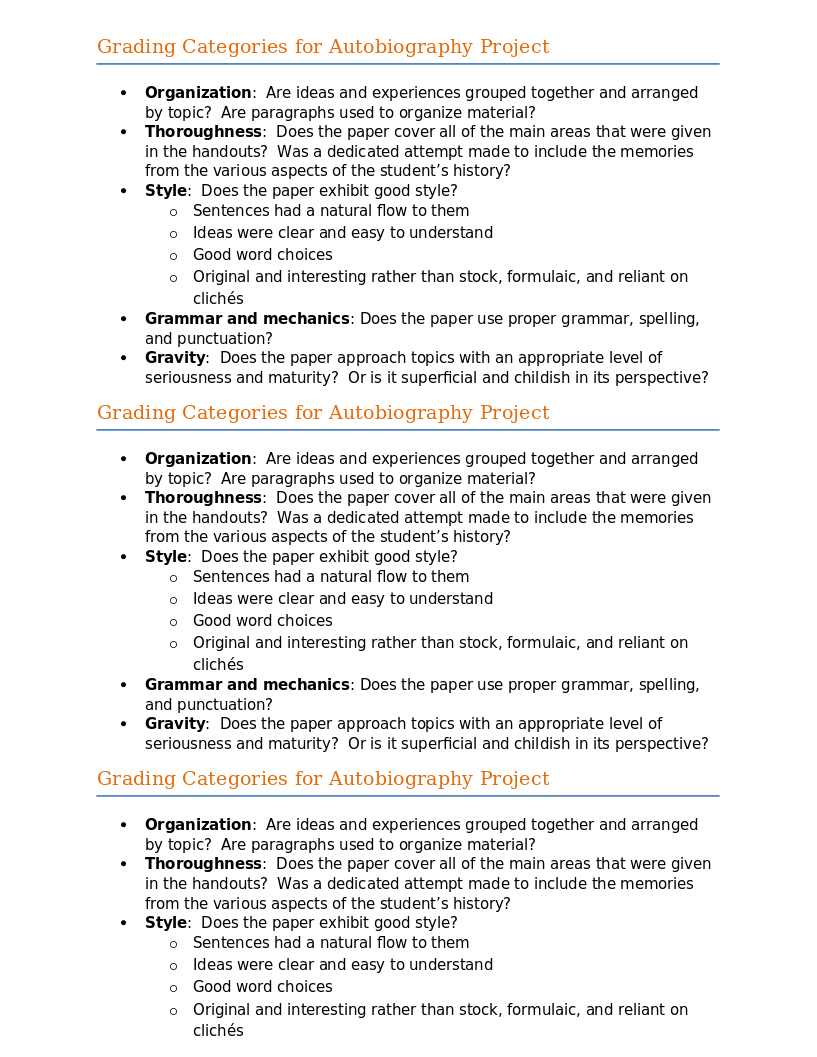
A handout that describes and details the grading categories for the autobiography project.
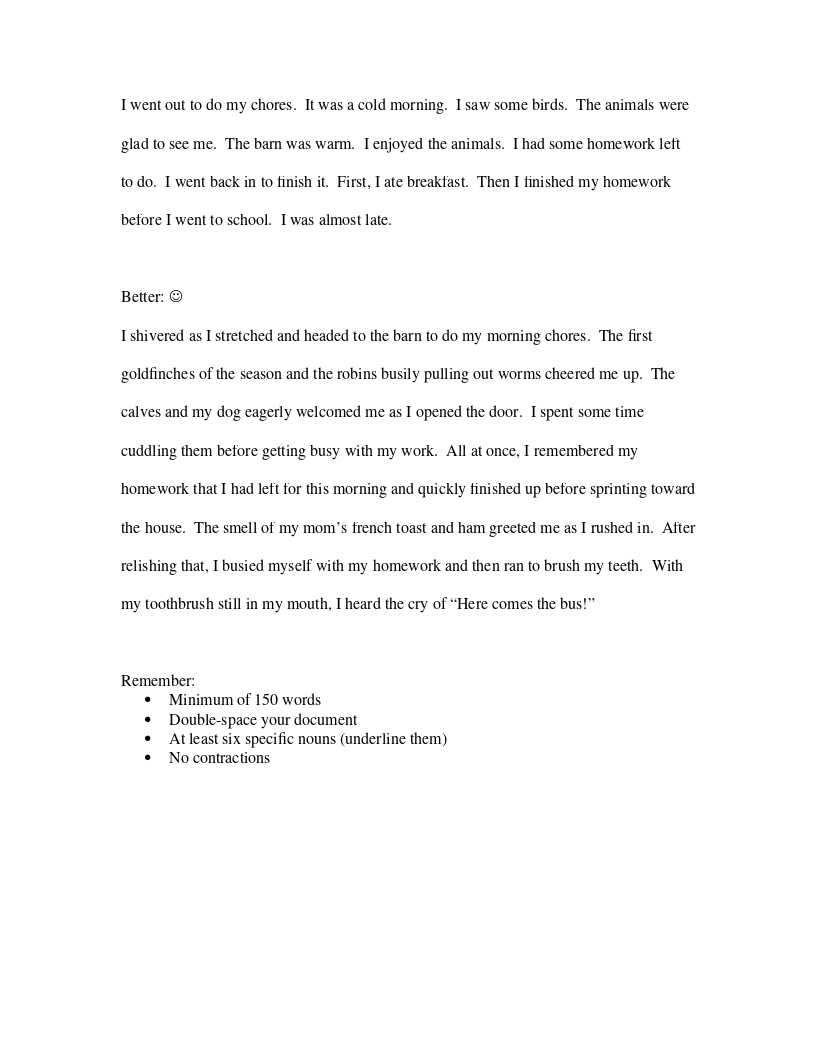
A handout that demonstrates how using specific, concrete nouns can enhance writing.
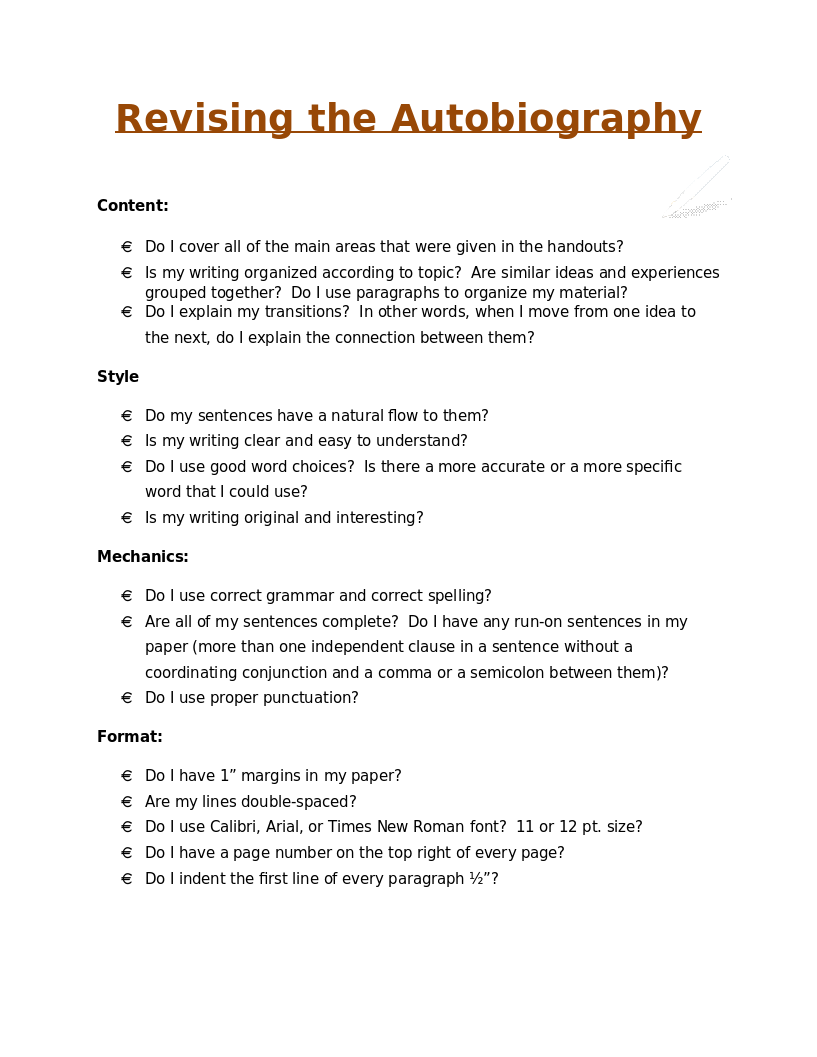
A checklist that enables students to review, evaluate, and revise their autobiographies.