
All Content
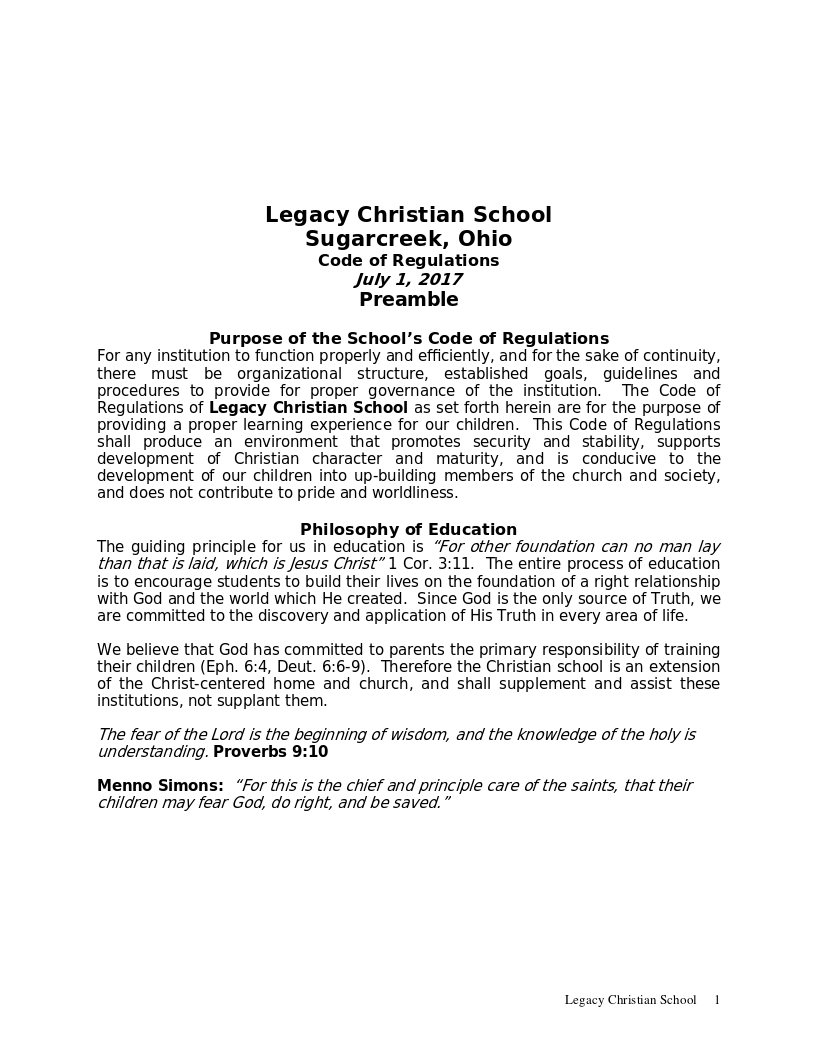
LCS Code of Regulations & Conflict of Interest Policy
These two documents from Legacy Christian School—a code of regulations and a conflict of interest policy—seek to establish organizational clarity and effective governance. Offered here as templates for schools looking to develop similar policies.
Courtesy Mark Miller.
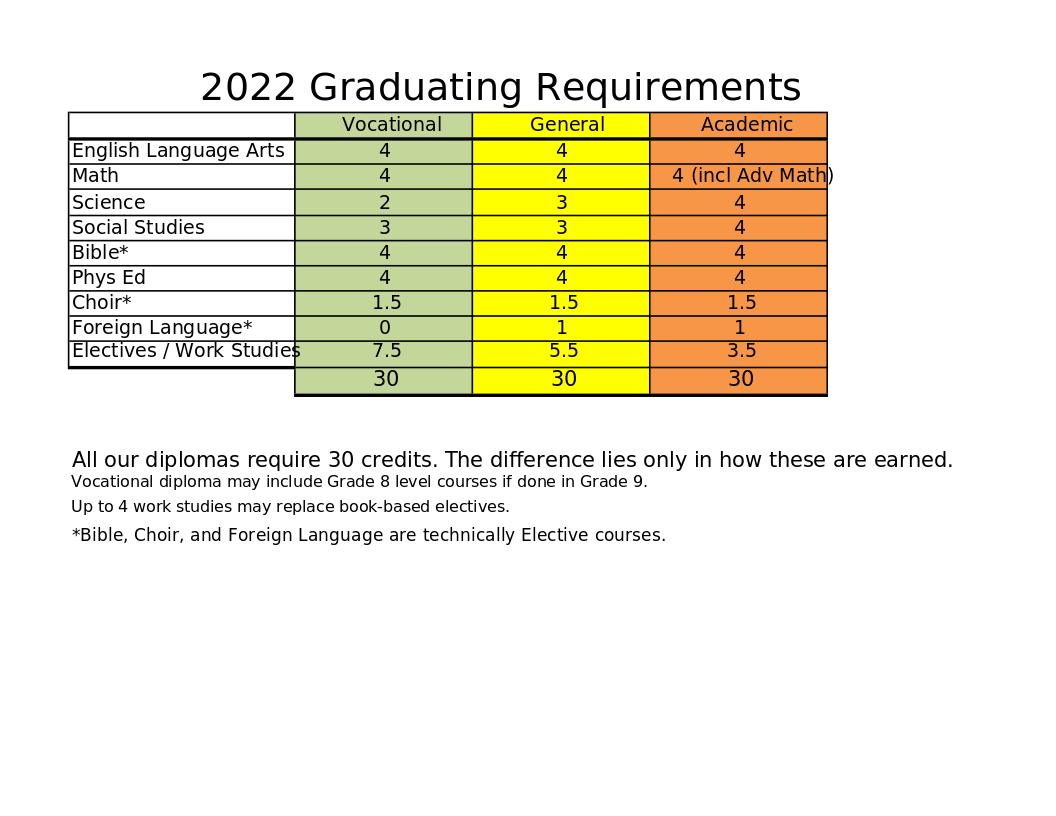

From Vision to Reality
Onboarding the First-Year Teacher
Excellent communication between teacher and school board is vital for a productive and profitable learning environment in the classroom. Building a good relationship between all levels of school staff will greatly help to maximize the effectiveness of each one involved in the work of the school. But how to attain this? This workshop from the Christian School Administrators Institute discusses ways for the board to support a new teacher in finding their way in their new responsibilities, as well
Principles of Teacher Compensation
What principles inform your board discussions and decisions about teacher salaries? In this recent workshop recording from the Christian School Administration Institute, Philip encourages boards to consider principles of stewardship, service, business ethics, and more as they determine what to pay their teachers.

Dear High School Senior
Dear High School Senior,
You’ve made it! It is graduation time and an end to twelve or thirteen years of studying, learning, and growing up. You probably have some mixed feelings about this: excitement, relief, maybe a little fear? I have seen you grow as a student in the last four years; I have prayed for you, encouraged you, and hopefully challenged you. But as you are leaving my classroom, I pray that you are not leaving the things you have been taught. II Timothy 3:14 says, “But continue thou in the things which thou hast learned and hast been assured of, knowing of whom thou hast learned them.”
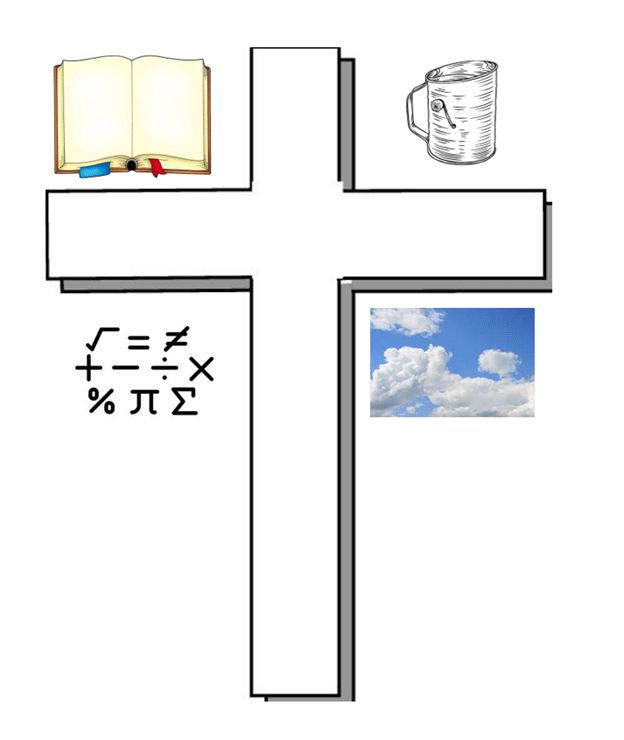
You didn’t think you were done with learning, though, did you? I had you in literature class, remember, so I have one final diagram here for you to decipher. And in case you can’t read my mind as to why I chose these symbols, here’s a little help. (See below.)
- All of the symbols are placed in the foundation of the Cross. You build your life on this foundation. Every decision, every choice, every thought should be constructed on the foundational stones of the Cross and God’s Word. You may feel much pressure right now to decide what you want to do for your future. Honestly, many of the decisions you make in the next few years (except if you marry and have children) do not have to be permanent. You might choose to pursue one job and then switch to another. You might decide not to go to college next year but change your mind the next. But what should never change is that each decision you make is based on the firm foundation of God’s work for you on the cross.
- The first symbol is an open book. Even though your formal education may – or may not – end here, you should keep learning…keep opening books. Of course, the most important book you should keep opening is the Bible, but beyond that, keep reading books that help you grow. And you can learn from other sources as well. Listen to your parents and other godly people in your life. Find a mentor in your field of service or career who can guide you with godly wisdom. And even to old age, keep your mind open to learning God’s ways and will for your life.
- Do you remember the second symbol from Home Ec class? It is a flour sifter, used to sift out any impurities in baking and make the flour fine. You also need to sift out any impurities that you come across and be able to discern Truth from lies. Acts 17:11 says that the Bereans were more noble because they “searched the scriptures daily” to see if the teachings they were hearing were of God. The world bombards you with so many philosophies that it can be overwhelming. How do you know what to believe from all the many voices you hear? While you should listen to godly people, the bottom line is that you need to know the Scriptures well enough that you can lay all of these philosophies beside the Bible and determine which of them follow God’s Truth.
- The third image is a collection of math symbols. You may have wondered how you will ever use some of the math classes you have had, and granted, you may never need to use the quadratic formula in your life. But you will need to be logical…and that is something your math classes were based upon. Emotions always play a part in our lives; God created all humans with feelings. But be careful of basing major decisions such as loving a spouse, choosing a job or a ministry, or even following God’s calling on emotions only. Emotions can fade; logic will last.
- The last symbol you see is the sky. Your goal in life should always be eternal life in heaven. Hebrews 12:2 tells us to “ unto Jesus, the Author and Finisher of our faith.” The idea here is to focus on Jesus in heaven exclusively, ignoring any obstacles in the path. Of course, you will have tasks and relationships all your life, but these should never detract you from your ultimate goal. And if you ever stray from the way of God, return to the Cross and start your path from there again. When we read Pilgrim’s Progress in class, we saw how Christian was always headed for the Celestial City no matter what obstacles came in his way. Live your life so that you will one day enter heaven to hear God say to you, “Well done, thou good and faithful servant.”
I pray God’s blessings on you for all your future endeavors,
Your Teacher

Restart
 Photo by Simon Hattinga Verschure on Unsplash
Hmmmm...why won’t this DVD play? I remove the disk, insert it again, and try again. It still won’t play. This is annoying! My class is getting restless, waiting on me, so I try to fill in with some conversation while I try the disk for the third time. No, it still won’t play. Maybe restarting the computer will help. After the computer has restarted, I insert the disk, and it immediately plays! The restart was the answer.
I think of “Restart” in other areas. Sometimes this teacher needs a Restart; I may need to give myself a Restart. We have had a long stretch from Christmas break until spring break with no days off, no snow days this year! I may need to take a weekend break for a Restart, or put aside that grading and just go home earlier some days and go for a walk or plant some pansies.
I often think of teachers having a Restart at the beginning of each school year. We get to start over. We may redo some lessons that weren’t the best last year. We may develop new lessons or add to existing lessons based on our teaching of them the previous year. Perhaps we revamp our classroom management system and have a Restart on that.
Returning to school after Christmas break may be a Restart. This is our chance to start over on classroom management and be more consistent. We may start a new behavior plan in the new year.
We may need a Restart in the spring. I have a saying, “Lights off, voices off!” When I turn off the lights, it’s supposed to be quiet. I introduced this at the beginning of the year, we practiced, and I implemented it. I noticed after a few days that some children were not being quiet when the lights were off, so we practiced again. Recently, I realized that many children are not being quiet when the lights were turned off. I have let this slide and have not been consistent in this policy. We need a Restart. It is easy to let things slip now. We are familiar with each other and feel at home in the classroom. We tend to forget and not take the effort to enforce or reinforce policies. I may feel like there aren’t that many days left in this year, so I won’t bother following through on those classroom management plans. I don’t think this is the right attitude. Let’s hit “Restart,” practice “Lights off, voices off” again, and see if we can keep going strong.
We may need a new initiative for a week or two to revive us and help us to restart so we can finish the year well. Some of my students were getting lax with their handwriting. I made a chart and when I find neatly written pages of work, I punch a star at the top of the page. The children put a sticker on the chart for each punched star that they have. This gave us a fun Restart on writing. I see most of the children now writing diligently and sometimes erasing things that don’t look so nice. I don’t usually tell them which pages I will punch, so they need to try to be neat on all their work.
One day started in a challenging manner, with loud talking, restlessness, and some attitudes that needed improving. We had an actual Restart to that day as we went outside, lined up at the front door, and came in again. This time as we restarted we came in calmly and cheerfully. It worked! The day went much more smoothly after that.
Sometimes a relationship needs a Restart. I may need to apologize or clarify something to my students. Maybe I need to Restart and just sit down with a child and listen for a while.
Communication is another area that may need a Restart. I communicate with monthly newsletters, reminder emails, and progress monitoring scores. One day I was troubled by the attitude and lack of effort that “Kenny” had about reading, so I communicated more with his mom. I was pleased with the improvement in his reading and his attitude after I had made that Restart with his mother. Kenny read the book I had required, then asked if he could read another book! I said, “Sure!” Later Kenny was so absorbed in his reading that he was tuned out to other events in the class.
Restarting the computer resulted in successful playing of my disk. Restarting my day, relationships, communication, classroom management, or my personal life can revive my students and myself and give us enjoyable school days.

Do the Write Thing, Part 3: How to Structure a Writing Lesson
Creativity flourishes best within boundaries—or at least, that’s what they say. As counterintuitive as this may seem, it is absolutely true when it comes to teaching children how to write.
As a teacher, perhaps you’ve had the unfortunate experience of giving your students a writing assignment that you thought would be straight-forward: provide a sentence starter and have each child continue the story. However, you found that several of your students seemed to be stuck like rubber boots in spring mud, and they just couldn’t get further than that first line.
Or perhaps you’ve given your students a writing assignment that you were excited about, only to receive compositions that were flat and boring or random and meandering.
In both of these situations, it’s easy to think that a student’s lack of creativity is to blame. And while it is true that some children struggle to create imaginative writing, it is also true that there are things that we as teachers can do to help creativity to flourish.
That’s where the structure of our writing classes comes in. Often, by providing some boundaries, we can shepherd students toward writing in ways that are vibrant and well-crafted.
The so-called “writing process” is often broken down into the following categories: prewriting, writing, revising, editing, and publishing. Putting structures such as these in place breaks a complex task into more manageable chunks.
Instead of a five-step process as listed above, it can be helpful to simplify it further, and think of it as three basic stages: pre-writing, writing, and post-writing.
Pre-writing includes a taught lesson followed by brainstorming or planning. In this stage, we want to introduce the writing assignment, let our students unleash their creativity, and start to build a story in their minds.
Writing is, well, the actual writing. It’s the students actually putting pencil to paper.
Post-writing is editing, revising, and feedback. It’s both the student and we as teachers going back over their writing and making improvements. This is some of the hard, gritty work of writing, but it’s essential in helping our students learn to write well.
Think of it like building a house. The pre-writing is the foundation on which the rest of the story is built. The writing of the rough draft is putting the framing in place by giving us the barebones structure on which we can expand. The post-writing is finishing the house (or the story) with all the things that make it functional and beautiful.
And just like if a carpenter would skip any one of these steps, his house would be missing something, our students are going to tend to be shakier writers if any of these parts are missing in their writing experience.
Pre-Writing
Pre-writing can take on many different forms, but the basic goal is to help our students create a foundation that can ground their writing. In its simplest form, pre-writing is getting our students to think about what they’re going to write before they actually write it.
This may feel unnecessary or time-consuming, but time spent well in the pre-writing stage will always pay off in the writing stage.
If you’re teaching a concept (such as foreshadowing, conflict, character development, sentence flow, etc.) that you want them to include in their story, this is where your lesson happens.
Another way to give your students some instruction before they write is by using a mentor text, which is simply using a book or poem as a guide for the students to write their own story or poem. The idea is that just like you can learn how to be an artist by imitating the great artists, you can learn to be a writer by imitating great writers.
So a mentor text might be reading a sample from a chapter book rich with similes and metaphors and using that as a model of how to use similes and metaphors in their own writing. It might be reading an example of the kind of assignment you’re about to give them—maybe even one you’ve written yourself or was written by a student from a previous class.
Well-written children’s books make wonderful mentor texts. You can use any book, really. Just ask yourself two questions: “What is the thing about this story that I love?” or “What is the thing that makes this story unique?” Then, take that thing and have your students piggyback off the idea by writing their own version of that type of story.
In the pre-writing stage, alongside the instruction part (whether that’s teaching them an actual concept or giving them a model by reading a mentor text), it is important to allow students to plan and brainstorm.
This is one of the best ways to beat the blank page. Giving students time and space to think about their writing guides them in coming up with ideas, breaks down mental blocks, avoids aimless meandering, and improves writing quality.
Brainstorming and planning is going to look different depending on what you’re teaching. However, some standard forms like bubble maps, mind maps, or t-charts are a great way to allow students to brainstorm. (If you’re unfamiliar with these strategies, a Google search should provide you with lots of examples).
Another way to guide students in planning is for you as the teacher to create a series of questions for them to answer. For example, if your lesson is about conflict and their assignment is to write a story that includes conflict, you might give them a brainstorming sheet that requires them to answer a series of questions. What type of conflict will your main character encounter? Who/what is your character struggling against? How will the struggle be shown to the reader? How does the character react internally to the struggle? How is the conflict resolved?
After students have thought through these questions, they should have at least a partial story-line created in their minds. This will help the actual writing feel less daunting and increase the chances that their story will actually include well-developed conflict and resolution.
Brainstorming can even be done as a whole class. For example, if students are writing a short poem, work together as a class to write an example poem. This helps the task feel manageable and accessible to students.
The pre-writing stage can sometimes take over half of the class period. But once students have been given instruction on what to write and a chance to plan their writing, they are fueled and ready to take off into the writing part.
Writing
The pre-writing stage includes a lot of involvement from us as teachers. But in the writing stage, the class becomes almost entirely student-centred. This is a time when you as a teacher can be less hands on. Students need space and time to simply write. Be available to answer questions or help students who are stuck, but mostly allow them time to transfer ideas from their brain to the page.
Post-Writing
And then comes post-writing—the part that we tend to not spend enough time and energy on, and it has a direct impact on the quality of our students’ writing.
We would never let our students go through a whole year of school without pulling out the answer key and checking their math pages to let them know if they’re doing their assignments right or wrong. But if we stop after writing the first draft and never go further, we’re essentially doing the same thing. How can we expect them to get better at something if we never show them what they’re doing poorly and where they can improve?
This is where the last stage of the process comes in: editing and revising. Sometimes these words are used interchangeably, but they are actually two different things. Editing has to do with making changes to capitalization, punctuation, and spelling in order to improve grammatical accuracy. Revision is making changes to thoughts and wording in order to improve content.
Too often, when we tell students to revise their work, they actually just edit it and stop there. Editing is more concrete, and therefore easier to accomplish. But learning to revise well is a core part of learning to write well, so we want to put energy into making sure that our students are not just editing. We already have whole classes dedicated to teaching grammar and spelling, so writing class should be the place to focus on building essential revision skills.
Like most things, the skill of revision requires explicit instruction. Spend time showing students what it looks like to examine a piece of writing and improve the wording, add more creative phrasing, cut out excess, and improve sentence flow. Another great way to guide students in revision is to create a checklist or self-evaluation of various writing elements for them to use as a guide in their revision. At this stage, the teacher should be very involved again, answering questions and offering suggestions to students.
By building our writing lessons around the structure of pre-writing, writing, and post-writing, we will eliminate many factors that hinder students from writing well and offer an environment that allows creativity to thrive. Students will become better thinkers, dreamers, and writers—and that is a beautiful thing to see!
Do the Write Thing, Part I: Why Writing Matters
Do the Write Thing, Part 2: Integrating Writing into All Subjects
Get More Out of Your Students
You can get more out of your students by presenting thought-provoking, inspiring examples and additional ideas.
One of the most effective strategies that can be used in the classroom is to give students creative examples and additional ideas before having them do creative work on their own. Doing this covers two important aspects. It gives students a framework, a tangible springboard to begin on their own, and it sets a standard so that they will know what we as teachers expect from them. Rather than just stabbing in the dark at whatever they come up with, the information we give them gets their brains in gear and supplies them with a direction from which to begin.
Examples give students structure and help them to better understand concepts. For instance, if I’m asking students to write a character sketch, I tell them about my grandfather tinkering with engines in his workshop. I describe his appearance (tall, wearing glasses, and smiling) and his personality (humorous, focused, and inquisitive). Telling students about the sounds and smells (sweat, gasoline, and oil) also helps to give them concrete ideas that they can in turn apply to their own writing.
Presenting additional ideas and/or options to students prompts their brains to ponder the various possibilities that exist, and usually encourages them to try to accomplish something greater than they would have produced without their teacher giving them the extra ideas and information.
For example, this week in art class we were working on making little wooden houses from scraps of wood. I put together a slideshow of sixteen photos of various artists’ little wooden houses. I gave my students a piece of paper and asked them to design their own. The next day they transferred their designs onto their own houses and began painting. The results were far above what I had expected. There were arched doorways, triangular attic windows, Gothic windows with curtains, and clotheslines hanging above the doors. They got most of those ideas from the photos, but what happened next surprised me even more. Once they got to work and started viewing each others’ houses, they took it a step further and began designing on their own. One student turned her chimney (a nail) into a flag pole. She painted a flag and added it to the roof. Another student painted bricks all over the front and sides of his house. One accidentally flicked white paint from his roof onto the front of his house. He decided to make that the snowy winter side of his house and painted the other side as the summer side.
The concepts of giving examples and presenting additional ideas works for most subjects. Here are a few examples.
Writing Read aloud your own, other students’, or other authors’ writing before giving a writing assignment. This can be used for journal entries, creative writing, research paper introductions, poems, short stories, etc.Art Make one of each project yourself ahead of time to show the students and make another one during art class if you have time. Show students pictures of other artists’ work. Point out creative things that other students are doing in class. “Everyone, look. See what so-and-so did to his house? That’s a really great idea.” Encourage them not to copy, but to think of other creative out-of-the-box ideas of their own.Science fair Find interesting lists of possible projects. Suggest a few from the list that you think are especially interesting. Give students ideas for their boards: photos, three-dimensional items, etc.; and show them past students’ examples or photos of amazing presentation boards. Offer to proofread their titles and paragraphs (or have them turned in for an English assignment.)History For projects or papers, present many different interesting topics and have students write down a few that they find interesting. Give students ideas for what they could build, show them examples or photos of these, and ask questions about fascinating facts they could answer in a written paper.Presenting examples and additional ideas gives students a framework from which to launch their own work. Set high standards, give examples, and watch your students fly!

Threatening or Leading?
“At the noon hour of my first day at Landsburgh High School, I noticed a last year’s sign beside the walk that read: KEEP OFF THE GRASS. Beneath these words, in smaller print, the sign read: If you don’t, you will be punished. This means YOU! I didn’t like that. It made me want to step on the grass. I made a new sign and put it back on the same spot: PLEASE, PROTECT THE GRASS. My pupils reacted well to the new sign. They knew that we were working for and not against them. They understood the difference between threatening and leading.”
Somehow this simple illustration has stuck in my head ever since I read the book years ago, and I believe it conveys important principles for us to consider as we lead our classrooms. Do our students know that we are working for and not against them? Do we lead them with patience and understanding, or do we resort to an authoritarian system of threats and punishments?
Rules and consequences certainly have their place, and our schools could not function without a healthy dose of them. But sometimes our “KEEP OFF THE GRASS” signs are counterproductive because of the attitude behind them. Whether we like it or not, our students are adept at sensing the spirit with which we make and enforce rules. They know when we are working for their good, and when our reaction to a situation is rooted in our own selfishness and desire for convenience. Drawing a strict line in the sand without showing our students that we truly care for their hearts only opens the door to rebellion.
Let me give you a little example from my own experience. Little boys love paper airplanes. Paper is available in abundance at school, and what could be more natural than for a boy to fold a paper airplane at his desk when he has a little free time? Sometimes the temptation to test its flight powers during class becomes too great, and the child succumbs. Now, obviously it would be detrimental to the learning experience to have paper airplanes flying all over my room during class time, and I could respond by immediately dealing out some sort of punishment. Instead, I choose to give as little reaction as possible and merely say, “Please wait until break time to fly paper airplanes.”
Then at break time, if my students still want to fly paper airplanes, I do it with them. I admire their new designs. I let them look at a book I have with instructions for folding paper airplanes. There have been some exceptions, but generally after this happens once in a school year, I don’t have trouble with airplanes being flown in class for the rest of that year. Showing my students that I am on their side and that I delight in their interests is a powerful tool for gaining their trust and cooperation.
Cut-and-dried rules are convenient. If you do this, then this happens. Bam. But human beings are not robots. The route of patient guidance is more complicated; it takes time, energy, creativity, and a willingness to connect meaningfully on our students’ level. It accomplishes far more in the end, however, and it is the path that our own Master Teacher walks.
Consider the way that Jesus led His “classroom” when He was on earth. His disciples were not easy learners, and sometimes He must have felt just as exasperated as we do with our students. But He continued to guide them patiently. He gave them responsibility and choices. He let them make mistakes and deal with their natural consequences. Always He led them by example through His relationship with them. Our students also need meaningful relationship us so that they know we are always for them, not against them. We can be divinely enabled to meet those needs as we follow our perfect Teacher.
A Prayer for Tired Teachers

Father,
We are weary.
We admit that sometimes the task before us seems too great to accomplish.
We are daunted by our never-ending to-do lists. We are overwhelmed by the students whose needs can’t be filled. We are carrying an emotional load that threatens to crush us.
We need you.
In humility and inadequacy, we cry out to you.
When we don’t know how to handle a difficult situation, give us your wisdom.
When our hearts are burdened by the emotional struggles of our students, give us your peace.
When we are exhausted before the day has even begun, give us your strength.
When we don’t know how to carry on, give us your grace.
When we are annoyed, frustrated, or angry, give us your love.
Help us to remember that you specialize in working through the weak.
Remind us of your words to Moses: “I will help you to speak and will teach you what to say.”
Remind us of your words to Gideon: “Go in the strength you have. Am I not sending you?”
Remind us of your words to Joshua: “Be strong and courageous. Do not be afraid; do not be discouraged, for I am with you wherever you go.”
Remind us of your words to all peoples in all times: “I will never leave you or forsake you.”
Thank you that we do not walk alone. Thank you that without you, we are never enough; but with you, we have more than enough. Thank you that our mistakes and failures are never outside the reach of your redemption. Thank you that you love these students more than we do.
Pour that love into us, through us, and around us. Be the strength that is made perfect in our weakness. Fill us with your Spirit, who comforts us and shows us all truth.
May this season of weariness be a time of learning to rely fully on you.
Give us strength to walk forward into this day and faithfully do the next right thing.
Amen.

Laying a Good Foundation for English
In this presentation, Martha Penner focuses on effective strategies for teaching English to young students. Some points she covers are:
Model Correct English
Follow Curriculum
Teach Sentence Structure
Reinforce Fundamentals
Engage Students
Her approach prioritizes incremental learning and review for a strong English foundation.