All Content

Navigating Election Years in the Christian School Classroom
In my classroom, my students often wear their emotions on their sleeves. As a result, it’s usually easy to tell when they’re feeling excited about an upcoming field trip, anxious about an upcoming test, sleepy on a rainy afternoon, or restless on a sunny morning in Mid-May. After over ten years of teaching, I have grown accustomed to the ups and downs of this 180-day long emotional roller coaster we call a school year. However, one emotion that I have little experience with (thankfully) is fear.
It was a late autumn afternoon during a presidential election year in the United States, and a final electoral college map had just been published by a reputable source showing a clear victory for one of the candidates. Thinking that this would make an interesting opportunity to study current events, I shared the visual with my students. After a few moments of eerie silence, one of my students raised her hand and, with uncertainty in her voice, asked, “...but will everything be okay? Will things be different tomorrow?”
What began as a matter-of-fact announcement in my typical teacher volume and cadence ended with me feeling speechless. I had not anticipated such a response to what I thought would be just a simple update. At that moment, I realized that my students were carrying more preconceived notions and insecurities about elections than I had imagined. I paused for a few moments before proceeding, reflecting on how to best handle the tension in the room and praying for wisdom on how to best quiet the tempest raging in my students’ minds.
Up until that moment, I had wrongly assumed that my students, mostly representing Anabaptist homes, were relatively removed from our nation’s increasingly intense political climate and would not be affected much by this conversation. That clearly was not the case. Instead, I set my next lesson plan aside and took additional time to address their concerns and to offer what I believed to be an age-appropriate perspective from Scripture on the situation.
In hindsight, it is quite clear how my students, like many others in our communities, were affected by the nearly endless barrage of political ads, yard signs, bumper stickers, vulgarity waving proudly on flags, and careless comments heard elsewhere. After the incident, I discovered that just a few well-meaning students had been the source of the apocalyptic fears in the classroom regarding what would likely happen if the ‘wrong’ person won - likely echoing conversations they had overheard while out and about in the community.
As November 2024 rapidly approaches and another election looms on the horizon, I have been reflecting once again on how (and if…) to address this sensitive topic in my classroom. Without any political agenda of my own, my goal is to keep my students informed about current events while also pointing them to the One who holds ultimate authority—the One whose reign will never end.
As teachers in Christian schools, we are uniquely positioned to help shape the narrative in our classrooms this election season and to use this event as a backdrop for sharing the Good News of the Kingdom with our students. Below are some thoughts for fellow educators on how to speak about these matters in an age-appropriate, God-honoring way. Please note that these are meant to be ‘food for thought’ for teachers and not a step-by-step guide for sharing campaign and election news with your class. I encourage you to prayerfully consider how you can best speak to these issues in a way that sufficiently meets your students’ need to be informed without giving them unnecessary burdens to bear.
There is academic value in understanding the electoral process.
As those living in an earthly kingdom, there is benefit in being aware of its laws and institutions. While many Anabaptist communities avoid becoming entangled in the political process, I would suggest that there is inherent academic value in teaching our students about the complexities of the election process so that they can engage with their neighbors about matters important to our general society. This is an opportunity to provide a fact-based explanation of how our nation’s leaders are elected or appointed. If you are not living in the United States, you can still find some meaningful moments in the course of the school year to explore government processes relevant to you and your students.
Scripture provides many different lenses for viewing elections.
God’s Word is anything but silent on how He views the kingdoms of this world and His will for how we should interact with them as citizens of another Kingdom. The following is a small sample of verses that can be shared with your students during class devotions, Bible classes, or when discussing current events. This is an effective way to help our students maintain a proper perspective and to stop anxiety-inducing rumors in their tracks:
Psalm 118:8-9: It is better to trust in the Lord than to put confidence in man. It is better to trust in the Lord than to put confidence in princes.
Isaiah 9:6-7: …and the government shall be upon His shoulder. And His name will be called Wonderful, Counselor, Mighty God, Everlasting Father, Prince of Peace. Of the increase of His government and peace there will be no end…
Luke 1:32-33: He will be great, and will be called the Son of the Highest; and the Lord God will give Him the throne of His father David. And He will reign over the house of Jacob forever, and of His kingdom there will be no end.
Romans 13:1: …For there is no authority except from God, and the authorities that exist are appointed by God.
I Timothy 2:1-4: Therefore I exhort first of all that supplications, prayers, intercessions, and giving of thanks be made for all men, for kings and all who are in authority, that we may lead a quiet and peaceable life in all godliness and reverence. For this is good and acceptable in the sight of God our Savior, who desires all men to be saved and to come to the knowledge of the truth.
2 Corinthians 10:3-4: For though we walk in the flesh, we do not war according to the flesh. For the weapons of our warfare are not carnal but mighty in God for pulling down strongholds.
Many other passages of Scripture describe the glories of the Kingdom, Christ’s lordship, and guidance for our interaction with our earthly authorities. From beginning to end, the accounts of Scripture reveal a God whose Kingdom is not in the least affected by the results of this world’s elections. Furthermore, I Timothy 2 instructs us to pray for those in authority over us, which also has many potential applications for ways that we can be speaking to these issues productively.
There is neither Jew nor Greek…neither Republican nor Democrat?
God’s word makes it clear that He does not show partiality. His love is unconditional and extends beyond race (Jew nor Greek), socioeconomic status (slave nor free), or gender (male nor female). We have no reason to doubt that this great love is hindered by political affiliation and voter registration status. In today’s highly polarized world, showing kindness and understanding to someone who disagrees with or opposes us can be considered a radical example of Christ’s love. Demonstrating to our students what it looks like to love our neighbors regardless of which political yard signs grace their front yard is an important lesson for election season and beyond. As teachers, let’s model this for our students from day to day as we magnify Jesus as the King of Kings, the Lord of Lords…and the President of Presidents.
Photo by Louis Velazquez on Unsplash

Book Review: Teaching Redemptively
If you are a teacher, you know all about those hours and days when you question the value and impact of what you are doing. You know about times when you feel stuck in a rut, and nothing seems to be working the way it should. You lack vision to see further than the enormous stack of ungraded papers in front of you. It is especially in moments like these that we need to look beyond ourselves and the present and be reminded that we are part of a larger story.
In his book, Teaching Redemptively, Donovan Graham calls us to a compelling vision of our calling as Christian schoolteachers. Subtitled “Joining Jesus’ Restoration Project in Your Classroom,” this book reminds us of the exciting and fulfilling vocation that we have as agents of God’s Kingdom here on earth. We are part of the great story of redemption that God is enacting, and He invites us to partner with Him and to be channels of His grace.
Graham begins the book by outlining the values and practices of two hypothetical schools. Both are Christian schools, and both emphasize solid Biblical teaching. Yet in the one school, grace is absent, while in the other school grace informs everything. In subsequent chapters, Graham explores what it means for us as teachers to be both recipients and dispensers of God’s grace and how this perspective transforms what we do in our classrooms. He writes, “Redemptive teachers are engaging their students in healing, restoring, renewing, reconciling, merciful, just, creative, and beautiful activities—practices that are redemptive in themselves.”
An essential component of a redemptive, grace-informed classroom is a proper perspective of human nature. We are broken because of the fall, yet every human being still carries the image of God. As we relate to our students, we must see them as the flawed yet glorious image bearers that they are. Graham says, “The most basic principle of learning is that children learn in conjunction with their nature. They do not somehow step out of their nature as God’s image bearers when they are learning.” Like God, humans are rational, creative, moral, and purposeful beings. However distorted these attributes may be in fallen humans, they are still present. We must reject any teaching practices that ignore or downplay the image of God in our students.
A large portion of the book deals with the practical outworking of a grace-filled perspective in our classrooms. Among other things, Graham discusses curriculum choices, lesson plans, grading, and classroom behavior and discipline. The last part of the book turns inward and reminds us of our overwhelming need of maintaining an intimate relationship with Jesus. All our teaching must be centered on the person of Jesus Christ.
As I read, I found myself drawn into Graham’s vision of Christian education, and I felt renewed excitement for the part I get to play in this work. At the same time, all these things can feel idealistic and unattainable. Yet Graham himself acknowledges that none of us will get it all right, and our responsibility is to do the best we can to work toward that vision, trusting the Lord to help us. He says, “Only one who is mad, or one who truly trusts Christ would attempt to educate children God’s way.”
Teaching Redemptively is not a quick, easy read; but I found it well worth my time. I highly recommend it as a book to read personally or with your school staff.
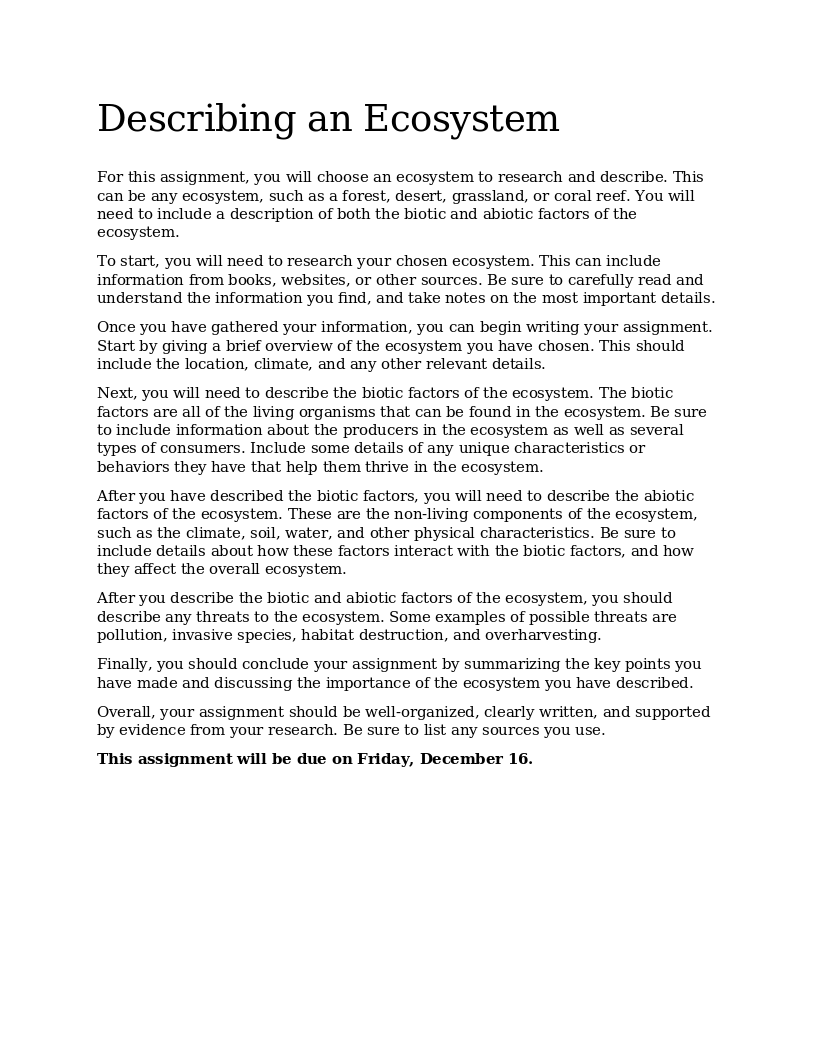
Ecosystem Writing Project
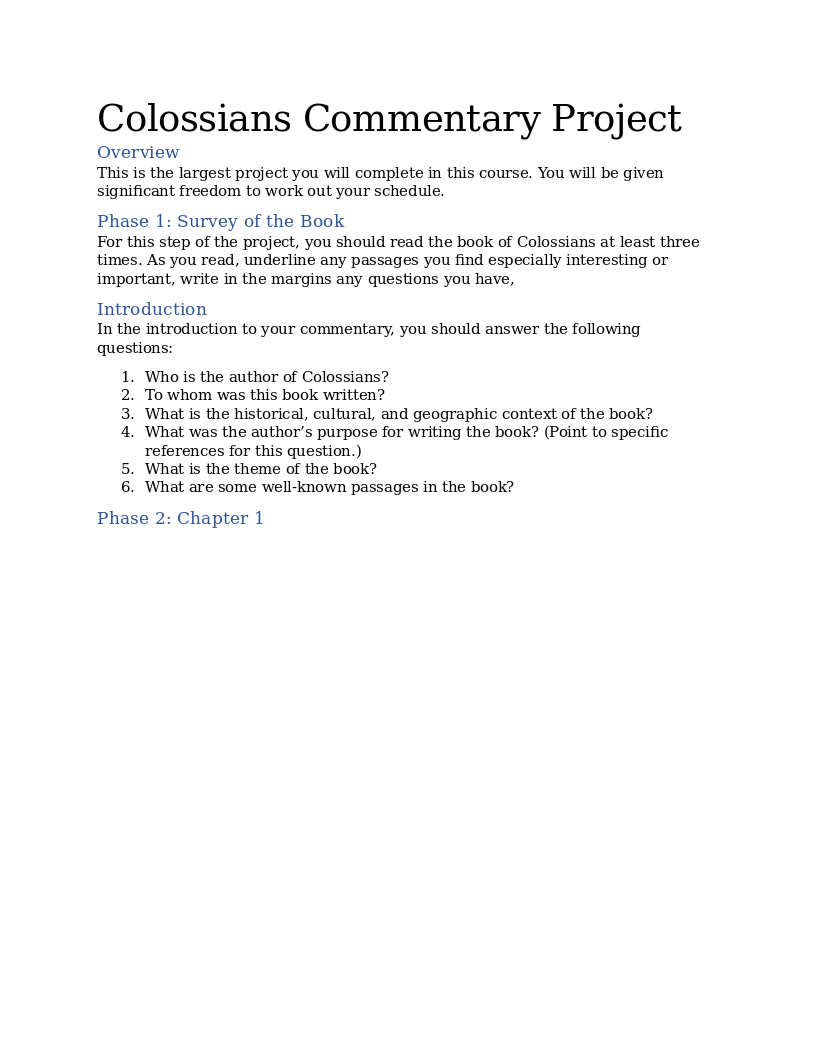
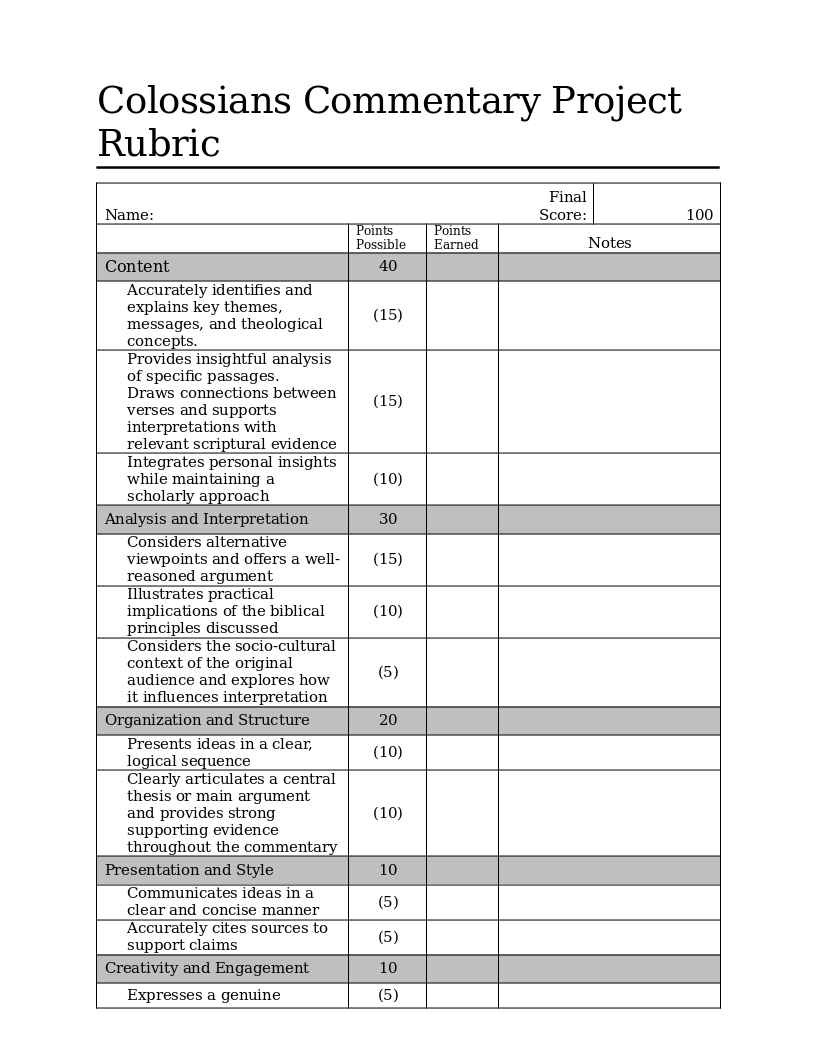
John Mark Kuhns provides a set of instructions for an Ecosystem Writing Project. It outlines the requirements for researching and describing an ecosystem, including both biotic and abiotic factors, threats to the ecosystem, and its importance. The project includes specific grading criteria for the overview, biotic and abiotic factors, threats, conclusion, and organization.
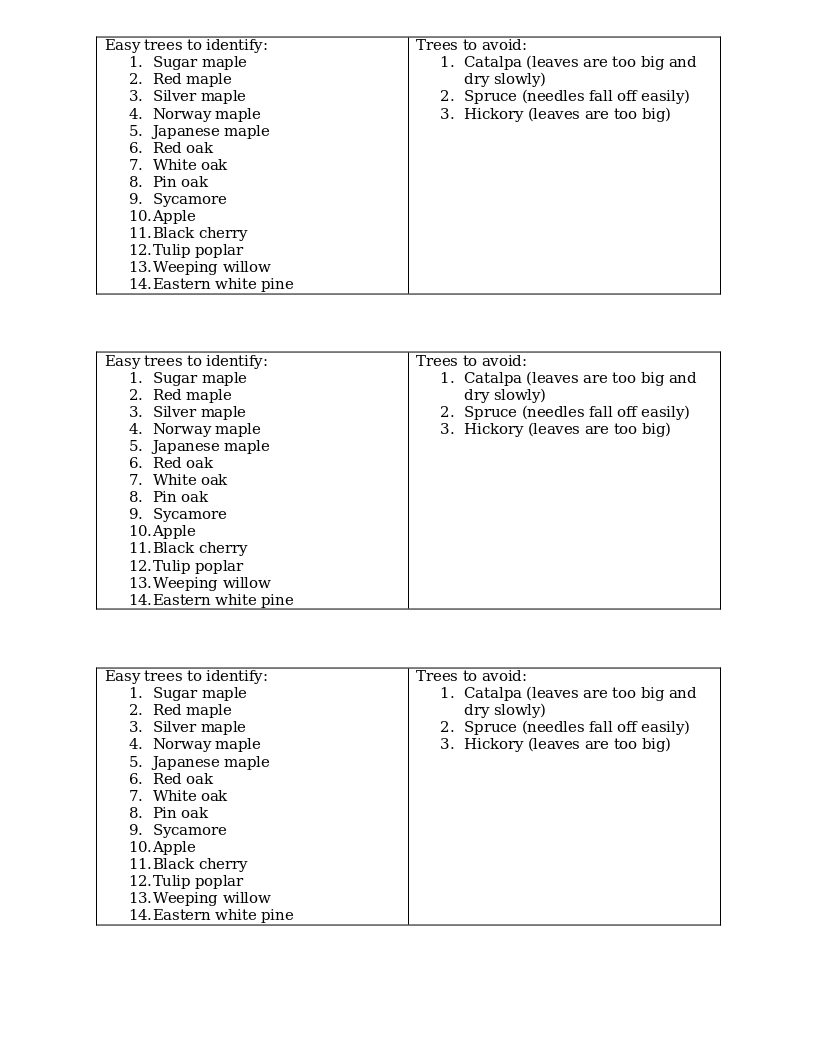
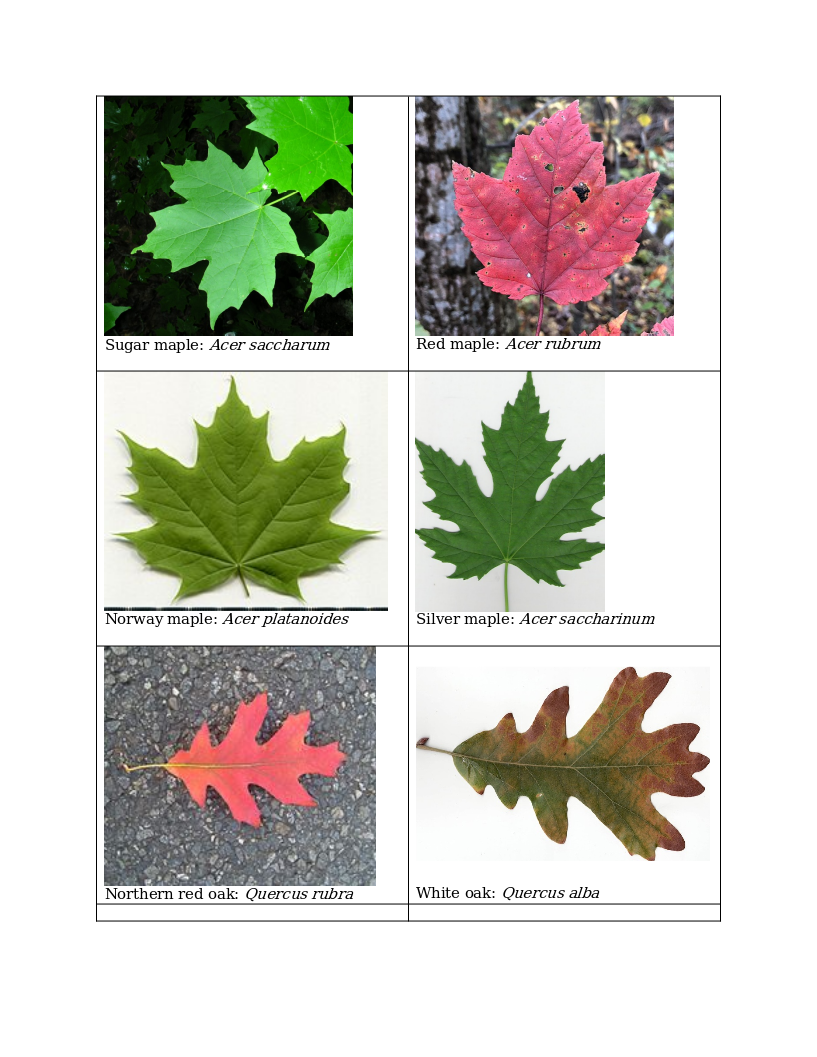
14 Easy Trees to Identify (and several to avoid)
John Mark Kuhns provides a list of fourteen easy-to-identify trees, including sugar maple, red maple, silver maple, and others, and highlights trees to avoid, such as catalpa, spruce, and hickory, with reasons for each. This information can help students identify trees in their surroundings. This Word document is formatted to print three sets of the list for distributing to the class.