
All Content
The Principal: Dealing Effectively with Issues
This session is part of the series on the role of the principal or administrator. A team needs a captain, a work-crew is well-served by a foreman, and a committee functions best with a chairman. Similarly, a principal can be a visionary leader, an organizational director, and a helpful discussion moderator at your school. What should the board task the principal with? What are the dangers of letting him run the show or micromanaging him? How can you as a principal be an inspiration to both, yo
The Principal: Proactive Initiatives
This session is part of the series on the role of the principal or administrator. A team needs a captain, a work-crew is well-served by a foreman, and a committee functions best with a chairman. Similarly, a principal can be a visionary leader, an organizational director, and a helpful discussion moderator at your school. What should the board task the principal with? What are the dangers of letting him �run the show� or micromanaging him? How can you as a principal be an inspiration to both, yo
Encouraging the Construction of Solid Foundations
This session is part of the series on nurturing and training children. Steve encourages parents to guide their children through stages of maturity. It is no secret that Judeo-Christian values have been increasingly under attack by our humanistic society. What is more sobering is how much those ideas have infiltrated our own thinking and affect the way we have been raising our children. From even before conception, when children are now considered optional instead of a God-given responsibility, a
Examining the Elements of Solid Foundations
This session is part of the series on nurturing and training children. Steve offers guidance on training very young children to hearken to their parents and other authorities. It is no secret that Judeo-Christian values have been increasingly under attack by our humanistic society. What is more sobering is how much those ideas have infiltrated our own thinking and affect the way we have been raising our children. From even before conception, when children are now considered optional instead of a
Examining the Cause of Faulty Foundations
This session is part of the series on the structure and function of the board. Steve examines popular ideas that hinder parents from nurturing their children with love and discipline. It is no secret that Judeo-Christian values have been increasingly under attack by our humanistic society. What is more sobering is how much those ideas have infiltrated our own thinking and affect the way we have been raising our children. From even before conception, when children are now considered optional inst

A Prayer During COVID-19: The Speed of Grace
Oh Lord,
My life has been a constant state of rushing, from one thing to the next. On the Appalachian Trail, when we were supposed to be �getting away from it all,� I was constantly pushing to rush through breakfast, lunch, and supper so we could get the maximum number of miles done before falling into our sleeping bags at night. Then we�d wake up early and repeat. My senior year in high school was a very busy time as I worked to graduate as well as other involvement...
- Director of Evangelism, (which included heading up VBS)
- Big Brothers
- Thursday night Bible school
- A weekly Bible study
- Street evangelism
- Third Sunday outreach
- Prison services
It got so bad that I�d brag that my dad was the pastor, but I ran the church. I gloried in my busyness and thought you were also pleased. I took this belief into my marriage.
I thank you for giving me the two years at Faith Builders to teach me to live at the speed of grace. It started with a late arrival in the middle of the night because I had been painting our rental house the day we were to leave. It ended with the book An Unhurried Life as a graduation gift. This time and this book were a means of your grace to help me recover from my addiction to speed.
The last three years haven�t been hurry free, but have been much richer and freer than my pre-Faith Builders life. I thank-you for a wife and children who are teaching me to slow down as well as the Full Focus Planner, a tool which has helped me achieve more while doing less. It has also helped me win at work and succeed at life.
All three years of growth seem to have died with the arrival of the COVID-19 pandemic.
All the routines, rituals, and richness of a schedule I could control have rushed away and, until I sat down to write this prayer, I had been right back to my speed addict ways: constantly sending and receiving messages, receiving what the news had to throw at me and not so courteously passing on articles to people who didn�t agree with my view of this situation. Once again I was searching for and volunteering for needs that I could meet.
Oh God, I�ve been so foolish, once again rushing ahead of your plans for me. You and I both know that there are a lot of things that need to be done at this time. But you know that a life lived at the speed of grace is much more important at this time of need. Thanks for the reminder; I�ll try to keep it in mind.
Homework
- An Unhurried Life | Visit unhurriedliving.com/store and embark on your own unhurried journey.
- COVID-19 Prayer | The process of writing this prayer was very healing and helpful to me. I�d recommend that you do the same. If it seems appropriate, post your prayer in the comments section below.
- The Full Focus Planner�? | Check out my other blog about why I feel this tool is so helpful.
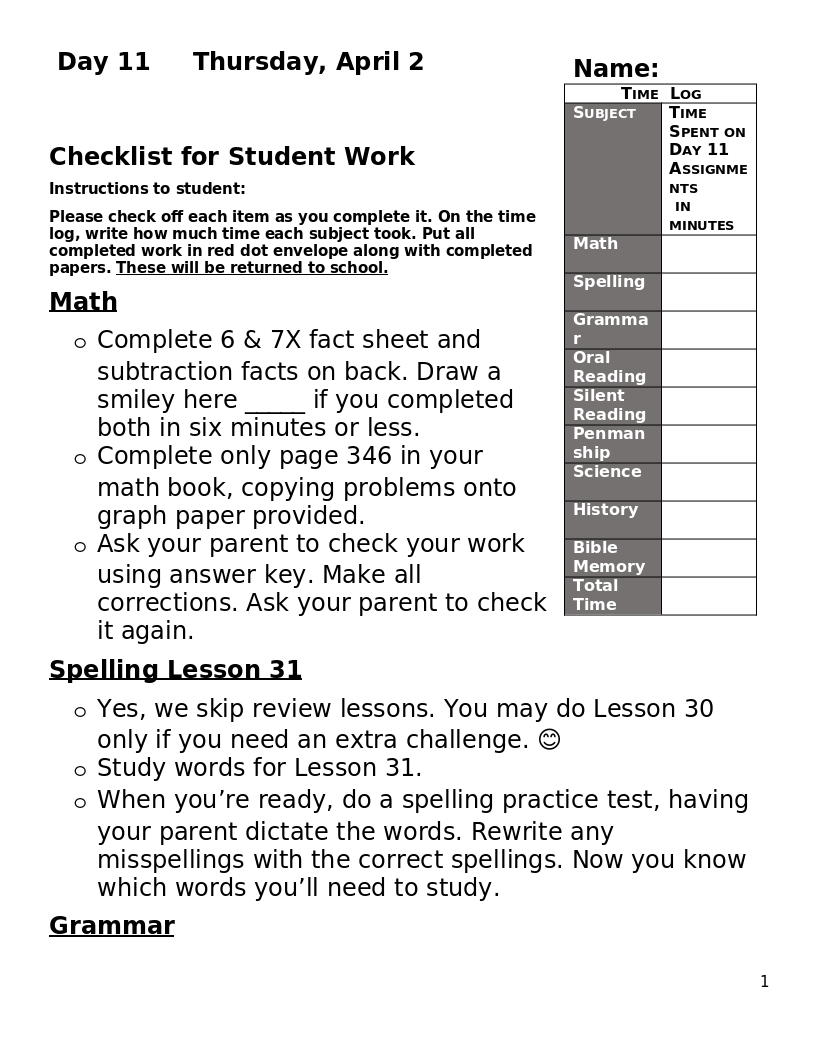
Daily Learning at Home Checklist (Third Grade)
Anna offers this sample checklist for supporting students who are learning at home during the school shutdown.
Download the document or preview it below.
Communicating Victory
I’ve appreciated the letters and emails with updates and encouragement that I’ve seen other school leaders sending regularly. Here is a quote from a superintendent in one of our local districts: “FDR did a brilliant job of conveying a confidence, an easiness, and a determination that though we are going through dark times, we are going to get through this—we are going to come out victorious.”
Christians have a hope to not just avoid death, but to “survive” death ultimately victorious. In our roles as educators, what are we conveying to our board, faculty, patrons, students, church, and broader community?
I’ve written some letters so far and I encourage other school leaders to do the same for your families living in stressful times. I’m sensing the stress levels rise on various fronts as the closure has set in longer and indefinitely. The families in our communities might seem to have it all together, but we need encouragement too, now as much as ever, or more than ever, in these unprecedented times. It is a traumatic time for children. We need to admit this and give strategies for parents to cope.
To inspire you, I offer three themes I shared in my recent school newsletter:
It’s been different for all of us. Some have just gotten into the groove after adjusting the first two weeks, and others found the first two weeks easier, and now it’s harder to maintain energy. The longer the closure lasts, the more strained our emotions will become. I’d like to share three valuable themes to keep in mind during these stressful times.
Laughter, or good humor
If you lose the power to laugh, you lose the power to think. - Clarence Darrow
Some think of jokes when they hear humor. “I could tell you a coronavirus joke, but I’d have to wait two weeks to see if you got it.” Jokes often play on words or differing expectations, but they are only one level of laughter. True joy comes from a transformed heart, and a transformed heart is practiced at enjoying the little moments in life. Find and capitalize on these little joyful moments as a way to relieve stress.
This song is meaningful to our family: “Yesterday’s gone and tomorrow may never come, but we have these moments today.”
Our one year-old twins bring us much joy and laughter. Picture them both wandering around the house holding sleepers over their heads for fun and bumping into things. One was fine looking at the laundry on the line until she recognized her dress hanging there and wanted it now. Sometimes they just lie down and roll around! Try it!
Play
Play is important in both reducing stress and the development of children. Just as children feel safe in the presence of a strong adult, they feel safe when absorbed in play, or when they are creatively engaging themselves in such a way that they are lost in play and lose track of time. (We’re not talking about screen time here.) This could be developed deeper, but for now I’ll quote my father:
“It's more important than ever for our children to play in these times…. Encourage your children to play all kinds of play--role play, sing, run, walk, build, imagine, board games, make-up games, play that goes BOO... And be present for your children.” -Jonas Sauder
Family time
Our emotional development and our spiritual identity are strongly linked to the bonding and worshiping times with family. Now as never before in our collective living memory will we perhaps have more of what we may have always wished for: more family time! Be careful what you wish for!
Staycations have been popularized recently I hear. Live it up! Try playing "Suspend," charades, or act out Bible stories. And finally, sing, sing, and sing! “Speak to one another in songs” (Eph 5:19).
One thing I didn’t anticipate was how much more work this closure would create, though different from the normal load. So blessings on each of you as you serve your school and community. Keep it up, never give up, and go “Further up and further in!”

Don't Hoard It: Passing On the Gift
What is your goal as a teacher? Survival? Keeping your job? Teaching is much more than making it to the end of the year, Aaron reminds us. We have the opportunity to invest the precious gifts we have received. Is making the investment hard work? Definitely. But the rewards are incomparable. For more on this topic, consider listening to the full talk.
Teaching Your Children Their ABC�s Without Them Realizing It
Repetitive Alphabet Books
Find a book that goes through the alphabet and read it every day.� Believe me, if someone tires of it, it is usually the adult.� Children thrive on repetition and if you take the time to pause while you are reading, they often can fill in the next word or phrase for you.� Any favorite ABC book can work, but my son�s current favorite is Chicka Chicka, Boom Boom.� We have enjoyed it so many times together that he can �read� most of the book on his own.
ABC Manipulatives for Play
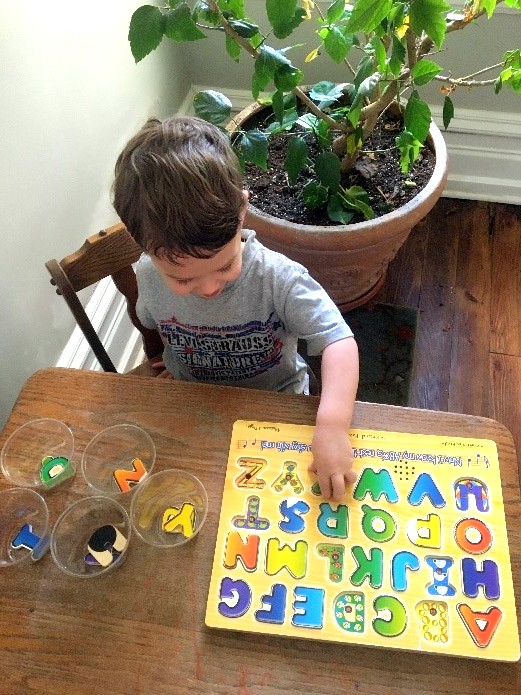
Have your child view the alphabet as simply another toy to play with. This provides opportunities for spontaneous learning.
- sponge letters in the bathtub
- magnetic letters on your refrigerator
- ABC playdough mats
- flashcards they can copy while writing in sand or shaving cream
- an ABC puzzle
As you are working in the kitchen or having them clean up their toys after bath, have them hand you the letter that you call for or sort the letters by colors.� Currently, my oldest son�s favorite way to play with his alphabet is by matching the magnetic letter to the corresponding one that I drew on a magnetic cookie sheet from Dollar Tree. It shows the uppercase alphabet on the front and the lowercase alphabet on the back.
Identify Favorite People Or Objects By their Initial Letter/Sound
This is my son�s favorite way to identify his letters and sounds.� The �A� is his cousin, �Addi�s letter.�� The �K� is for his cousin �Karina.�� The �G� is for �Grandma.� The �Z� is for his best friend �Zion.�� We had to go with his xylophone for �X� and his bathtub toy fish for �F.�
You do not need any expensive supplies or a how-to-manual to have your child interact with language.� However, it does take intentionality to surround your child with an environment that piques their interest in written words!
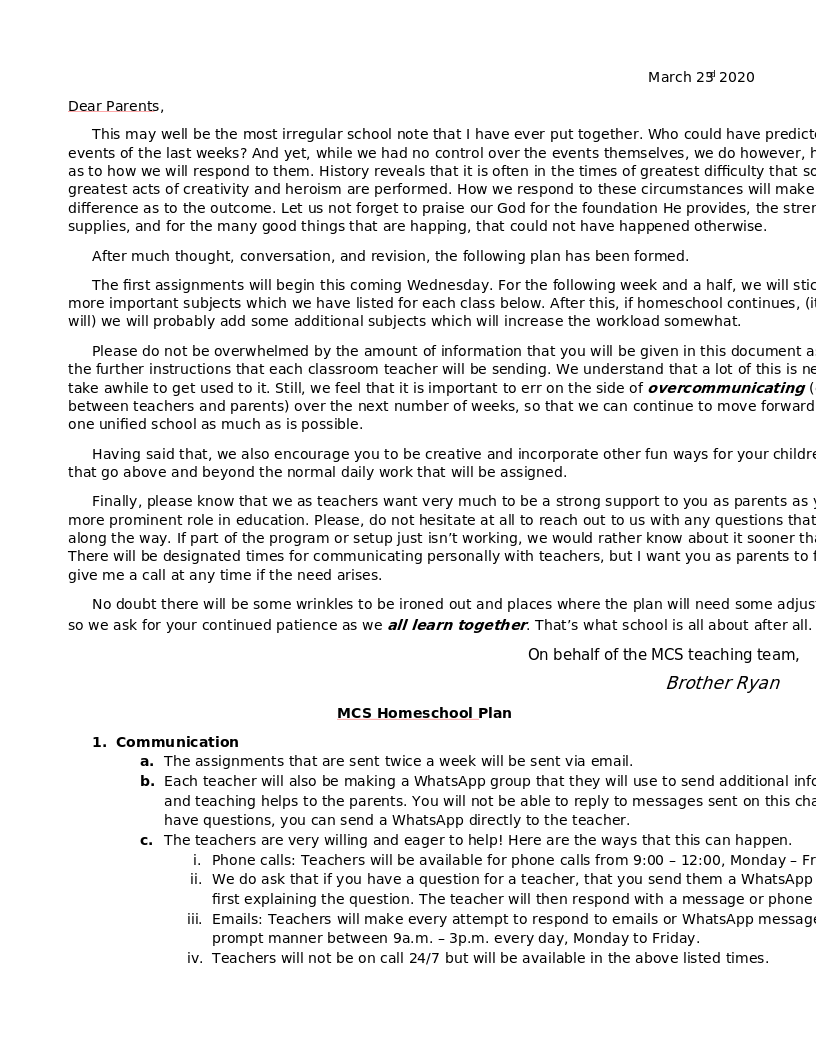
Homeschool Plan: Parent Letter (MCS)
Staff at MCS considered the plans of other schools and crafted this approach to fit their community.
Download the plan or view it below.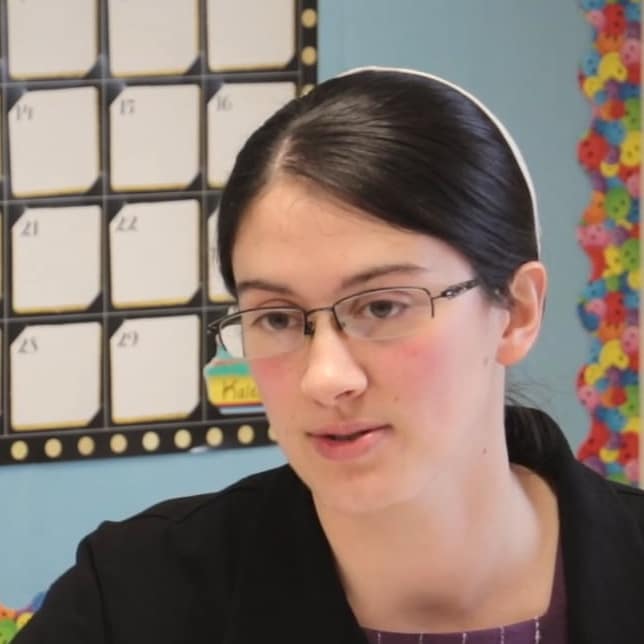
Are They Ready? Evaluating a Child's Preparation for First Grade
The whole being ready emotionally and socially to me is just as big as being ready academically because if a child has a lot of maturing to do socially and emotionally, it will affect their learning academically. It's hard to know because they do mature a lot. I've had children that come through kindergarten and I'm not quite sure how they're going to manage first grade between March and August. I'm amazed at how much they grow up and how much they mature.
You can't always assume everything in kindergarten as to how they're going to be in first grade but it does give you a good window into how they are, what they struggle with. If there are things that they are struggling with in kindergarten, then at the end of kindergarten, that's a good time for me to talk to the parents and say, "Hey, here are some things that they need to work on or you can work on with them." If you put the emotional part and social part together, some of it's just in how they respond to me. I expect them if I ask them a question to be able to respond back to me right away. Even in how they respond to their peers, to be able to respond in a friendly response, if they're asked a question, do they know how to respond back?
The emotional part, I really watch how tired they get. Some kindergartners can hardly make it through the day. It's a big change for them. It's much different than just being at home with mom and being able to play and it's a totally different atmosphere. It's very structured and they do have a lot to get used to. How they react to things, even on the playground, if there's something that didn't quite go their way, do they sit there and have to cry about it for a while or are they would buck up and take it?
I've always been thankful for the ones that have waited. It never hurts them. Depending on how they react to the test or they all can't handle doing a test like that. That can tell me a little bit. Some children, I don't know if it's more of a test anxiety thing or not. I had one a couple of years ago that had done very, very well in kindergarten and came to the test and did not do well. Sometimes coming to school was just a good thing. That can help them a lot. Some have come to kindergarten before, I wonder how are they ever going to manage first grade? It seems like once they come to school�and I've had parents talk to me about it before�they see a big change in them at home too after they've come to kindergarten. It does grow them up and mature them.
What is first grade like for the student who was held back for emotional or social reasons?
They might be a little bit farther ahead as far as academics. They may be nearly reading or are reading. I have always found that even if they do know how to read, they've still never learned the rules to reading. I've never really had a big issue with children who already know how to read. Often, parents worry about that and I just tell them, "Don't worry about it." Within a couple of months, it will be a challenge. Even a child who knows how to read, they may struggle with math.
If a child is held back from first grade, should he or she take kindergarten again?
Yes. I believe the child that I held back, I think she did come back for kindergarten and the next year as well. It didn't seem to faze her. I held one student back one year simply because I'd ask a question and didn't know how to respond back to me but they were very ready academically. Thankfully the parents were very much of holding them back another year and I was amazed at the difference. They came back the next year and they were like a completely different child. A lot of it to me just simply comes down to how ready they are to actually learn.
The child does not really want to learn that much, it's really hard.
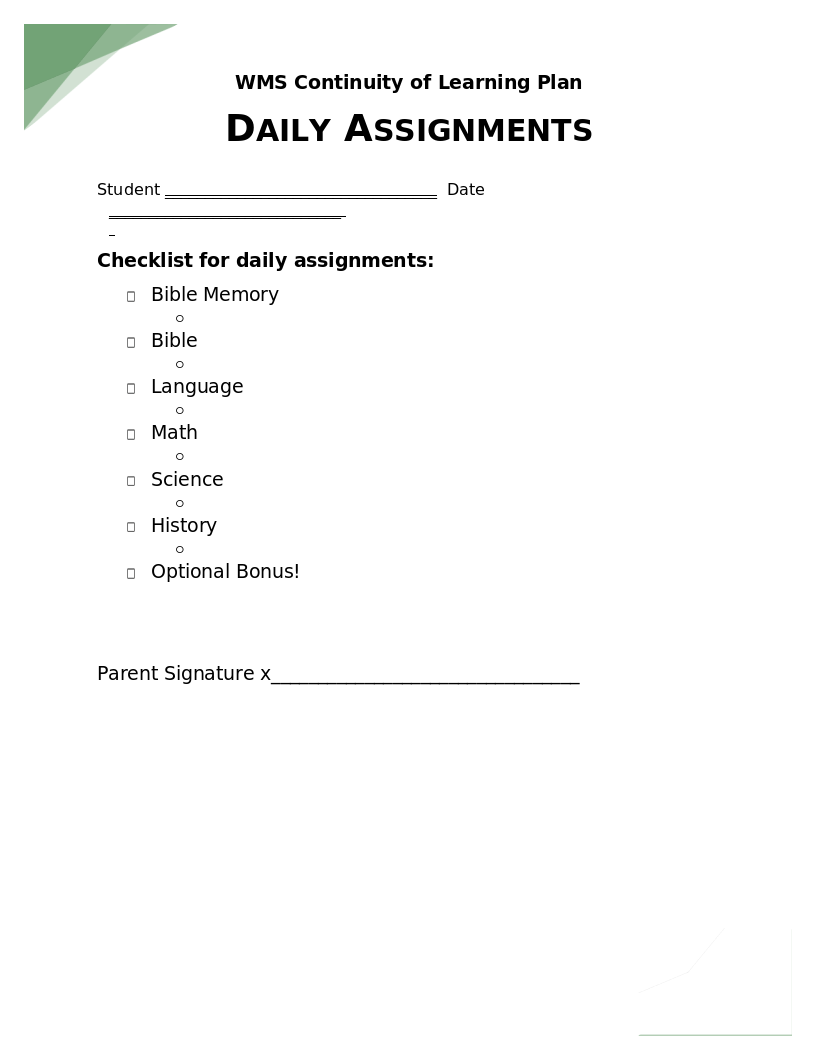
Daily Lesson Checklist for Home Study
Waynesboro Mennonite School developed this checklist to allow parents to verify their child's progress during study from home.
Download the checklist now or view it below.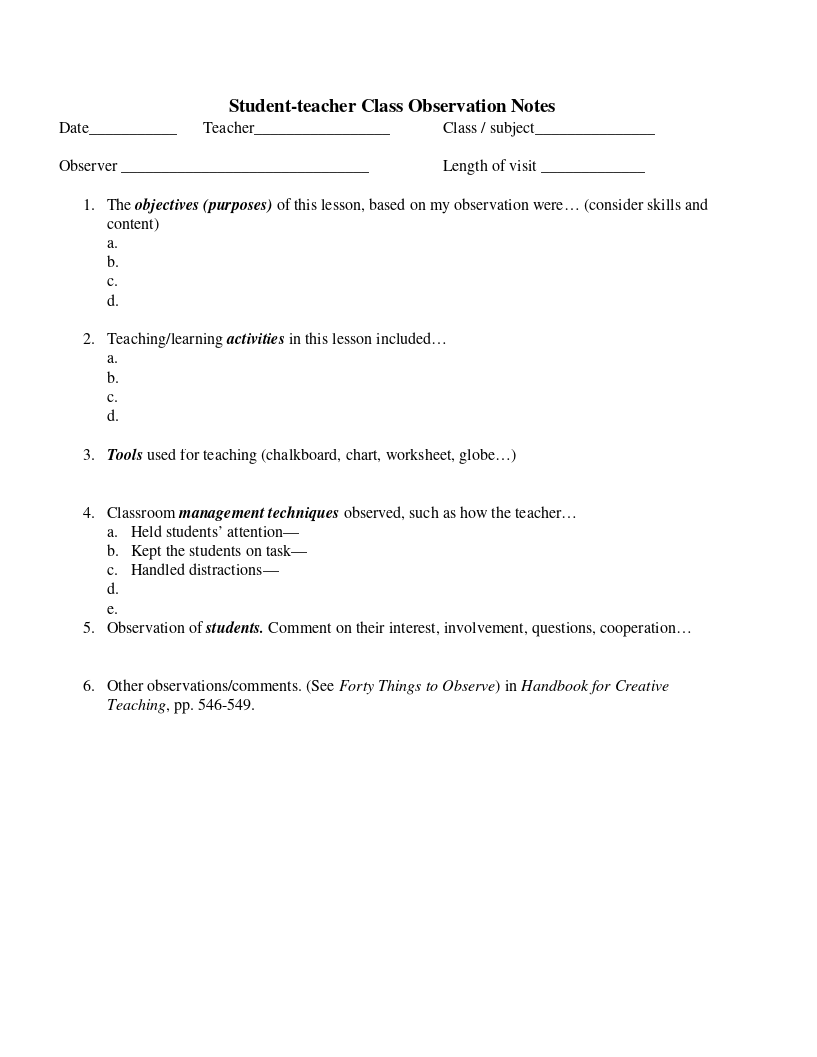
Classroom Observation Form
Jonas developed this template for the use of student teachers who are observing classes as part of their training.
Download the form or view it below.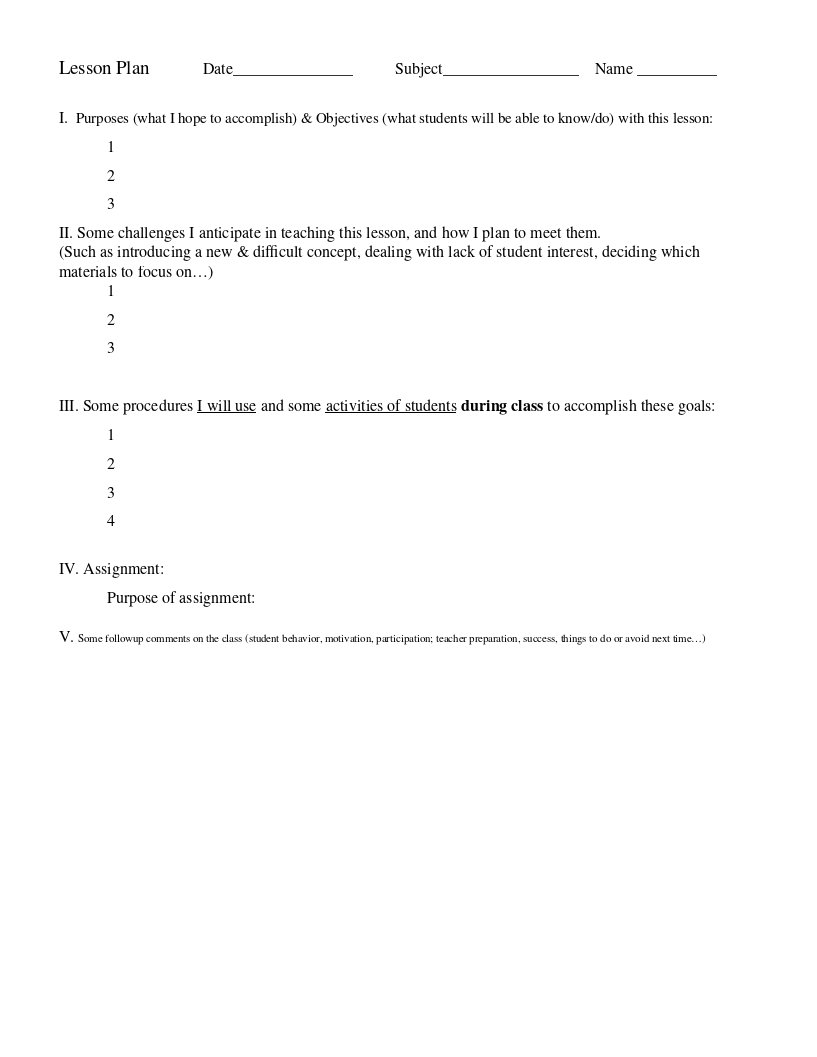
Basic Lesson Plan Template
Jonas offers the lesson plan template below as a guide for high school students participating in a teacher apprenticing program.
Download the template or view it below.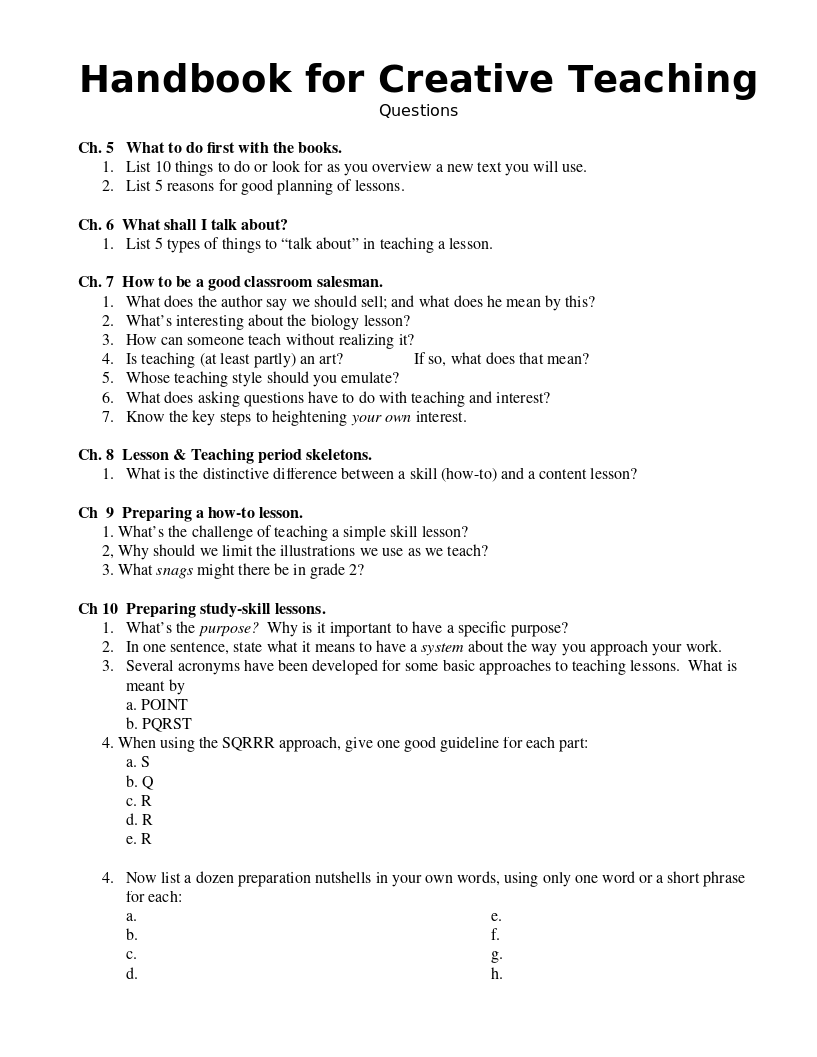
Study Questions for Handbook for Creative Teaching
For high school student teaching, Jonas offers a set of questions on Handbook for Creative Teaching by David L Martin (Rod & Staff). This is a handbook, but serves well to introduce the initiate to a broad spectrum of topics related to teaching such as how to teach, how children think, practical preparations, preventive and corrective teaching, and more. The chapters are relatively short, easily readable for a high school student, and quite down-to-earth and practical. A few are a bit dated; these can simply be skipped.
Jonas developed the questions below for most of ch. 1-65. His student-teachers completed the questions for several chapters per week in preparation for two sit-down half-hour conferences they had weekly.
Jonas also recommends Gregory's Seven Laws of Teaching.
Download the questions or read them below.